




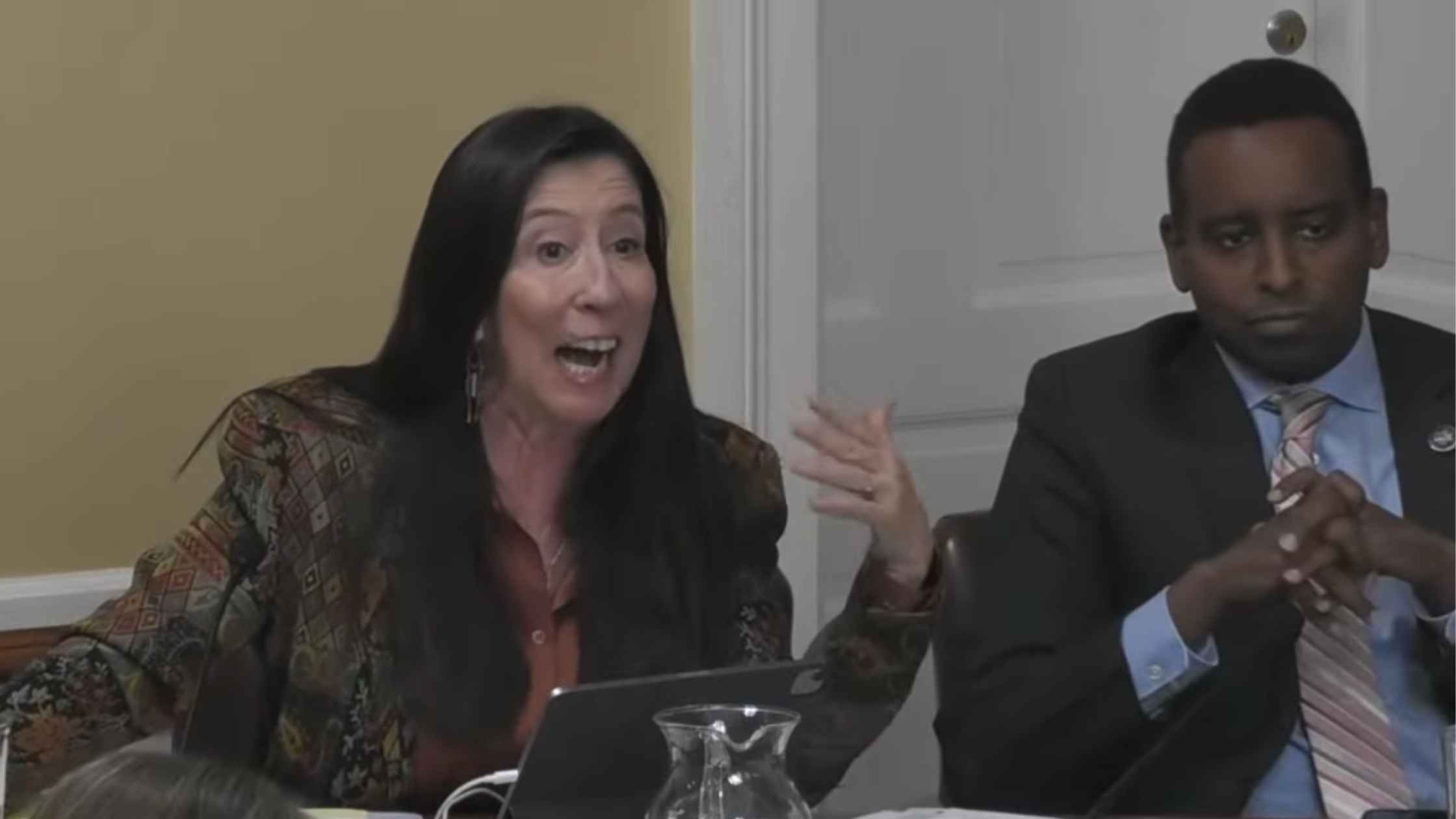


Chair Virginia Foxx (08:40):
Good afternoon. The committee will come to order. Without objection, The Chair is authorized to declare a recess at any time. Today, the Rules Committee is convening to consider two measures, H.R.4626 and H.R.4758. H.R.4626, The Home Appliance Protection and Affordability Act would enact the series of targeted reforms to the Energy Policy Conservation Act. These reforms would dispense with unnecessary duplicative rulemaking requirements related to the energy efficiency standards of household appliances that millions of American families rely on every day. Americans deserve the freedom to choose the household appliances that suit their own individual needs and not bear the brunt of regulations that infringe upon their choices and lead them to fork out more their hard-earned money. It's quite peculiar how our colleagues across the aisle have this insatiable itch to regulate everything under the sun and all the while they never think of the people who will be affected by their doing so.
(09:53)
H.R.4758, The Homeowner Energy Freedom Act would strike three provisions within the so-called Inflation Reduction Act, that amount to over 5.7 billion in costs that are shouldered by hardworking Americans and their families. The IRA proved to be an outright scam, far from delivering on reductions in inflation. This Byzantine conglomeration of unbridled spending fueled unprecedented surges and prices paid by working Americans. These specific provisions from the IRA were concocted to electrify the entirety of our homes. Ironic, given the fact that electricity prices surged under President Biden by more than 25%. It's even more ironic when you consider the fact that the IRA helped spark this unprecedented inflation. Americans deserve to exercise choice in the appliances that they purchase. The last thing they want is the federal government wagging a finger in their faces and telling them that their decision making comes with an extra price tacked on.
(11:05)
It's not that hard to understand. If our colleagues across the aisle want to join us in protecting consumer choice in undoing the damage that their wrong-headed policies have created, we will welcome them with open arms. Instead, I'm sure they'll try to describe these bills as just another waste of time. I couldn't disagree more. I don't disagree with my Democrat colleagues that regulation has its place, but it's clear that the lives of everyday Americans are overregulated and overburdened by the federal government. Regulations have a cost, that's clear. In the last year of the Biden-Harris administration, they finalized more than $1.6 trillion in net regulatory costs. And who pays for the cost of these regulations? The American people.
(11:58)
Contrast that to the first year of the Trump administration where regulators finalized a decrease of almost 130 billion in regulatory costs. If we really want to talk about affordability, let's talk about how we can reduce the crushing burden of government regulations on every aspect of the American people. Let's not force manufacturers to make new energy-efficient appliances, which costs more and last less. If people want energy- efficient appliances, let them signal that to the marketplace, but don't go down the road the Democrats always want to, by imposing costly mandates and actually reducing consumer choice all in their quest for "energy efficiency". With that, I now yield to the Ranking Member Mr. McGovern for any comments he wishes to make.
Ranking Member McGovern (12:52):
Well, thank you Madam Chair, and I know the State of the Union is tomorrow night, and I'm sure we'll hear all kinds of claims from the president, but let me tell you what regular Americans think is the State of the Union right now. God-awful. People are watching their neighbors getting kidnapped by masked agents. People are getting shot in the street and people are getting crushed by costs. Groceries are up, rent is up, healthcare is up, child care is up, college is up, energy bills are up. Everything is more expensive and when millions of Americans can't even afford a home, House Republicans keep showing up here with bills about home appliances. I mean, this is like the 12th time that we've been asked in this committee to advance measures about dishwashers or shower heads. While families can't afford a down payment, and the worst part is these bills would actually raise utility costs for consumers, one of these bills is called the Homeowner Energy Freedom Act.
(13:46)
If Republicans want to talk about real freedom, here's what freedom would look like. Freedom from price gouging at the grocery store, freedom from rent hikes, freedom from medical debt, freedom from a Trump economy that rewards the biggest corporations and sticks, working people with the bill. Speaking of sticking people with the bill, let's talk about Trump's tariffs because tariffs are really just an additional tax on Americans. On Friday, the Supreme Court ruled that Trump did not have the authority to impose these sweeping tariffs under IEEPA. The court struck them down.
(14:19)
Now there's a huge question, over $165 billion about refunds for money the government collected illegally. The Trump administration said, and I quote, "If we lose the case, people will get their money back." Well, the administration lost, and now Trump's team is signaling they're going to fight the refunds in court and slow walk the whole thing. That's exactly the point. Republicans can find endless time to obsess over stoves and microwaves, but they won't lift a finger to make sure the money Trump took illegally actually gives back to the people he overcharged. That's the choice in front of us, not appliances, but affordability and Republicans are failing. And with that, I yield back.
Chair Virginia Foxx (15:03):
Thank you Mr. McGovern. Without objection, any prepared statements our witnesses may have will be included in the record. I now welcome our panel, Representative Weber and Representative Castor from the Committee on Energy and Commerce. Your full statement will be submitted for the record and we ask you to summarize your statement in five minutes. We ask you to address all of the legislation within your jurisdiction in your five minutes. Representative Weber, I welcome your testimony.
Representative Weber (15:33):
Thank you, ma'am. Thank you, Chairman Foxx. Thank you, Member McGovern and members of the Rules Committee for the opportunity to testify before you today. I'm here, I'm pleased to speak in support of H.R.4626, The Home Appliance Protection and Affordability Act, sponsored by my colleague, Representative Allen from Georgia and H.R.4578, The Homeowner Energy Freedom Act, sponsored by my colleague, Representative Goldman from Texas. These folks provide key reforms to energy efficiency and home energy authorities to protect consumer choice while lowering costs for hardworking households. I should know, I owned an air conditioning company for 35 years. H.R.4626 modernizes provisions of the Energy Policy and Conservation Act or EPCA to bring energy efficiency authorities into the 21st century. In 1975, Congress enacted EPCA in the midst of the 1970s oil crises with the intent of reducing energy consumption through the use of more efficient technologies.
(16:39)
EPCA gave statutory authority to the Department of Energy to regulate and set minimum energy efficiency standards for a list of covered products, including stoves, water heaters, dishwashers, and more, as well as certain commercial equipment. 50 years later, five zero years later, EPCA has remained largely unchanged, but the focus of conservation efforts shifted from energy security to green policies that actually advance a far left agenda. As EPCA is written in current law, the Department of Energy is required to consider technological feasibility and cost impacts of new standards to prevent burdening households and businesses with expensive mandates. Unfortunately, the Biden administration ignored statutory requirements and weaponized EPCA authority to attack fossil fuels and prioritize environmentalists over American consumers. I know, I've seen it day after day after day in Texas after 35 years in the energy business basically. It's to remember that upwards of 60% of households rely on natural gas appliances, let that sink in.
(17:58)
60% of households actually rely on natural gas appliances and close to 75% of those are in colder states. Why? Because natural gas appliances work. In their own regulatory analysis, DOE acknowledged that electrification was a more expensive option and would take decades, decades for households to see any semblance of efficiency benefits after very, very steep upfront cost. I know, I was associated with the building industry. I know what it takes to put an electric furnace or gas furnace and dwellings. I did that for 35 years. In fact, the Biden-Harris DOE regulations on dryers could take up to 46 years to see efficiency benefits. Let that sink in. 46 years to see efficiency benefits. Even though household appliances are replaced, guess what? Eight to 10 years on an average. Where's that savings come from? This bill ensures future energy efficiency standards if necessary, it will be cost-effective and economically justified for all consumers.
(19:08)
If the Democrats' electrification strategy truly lowered cost for households, there would be absolutely no reason to spend billions of dollars along the way. None, no reason. That's a key reason Democrats use the Inflation reduction Act to subsidize those expensive mandates. H.R.4578, the Homeowner Energy Freedom Act, repeals disastrous policies of the IRA that spent billions of American taxpayer dollars to benefit green cronyism and did absolutely nothing to help Americans realize the dream of homeownership. Importantly, this legislation builds on the success of the Working Families Tax Cuts by officially removing IRA authorities that were used to subsidize green agenda mandates. In particular, Section 50133 of the IRA bribed states with a $1 billion fund to update building energy codes. While seemingly well intended, what Democrats will not tell you is that these codes are a backdoor ban on fossil fuels and they forced electrification of our homes, even though electricity is a higher form of power that you have to pay for.
(20:22)
In fact, adopting the 2021 IECC would raise the cost of homes by upwards of $31,000, pricing out millions of families from the building industry. The dream of homeownership is already out of reach for majority of Americans. 75% of households cannot even afford a median price new home. At a time when Americans are concerned affordability and rising energy costs, these bills provide necessary relief for families and long-term certainty to those addressing the housing crisis. I urge my colleagues to join me in modernizing EPCA, repealing government handouts to the green environmental lobby and lowering costs for American families. Thank you. Madam Chair. I yield back.
Chair Virginia Foxx (21:07):
Thank you very much. Representative Castor, you're recognized.
Representative Castor (21:12):
Well, thank you, Madam Chair. Thank you to the Ranking Member for the opportunity to stand up for my neighbors back home and their pocketbooks. They are really being squeezed right now, and I think the context of these Republican bills coming forward is very important. We know that 80 million Americans are struggling to pay their electric bills, their utility bills right now. Electric bills have increased on average across the country 13%, but much higher in some states. For example, in the state of Florida, the Utility Commission just approved the largest rate hikes in the history of the country, and we don't even have the pressure of data centers, so people are truly struggling. Then when you add in the tariffs, people know that they've been paying too much for their groceries, for their food. Yes, this impacts electricity bills as well.
(22:08)
Thank goodness the Supreme Court kind of sent a message last week, but I wish that would be a magic wand to help the cost of living for our neighbors, and then you can't ignore the context too of the big ugly bill that was passed by this Congress last year signed by the president, because the estimates are that that big ugly bill will raise electricity prices by a staggering 61% over the next decade. So we need to be doing everything in our power to give some relief to hardworking Americans back home, but it seems like the deck is constantly stacked against them. And then we could be working together on legislation that would help lower costs to bring cleaner, cheaper energy onto the grid, but instead, Republicans now are offering these bills that it's going to make life much more expensive for hardworking Americans all across this country.
(23:07)
So let's talk about energy efficiency standards. They're popular, they save people money, they save energy, they cut pollution. The first bill, 4626, would gut energy efficiency standards for households. Now, energy efficiency standards used to be bipartisan. They've been around for decades and decades. It was really a brilliant move decades ago to use good old American technology and know-how. Combine that with a little push, a little investment from the federal government to help our neighbors save money on their appliances. We're talking about refrigerators, dishwashers, air conditioners. Over time, these energy efficiency standards have been a godsend to our neighbors back
Representative Castor (24:00):
Com, they've already saved over $6,000 per household over the past 10 years. Don't just take it from me. I'll ask that we submit this letter from Consumer Reports. I think that's a well-respected organization that has their eye on the bottom line for consumers.
Chair (24:16):
[inaudible 00:24:18]
Representative Castor (24:18):
Thank you, Madam Chair.
(24:21)
What this bill does is it just takes a sledgehammer to it. It says, no longer are manufacturers and consumers going to get together with the Department of Energy to consistently improve technology and to help save money. Instead, they're going to call it quits. They're going to rip the rug out from under consumers and manufacturers. They're going to allow manufacturers to backslide.
(24:45)
In the law right now, appliances can't get worse over time. This will restrict the choice for consumers. Since energy efficiency standards were adopted decades ago, you go shopping for an appliance, you have a wide range of options. If you want the cheaper model, it's available, but you're going to pay more over time if you want to pay a little bit more, usually. But a lot of this over time saves you significant money.
(25:16)
We are in a period right now of excessive demand growth because of AI data centers and electrification across the economy.
(25:27)
Energy efficiency standards are one way to help manage that demand growth and keep money in the pockets of consumers and not pay out the wazoo. And as this demand for electricity increases, we have got to enact modern policies that help the consumer and protect the consumer.
(25:49)
Otherwise, these data centers and large load generators are going to eat their lunches. Already people are feeling the strain.
(25:58)
Now, 4758, again, makes life more expensive for hardworking Americans. It says that it rescinds the money that is already out there on the streets in North Carolina, in Michigan, in California and other states that is helping working-class neighbors afford the energy-efficient appliances.
(26:20)
In my neck of the woods and in yours as they recover from hurricanes, a lot of people have to go out and buy new appliances. Why would you rip away that small little rebate right now that is going to give folks peace of mind and allow them to get back into their homes and do so with a more efficient appliance?
(26:43)
This bill also guts the workforce training that is important to creating jobs. So overall, this bill, Americans will pay more, you're cutting jobs, you're increasing pollution, you're making life a whole lot more expensive for our neighbors back home. That's not right. People deserve better right now. It's tough out there and Republicans shouldn't make it worse through these bills. I encourage you to pause on these bills.
(27:12)
There's a lot of other work we can be doing right now to help people with the affordability squeeze. These bills are not it. I yield back my time.
Chair (27:19):
Thank you, Ms. Castor.
(27:21)
Mr. Scott, you're recognized.
Mr. Scott (27:26):
Madam Chair, I don't have any questions. It just seems to me like we have to repeal a whole lot of things that the Democrats did when they had control of the House, the Senate, and the White House. And I think people have forgotten somewhat of their open border policies and micromanaging every aspect of our life, including what appliances we buy.
(27:48)
But I would just like to ask Mr. Weber if he would like to respond to any of the last statements that have been made by the members of the Micromanagement Conference.
Representative Weber (28:02):
Well, thank you. The gentlemen that's 4626 with gut energy efficiency standards was the statement actually. And I did this for 35 years on at Air Condition Company and I watch energy efficiency ratings go from what's called 8 SCER to 16 SCER. Manufacturers and companies will build a better product if left alone. Energy efficiency standards are important, and electricity for sure is when you're talking about heating your home, is a lot more expensive than a gas furnace.
(28:32)
Actually, if we left the industry alone, if we don't try to coerce the states by giving them a billion dollars to split on dangling that money in front of them, these manufacturers would build efficiency equipment, and the companies will be more efficient and then competition will kick in, and we won't be given subsidies that groups that are pushing green energy and somehow going out there and trying to make sure that electricity is the main energy at hand. Let me just tell you something, natural gas in Texas is a lot more affordable than electrifying a system. I know that firsthand, so I know that they're concerned about it. But the truth of the matter is, and I could go through the percentages and stuff on exactly what those costs are, because in Texas, we get it. We let industry do their own thing. I was in the house-building part of this thing, the air conditioning part of that for 35 years. I've seen this up close and personal, and electrical heat, water heat and those kinds of things draw a lot more electricity than gas uses BTUs and I'll stop there, Madam Chair. Thank you.
Mr. Scott (29:40):
Well, if it was about the environment, we would certainly be using more natural gas.
Representative Weber (29:44):
Exactly
Mr. Scott (29:45):
Than less natural gas. And it's clean, it's efficient. And Madam Chair with that, I look forward to passing these two pieces of legislation, and I yield the remainder of my time.
Chair (30:02):
Thank you, Mr. Scott. Mr. McGovern, you're recognized.
Ranking Member McGovern (30:05):
Yeah. Thank you. So in 2023, Representative Lesko introduced an earlier version of HR 4626, which was then called the Hands Off Our Home Appliances Act.
(30:17)
But this congress, representative Allen reintroduced the bill with a new name, the Don't Mess with My Home Appliances Act. Then on Thursday, a new version of this bill was posted online and you all have once again changed the name of the bill. It's now called the Home Appliance Protection and Affordability Act. That's three names for the same bill.
(30:38)
So Mr. Weber, why was the name of the bill changed from the Hands Off Our Home Appliances Act to the Don't Mess with My Home Appliances Act. And why did Republicans change the name of the bill yet again this time from the Don't Mess With My Home Appliances Act to the Home Appliance Protection Affordability Act.
(30:54)
I mean, do you believe, and I hope that you do, that we have an affordability crisis in this country, or do you agree with President Trump who calls the affordability crisis a hoax?
Representative Weber (31:03):
Well, let's take the first question first. Why do they change the names? You'd have to ask those authors why do they change the names, but I know that the intent is this. We don't need the federal government telling consumers and manufacturers how to build efficient equipment and what consumers must pay for higher, for less efficient air conditioning and heating. And those are the two main drags in a house, air conditioning and heating.
Ranking Member McGovern (31:26):
But you would agree we have an affordability crisis in this country, wouldn't you?
Representative Weber (31:30):
On air conditioning and heating products?
Ranking Member McGovern (31:31):
On everything?
Representative Weber (31:32):
Well, if there's a lot of mandates and there's a lot of things done on in the name of green energy-
Ranking Member McGovern (31:36):
It's a yes or no answer.
Representative Weber (31:38):
No, no. Well, I'd agree, but who's to blame for it? Who's to blame for it?
Ranking Member McGovern (31:42):
Donald Trump says it's a hoax. Let me ask you another question. Does H.R.4626 block individual states from putting in place their own efficiency standards for an appliance covered by this bill? I mean, if the Department of Energy decides to revoke the federal standards, can states do their own thing?
Representative Weber (31:56):
No, it doesn't. But I want to go back to the affordability crisis. It's because exactly what the Democrats put in the IRA. So just let's get that clear. States have the right to do whatever they want to. I'm a big state's rights guy and I come from-
Ranking Member McGovern (32:07):
But states under this cannot, individual states are blocked from putting in place their own efficiency standards.
Representative Weber (32:17):
The reason for national efficiency standards. And when you've got suppliers like Linux, Carrier Train, American Standard, I can go right down the list. You want them to all build a product that can be used across the country, and if they do it well, and we don't need to get federal-
Ranking Member McGovern (32:34):
They should have no role in it.
Representative Weber (32:36):
They can if they choose. But how they do that is depend on the state. They can go above those rules if they'd like to.
Ranking Member McGovern (32:42):
They can't have a say if it's revoked under this bill.
Representative Weber (32:45):
Well, as long as they stay with higher efficiency ratings, I don't see that that's the case.
Ranking Member McGovern (32:50):
Do you want to add anything?
Representative Weber (32:51):
But if I may, forgive me. Remember, the higher efficiency of air-conditioned equipment the more it costs, right? And so when you're talking about new homeowners, people that have a brand-new family and they want to be able to home, it'll add something between 15 to $30,000 to the cost of that home.
(33:08)
So don't forget that that's what our American families are facing.
Ranking Member McGovern (33:11):
Yeah, no, they're facing prices skyrocketing in this last year.
Representative Weber (33:14):
Well, we shouldn't mandate the seal rating. I'm sorry, I yield back.
Representative Castor (33:18):
In the end. My advice to consumers if these bills would pass would be hold onto your wallet because this would create a chaotic situation.
(33:29)
Now, most manufacturers like energy efficiency standards, and the way this works is typically manufacturers and consumer groups and the Department of Energy get together and they negotiate out. The rules have to be economically feasible and they have to be technologically feasible and they have to show they save money over time.
(33:49)
And it has worked well for decades and decades. It is not correct to say that this is a mandate of any kind.
(33:59)
There's no mandate that you have to go out and buy right now, under the law, a certain air conditioner or a certain refrigerator. You go shopping at your local appliance store, you have a broad range of selections and thank goodness you have the one that can fit your family's budget.
(34:16)
But over time, energy efficiency standards have made sure that we have efficient models on the market that help consumers save money. And the Inflation Reduction Act was very smart too. It said "Here, states, we're going to allow you to do rebates for consumers."
(34:34)
People need all the help they can get right now. These are very popular in states, especially working-class families that are paying out the wazoo for higher tariffs, electric bills, healthcare costs. That's the real estate of the union that I think you were mentioning earlier.
Ranking Member McGovern (34:48):
Let me raise one other issue here. This past January, a deal was cut between certain Midwestern Republicans and their leadership to create an E-15 Rural Domestic Energy Council in exchange for their votes to pass a rule to fund the government.
(35:04)
The council was supposed to, quote "Meet regularly to develop legislative solutions and to submit legislation to Congress no later than February 15th, 2026, with the intent to vote on that legislation no later than February 25th, 2026." That's this week.
(35:22)
But here we are with no votes on ethanol on the House vote schedule this week that I can see. We haven't even received a proposal from this council that was due over a week ago. At the time that this deal was struck, the president of the National Corn Growers Association said quote, "Corn growers are disgusted, disappointed, or disillusioned, that after spending years calling for passage of E-15, Congress has again punted and it has done so in a spectacularly weak and offensive way."
(35:52)
Representative Nunn of Iowa and a blog post entitled, "Not Just Talk, We're Fighting for E-15," wrote that bipartisan E-15 language that he helped negotiate was, quote, "Stripped out of the bill behind closed doors at the 11th hour."
(36:07)
He then goes on to brag about how he "Forced a commitment on a House vote on permanent E-15." To be clear, that commitment is what is about to be broken by the Republican leadership.
(36:18)
This week, Representative Miller Meeks of Iowa said, and I quote, "The council exists because we failed in our primary duty to deliver immediate relief to rural America."
(36:29)
Representative Adrian Smith in Nebraska said, quote, "This council is not a substitute for action and I refuse to let it be utilized as a delaying tactic."
(36:37)
Representative Hinson of Iowa said, quote, "While our farmers are hurting and our ag economy is on the brink, half-measures are unacceptable". And yet these members were willing to trade their leverage in withholding their votes for a council that has already failed to meet its deadlines with no guarantees of ever having a vote.
(36:58)
So, Mr. Weber. Given that your committee has jurisdiction over the E-15 issue, I would assume that you could provide the American people with an update on the council's work.
Representative Weber (37:08):
I'm not on that council, but I'll say this. I have seven ports in my district. We produce 65% of the nation's jet fuel, 80% of the nation's military-grade fuel, and we have 60% of the strategic petroleum is over in my district. Energy for us is a big deal. And when you're talking about E-15, let's not make this a mandate and I can buy gasoline right now that lasts longer because it doesn't have E-15 in it. Or if I wanted to, I could buy gasoline that has E-15, give the consumer the choice.
Ranking Member McGovern (37:36):
But given the fact that your committee has jurisdiction over the issue, I mean, can we expect the proposal to be sent to Congress?
Representative Weber (37:42):
That's above my pay grade. You're going to have to talk to the leadership.
Ranking Member McGovern (37:46):
Have you a proposal?
Representative Weber (37:46):
You're going to have talk to the leadership.
Ranking Member McGovern (37:48):
Well, do we know who's on the council?
Representative Weber (37:49):
You're going to have talk to the leadership.
Ranking Member McGovern (37:51):
So you can't give us a full list of... Is there a list?
Representative Weber (37:54):
I'm not going to try to single out people who are on the council and are not make -
Ranking Member McGovern (37:58):
Does there an actual council exists with people on it?
Representative Weber (38:01):
I've heard that there is. I'm not on that council.
Ranking Member McGovern (38:03):
Do we know if the council's ever met?
Representative Weber (38:07):
That's above my pay grade. I'm not part of that council.
Ranking Member McGovern (38:11):
I guess I'll just say we've kind of seen this show before. I mean, instead of actually getting policy passed into law, rank-and-file Republicans are continually duped by their leadership into agreeing to hollow deals that create task forces and working groups that don't accomplish anything. We don't even know if it ever met. We don't even know who the hell's on this council.
(38:32)
And in some cases, like the so-called Tariff Policy Working Group that we saw earlier this year, these task forces are just press releases. They're never really materialize. They never meet. They never do any work that they were supposedly created to do.
(38:45)
So I don't know why Republicans keep signing on to these hollow promises. They're not fooling anybody. The people you represent, farmers, consumers, whoever, can see that you're not doing a thing to ease their burdens.
(38:56)
And in this town what matters isn't what you say in a press statement, it is what you vote for and how you show up to deliver for the people back home. So I mean, this would be comical if it wasn't so tragic. And with that, I yield back.
Chair (39:15):
Thank you, Mr. McGovern, Mr. Griffith, you're recognized.
Mr. Griffith (39:18):
Thank you, Madame Chairman. I believe you'd be better off if you were here on trial today.
Ranking Member McGovern (39:27):
Well,
Mr. Griffith (39:27):
Because as you were being questioned, I couldn't help but think of, all right, what is the relevancy? None of these bills have anything to do with E-15 or any commission set up to deal with E-15, do they?
Representative Weber (39:37):
No, sir.
Mr. Griffith (39:38):
And you were here today to testify on these two bills. Is that not correct?
Representative Weber (39:41):
Yes, sir.
Mr. Griffith (39:42):
And you were not here today to testify on E-15?
Representative Weber (39:44):
No, sir.
Mr. Griffith (39:45):
So when you're being asked a lot of questions that you were not expecting to be asked because you weren't prepared for those, because you weren't supposed to be prepared for those, it's a little unfair. Is it not?
Representative Weber (39:55):
It is to have that irrelevancy rear its ugly head here.
Mr. Griffith (39:59):
And then when you answered the question that you weren't on the commission, that you weren't a part of that process, if you'd been in a court, your attorney could have jumped up and said, "Asked and answered. Quit badgering the witness."
(40:14)
But we're here where political games get played every day and you take somebody who comes in to testify on two bills and you go ask them about a third bill or a fourth bill or something that has nothing to do with today.
(40:24)
Let's talk about today.
Representative Weber (40:25):
Yes, sir.
Mr. Griffith (40:26):
One of the things I find interesting is it focused on energy. And I've talked about these bills and committee before, not this year, but in previous years, when we've had various versions of this. And one of the things that gets lost is it also deals with water consumption.
(40:39)
And I used to bring out the picture that a constituent sent me one time of her garden hose put in her washing machine, because the guidelines that had come out from the EPA wouldn't let her have but so much water in the washing machine.
(40:56)
And so she had to add water, she had to rinse twice on her own, go in and do a super rinsing. We heard stories, have we not, not only the washing machine stories, but also stories of people having to redo their dishes in the dishwasher, because as the standards have been brought about and been pushed on, "Oh yeah, the efficiency looks great and in 41 years you might get your money back, but in the meantime you got to run your dishwasher twice." And we heard those stories in committee on numerous occasions.
Representative Weber (41:26):
Yes, we have. And you're singing my beautiful bride Brenda Gayle's song because we had to buy a dishwasher and-
Mr. Griffith (41:31):
For everybody back home. Brenda Gayle is your wife.
Representative Weber (41:33):
Yeah, that's right. Thank you. Thank you. And it takes... Do this math. Yes, it uses less flow of water, but it goes twice as long and it uses more electricity.
(41:42)
And yet that's the kind of standards that they're proposing that we say, "Look, Americans are tired of it."
Mr. Griffith (41:49):
And that's why we need these bills.
Representative Weber (41:50):
Yes sir.
Mr. Griffith (41:51):
I yield back.
Chair (41:54):
Thank you. Mr. Griffith. Mr. Neguse, you're recognized.
Mr. Neguse (41:59):
I think the Chairwoman. I want to give my colleague, the ranking member an opportunity to,
Ranking Member McGovern (42:04):
Yeah, I just listened to Mr. Griffith and listen to you Mr. Weber just can't believe
(42:09)
I just listened to you and I can't really believe what I just heard. So you want to know why I asked the question? Because the E-15 issue is under Mr. Weber's committee. You want to know why I asked? The issue is because this is a week as a deadline. You all did press releases on this E-15 Rural Domestic Energy Council. You all said we were going to do something on that.
(42:31)
And as I mentioned to you, the council was supposed to meet regularly, the head of the committee doesn't even know where the council exists, and to develop legislative solutions to submit legislation to Congress no later than February 15th, 2026. We're at February 23rd with the intent to vote on legislation on February 25th, 2026. That's this week.
(42:57)
So yeah, forgive me if I'm asking questions about things you all promised and all bragged about, but who the hell else are we supposed to ask?
(43:03)
I mean, every time the speakers ask the question, he always says, "I don't know. I never heard of it. I don't know what you're talking about."
(43:09)
So I'm just asking the person who is in charge of the committee with jurisdiction whether he knows anything.
(43:14)
And so that's why I asked it. That you think that that's unfair, when you all said that this thing that you voted for was to submit legislation by the 15th, it never happened and we're going to have a vote this week. Give me a break. This place has become a joke when it comes to legislating and the deals that are made that mean nothing to anyone. Our farmers are hurting and this Congress is not doing a thing. So I'm sorry you were bothered by my questioning, but who the hell else am I going to question? And I think Mr. Weber was the appropriate person. I thank you, gentlemen. I yield back.
Mr. Neguse (43:46):
I thank the ranking member. Mr. Weber, thank you for being here. And Madam Castor.
Representative Weber (43:50):
Yes sir. Glad to be here. It's the first time I've been called appropriate for a long time.
Mr. Neguse (43:55):
Called it.
(43:58)
All right, I digress. Well, it's good to have you both here. I appreciate it and look forward to the opportunity to engage with you both on the bills that you're testifying on.
(44:07)
I was back in Colorado last week during the work period, Mr. Weber. I take it you were probably back in Texas. I was reading a little bit about your district. Galveston.
Representative Weber (44:16):
God's country.
Mr. Neguse (44:17):
All right. Last time we were in session I think was February 11th. That's the last date that the House held votes. So it has been about 11 days by my count that the house of has been out of session.
(44:28)
We're back now, here in Washington. In that 11 days, a lot happened in the country and on the global stage, as you might imagine, I'm sure you're familiar, Mr. Weber with the Supreme Court's decision on Friday regarding the President Trump's tariff authority. Generally familiar with that, right?
Representative Weber (44:45):
That would be correct.
Mr. Neguse (44:46):
And my understanding is that the cartels have unleashed terrible wave of violence in Mexico. I'm sure you're following that closely, given your district.
Representative Weber (44:57):
Yes.
Mr. Neguse (44:58):
Yes. As am I. The administration, as we understand from public reports, the Trump administration is a debating potential military strikes against Iran. You're probably familiar with that.
Representative Weber (45:12):
Yes, sir.
Mr. Neguse (45:13):
All right. A lot is happening in the world, a lot for the House of Representatives to consider. And this week, the bills that we will debate are bills on regulations of shower-heads and dishwashers. Is that right?
Representative Weber (45:30):
That's my understanding.
Mr. Neguse (45:31):
Yeah. You could imagine Mr. Weber, the confounding feeling my constituents feel back in Colorado and I suspect yours as well, that given all that I just described, all the challenges facing our country, all the major issues that are developing here in the United States and across the globe, the fact that Republicans have chosen to prioritize the regulation of dishwashers and shower-heads yet again as the focus for this esteemed body.
(46:05)
Could you imagine why my constituents would find that really confusing?
Representative Weber (46:09):
I can't speak for your constituents. I can speak to this process that says, look, there's a myriad of things that we deal with, and these have been looked at, dealt with before and brought back to try to make sense of this program. And that's why we're here tonight.
Mr. Neguse (46:22):
But how many times, and I'm Mr. Weber, this is the first time I've had a chance to speak with you in the rules committee.
Representative Weber (46:27):
You've got bad luck. What can I tell you?
Mr. Neguse (46:28):
But I'm delighted to have you here. I'll just tell you all the other issues that I referenced. We haven't debated once as far as I can recall since this Congress began. But we've debated dishwashers and shower-heads it feels like every week.
(46:45)
Every week one of your colleagues in the House Republican Conference is back here in front of the rules committee making the case about shower-head regulation that needs to be repealed or a dishwasher regulation that needs to be eliminated. How many times I get it, I understand you all are very committed to this, you've made that clear to the American public, but can we begin to have a debate about some of the other challenges facing the country?
Representative Weber (47:08):
Sure, we can. That mean you'll vote for these bills and we'll move on.
Mr. Neguse (47:12):
Does that mean that you'll stop bringing these bills? How many more bills?
Representative Weber (47:15):
Well, I can't speak. I'm only speaking for these two bills. You plan to speak for them, Representative.
Mr. Neguse (47:19):
Well, I'm going to talk to you about the substance of at least one of these bills because I'm very interested in getting your thoughts. But I guess if I had one request of you, it's to go back to the Speaker and make the case to him.
(47:32)
You can clearly relay to him that at least from this side of the aisle, this side of the dais and the rules committee, that we are befuddled by his priorities. And I think the American people probably feel the same way.
(47:44)
Now I do want to talk to you about one of the bills, and this is H.R, 4758. I think it's called the Homeowner Energy Freedom Act. And Ms. Castor, I think articulated well the reasons why I am very doubtful
Mr. Neguse (48:00):
... about this bill. But I guess I want to get a better sense from you about what you believe this bill accomplishes. Is it your view, essentially this bill would repeal the funding subsidies for a variety of renewable energy related programs? Is that right?
Representative Weber (48:16):
Yeah, I think you might've come in a little later.
Mr. Neguse (48:20):
I did.
Representative Weber (48:21):
And when I said, look, manufacturers will build energy efficiency equipment. Don't mandate it, don't give this green idea over to companies that can go out there and they can push this stuff in the name of saving the planet Earth. Because we all want cleaner energy, we all want cleaner water for our kids and for the future. And so what we're doing is we're saying, look, the United States of America is a very, very industrial power. We've lost a little bit of that, granted. But we can build and make things if the government doesn't get in the way. And we feel like this puts the government in the way. I said I've owned an energy company for 35 years. I've watched air conditioning and water heaters and gas furnaces and electric furnaces change throughout the years. Let the free market be, I don't know, the free market.
Mr. Neguse (49:19):
So let's talk a bit about that. And I understand you have an experience in this industry and so I appreciate that. You mentioned free market. Is it your position that we shouldn't be subsidizing renewable energy programs designed to lower emissions?
Representative Weber (49:38):
Is it my position that we shouldn't be subsidizing renewable energy? You're talking about solar panels, you're talking about wind energy-
Mr. Neguse (49:44):
Correct. I mean, basically the bill that you have here, unless I'm mistaken, this bill repeals the High Efficiency Electric Home Rebate program, the state-based Contractor Training Grants program, and the Assistance for Latest in Zero Building Energy Code Adoption program.
Representative Weber (50:00):
Yeah, I'll speak-
Mr. Neguse (50:01):
Hold on, let me finish. That's what the bill repeals. So that's not complicated. And that builds off of the repeals with respect to the funding that you all fought for in the bill last year. So I'm just asking, it sounds like that's your position, you don't think we should be subsidizing at the federal level renewable energy programs?
Representative Weber (50:21):
I can tell you when you're talking about home building, that's the number one industry in this country. Home building. And when you're talking about subsidizing, subsidizing money to people so that they can buy, for example, higher efficiency equipment, you'd be surprised that it's for families that make 150,000 to 170,000 and up.
Mr. Neguse (50:38):
So is that a no?
Representative Weber (50:41):
That we should repeal? Yeah, those kinds of subsidies that [inaudible 00:50:44]-
Mr. Neguse (50:44):
Shouldn't be subsidizing.
Representative Weber (50:46):
... IRA, you betcha.
Mr. Neguse (50:47):
Okay. And I assume you agree that extends to other sort of broader Inflation Reduction Act subsidies for renewable energy?
Representative Weber (50:56):
Well, you'd have to be specific about that, Representative.
Mr. Neguse (50:58):
So the Inflation Reduction Act, right, which you voted against, included subsidies for solar and wind. I take it you don't believe that we should continue those subsidies?
Representative Weber (51:11):
With the backdrop of Texas being the number one wind energy state as well as solar panel state in the United States-
Mr. Neguse (51:18):
Sure.
Representative Weber (51:19):
... you let manufacturers build something that's affordable and that people buy them in the subsidies I don't think are needful.
Mr. Neguse (51:25):
So we shouldn't be subsidizing solar and wind at the federal level. And a good example of this is what we tried to do in the Inflation Reduction Act. Right?
Representative Weber (51:36):
We shouldn't be subsidizing. Whether it's a good example of what you tried to do, that remains to be seen.
Mr. Neguse (51:40):
Yeah, these may be inartful questions. I apologize if ... I'm probably asking you the wrong way.
Representative Weber (51:45):
That's okay.
Mr. Neguse (51:46):
I guess what I was trying to say ... Because I'm assuming that's why you voted against the Inflation Reduction Act. The Inflation Reduction Act included a lot of subsidies for renewable energy, for solar, for wind.
Representative Weber (51:56):
Sure.
Mr. Neguse (51:56):
Right? You opposed them. I supported them. Correct? Right?
Representative Weber (52:01):
Well, whether you support them, I don't know, but I oppose them. That much you got true.
Mr. Neguse (52:04):
Yeah, okay. And Republicans have been very vocal about repealing them, both in terms of cutting the funding, right, through the bill last year.
Representative Weber (52:12):
I think you're on it.
Mr. Neguse (52:13):
Right. And then of course through bills like today. The reason why I asked this question, Mr. Weber, is because three years ago it seemed like you were saying something very different. This is a press release from your office. This is October 13th of 2023. " Rep Weber announcing the Gulf Coast Hydrogen Hub. It's an exciting day for Southeast Texas as we welcome the Gulf Coast Hydrogen Hub to our backyard, "said Representative Weber. This hub, located in the energy capital of the world, will be a game changer, harnessing our resources to produce hydrogen, reduce emissions and create 45,000 jobs right here at home." This is a $1.2 billion subsidy. Do you know where that subsidy was coming from?
Representative Weber (52:58):
Absolutely.
Mr. Neguse (52:59):
The Inflation Reduction Act, correct?
Representative Weber (53:01):
Yes.
Mr. Neguse (53:01):
Signed by President Biden, correct?
Representative Weber (53:03):
Yes.
Mr. Neguse (53:03):
Yeah. This is a President Biden Inflation-
Representative Weber (53:06):
But ...
Mr. Neguse (53:06):
Hold on. Mr. Weber, I'll give you a chance. This is a President Biden Inflation Reduction Act investment of $1.2 billion in your district-
Representative Weber (53:14):
Yes, sir.
Mr. Neguse (53:14):
For renewable energy that you supported.
Representative Weber (53:16):
Yes, sir.
Mr. Neguse (53:17):
You can understand why I'd be frustrated that you all are singing a very different tune now.
Representative Weber (53:23):
You through?
Mr. Neguse (53:23):
Chair, I didn't go that long. Give Weber an opportunity to respond. Mr. McGovern had ... Mr. Weber.
Representative Weber (53:30):
So you're talking about hydrogen. You asked me about solar panels and wind. Know this, I said I've got seven ports. We produce 65% of the nation's jet fuel. So what we're doing with hydrogen in that regard, building jobs on the Gulf Coast of Texas, right, in those seven ports-
Mr. Neguse (53:46):
This is a clean hydrogen project.
Representative Weber (53:46):
Absolutely. I got it.
Mr. Neguse (53:48):
Focused on reducing emissions.
Representative Weber (53:49):
But that's okay. But it's not wind, it's not solar panel. I was specific about that, was your specific question. And yes, this project came. We have the largest carbon capture and sequestration storage facility in Jefferson County, in Gulf Coast of Texas.
Mr. Neguse (54:04):
I'm sure you're aware that Secretary Wright has this program in his-
Representative Weber (54:09):
Sight.
Mr. Neguse (54:10):
... line of sight.
Representative Weber (54:10):
Yes.
Mr. Neguse (54:11):
On the chopping block.
Representative Weber (54:12):
I'm aware of it.
Mr. Neguse (54:12):
You're going to fight against it?
Representative Weber (54:14):
My, my, look at the time. So I think his time's over, Madam Chairman. We're going to see, we'll watch that.
Mr. Neguse (54:20):
Is that the answer?
Representative Weber (54:21):
We'll watch-
Mr. Neguse (54:23):
That's not going to be much comfort to the people in Galveston.
Representative Weber (54:25):
We'll watch that, what it means. Texans are very, very resilient, in case you don't know, Mr. Neguse.
Mr. Neguse (54:31):
No, I do know.
Representative Weber (54:31):
You betcha.
Mr. Neguse (54:31):
Thank you, sir.
Representative Weber (54:31):
You betcha.
Mr. Neguse (54:31):
I yield back.
Representative Weber (54:32):
Madam Chair, I just want to stay for the record that when I was chair we didn't have time limits.
Chair Virginia Foxx (54:38):
Yes, sir. I realize that. Thank you, Mr. Mr. Neguse. Ms. Fischbach, you're recognized.
Ms. Fischbach (54:47):
Thank you, Madam Chair. And unlike some of my colleagues, I'm not going to attack you either one of you with things you weren't prepared for-
Representative Weber (54:54):
You're going to stop this [inaudible 00:54:55].
Ms. Fischbach (54:55):
... like Representative Griffin was talking about. But genuinely I just want to say thank you for bringing this forward, Mr. Weber, because I support the trying to get rid of overregulation and making sure that consumers have the kinds of choices in appliances. And so I just thank you for bringing it forward. And I do want the Chairwoman maybe to think about how we are treating our testifiers. And if they're being attacked regarding a three-year-old or whatever it is, the press release you had there, I have concerns. Or whatever it was. But he was obviously not ... I mean, you were obviously trying ... It was an obvious gotcha question. I mean, three years, was it three years old? Is that correct? Three, four years old. But I think we should treat ... They are colleagues and we should be treating them with respect, both of them. And whatever side of the aisle.
Representative Weber (56:00):
Will the gentlelady yield?
Ms. Fischbach (56:02):
Yes, sir.
Representative Weber (56:02):
If it made him feel better about that, I'm okay with it. I yield back.
Ms. Fischbach (56:06):
Okay. I appreciate that. But I think that we've seen it far too many times here, where we do the gotcha attacks here. And so with that, Madam Chair, I yield back.
Chair Virginia Foxx (56:16):
Thank you, Ms. Fischbach. Ms. Leger Fernández, she never asked gotcha questions.
Ms. Leger Fernández (56:24):
But you know what? I don't think any of us ask gotcha questions. I think the whole idea is to have a debate about what are the issues that we are proposing, what are you willing to stand up for? Are you willing to stand up for projects only when they're in your district or not? And you seem to be fine with having that debate. So I appreciate that. But I'm going to yield sometime to my colleague from Colorado.
Mr. Neguse (56:46):
And I would just thank the gentlewoman. And at the obvious risk of belaboring this, because I thought I was fairly direct in our exchange on this, just to be clear about why it's germane, this is a bill, at least one of the two bills that you've proposed and that this committee is debating and that you've made the focus of the House of Representatives for this week, is repealing Inflation Reduction Act subsidy programs. That is the focus of all of the debate this week in the House of Representatives. So you could of course understand why I would be very curious about the subcommittee chairman's position on this particular bill, given his strong support for one of the largest subsidies ever delivered by the US Department of Energy under Joe Biden through the Inflation Reduction Act, which is the very legislation that we are debating today undermining or changing or modifying.
(57:44)
So it's a fair question and the gentleman is entitled to offer his response as to why he believes that the $1.2 billion that his district was slated to receive from Joe Biden through the Inflation Reduction Act is very different than the subsidies that we're debating in this bill. And I look forward to that explanation. I thank the gentlewoman for indulging me.
Ms. Leger Fernández (58:07):
I mean, I think that that's a fair question because I think there's a difference also in terms of that subsidy and some of the subsidies that are going to be repealed now, in the sense that some of these actually are helping low-income and middle-income Americans. They're having working families be able to afford, be able to afford what you need to live, right? And we all do want to have working appliances and we have to replace those appliances and there is very strong support for having energy-efficient appliances.
(58:42)
But Mr. Weber, I think that there is an interesting thing is I feel like we take up these appliance bills and the showerhead bills all the time. I never hear from my ... I go around a lot. I have a huge district. I travel all over my district. We have town halls, I have town halls with high schoolers, with adults, with seniors, everyone. Nobody ever brings up appliances. But the last time, this bill was called Hands Off Our Appliances Act. Is that right? And now it's called ... Is that right, Mr. Weber? And why did we change the name to Appliance Protection Affordability Act?
Representative Weber (59:20):
To the lady's question, I'm not the author of those bills. And I know that they did change a couple of names as I think the ranking member pointed out.
Ms. Leger Fernández (59:28):
Yeah.
Representative Weber (59:28):
Sure.
Ms. Leger Fernández (59:29):
So I think that the fact that you chose to put in affordability in here is interesting, because as you know, President Trump has said that the term affordability and whether we have an issue around affordability, that that's a hoax. Have you heard him, heard that statement? Well, do you think that the crisis of affordability is a hoax?
Representative Weber (59:53):
I don't know what setting he said that in, if that's the case, so I'm not equipped to try to answer that question. I'm going to go back to Texas. So where we have refineries on the Gulf Coast. Where when you want to talk about affordable energy, we produce it in Texas Gulf Coast. And that's in terms of electricity, that's in terms of natural gas, that's in terms of a lot of things. And so for me, affordability is a big deal. And so how that was used in that other context, I can't answer. But affordability, to the point, is a big deal.
Ms. Leger Fernández (01:00:27):
You think affordability is a big deal.
Representative Weber (01:00:27):
Sure.
Ms. Leger Fernández (01:00:28):
Do you think that these appliances, do you think that the fact that we have tariffs, that tariffs have caused some of the issues with regards to rising costs for Americans?
Representative Weber (01:00:42):
I'm not informed on all the tariffs. I'll tell you this though. I think you came in a little late. I owned an air-conditioning company for 35 years and I saw a lot of things go. My parents had rental property and we replaced a gas water heater that was 40 years old. Nobody was telling them 40 years ago that they need to do this and the government said you had to do this and you couldn't do that. And so I said, let the free market be the free market. That's what we're aimed at. I yield back.
Ms. Leger Fernández (01:01:12):
It's interesting, because if you're going to let the free market go, you might not want to just be imposing tariffs because tariffs are not allowing a free market. Tariffs are actually interfering and charging Americans more for products that you might import or for materials that you might import. But we don't really need to worry about that because President Trump, he already said he solved it. I mean, two weeks ago at a rally at a steel distributor, he said, "Affordability, I've won." This is his quote, "I've won affordability." And so the reason I ask you that is because I think Americans want to know, do you think that the affordability issue has been solved? Because your president thinks he solved it.
Representative Weber (01:01:57):
Well, that's an obvious question that I said air-conditioning company with all that experience of what affordability meant to homeowners. But I guess I'm a little confused because you're asking about tariff ... We're debating this bill, 4626 and the other one, and yet I don't see tariffs in these bills. I yield back.
Ms. Leger Fernández (01:02:14):
Well, I think the whole issue is where are things going and what are Republicans doing to address how expensive things are and how Americans want some help. Americans want some help with the high cost of living. And what Republicans are proposing us Democrats don't think are really going to help much. And in fact, you're taking away the help that existed. We actually had help, going to working families so that they could afford things, to down the costs that they have to pay. And I think that that is very relevant to the two bills that we have. So I think that that's an honest discussion to have. Representative Castor, what are your thoughts with regards to this issue? Do the bills before us now make things more affordable for Americans or not?
Representative Castor (01:03:12):
They will make it more expensive for hardworking Americans. And you're very correct to highlight the context that these bills come up in. Inflation is up. The tariffs, according to the Yale Budget Lab, have cost on average households $1,700 in 2025. Everyone, what they're talking about at town hall meetings, high electric bills. So now you're going to pull the rug out from under two initiatives that help people save money. In fact, energy conservation is one of the most effective tools in United States history to save consumers and businesses money over time. It has saved businesses and consumers trillions of dollars and cut pollution at the same time. That also has a cost to it.
(01:04:03)
Before you came in, I highlighted the opposition to these bills by Consumer Reports and the Consumer Federation of America. They say, "Energy efficiency doesn't just directly save money but also puts downward pressure on utility rates. Energy efficiency gains have helped create a downward trend in household energy consumption over the past 20 years, reducing the amount of investments utilities have had to make, preventing costs that they otherwise would've passed on to consumers." That is incredibly important right now as data centers and the electrification call on additional electricity. We can't leave consumers behind. And that's what these bills do. They will make life more expensive for our neighbors back home in a time that they deserve so much better.
Ms. Leger Fernández (01:04:55):
And what's interesting is that Consumer Reports actually did some surveys to determine whether energy efficiency was popular and whether Americans wanted it. And it was overwhelmingly popular by both Republicans and Democrats. I think I remember the numbers were in the seventies and the eighties, like over seventy-some percent of Republicans wanted us to keep energy efficiency standards, wanted us to be able to help out so people could afford to buy these. And eighty-some percent of Democrats. But the idea that you'd have these numbers, because Americans want us to do what we can. Can government help? And what we're hearing the other side, not only are we not going to help you, we're going to let free market, but then we're going to put the scale on for utility companies. They're putting the thumb on the scale for utility companies rather than helping out Americans. And that's what's sort of amazing to me. And Mr. Wright, since you hadn't seen it, I'll enter into the record the article that Trump calls affordability crisis a hoax. The data tells a different story.
Chair Virginia Foxx (01:06:08):
Without objection.
Ms. Leger Fernández (01:06:10):
And I think that, in fact, I found it very interesting that President Trump was going to say he's going to talk a lot about how he solved it all. He solved inflation, he solved everything. People know the difference because they are paying those utility bills. And what Republicans are trying to do is to make sure that your utility bills go up, not down. And with that, unless there's anything else you want to add, Representative Castor, with that Madam chair, I yield back.
Chair Virginia Foxx (01:06:37):
Thank you Ms. Leger Fernández. Ms. Houchin, you're recognized.
Ms. Houchin (01:06:41):
Thank you, Madam Chair. I'd like to yield some of my time to the gentleman from Virginia, Mr. Griffith.
Mr. Griffith (01:06:45):
Thank you, Ms. Houchin. I appreciate that. And Madam Chairman, I just want to clear something up, because American public gets so confused on these things and there seems to be this narrative, and both sides have done it over the years, but there seems to be this narrative that we have one job to do here. We don't. We have multiple jobs. And in fact, the two biggest jobs we have, Madam Chairman, is we have the job to legislate and pass policy. And in that sense, we vote for or we vote against things. And sometimes we vote against things that pass.
(01:07:19)
But when they pass, even if we don't think it ought to be the law of the land, even if we don't think the federal government ought to be spending money on it, it triggers our second job and our obligation to our district, is that once the money is put on the table, a member of Congress has a duty to join in the dash for the cash to bring money home to his or her district, because the money's going to be spent somewhere. And it might as well be spent in the Ninth District of Virginia or in Texas or in the 14th District of Texas. That is known as one of our ombudsman duties. And that has multiple factors to it. But one of those duties is to look out for our districts. And so when we get into these debates where, well, you voted against this, but then you came out and advocated for a program in your district, and somehow that's supposed to be hypocritical or against things, no, no. That, madam Chairman, is the definition of a congressman or a congresswoman doing their job. And so I never hesitate, I tell people exactly where I stand on the issue. I don't think the federal government ought to spend money on this. But once we're spending the money, why would I want to pauper my own district, make my own district suffer when the money's going to be spent? It ought to be spent across the country in the districts where it can do the most help and the most good, even if I disagree with the underlying policy. With that, I yield back to Ms. Houchin.
Ms. Houchin (01:08:49):
Thank you. Before I guess get into my broader comments, some comments were made about that the American people want help and it's a good thing that we are delivering on that. And I'll give you some examples. President Trump's deregulatory agenda, of which this, Mr. Weber, is part of. In 2025, federal agencies finalized decreases of $129.7 billion in net regulatory cost reductions. Compare that to the Biden Harris administration. The last year of the Biden administration regulators finalized more than $1.4 trillion in additional regulatory cost. So when we hear our colleagues on the other side of the aisle talking about we aren't trying to help consumers, I think some of the things that this boils down to and why we have these discussions is should the government decide what energy choices I make within my own home or should the consumer decide? And the Trump administration is trying to reduce the regulatory burden on families so they can decide within their family budgets how much they're willing to spend for whatever choice they decide to make in their home appliances.
(01:10:14)
I'd like to point out a couple of other things. We heard the other side of the aisle say that inflation is up. Core inflation is down to the lowest levels since 2021 at 2.5%. So it's just not true to make a broad claim that inflation is up. Economic growth is also doing well. In quarter three, growth was at a roaring 4.3%. These are all because of Trump's policies. We're adding jobs. Real wages are outpacing the level of inflation. We also passed to the Working Families Tax Cut legislation, which is set to give American taxpayers $191 billion in net new tax relief. In 2026, taxpayers are expected to take home an additional 91 billion in refunds and keep an additional 30 billion in their paychecks from reduced withholdings.
(01:11:09)
And again, I've said these in this committee before, but here are some of the things that taxpayers can expect to see this year under the Working Families Tax Cuts Act, a double standard deduction and lower tax rates from making the 2017 Trump tax cuts permanent. An increase in the standard deduction by up to $1,500 per family in 2025. No tax on tips, no tax on overtime, tax relief on Social Security, a boost to the child tax credit of $2,200, while indexing that value to inflation, expanding access to child care and paid leave tax, making those permanent, expanding access to 529 accounts to help families choose the education that best fits their needs, and expanded health savings accounts so American families can control their own healthcare. Rent is
Ms. Houchin (01:12:00):
... is falling. Shelter inflation is at a four-year low. Gas prices are down. But it's going to take a long time for this administration, despite all of the great things that we are doing to dig out from under the Biden administration's very expensive policies. And it's unfortunate that here we are again being tasked with addressing the consequences of the policies that were imposed under the Biden administration that made life more expensive and more complicated for American families.
(01:12:33)
The American people have been feeling the impacts of those decisions every single day at the grocery store, at the gas pump, and most significantly in the cost of keeping a roof over their heads. The previous administration embraced a governing philosophy that picked winners and losers, favoring bureaucratic mandates over market innovation and free market choices.
(01:12:53)
In practice, sweeping a one-size-fits-all regulatory scheme that distorted the market, increased cost, and reduced options for consumers. We know this because we watched it happen. Under the Biden-Harris administration, Americans experienced the worst inflation surge in four decades. Families were forced to absorb an estimated $1,100 increase in monthly living expenses compared to January 2021 just to maintain the same standard of living.
(01:13:23)
By the end of the Biden presidency, the median price of an existing home had climbed roughly 40% compared to 2021 levels. The Green New Deal style policies in the so-called Inflation Reduction Act effectively dictated appliance choices, restricted product availability, and increased compliance costs both for manufacturers and home builders. Regulatory overreach carries real cost.
(01:13:49)
The bills we're considering today restore balance and accountability to the appliance efficiency rulemaking process and repeal costly energy mandate programs that have indeed resulted in higher housing costs for homeowners. Congressman Weber, these Green New Deal mandates that were forced on consumers and manufacturers led to a shrinking customer base for natural gas, driving up costs for those who've been left behind. What are the potential consequences for consumers if natural gas options are effectively regulated out of the market?
Representative Weber (01:14:25):
Well, thanks for that question. Look, as I've already said, natural gas is the cleaner form of energy. Let consumers buy what they want to buy without the government mandating it. And I know we've talked about other things, whether it's gas stoves or whether it's dishwashers or shower heads or whatever it might be.
(01:14:43)
Let Americans make that choice. They will set the market economy if we just get out of the way. When all those subsidies that you mentioned as Biden was going out, I don't know whether it was him or his auto pen was going out of office, a lot of the money that got spent. There's no reason that the federal government should be doing those things. Americans are smart. If you'll give them the chance just to make their own decisions, they'll do the right thing.
(01:15:10)
And so natural gas is the cheapest form of energy we can use. You talk about home building for example. I meet with the home builders regularly there in Texas and they don't want government subsidies and they don't want government mandates. They want the government to leave them alone and they'll build a better product, a cheaper product, and Americans will benefit by less government interference.
(01:15:33)
No programs, no more employees to hire by the government, right? No more offices of this, that, and the other. Let Americans just buy what they want to buy. I've watched this up close and personal and that's what really is at stake here.
Ms. Houchin (01:15:49):
Thank you.
Representative Weber (01:15:49):
You bet.
Ms. Houchin (01:15:49):
Madam Chair, I yield back.
Ranking Member McGovern (01:15:51):
Madam Chair, all those accomplishments and you're at a 34% approval rating. So the American people aren't buying it.
Chair Virginia Foxx (01:15:58):
Mr. Jack, you're recognized.
Rep. Jack (01:16:01):
I'll be brief, Madam Chairwoman. But first and foremost, I want to commend my colleagues, Representative Goldman, Representative Allen, from Representative Scott and I's home state for introducing these two pieces of legislation.
(01:16:12)
And Representative Weber, I just want to kind of close this out. I mean simply put passage of these two bills based upon all the data we found and what the home builders tell us, passage and enactment of these two bills, yes or no, will lower the cost of home building in our country?
Representative Weber (01:16:28):
Yes. It's just that simple.
Rep. Jack (01:16:30):
And that's really what it is. I mean, it's a vote this week. Do you want to make it more affordable to build a house or not? And the other thing I'd just like to comment, and certainly welcome thoughts from you, but we talk about governing how you campaigned.
(01:16:42)
I mean, one of the central planks across every speech that was given in the 2024 elections was, "Deregulation, deregulation, deregulation." How can we deregulate all the policies that Biden imposed upon us? It seems like this codifies that campaign promise, but welcome thoughts from you in that.
Representative Weber (01:17:01):
Well, absolutely. It's a good start. It's a very good start and it lays the groundwork for doing exactly what we said, "Let Americans have their way." Let them have their choice. Look, if they want less water spent in the shower, then they shower shorter or they tell the kids turn it off.
(01:17:17)
Or if they want to do things with natural gas, if they want to cook indoors, outdoors, whatever, over an open fire, let Americans make those choice. And we will see the economy do better. We will see government get out of the way and Americans, all the things that we've campaigned on will take effect and American people will appreciate it.
Rep. Jack (01:17:36):
Well, thank you very much. Appreciate you testifying today. I think we're ready to vote. So I'll yield back to our, Chairwoman.
Chair Virginia Foxx (01:17:44):
Thank you, Representative Jack. I see no other person seeking to ask questions, so therefore the witnesses are excused. Is there anyone else seeking to testify on HR 4626 or HR 4758? Seeing none, this closes the hearing portion of our meeting. The Chair will be in receipt of a motion from the gentleman from Virginia, Mr. Griffith.
Mr. Griffith (01:18:32):
Madam Chair, I move the committee grant HR 4626, the Home Appliance Protection and Affordability Act a closed rule. The rule waives all points of order against consideration of the bill. The rule provides that in lieu of the amendment and the nature of a substitute recommended by the Committee on Energy and Commerce now printed in the bill an amendment, the nature of substitute consisting of the text of rules committee print 119-20, shall be considered as adopted and the bill as amended, shall be considered as read.
(01:18:57)
The rule waives all points of order against provisions in the bill as amended. The rule provides one hour of general debate, equally divided and controlled by the chair and ranking minority member of the Committee on Energy and Commerce or their respective designees.
(01:19:09)
The rule provides one motion to recommit. The rule further provides for consideration of HR 4758, the Home Energy, excuse me, Homeowner Energy Freedom Act under a closed rule. The rule waives all points of order against consideration of the bill. The rule provides that the bill shall be considered as read.
(01:19:24)
The rule waives all points of order against provisions in the bill. The rule provides one hour of general debate, equally divided and controlled by the chair and ranking minority member of the Committee on Energy and Commerce or their respective designees. Finally, the rule provides one motion to recommit.
Chair Virginia Foxx (01:19:41):
Thank you very much, Mr. Griffith. You now heard the motion. Is there any discussion or amendment to the rule?
Ranking Member McGovern (01:19:46):
Yeah.
Chair Virginia Foxx (01:19:47):
Mr. McGovern.
Ranking Member McGovern (01:19:48):
Madam Chair, I heard the gentleman Mr. Griffith talk a little while ago about the importance of legislating and voting, and yet we have two closed rules. No amendments are made in order. And when we report this rule out in just a moment, the 119th Congress will officially, officially become the most closed Congress in American history with 10 months still left in this Congress.
(01:20:09)
The House of Representatives is deteriorating in real time under Speaker Johnson. And this committee right now is being weaponized by this Republican majority, which seems to think it works for Donald Trump and not the American people. Trump's own people brag about ruling with an iron fist. His own advisers brag about turning Congress into their own version of the Russian Duma, a legislative body which exists in name only, not to enable democracy but to rubber-stamp power.
(01:20:38)
You can't even change a comma in these bills unless Donald Trump gives Mike Johnson permission. How pathetic is that? And as of today, over 115 times in this Congress, Republicans have brought bills to the floor with no amendments allowed. That's a new record. That's a new record.
(01:20:54)
And oh, by the way, the last record was set by Mike Johnson during the 118th Congress and the record before that was set by Republicans. So they are breaking their own record again and again and again, shutting down debate and undermining democracy. Since January of 2025, more than eight out of 10 times, Republicans advance a bill to the floor, there is no amendments allowed.
(01:21:17)
And it's not just democratic amendments that they're shutting out. Speaker Johnson has blocked 82% of all amendments submitted to this committee, over 3,300 amendments straight into the shredder. He's blocked more than half of all Republican amendments, by the way. And I'd ask my colleagues, "How does that feel getting shut down time and time again by your own party?"
(01:21:39)
Speaker Johnson blocks over 60% of bipartisan amendments where Democrats and Republicans are working together to try to improve a bill. Now think about how messed up that is. The American people are begging us to find common ground and the speaker doesn't reward it, he punishes it. And if you're a Democrat with a good idea, forget it. Half the time I'm not convinced anybody even reads what we submit.
(01:22:04)
Speaker Johnson clearly does not want debate. He certainly does not want us to be voting. He's clearly afraid of allowing votes on amendments and he clearly wants to turn this place into a rubber stamp for Donald Trump. On his watch this committee has become a place where democracy goes to die.
(01:22:22)
There is no real oversight, no real pushback when the White House illegally withholds funding in violation of the laws we passed. No vote on tariffs until we forced it. We know that's all about shielding this administration from accountability, and a total abdication of our duty to debate matters of war and peace. But Speaker Johnson isn't just silencing us, he is silencing the people we represent.
(01:22:45)
This is what happens when you have a speaker and a Republican leadership team that doesn't care about debate, who don't trust their own members, and who don't want democracy. They simply want to protect the President and do the bidding of the White House no matter what it costs them.
(01:23:01)
This is shameful and it's a sad state of affairs for this committee and for this Congress and for this country. Again, this place, I mean, Mr. Neguse pointed this out, I don't know what you hear when you go home, but I don't hear about refrigerators and shower heads. People are worried about the high cost of everything.
(01:23:24)
I don't know what it's like in Indiana, but I'll tell you anywhere else in this country, Miss Houchin, people are complaining about the high cost of groceries and the high cost of building homes, all related by the way to these tariffs, which now the Supreme Court says the President has no legal right to put into place.
(01:23:41)
Affordability is the issue that our constituents, I think the majority of people in this country want us to focus in on. And we can't even offer any amendments to try to advance any of this stuff. I just want everybody to understand that this is a historic moment in this committee. You have broken your previous record of being the most closed Congress in history.
(01:24:08)
And again, I think it is bad not only for this Congress, I think it's bad for our country. I think people ought to debate. I think people ought to be able to vote and we ought to be able to give them a chance to do that. And so with that, Madam Chair, I have an amendment that I want to offer as well. I have an-
Chair Virginia Foxx (01:24:23):
You have been recognized.
Ranking Member McGovern (01:24:25):
I have an amendment to the rule. I move the committee, make an order Amendment Number Two to HR 4626 and Amendment Number Two to HR 4758, both offered by Representative Castor, which will require the Secretary of Energy to certify that the bills would not increase energy costs for the American households.
(01:24:45)
Republicans claim that their bills lower energy costs, yet they're weakening standards that save Americans money by making appliances more energy efficient. If these bills really lower energy costs, Republicans should have no problem supporting these amendments, which merely require the Secretary of Energy to certify that these bills will in fact lower costs for everyday people. And with that I urge a yes vote on my motion and I yield back.
Chair Virginia Foxx (01:25:12):
Thank you, Mr. McGovern. For the record, there were no germane amendments offered.
Speaker 1 (01:25:19):
Except for one 30 minutes before.
Ranking Member McGovern (01:25:25):
These are germane.
Chair Virginia Foxx (01:25:32):
Miss Castor's amendment was offered only as we came to this meeting. My understanding is we had one amendment offered to each of the two bills by a Republican and they were not germane.
Ranking Member McGovern (01:25:46):
And, Madam Chair, may I ask, speaking for not just Democrats, but for Republicans, how do people know when to submit amendments when this committee no longer calls for amendment submissions? There was no call for amendments on this at all. So how was Miss Castro supposed to know how to proceed?
(01:26:06)
And the bottom line is a lot of times when we are notified, we are notified at kind of the last minute when people don't have time to draft it. Do you know how many measures you have all issued a call for amendments on this Congress? 18 times. 18 times you have asked members to submit amendments in 14 months. 18 times across 139 measures.
(01:26:29)
For the other 121 measures they have sent a clear signal to members, "Don't bother, Rules Republicans have no interest in your ideas." Also, this new discretion of the Rules Committee line. You know what else is at the discretion of the committee? Issuing a call for amendments. And I don't understand why we don't do that. Why Republicans don't do that?
(01:26:51)
Again, I heard Mr. Griffith talk eloquently about the importance of debate and voting. I mean, we ought to be asking amendments, Democrats or Republicans for their ideas.
Chair Virginia Foxx (01:27:03):
Well, it's never stopped people from offering amendments before. Is there any further discussion on the Amendment by Mr. McGovern? Hearing none, the questions on the amendment, all those in favor signify by saying aye.
Ranking Member McGovern (01:27:17):
Aye.
Chair Virginia Foxx (01:27:18):
All those opposed say no.
Congress (01:27:19):
No.
Chair Virginia Foxx (01:27:20):
In the opinion chair, the noes have it. The amendment's not agreed to.
Ranking Member McGovern (01:27:24):
Ask for a roll call though.
Chair Virginia Foxx (01:27:25):
Mr. McGovern requests a roll call. The clerk will call the roll.
Clerk (01:27:29):
Mrs. Fischbach.
Mrs. Fischbach (01:27:30):
No.
Clerk (01:27:30):
Mrs. Fischbach, no. Mr. Norman. Mr. Roy. Mrs. Houchin?
Ms. Houchin (01:27:31):
No.
Clerk (01:27:32):
Mrs. Houchin, no. Mr. Langworthy. Mr. Scott?
Rep. Scott (01:27:33):
No.
Clerk (01:27:34):
Mr. Scott, no. Mr. Griffith?
Mr. Griffith (01:27:35):
No.
Clerk (01:27:36):
Mr. Griffith, no. Mr. Jack?
Rep. Jack (01:27:38):
No.
Clerk (01:27:38):
Mr. Jack, no. Mr. McGovern?
Ranking Member McGovern (01:27:39):
Aye.
Clerk (01:27:40):
Mr. McGovern, aye. Miss Scanlon. Mr. Neguse.
Mr. Neguse (01:27:41):
Aye.
Clerk (01:27:42):
Mr. Neguse, aye. Miss Leger Fernández?
Miss Leger Fernández (01:27:43):
Aye.
Clerk (01:27:44):
Miss Leger Fernández, aye. Madam Chair?
Chair Virginia Foxx (01:27:45):
No.
Clerk (01:27:46):
Madam chair, no.
Chair Virginia Foxx (01:27:49):
The clerk will report the total.
Clerk (01:27:50):
Three yeas. Six nays.
Chair Virginia Foxx (01:27:52):
The noes have it. The amendment's not agreed to. Is there any further discussion on the rule? Hearing none, the questions on the rule. All those in favor? The question is on the motion from the gentleman from Virginia. All those in favor signify by saying aye.
Congress (01:28:13):
Aye.
Chair Virginia Foxx (01:28:14):
Aye. All those opposed say no.
Ranking Member McGovern (01:28:15):
No.
Chair Virginia Foxx (01:28:16):
In the opinion of Chair the ayes have it. The motion is agreed to.
Ranking Member McGovern (01:28:22):
Request for roll call.
Chair Virginia Foxx (01:28:23):
Mr. McGovern requests a roll call. The clerk will call the roll.
Clerk (01:28:26):
Mrs. Fischbach?
Mrs. Fischbach (01:28:26):
Aye.
Clerk (01:28:27):
Mrs. Fischbach, aye. Mr. Norman, Mr. Roy, Mrs. Houchin.
Ms. Houchin (01:28:30):
Aye.
Clerk (01:28:30):
Mrs. Houchin, aye. Mr. Langworthy. Mr. Scott?
Rep. Scott (01:28:31):
Aye.
Clerk (01:28:32):
Mr. Scott, aye. Mr. Griffith. Mr. Griffith?
Mr. Griffith (01:28:34):
Aye.
Clerk (01:28:34):
Mr. Griffith, aye. Mr. Jack?
Rep. Jack (01:28:35):
Aye.
Clerk (01:28:35):
Mr. Jack, aye. Mr. McGovern?
Ranking Member McGovern (01:28:37):
No.
Clerk (01:28:38):
Mr. McGovern, no. Miss Scanlon. Mr. Neguse?
Mr. Neguse (01:28:42):
No.
Clerk (01:28:42):
Mr. Neguse, no. Miss Leger Fernández?
Miss Leger Fernández (01:28:45):
No.
Clerk (01:28:45):
Miss Leger Fernández, no. Madam Chair?
Chair Virginia Foxx (01:28:46):
Aye.
Clerk (01:28:47):
Madam Chair, aye.
Chair Virginia Foxx (01:28:50):
The clerk will report the total.
Clerk (01:28:52):
Six yeas. Three nays.
Chair Virginia Foxx (01:28:54):
The ayes have it. The motion to report is agreed to. Accordingly, the gentleman from Virginia, Mr. Griffith will be managing this rule for the majority.
Ranking Member McGovern (01:29:03):
And I'll be managing it for the minority.
Chair Virginia Foxx (01:29:05):
Mr. McGovern, for minority. Without objection, the committee's adjourned.