Chairman Risch (23:29):
United States Senate Foreign Relations Committee will come to order. We have a business to do today. As usual, welcome everyone in our audience to watch. This is not interactive, there'll be no participation from the audience, and I think those of you who are contemplating know what's going to happen if you do. So we look forward to doing the government's business uninterrupted and we again appreciate people's attendance.
(23:59)
We have today five nominations to consider and we have a good panel, an interesting panel and we're going to proceed. I'm going to give an opening statement, few opening remarks. I'm going to yield to Senator Shaheen to do likewise. Then we will hear from the nominees and then we will proceed to a round of five minute questions from all of the members of the committee who wish to ask questions. Before we do that, we have a couple of introductions.
(24:40)
Senator Lee, I believe you have something for the good of the order.
Senator Lee (24:46):
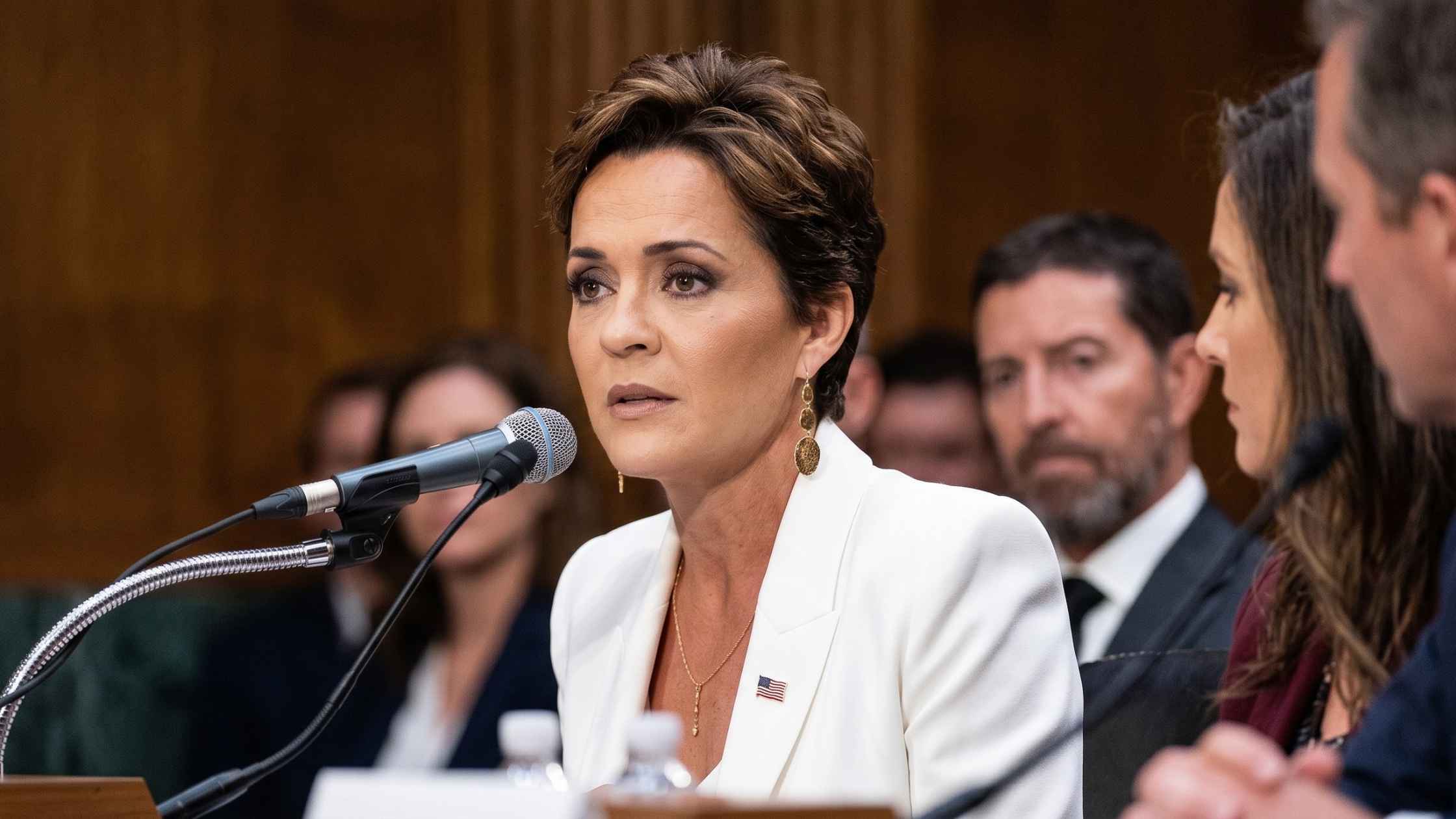
Yes, I do. Thank you so much, Mr. Chairman. It's an honor and a great privilege for me to be here today to introduce my friend Kari Lake who has been nominated to be the next United States ambassador to Jamaica.
(25:01)
Ms. Lake is a true champion of truth, of accountability of the US Constitution and of the freedoms that we all enjoy as Americans. President Trump has a clear-eyed vision for the Western hemisphere. Ensuring that American prestige and security remains strong and remains strong in particular in this hemisphere. The key to our prosperity doesn't always lie on the other side of the world. It often is found, is often best defended, close to home in our own hemisphere. And that certainly includes the Caribbean and Jamaica, the country where she's been asked to serve as the ambassador.
(25:44)
So we need somebody now more than ever who knows how to advance our interests and articulate our values. And Kari Lake is that person, exactly that person. If you tried to design a person better suited to be the US ambassador to Jamaica, you could not do a better job than Kari Lake. As a leader for the US Agency for Global Media, she's looked out for American interests all over the world to make sure that the US government's international broadcasting efforts actually advance our interests. She's fought for that every day and her work in uncovering security threats at an agency as well as rampant waste fraud and abuse demonstrate how unwavering her patriotism is and her commitment to good government.
(26:33)
She's also spent nearly 30 years in the media industry as a television news journalist and anchor. And in that capacity, she's become a very effective communicator. She knows how to get a point across succinctly, clearly and with the appropriate emphasis that the occasion happens to require. Throughout her entire career, she's received awards for her work. While she was at Fox 10 News in Arizona, she conducted several high level one-on-one interviews with then President Barack Obama in 2016 and with President Trump in 2020.
(27:16)
She stepped down from her position at Fox back in 2021 where she was one of the longest serving and top-rated news anchors and dedicated her life and her career to public service and to media accountability.
(27:32)
In addition to her success as a journalist and an advocate for our country, she's also a wife to Jeff Halperin and to their children, Ruby and Leo, who are with us today. I have no doubt that upon her confirmation, Ms. Lake will hit the ground running, and she's going to build on our relationship with Jamaica and do so in a way that advances American interests meaningfully and consistently unwaveringly.
(28:04)
So Kari, you have my unqualified enthusiastic support. I know you're ready for this position, you were born for this position and I look forward to working with you to my colleagues. I strongly encourage you to support her nomination.
(28:17)
Thank you, Mr. Chairman.
Chairman Risch (28:17):
Thank you, Senator Lee.
(28:19)
Senator Hagerty.
Senator Hagerty (28:20):
Thank you, Chairman Risch and Ranking Member Shaheen. I appreciate you holding today's hearing. It's my distinct honor to also introduce Keri Lake, President Trump's nominee to be US ambassador to Jamaica.
(28:31)
I've had the privilege of serving our nation myself as US ambassador to Japan during President Trump's first term and I know firsthand what it takes to succeed as an ambassador and in particular I know how essential it is for an ambassador to have the president's trust.
(28:48)
Kari Lake has that trust. She's earned it through her courage, her dedication to the American people, her abilities as a great communicator, and her willingness to fight for the principles that make our country great. In fact, Kari's story is a remarkable example of the American dream. She grew up in Iowa as the youngest of nine children, the daughter of a football coach and a history teacher in a family where nothing was handed to her and where she was taught the importance to earn and value what you have. In a large household, Kari learned early how to speak up and hold her own, yet also to listen carefully and to nurture relationships with those closest to you.
(29:27)
She earned her undergraduate degree at the University of Iowa and subsequently spent three decades as a top-rated news anchor and television journalist in Arizona. What's apparent though is that Kari has the heart of a public servant. She could have easily chosen to remain in the private sector where she'd built a successful lucrative and Emmy award-winning career in news media, but Kari felt a genuine calling to public service and she's acted on that calling because she believed there were critical issues facing our country that demanded new leadership and a fresh voice. After running as a candidate for public office, she subsequently served as a political appointee in the Trump administration. At the US Agency for Global Media, Kari has helped return the agency to its statutory mission. The agency was supposed to be providing news that is quote, "consistently reliable, authoritative, accurate, objective, and comprehensive." Before her arrival, however, the agency had drifted far from that charge. With the State Department Inspector General identifying major information security and grant oversight failures that increased the risk of waste, fraud, and abuse at the agency.
(30:35)
Through much needed reforms, Kari has helped restore accountability and she's put the agency back on the side of the American taxpayer. As the president's nominee to be US ambassador Jamaica, Kari also brings a genuine love for the island, its people, and its culture. She's deeply familiar with Jamaica, having visited the island over 40 times and she understands the tremendous promise of the deeper strategic partnership between the United States and Jamaica. Of importance, Jamaica, as host government, will know that if she's confirmed as US ambassador, she will be a chief of mission who has a clear line of communication with the president.
(31:11)
Kari will bring to this post a uniquely American story, a proven ability to communicate a deep trust and connection to the president and the strength required to represent our nation with utmost confidence. I believe she has what it takes to be an excellent ambassador and I therefore urge this committee to move quickly in considering Kari Lake's nomination so she can begin her important work as our next ambassador to Jamaica.
(31:35)
Thank you, Mr. Chairman.
Chairman Risch (31:36):
Thank you, Senator Hagerty. So first of all, let me say thank you to the panel for all of you willing to step forward and take on these positions. And just as importantly, thank you to your families. We all know the families play a huge role in these kind of jobs and their support is absolutely necessary and they will certainly assist with that.
(31:59)
So let's get down to business and I'm going to start, Mr. Vance, with you. Well, the bureau you would manage is smaller than some of its intelligence counterparts. The Assistant Secretary of State for Intelligence and Research, or INR, and its staff punch well above their weight in competition with the other 17 intelligence agencies that America has. INR has a history of analytic independence and was famously the only intelligence agency to get it right on what was going to happen when Putin got into Ukraine. Every other agency gave us estimates of somewhere... The war was going to last somewhere between three days and three weeks and the agency you're taking over said, "I'm not sure of that." They were the only one of the... At that time, there were only 17, but they were the only one of the 17 agencies that got that right. Today, I hope to hear how you will continue this tradition and advance the administration's security priorities.
(33:04)
Mr. Hanrahan, as you know, the US and Europe share the world's largest economic relationship and account for one third of global trade. Our security alliances and institutions, most of all NATO, which is the most successful political military alliance in the history of the world, have underpinned an unprecedented period of growth and prosperity on this planet. But the threat posed by Russia, China, and Iran working together grows clear by the day and we need our European allies on our side to confront them.
(33:40)
As Assistant Secretary for the Bureau for Europe and Eurasia, you will be on the front lines of defending Americans from these threats. I'm eager to hear how you will implement policy that strengthens and modernizes our relationships in Europe, particularly our security and economic relationships. Those of us on this committee deal regularly with our European allies and you will find some interesting conversations as you go forward with our allies. It's important we maintain a good relationship with them.
(34:10)
Ms. Lake, the United States and Jamaica maintain a robust relationship based on shared democratic values and our economic and security interests. I was glad that Jamaica decided to end its participation in Cuba's medical professionals labor trafficking and join the administration's Shield of the America's initiative. I hope that as ambassador, you would work with this positive inertia and advance US interests in Jamaica and the Caribbean more broadly.
(34:39)
Mr. Segura, the United States has an enduring interest in a prosperous democratic and stable Western hemisphere as clearly outlined in the national security and national defense strategies. I believe the most substantial threats to US interest in our hemisphere are China and violent transnational criminal organizations. I deeply appreciate-
Chairman Risch (35:00):
... transnational criminal organizations. I deeply appreciate Presidents Trump's actions to curb both threats in the Panama Canal, Mexico and in Venezuela.
(35:11)
Mr. Segura, I hope to hear from you on how you will build on this work as Assistant Secretary to the Western Hemisphere and ensure the United States can strengthen regional cooperation to advance our national interests.
(35:25)
And finally, Mr. Bauer, as you know, the US remains Belize top trading partner and largest foreign direct investor, underscoring our longstanding bilateral relationship. I appreciate Belize continued support for Taiwan, and I look forward to hearing from you on efforts to deepen that partnership and our partnership with this key Caribbean neighbor.
(35:46)
Thank you again to all our nominees. And with that, I would like to turn it over to the Ranking Member, Senator Shaheen. Thank you.
Senator Shaheen (35:52):
Well, thank you, Mr. Chairman, and welcome to all of our nominees this morning, to your family and supporters who are here with you. Thank you all for being willing to be considered for these positions.
(36:05)
I think one of the real benefits that the United States has enjoyed has been its credibility. I think the credibility of this country is a strategic asset, and distrust of US statements really matters. Iran, Russia, and China understand that.
(36:23)
Last year, Tehran increased funding for its state broadcaster by 50%. At that very moment, our adversaries were investing in the information battlefield. The United States was retreating from it, dismantling programs designed to deliver independent fact-based news to people living under authoritarian regimes.
(36:45)
Ms. Lake, the administration put you in charge of that effort. I have a different view than Senator Hagerty about your work on that effort. You placed hundreds of employees at the US Agency for Global Media and Voice of America on administrative leave. You attempted to cut off funding for Radio Free Europe and Radio Free Asia until a court intervened. USAGM and Voice of America survived, but our adversaries exploited that chaos.
(37:16)
Iran's LEGO video campaign, mocking and humiliating the president, reached more than a billion views in just 30 days. Its purpose was not to strengthen Iran. It was to weaken confidence in the United States.
(37:33)
Ms. Lake, this is the information environment you may soon have to navigate as ambassador to Jamaica. If confirmed, I hope you will push back not only by advancing the administration's message, but by contesting the narratives our adversaries are spreading throughout the region.
(37:51)
Beijing and Moscow are investing heavily in shaping perceptions of the United States across the Global South. Mr. Segura, am I pronouncing your name correctly? You have been nominated to serve as Assistant Secretary of State for the Western Hemisphere. And Mr. Bauer, you have been nominated to be ambassador to Belize. Russia has trained more than a thousand Latin American influencers to spread pro-Kremlin propaganda messaging across Latin America, and that network didn't stop operating when Maduro fell. If confirmed, I hope each of you will take these efforts seriously.
(38:32)
Mr. Hanrahan, you've been nominated to serve as Assistant Secretary for Europe, but I think we have to ask a threshold question there, and that is what is the portfolio that you're going to have? Ukraine peace talks are being run by Special Envoy Witkoff. The Armenian initiative is led by the policy planning staff. Bosnian policy appears to have been outsourced to the White House. The threats in this region are not waiting for Washington to sort itself out. Vladimir Putin has spent years investing in far right parties across Europe, parties that oppose Ukraine aid and want to dismantle European institutions. Ukrainian battlefield successes have complicated those influence operations, but they have not stopped Putin from exploiting our political divisions. If confirmed, I hope you will be a strong voice against Russian influence and for those governments that have stood with us and with Ukraine.
(39:33)
And finally, Mr. Vance, you've been nominated to lead the Department's Bureau of Intelligence and Research. As the chairman said, INR occupies a unique role within the intelligence community. It's independent of other intelligence agencies, and it's charged with providing objective fact-based analysis to the Secretary of State.
(39:57)
I have concerns, given your unwillingness to affirm the basic fact that President Biden won the 2020 election. I have concerns about your commitment to that fact-based mission.
(40:10)
You've also written that Western Europe is succumbing to what you call soft authoritarianism and have compared it, some European practices, to the Soviet Union. If confirmed, I hope you will put aside prior views and provide Secretary Rubio with the unvarnished intelligence that he needs to operate. Again, thank you all.
Chairman Risch (40:33):
Well, thank you, Senator Shaheen. Appreciate that.
(40:36)
We're now going to hear from each of you. We're going to start with Mr. Segura. What I'd ask that you do is please keep your remarks to five minutes or thereabouts. If you have anything you want to add, we got lots of room in the record, so you can submit whatever you'd like for the record. But in the meantime, to give everybody a chance at questions, if you'd keep it to five minutes, I'd appreciate that.
(41:01)
Mr. Segura, Segura, the floor is yours.
Mr. Segura (41:06):
Thank you, Mr. Chairman.
(41:08)
Chairman Risch, Ranking Member Shaheen and distinguished members of the committee, it is an honor to appear before you today as the president's nominee to serve as the next Assistant Secretary of State for Western Hemisphere Affairs. I'm grateful for the confidence President Trump and Secretary Rubio have placed in me at this watershed moment in our engagement with the hemisphere.
(41:31)
I'd also like to thank my family who in part are here today. They truly are the bedrock of my life. To my wife and partner, Cecilia, I love you and thank you for everything you do every day. I would be nothing without your support and belief. To my parents, Enrique and Alejandra, thank you for always challenging me and for sending a beautiful example of faith, hard work, and great sacrifice. It is truly through the eyes of my parents, who came to this great country with nothing more than 40 years ago, that I first came to understand the why of the United States of America.
(42:07)
From as young as I can remember, three words would ring true at the Segura kitchen table: Never give up. Whether it was in sports, in school, or in building companies, where there was a will, there was a way. As I reflect on my own story of building a healthcare company to be one of the largest maternal monitoring companies in the world to leading economic growth and international trade for the great Commonwealth of Virginia, a state that has a GDP of more than $620 billion a year, never giving up is how we overcame seemingly impossible obstacles.
(42:42)
I believe this administration will never give up on the hope for America and its people and how America works with and partners with the Americas.
(42:52)
President Trump's National Security Strategy underscores the critical importance of the Western Hemisphere. The Trump administration has set an ambitious agenda that includes securing our border, defeating narco terrorist groups, securing critical infrastructure, and expanding economic opportunities for Americans.
(43:12)
The National Security Strategy also outlines that the United States will reassert the Monroe doctrine to restore American preeminence in the Western Hemisphere and push back on the influence of global adversaries and malign actors in the region.
(43:26)
The Trump administration is aggressively implementing this strategy with regional partners, expanding cooperation bilaterally as well as enlisting partners in new initiatives, including the Shields of the America, the Americas Counter-Cartel Coalition, and a Critical Minerals Ministerial to build secure and resilient supply chains.
(43:45)
As a former Virginia Secretary of Commerce, I'm particularly enthusiastic about the Trump administration's prioritization of commercial diplomacy in the Western Hemisphere. If confirmed, I look forward to employing all available tools to ensure American companies are well-positioned to help our regional partners build their economies.
(44:06)
As the National Security Strategy notes, an economically stronger Western Hemisphere is not only a more attractive market for American companies and investment, but increased commercial linkages will benefit both sides and reduce the space and influence of non-hemispheric actors.
(44:24)
This will require closer coordination with the American private sector, and this coordination is a role I'm eager to embrace drawing on my professional background as a former entrepreneur and investor. If confirmed, I look forward to leading the Bureau of Western Hemisphere Affairs to enlist the cooperation of our regional allies, the private sector, and Congress to advance the Trump administration's ambitious agenda for the Americas.
(44:50)
Thank you for your consideration, and I welcome your questions.
Chairman Risch (44:54):
Oh, thank you very much.
(44:57)
Let's move to Mr. Hanrahan.
Mr. Hanrahan (45:03):
Chairman Risch, Ranking Member Shaheen, distinguished members of the committee, I'm honored to join you as the nominee for the position of Assistant Secretary of State for Europe and Eurasian Affairs.
(45:13)
I appreciate the trust that President Trump and Secretary Rubio have placed in me by nominating me for this role. If confirmed, I commit to working closely with you and members of your staff as I work to implement our foreign policy.
(45:26)
I want to start by thanking the many teachers, mentors, and colleagues that have shaped the educational and professional experiences that I will bring to this role. In particular, the teachers and coaches at Roxbury Latin in Boston, who fundamentally instilled in me the call to public service. My foremost thanks I extend to my family for their love and support. To my grandparents who have led through the example of public service in our military and who have exemplified humility and hard work. To my three siblings, Mary-Aidan, Grace, and Eamon, who have been my foundational support throughout my life. To my parents, Drs. Lynn and John Hanrahan, who have given me my faith in God and taught me the imperative of personal integrity and service to others. And finally, my greatest thanks and love to my wife, Lauren, who is with me here today and our newborn son, James. I would not be here without their support.
(46:19)
The United States stands at a critical moment in our relationship with our oldest and strongest continent of allies. I think it is important to underscore that core framing to our relationship with Europe. It is an alliance forged in a shared history and a civilizational heritage. As Secretary Rubio stated in his Munich speech earlier this year, we want Europe to be strong and we want a strong relationship with Europe.
(46:44)
A safer, stronger, more prosperous United States in the 21st century requires a reinvigorated relationship with Europe that can better advance our shared prosperity. Leading this work requires a seriousness of purpose and candid diplomacy. Should I be confirmed, I will bring both to our efforts. In practical terms, I will focus on four guiding objectives.
(47:06)
First, keeping American citizens safe by working closely with our ambassadors and missions abroad. This is our highest and most essential goal.
(47:14)
Second, rebalancing our relationship with Europe to better advance our core interests, the security and prosperity of American citizens. In the domain of security, this means advocating for transferring primary responsibility for conventional European defense to our allies while simultaneously expanding the US defense industrial base and co-production opportunities with NATO partners. We must press our allies to fulfill the defense investment commitments that they made at The Hague last year. Rebalancing also means enforcing a reciprocal trade and regulatory environment, especially with the European Union, one that permits a level playing field for American businesses and workers.
(47:53)
Third, if confirmed, I will focus on promoting a peaceful, stable Europe that unlocks the economic potential of the region. I will support President Trump's efforts to secure a durable peace in the Russia-Ukraine war. I will work to solidify the significant gains from President Trump's historic peace deal between Armenia and Azerbaijan, and I will work to further deescalate other regional tensions by empowering local actors to forge local solutions.
(48:20)
One of the key tools to advancing this peace and stability is commercial, ensuring Europe and Eurasian countries partner with the United States for their technology and energy. The United States has already supplanted Russia as the LNG supplier of choice, and by pushing for large scale energy infrastructure projects to support and transport US gas across the continent, we can further secure Europe's energy sector and support the American worker.
(48:45)
Fourth and finally, if confirmed, I will work with European counterparts to guard against emerging and future threats to US interests. This will entail enhancing law enforcement cooperation to combat terrorist networks, organized crime, and other bad actors that have exploited unfettered mass migration to the detriment of Europe and the United States. It will also require protecting supply chains by mitigating our collective dependence on adversaries and rivals. If confirmed, I will focus on countering China's abuse of the global trade system by advocating for commercial partnerships between trusted US and European firms to reinforce a secure US-Europe economic partnership.
(49:25)
I thank the chairman, ranking member, and committee for your time and the opportunity to appear before you today. I look forward to your questions.
Chairman Risch (49:32):
Thank you. Appreciate that.
(49:33)
Mr. Bauer, it's good to be with you again. Floor is yours.
Mr. Bauer (49:37):
Mr. Chairman, Ranking Member and distinguished members of the Senate Foreign Relations Committee, thank you for the honor and privilege to appear before you today as the president's nominee to serve as United States ambassador to Belize. I'm honored by the confidence President Trump has placed in me through his nomination.
(49:57)
I'd like to begin by thanking God for His many blessings and the opportunities that brought me here today. I'd like to thank my wife, Meredith, who's here with me. I'm grateful to have all four of my children here, Holland, Holden, Hudson, and Little Andre, whose presence in my life has been a continual source of joy and perspective, as well as purpose. Additionally, I'm eternally grateful to my parents for the sacrifices they made and the values they instilled in me.
(50:26)
Throughout my life, I've served in a variety of roles as a substitute teacher, as an entrepreneur, and as a businessman.
(50:35)
In South Carolina, I served in the House of Representatives, the South Carolina Senate, and two terms as lieutenant governor. In each of these roles, I work collaboratively with colleagues on both sides of the aisle to address concerns of constituents, improve government services, and bring attention to issues that had too often been overlooked.
(50:54)
The United States and Belize have a strong bilateral relationship. The United States is Belize's largest source of tourism with more than a million Americans visiting annually. Additionally, more than 85,000 Belizeans live in the United States, further strengthening the close ties between our two nations. Tourism remains a vital driver of Belize's economy, supporting jobs and economic opportunity throughout the country. If confirmed, I look forward to working alongside Belizean leaders to strengthen economic ties between our nations to support continued tourism and trade and expand avenues of cooperation and investment.
(51:38)
Having spent much of my career in the private sector, I understand the power of US business and investment. If confirmed, I'll work to strengthen commercial ties between our two countries, creating a stable investment climate where US businesses can grow and invest and also flourish and is essential to expanding opportunities for both of our countries. Belize and the United States enjoy a strong partnership in security cooperation. Belize works closely with the United States to combat counter narcotics and human trafficking, as well as transnational criminal activity. The United States continues to support Belize through programs focused on counter-narcotics, border security, and criminal deterrence. If confirmed, I'll work diligently to continue supporting to promote security, stability, and safer communities for Belizeans and for American citizens.
(52:34)
I will also work to ensure that Belize remains a reliable partner in countering risks posed by the Chinese Communist Party to hemispheric security and prosperity. Protecting the safety and interest of United States abroad will remain my highest priority. As we work together to address shared challenges, we must also continue to advance areas of mutual opportunity.
(52:59)
Belize presents growing opportunities for American investment in areas including tourism and economic development that can benefit both our nations. If confirmed, I'll serve with the same work ethic, determination, and commitment that have guided me through my life and my career. I'll work to advance the interests and values of the United States while strengthening our partnership with Belize and its people.
(53:24)
Thank you for the opportunity to appear before you today. It would be my honor of a lifetime to serve as the United States Ambassador to Belize. I thank you, and I look forward to all of your questions.
Chairman Risch (53:34):
Thank you very much.
(53:35)
Ms. Lake?
Ms. Kari Lake (53:38):
Thank you, and I'd like to start really quickly with thanking Senators Lee and Hagerty for the wonderful introduction. I really appreciate that.
(53:44)
Chairman Risch, Ranking Member Shaheen and distinguished members of the committee, thank you for the opportunity to appear before US President Trump's nominee to serve as ambassador of the United States to Jamaica. I am deeply honored that the president has put his trust in me for this position, and I'm mindful of the responsibility this role carries. I thank the president for his continued friendship and support.
(54:08)
I also want to thank my family and it was mentioned, I'm from a big family. I'd like to thank my siblings who are watching today, Vicky, Jill, Kim, Lori, Jack, Lisa, Susan and Jennifer. Thank you for shaping me into the woman I am today and my parents in heaven. I'm joined today by my husband of 28 years, Jeff, who has given me unconditional love and is my rock. Also here my daughter, Ruby and son Leo. Aside from a few moments in the teen years, they have brought me nothing, but joy. My favorite claim to fame is telling people that I raised you. Also here today, my future daughter-in-law, Scotty, who's celebrating a birthday, and my son-in-law, Stetson, is watching back home in Arizona.
(54:50)
I spent three decades as a top-rated television journalist and news anchor communicating complex issues on national and international issues with clarity and purpose. That experience, combined with my work leading the modernization and accountability efforts at the US Agency for Global Media, has prepared me to represent American interests abroad with transparency, discipline, and results-driven leadership.
(55:14)
Over the past 35 years, I've traveled to Jamaica too many times to count. Jeff and I honeymooned in Jamaica, and from the time our kids were very little until now, we've spent family vacations, birthdays, anniversaries, and holidays in Jamaica.
(55:28)
Yes, of course, Jamaica has beautiful beaches and mountains and waterfalls. That's a given, but it's the incredible Jamaican people whose warmth, friendliness and deep pride in their country keeps us going back. When Jamaicans put their hearts into something, they succeed from earning Olympic gold medals to creating entire musical genres like reggae to creating businesses. Nothing can keep a Jamaican down.
(55:54)
It's evident that God is a source of strength guiding Jamaica through challenges and shaping the nation's character. There are more churches per square mile in Jamaica than anywhere in the world and as a woman of faith, I really admire that. We have a shared belief that through God, all things are possible.
(56:12)
Jamaica is one of our largest trading partners in the Caribbean with bilateral trade and goods exceeding $3 billion in 2025. Americans account for more than 70% of the tourists visiting the island. And Jamaica is a key security partner and a founding member of the Americas Counter Cartel Coalition combating narcotics trafficking in the region.
(56:32)
These deep economic security and personal ties are the foundation of a strong and enduring relationship. Under the Trump administration, we are renewing our focus on strengthening partnerships in the Western Hemisphere, recognizing that our neighbors are vital partners in creating mutual security and prosperity. If confirmed, I will focus on four priorities.
(56:52)
First, keeping Americans safe, protecting the tens of thousands of US citizens living in Jamaica along with the roughly two million who visit each year is a core responsibility. With hurricane season now underway and after two devastating storms in the past two years, it's especially important that this role is filled soon and actively engaged to work with the Jamaican government to strengthen preparedness, improve coordination and respond effectively to future disasters.
(57:21)
The United States and the American people stood firmly with Jamaica during its recovery from the catastrophic hurricane Melissa and acted with compassion and generosity. If confirmed, I will build on that commitment and ensure this critical work continues.
(57:35)
Second, strengthening security cooperation. I will work closely with the Jamaican government to dismantle transnational criminal organizations, disrupt drug trafficking and combat financial scams targeted at vulnerable Americans.
(57:48)
And third, advancing American economic interest, I will advocate for US businesses work to address trade barriers such as Jamaica's longstanding restrictions on US pork exports and promote American investment, especially as Jamaica continues to rebuild. I will work to ensure American companies can compete and succeed as we deepen our economic partnerships with Jamaica.
(58:10)
And fourth, we must counter China's growing economic influence less than 500 miles from our shores. The Chinese Communist Party has made strategic investments across the Caribbean in ports, infrastructure and critical sectors that carry long-term security implications. In a region this close to the United States, those efforts are not just economic. They are strategic. I will work to ensure that Jamaica continues to choose transparency, sovereignty, and partnership with the United States over dependence on actors whose interests do not align with our shared values.
(58:46)
Jamaica's democratic traditions, strategic location, and resourceful and strong citizens make it an indispensable partner in the Caribbean. If confirmed, I will bring my work ethic, clear communication and commitment to accountability to this role, and I will ensure that the United States Embassy proudly represents the American people with professionalism and purpose.
(59:06)
I thank you for your consideration today, and I look forward to your questions.
Chairman Risch (59:11):
Thank you, Ms. Lake.
(59:13)
We'll hear from Mr. Vance.
Mr. Vance (59:17):
Chairman Risch, Ranking Member Shaheen and distinguished members of the committee, thank you for the opportunity to appear before you today. I'm honored to be considered for the position of Assistant Secretary of State for Intelligence and Research. I have too many people to thank, to give everyone the credit they deserve for getting me to this point, but I do want to express my gratitude to the president for his confidence and to the Secretary of State for the trust he has placed in me. I would also like to thank my wife, Alessandra, for her patience and loving support over the course of my career. She is with me here today along with my four children, Wyatt, Morgan, Ellis, and Maple. I also want to thank my parents for the example they have set for me in life. My mother, a retired Dickinson County Virginia school teacher, taught me the value of education. My father, a former coal miner turned small business owner, taught me about hard work and dedication to family. I know they are watching today from home.
(01:00:15)
Finally, I would like to thank the many colleagues from across the intelligence community, the State Department and the White House, who have offered encouragement throughout the nomination process. If confirmed, it would be a tremendous privilege to lead the Bureau of Intelligence and Research. An organization with a proud tradition of analytic rigor, independence, and service to US foreign policy.
(01:00:37)
INR plays a unique and indispensable role within the intelligence community. Its officers provide objective, policy relevant, all source intelligence analysis and support rooted in deep expertise and an understanding of diplomacy, ensuring that policymakers receive assessments that are candid, timely and free from political influence.
(01:00:58)
At a time of increasing global competition, persistent conflict and rapidly evolving technological challenges, the demand for high-quality intelligence has never been greater. If confirmed, my foremost priority would be to safeguard the integrity and independence of INR's analysis while ensuring it continues to meet the needs of the secretary, the department, and Congress.
(01:01:21)
I also recognize the critical importance of partnership within the department, in the intelligence community, and with our friends and allies overseas. INR's value is magnified when it understands the department and its needs, collaborates effectively across agencies, and integrates diplomatic insight with intelligence collection and analysis. If confirmed, I would work to strengthen those relationships.
(01:01:44)
Equally important is our responsibility to Congress. I'm committed to transparency, timely engagement, and forthright communication. Robust oversight strengthens our intelligence institutions, and I would view my relationship with Congress as essential to the bureau's success. Finally, I would be deeply mindful of our obligation to the dedicated public servants of INR. Their expertise, professionalism, and quiet dedication underpin the bureau's reputation for excellence. If confirmed, I would prioritize supporting and developing this workforce, ensuring they have the tools, leadership, and trust necessary to carry out their mission.
(01:02:24)
Thank you again for considering my nomination. I look forward to your questions and to the opportunity to serve our country.
Chairman Risch (01:02:30):
Well, thank you very much. We'll now proceed to a round of five-minute questions by the members on the basis of first come, first serve.
(01:02:43)
So with that, I was here first, I guess, so I will go first. Even if I wasn't, I'm still going to go first.
Senator Shaheen (01:02:49):
[inaudible 01:02:50]
Chairman Risch (01:02:51):
I was. I was just down the hall.
Senator Shaheen (01:02:52):
Sure.
Chairman Risch (01:02:54):
So Ms. Lake, you spent time at the US Agency for Global Media, and there's been a lot of discussion about the USAGM amongst members for some time, and I'd like you, if you could, to talk about your work while you were there, please.
Ms. Kari Lake (01:03:14):
Chairman, thank you so much for that question. I appreciate it.
(01:03:18)
And thank you for asking me about the work that I've done at US Agency for Global Media. I'm very proud of the work that we have done there, and I am currently still in the role as deputy CEO at the agency. The agency runs Voice of America. The agency runs Office of Cuba Broadcasting. We have several grantees. And if you ask people who work at the agency right now, they will say we're doing the best news product that we've ever done. I'm really honored today to have in the crowd Alvaro Alba. He runs our Office of Cuba broadcasting. He's been there 28 years, started as a reporter. And even though the media reports have tried to disparage the work we've done, Alvaro would tell you that every single thing they've asked for in the effort to get news into the island of Cuba that I have provided or given him or made access to so that they could be incredible journalists covering what's happening in Cuba so that the Cuban people can hear it.
(01:04:15)
The same goes for Iran as well. We're putting in an exceptional product into Iran. Even during outages when the internet was down, we were on the air 24/7. I have people that run the newsroom, the VOA newsroom, VOA Persian, who say we're doing the best coverage we've ever done. Unfortunately, the media hasn't been fair in their coverage of what we're doing.
(01:04:37)
We have been modernizing the agency, and we have been making it more efficient and rooting out some of the waste.
(01:04:43)
Every single media outlet across the globe has been modernized and had efficiency measures taken, except for, unfortunately, some of our government-run media. So I had the tall task that President Trump assigned me to with an executive order to bring the agency to where it should be statutorily, and we are proud to say that we are operating in a statutorial fashion right now with an incredible team of journalists who are proud of the work that they're doing.
(01:05:14)
We're no longer pushing anti-American sentiment, no longer pushing pro-CCP, pro-regime sentiment. We are putting out America's story and how it aligns in our foreign policy and our National Security Strategy.
Chairman Risch (01:05:29):
Thank you. I appreciate that.
(01:05:32)
Mr. Hanrahan, you're going to find a challenge dealing with our European counterparts. The ranking member and I and other members of this committee frequently deal with our European allies, and I have to say that it's very, very mixed. You get some that are wringing their hands and talking about how bad the relationship has deteriorated, and others that have a recognition that it's time for them to step up and be much more of an equal partner than what they've been. And it's a rough patch with some people, but you're going to have to navigate that.
(01:06:15)
I've said over and over again that Europe and NATO and our European allies are our natural partners, our natural allies, as we go through this century and confront what is going to be a real challenge from China. Even if you put our two populations together, we're still only about half of what China is.
(01:06:40)
But we are much more like our European cousins than like China, and it's important that we stand together because it's going to take that, really, to stand up to China as they become more and more sophisticated in their challenge to us.
(01:07:01)
And they're the most likely, they're the most natural allies we have in that regard. Our values are the same. We're democracies, we're capitalists. We have a rule of law, a strong view and respect for human rights. China's 180 from that. So it's a lot easier for us to work with our European allies.
(01:07:23)
Are we always going to agree? Of course not. That's never going to happen. But I'd like to hear your thoughts on the relationship and your management of that.
Mr. Hanrahan (01:07:33):
Mr. Chairman, thank you very much for that question, and thank you also to all your team's time as I went through this process. I really appreciate it.
(01:07:41)
I agree with your assessment completely. I think as I noted, the intention and objective for our relationship with Europe is, one, an alliance that can counter shared threats, and those come from both Russia and, increasingly in the 21st century, those will come from China.
(01:07:58)
I think one of the key focuses for President Trump's administration is to bring that message and to be direct to our European partners that they need to step up. And inevitably in some of those conversations that directness creates some bumps in the road, but I think how I, if confirmed, would take that message forward is commonly and candidly to them. And I do think we're starting to see some good progress in that domain.
(01:08:25)
I think in particular in China, there's really two components that we can work on. One is increasing awareness of the threats. Some of our European partners there, others still have a ways to go to show them what the challenges can be.
(01:08:39)
I think once we get past that, the second component is really bringing the experiences we have to think about how to calibrate expert controls, synthesizing those, how to think about putting in the right level of investment screening legislation that can create better security for the vendors they're selecting and their economies.
Chairman Risch (01:09:00):
Thank you. That sounds like you have a good handle on the landscape there, and I wish you well as you go forward. If you can bring those things to fruition, it will be in the best interest of the United States of America.
(01:09:13)
With that, Senator Shaheen?
Senator Shaheen (01:09:15):
Thank you, Mr. Chairman.
(01:09:17)
Ms. Lake, I want to begin with you because as you heard in my opening statement, I have real concerns about how you operated at USAGM. You destroyed the Farsi language broadcasting ahead of President Trump's war in Iran. You cut the Spanish language services ahead of the administration's action in Venezuela. You put over 2,000 employees on leave paying them not to do anything for months. And when my staff asked how much that costs taxpayers, you had no idea.
(01:09:47)
Well, we know that keeping those personnel out of office and on administrative leave has cost American taxpayers $139.7 million. An independent audit found that your interpretation of the so-called statutory minimum standard-
Senator Shaheen (01:10:00):
... interpretation of the so called statutory minimum standard on staffing caused the agency to violate the law. And when my staff asked questions about these actions and invited you to meet with them, you refused to meet, and you subsequently directed your team to stop all communications with my staff on this committee. So, help me understand how we're going to be able to trust you to respond to Congress concerns if you're confirmed as ambassador to Jamaica if what you've done to date is to stonewall questions that I have on behalf of this committee.
Kari Lake (01:10:39):
Thank you, Ranking Member Shaheen, for the question. I appreciate your concern for the agency. It's an important agency and, as I said to the chairman, I'm really proud of the work that we are doing there. We have made ourselves available to your team. I was really happy to be able to meet with your team. I see some of them behind you right now, from your Western hemisphere expert to Naz and Amy and Mike and Mark. They were incredibly kind and had a lot of questions about USAGM. It's a difficult task, to bring an agency to statutory minimum, and I leaned heavily on career civil servants who were at the agency to help figure out what that meant. And we're actually operating at a higher level than what they suggested. I think that we needed more people to do the job, and we're working really hard to make sure we continue to be efficient. If we have not been forthcoming with our time with your committee, I will apologize for that. I know that many members of our team have met with your staff, and I can think of three or four times that we've met with them already. And if that wasn't enough, then we can work to continue our open dialogue. I know that we have reached out recently and said, "Where can we find some common ground here on what you need, so that we're providing it in a timely fashion?" And we haven't heard back. I did say that I would make myself available to meet with you and I never got a response from your team if that was open in your schedule.
Senator Shaheen (01:12:11):
If you didn't hear back from us, I'm sorry that that happened. I hope you will commit to provide this committee any information that's requested if you're confirmed.
Kari Lake (01:12:21):
Yes, I will commit to working through the State Department and their Legislative Affairs folks to make sure that we have an open line of communication and that whatever is needed, we can provide you.
Senator Shaheen (01:12:31):
Thank you.
(01:12:32)
Mr. Hanrahan, as I said in my opening statement, I am concerned about some of the decisions that are being made in other places throughout the administration. One of those areas in particular is our policy toward Bosnia-Herzegovina. The changes have been done without consultation with this committee. In our efforts to raise concerns about decisions that have been made, we have had really unacceptable responses to substantive requests. And so I'd like to submit for the record the response that I received from the department in response to my March letter, which called on the administration to impose the sanctions that are required by the FY26 NDAA on those responsible for undermining peace and stability in the Western Balkans. And let me be clear, I believe it's unacceptable, under any administration, to not abide by the law.
(01:13:38)
So, if confirmed, when the chairman comes back, we'll ask him to submit that response for the record. But if confirmed, do you commit to work within the administration to follow the law?
Mr. Hanrahan (01:13:52):
Thank you, Ranking Member Shaheen, for that question. Thank you also to your staff's time through this process, they've been very generous with it. Specifically on the component of the 2026 NDAA related to the Western Balkan sanctions, yes, we will commit to following the law as outlined. And if confirmed, I will work with our Office of the Legal Adviser inside of the State Department to work through that, and we'll be in communication with this committee as it relates to those requirements.
Senator Shaheen (01:14:19):
Well, thank you. I'm sure you're aware that despite the modest economy of the Republic of Srpska, under the continued direction of Milorad Dodik, it is spending millions of dollars in lobbyists and consultants to undermine the Dayton Peace Accords. One lobbying firm, which is registered under the Foreign Agents Registration Act, stated, very blatantly, that its objective was to secure the support of the United States and obtain independence from Bosnia and Herzegovina for the Republic of Srpska, they were saying. And that obviously would be in violation of the Dayton Peace Accords. So, can you commit to upholding the Dayton Peace Agreement?
Mr. Hanrahan (01:15:05):
Senator, thank you very much for that question. As it relates to this specific contract you were describing, I can say unequivocally it is the department and administration's position that there should be no secession in Bosnia, and that we support the peace that the Dayton Peace Accords have brought. And so I think we're very clear on that.
Senator Shaheen (01:15:26):
Okay. Well, I appreciate that. I hope you will be very clear with the multitude of lobbyists who have been hired to try and separate the Republic of Srpska from the rest of the country. Thank you, Mr. Chairman.
Chairman Risch (01:15:39):
Thank you to the chairman and the ranking member for holding today's hearing, and thank you to the nominees and your families for really being willing to serve and put yourself out there. So, we appreciate that.
(01:15:49)
Ms. Lake, it's great to see you today. Thank you for coming to meet me earlier this week. As the father of six spirited daughters, I can appreciate how your eight siblings help lay the early groundwork for a role in conflict resolution and international diplomacy. So, you're well schooled. There are some misconceptions regarding your candidacy in the 2022 elections and the 2024 elections, where you and I were both on the ballot. So, I'd like to just give you a minute to step back and give you the opportunity to speak in the case there's anything you'd like to address, as it relates to your 2022 and 2024 elections.
Kari Lake (01:16:26):
Can I have more than five minutes?
Chairman Risch (01:16:28):
No, I don't know about that.
Kari Lake (01:16:30):
Actually, you don't want that, probably. But thank you so much, Senator McCormick, for opening your schedule to me this week. I enjoyed meeting with you. And yes, in a family of nine, eight girls, one boy, I did learn diplomacy, because you have to. At the end of the day, and we didn't have a lot of means, we were pretty poor, although nobody ever told us that, we had to hop in bed and sleep with our sisters, we didn't have enough bedrooms. So, you didn't want to take that fight or disagreement all that way to the next day. So, I'm so honored to have grown up in a big family, thank you very much.
(01:17:06)
I felt that I ran incredible campaigns with the grassroots of Arizona firmly behind me, and I'm very proud of the way that I conducted myself, on the way we ran those campaigns. As a newcomer to politics, I thought that this country was set up where an outsider could step into politics, but then I realized that sometimes, the political class doesn't want the outsiders, but that's okay, it was a great learning experience. I fought for fair and free elections in the courts for the people of Arizona, and I'm glad that the president is going to continue fighting for fair and free elections. I'm looking to the future, and what I want to do is to hone my skills. I want to take everything I've learned thus far, and work at being the best diplomat and ambassador that the US has ever sent to Jamaica, and I'm looking forward to that.
Chairman Risch (01:17:54):
Very good, thank you. In your opening statement, you mentioned working with the Jamaican government to combat lottery scams that target vulnerable American victims to the tune of $300 million annually. Jamaica has struggled for years to prosecute these networks domestically. If confirmed, what practical resources or support would you pursue to encourage more effective cooperation between our law enforcement agencies to stop these scams?
Kari Lake (01:18:23):
Thank you for asking that question, Senator. I think people think, "How could you get scammed out of your life savings?" But there are some bad actors in Jamaica who have really honed the skill of bilking people out of their money through these lottery scams and other financial scams. And so we will work very closely with Jamaican law enforcement officials, we already have a great relationship. We'll work with our counterparts at the State Department, and we will work with local law enforcement here in the United States to make sure that we're doing everything we can to alert people to this problem, because I think a lot of people unsuspectingly don't even realize that they're obviously being caught up in a scam, and then prosecute people to the fullest extent of the law. And I will put pressure on the Jamaican government, if I'm confirmed, to really prosecute and take seriously these types of crimes.
Chairman Risch (01:19:17):
Very good, thank you.
(01:19:17)
Mr. Segura, the administration's prioritized going after the cartels in the Western hemisphere, and in pursuing a whole-of-government approach to dismantling the narcoterrorist organizations. Key to this is enlisting our allies and partners in the Western hemisphere to control migration, stop drug flows, and strengthen maritime and territorial interdiction capabilities. I saw this firsthand a couple weeks ago in Colombia, where there's remarkable cooperation. If confirmed, how do you intend to use the bureau's diplomatic tools to build sustained operational cooperation with partners that translates into real success in disrupting those narcoterrorist networks?
Mr. Segura (01:20:03):
Thank you for the question, Senator. I think this is an incredible priority for the department. It's one of my largest priorities, if confirmed as assistant secretary. And what's been very encouraging, especially through the president's leadership, the secretary's leadership, is creating the space to be able to work with our partners in the region to combat these narcoterrorist organizations. And so that's going to be a huge priority of mine. And also working across the department with our different bureaus that unleash funding, different tools and resources, so that we can address this scourge in the hemisphere.
Chairman Risch (01:20:46):
Very good. Senator Murphy, I think you're next.
Chris Murphy (01:20:50):
Thank you very much, Mr. Chairman. Ms. Lake, I heard you in response to earlier questions take credit for the programming that's going into Iran right now. And that was a little curious, given the fact that one of the early actions you took was to effectively dismantle our programming in Iran. You cut off funding for Farsi language Radio Farda, you put the VOA Persia staff on leave, such that when the bombing campaign... need to be able to send any message into Iran, in fact, you were able to broadcast 75 minutes of content in a 72-hour period at the very moment when it would probably be very important for the United States to be able to broadcast a message there. So, I heard you take credit for the current amount of programming in Iran. Was your decision to dismantle Radio Farsi and Radio Farda and the VOA Persia staff a mistake?
Kari Lake (01:22:15):
Thank you so much for that question, Senator Murphy, I appreciate it. RFE is who runs Radio Farda, we run VOA Persia, and it is very much alive and well. We had great coverage. We went into surge mode when the attack happened, and we immediately brought in a huge team of folks to cover it. We actually covered the president's speech live with live translation, so that the people...
(01:22:42)
... we have also in investigations and we're helping to train additional forces in Jamaica, and we'll be working with the Department of War. I understand that they are very much hot on bringing down these narcoterrorists. Most of the drugs, from what I understand, are coming from Colombia, about 40% of the drugs coming... of them are making their way into the United States. One death from fentanyl or overdose from drugs, in my opinion, is one death too many, and I'm glad we have a president who's taking this issue seriously. Fentanyl is a weapon of mass destruction, and I think that the people of Jamaica deserve the safety that their government is now working to help provide. They've brought down the murder rates by 43%, from what I understand, in the country, they're making huge progress in making Jamaica a safer country, and I think the people of Jamaica deserve that and the people of America deserve that as well.
Senator Hagerty (01:34:01):
When I was serving as US Ambassador to Japan, we found out that China was using Japan as a transshipment point as well. I think every one of our ambassadors needs to be extremely diligent, looking for the type of challenge you're going to be addressing, and if my offices can be of any help in that regard, I'm open the door to you to utilize that.
Kari Lake (01:34:22):
Thank you.
Senator Hagerty (01:34:22):
Thank you, Mr. Chairman.
Chairman Risch (01:34:23):
Thank you. Senator Kaine.
Tim Kaine (01:34:25):
Thank you, Mr. Chair. Ms. Lake, in response to a question from Senator McCormick, you said that you were proud of the way you ran your campaigns in 2022 and 2024. I asked you a question, on September 27, 2024, you gave a TV interview about your opponent then... October 3, a few days later, rated that "Pants on fire!" And the title of the article, and I'd like to submit it for the record, Mr. Chair, is In Arizona Senate race, Kari Lake fabricates link between Ruben Gallego and drug cartels. Now, this is pretty undiplomatic behavior.
(01:35:34)
And just for my colleagues, I hope you might read this story. Ruben, our colleague, has written a memoir about his very troubled upbringing, and about the fact that he was abandoned by his father, who then did get into criminal trouble. He was abandoned by his father, he had to be raised by his mother. He was so furious at his father that he changed his last name to be his mother's maiden name, not his father's name. He talks about graduating from bootcamp as a Marine, and after years of abandonment, his dad tried to show up and take credit for his own graduation from Marine bootcamp, and he writes about how furious that made him and still makes him. He writes about how ashamed he is of his father, how angry he is at his father. Abandonment by a father is one of the most seminal tragedies of life. I mean, go back to the biblical phrase, "My God, my God, why has thou forsaken me?" This is not something to fool around with. Ms. Lake accused one of our sitting colleagues of being controlled by the cartels. You had no evidence then...
Kari Lake (01:38:08):
Well, we provided the receipts. The father was...
(01:38:12)
[inaudible 01:38:45], Senator Kaine, I do appreciate it. I don't know, and I'm not here to do reputational control or reputational repair for-
Tim Kaine (01:38:52):
How about an apology to a colleague? If you made that claim, he was controlled by cartels, and now you're saying you don't know what the facts are, then you're acknowledging that your charge was wrong. How about apologizing to our colleague?
Kari Lake (01:39:03):
I don't believe my charge was wrong.
Tim Kaine (01:39:06):
Okay.
Kari Lake (01:39:06):
Ruben Gallego's father is a high-level drug trafficker.
Tim Kaine (01:39:10):
That's not the question I asked you.
Kari Lake (01:39:11):
Was a felon.
Tim Kaine (01:39:12):
You asserted he was controlled by cartels. You had no evidence then, you have no evidence now, you're unwilling to admit it. And here's something that's even worse, Mr. Chair. That was during the heat of a campaign. Sometimes we say things during campaigns that we go too far. She's continued to repeat this, as a sitting member of the Trump administration. A couple months ago, Ruben Gallego put out a tweet against the invasion of Venezuela. He didn't mention Ms. Lake, he just said he was against it. And she, at 2:35 in the morning the following day, responded, "You are a member of a Mexican cartel family. You are also a fraud. No one is surprised by your take." She's continuing to repeat a lie. She just told the committee she has no idea whether it's true or false, but she was glad to say it and she won't retract it now. That should be disqualifying.
(01:40:06)
Mr. Segura, I got a question for you. Your role is not only to be the assistant secretary for which you're nominated, but also to be key on the Inter-American Foundation. That is a congressionally-established foundation. It has sustained robust bipartisan support in the FY26 Approps Bill. Will you abide by the law, which states, "The Foundation shall have perpetual succession unless sooner dissolved by Congress," and commit to us not to take any action to dismantle or imperil the work of the foundation, unless dissolved by Congress?
Mr. Segura (01:40:45):
Well, Senator, thank you for the question. And also, I just want to commend the work you did as a missionary in Honduras. I also was a missionary in Latin America, and so it's a beautiful thing to do. As it relates to your question, I will follow all laws, Senator.
Tim Kaine (01:41:02):
And so that particular law, that, "The Foundation will have perpetual succession unless sooner dissolved by Congress," is one you will follow?
Mr. Segura (01:41:10):
Like I mentioned earlier, I will follow all laws.
Tim Kaine (01:41:12):
All right, thank you. I yield back.
Chairman Risch (01:41:19):
Thank you. Senator Lee.
Senator Lee (01:41:19):
Thanks, Mr. Chairman. Ms. Lake, what can you tell us about your take on the best way to help Jamaica? As ambassador, if confirmed, do you intend to focus more on aid or on lifting trade burdens on increasing economic opportunities for the island?
Kari Lake (01:41:38):
Thank you, Senator Lee, for that question. I think, if confirmed, we're going to look at everything. We're going to hit the ground running, and look at ways to expand American business opportunities, and try to level the playing field, because right now, as we know, when we're competing for a contract or a tender with the CCP or CCP-controlled company, oftentimes they'll underbid the United States. We want to make sure that we're working with Jamaica to make sure that there's a level playing field, so that American businesses have a real shot to do great work. We know that we provide better quality work. We hire Jamaicans, and we want to make sure that we're assisting and also allowing for American companies to expand.
(01:42:20)
I think there's big companies that could help right now. There's a huge need, as they're rebuilding after this Category 5, which devastated especially the southern and western part of the island. And if we don't take an active approach to getting American companies in to bid and get some of these big purchases and big jobs, we're going to see the vacuum filled by more Chinese influence in that country, and that's concerning to me. I think it's concerning to both sides of the aisle, when it comes to what China has done and their influence so close to home.
Senator Lee (01:42:55):
We've seen that all over this hemisphere, in many parts of Central and South America, China gaining footholds: putting a base in Argentina, for example, a lot of increased ties with Brazil, with the current government in Colombia, just to name a few. I would imagine that adding Jamaica to the list, securing significant foothold in Jamaica, would be a huge feather in the cap for the CCP folk who really want a massive inroad at the doorstep of continental United States of America. What do you think is the best antidote to that, and how can you work with the Jamaican government to discourage that from happening?
Kari Lake (01:43:37):
Yes, right now, the Chinese have a massive stake in one of the key ports in Kingston, I think they have a 49% control over it, and that puts us at risk. And so we need to rebalance things and work with the Jamaican government on that. And not just big businesses, there's small businesses as well. I love this story. We all know that Jamaica has incredible athletes. They dominate in track and field and in gold medals. The fastest man in the world, Usain Bolt, I mean, we all watched as he wowed the world. But they're one of the only tropical climates that also has a Winter Olympic team-
Senator Lee (01:44:13):
Bobsled.
Kari Lake (01:44:14):
... in the bobsled. And actually a company in Utah, Backcountry, does the outfitting for that team, the Jamaican bobsled team, which I think is very cool. I mean, we definitely want big projects, but we want to encourage all kinds of American businesses to invest in Jamaica, and Jamaicans to invest in America as well. You can buy a lot of things in Jamaica. You can show up and not have swim trunks and you can purchase those. You can purchase beach towels, whatever you need, shorts and shirts, but you cannot purchase winter parkas in Jamaica.
Senator Lee (01:44:48):
I would imagine it would have limited utility in Jamaica.
Kari Lake (01:44:50):
It would. You just don't need it. So, I think there's a real opportunity to work with our partners, our neighbors, Jamaica, an incredible country, and I'm looking forward to it.
Senator Lee (01:45:02):
There's a growing sense that [inaudible 01:45:04]...
Ms. Kari Lake (01:45:00):
... whole country and I'm looking forward to it.
Senator Lee (01:45:02):
There's a growing sense that gang violence is becoming more of a problem throughout the Caribbean and the growing concern that some of this is a spillover effect from Haiti, which has been really had a big problem with gang violence. Any thoughts on how best the United States can work with Jamaica in order to bring that problem under control?
Ms. Kari Lake (01:45:28):
Well, thank you for the question. Thank you for mentioning Haiti. I know that not only is the United States taking an active role with the gang suppression force down there, but Jamaica is as well. Jamaica has some very talented individuals that are on the ground. I think the second in command from what I understand in this gang suppression activity that's happening and the work to stabilize Haiti, is a Jamaican. So it's in Jamaica's interest, it's in the United States interest. It's really in the Caribbean interest to make sure that we can solve some of the serious problems in Haiti and we'll be focusing on that if confirmed.
Senator Lee (01:46:06):
Remind me again, you and I have talked about this in the past and you may have talked about it more while I stepped out to vote. You've had this ongoing relationship with Jamaica. I haven't met many ambassadorial nominees who have been to that country nearly as many times as you have. Tell me how that came about. Remind me why you feel so strongly about this country.
Ms. Kari Lake (01:46:27):
Well, growing up in Iowa, I never had a chance to do vacation in a big family. If we did vacation, it was camping somewhere with a short drive or going to visit grandparents.
Senator Lee (01:46:37):
As one of seven children, I know that real well.
Ms. Kari Lake (01:46:39):
Yes. The car trips were an experience, especially with nine car sick kids. So the first time I got to see the ocean, I saved money and flew to Jamaica. It was the first ocean I ever saw. I got spoiled. That's a great ocean to see, the Caribbean ocean. And we just kept going back. The beaches are great. My family and I, our kids are big swimmers. We like to swim in the ocean. We like to cliff jump and there's some great cliff jumping in Westmoreland Parish, but mostly we just love the people.
(01:47:12)
There's a feeling you get when you're in Jamaica, the spirit of the people. They love their country. They're so proud to be Jamaican. It reminds me of the patriotic pride I carry in my heart for this great country, America, where our opportunities are so great. And I'm glad to see that things are looking up. I know that as they continue to rebuild after this devastating catastrophic hurricane, I think they're going to pull themselves out of this and bright days are ahead for Jamaica.
Senator Lee (01:47:38):
Well, they are indeed, especially after we get you confirmed. I wish you well. You're going to do very well in that capacity. Thank you.
Ms. Kari Lake (01:47:43):
Thank you.
Chairman Risch (01:47:43):
Thank you, Senator Cruz. Senator Scott.
Senator Scott (01:47:48):
Thank you, Chairman. Well, first off, thank each of you for your willingness to serve. Congratulations on your nominations and I look forward to when you all get through this whole process. I hope we've enjoyed your day so far. Mr. Segura. Latin America, it's a big deal for Florida, right?
(01:48:03)
So if we want to unlock Venezuela's economic potential and attract the level of foreign investment needed for a true recovery that cannot happen on the back of a self, still entrenched corrupt regime. Any serious stabilization, recovery, and transition plan has to be accompanied by the full release of political prisoners, which hasn't happened. A genuine restoration of the rule of law in independent courts. Credible elections allow Venezuelans to choose their leaders freely.
(01:48:28)
Without those basic political and legal foundations, the country future will always be held back by the same corrupt people and structures that brought Venezuela to the state it's in now. After all, everyone who abused the Venezuelan people for decades stole the property of US citizens and kidnapped them, unfortunately, is still in power, comfortably in power.
(01:48:46)
I know the administration and I've talked to the president. I've talked to Secretary Rubio. They clearly understand the difficulty of moving to democracy. So can you talk about how you think about this and how we're going to get to free and fair elections and a complete change in the trajectory for Venezuelans?
Mr. Segura (01:49:06):
Well, thank you, Senator, for the question and also for spending time with me a couple of weeks ago. I really enjoyed our meeting. As it relates to Venezuela, the secretary, and I agree with his strategy and approach, has been very clear that we've got to get to democratically held elections. There's a process. There's a three-step process that we're going through, stabilization, recovery, and reconciliation, and then transition.
(01:49:32)
And so I've been very encouraged to see that in the second stage that the secretary has mentioned we're in right now, we're seeing the release of political prisoners in Venezuela. We have to continue to pressure the interim government to kind of release all political prisoners, not just some, and to obviously get to the point where they can have that last step of transition in elections.
Senator Scott (01:49:57):
Thank you. Mr. Hanrahan, Russian's invasion of Ukraine has now lasted longer than World War I. I think this is one of the greatest foreign policy blunders of recent memory. Hundreds of thousands of Russian soldiers have been killed for minimal territorial gains while Russia state spending is on an unsustainable path. This year's victory day parade in Moscow scaled back and overshadowed by record Ukrainian drone attacks instruction inside Russia underscores just how Ukraine is now bringing the war to Russian territory through its drone technology and expanding domestic manufacturing capacity.
(01:50:29)
I think this year they're going to build five million drones. As Assistant Secretary for European and Eurasian affairs, how will you ensure that the United States is absorbing the key lessons of this conflict about drone and defense innovation, sanctions, economic pressure, and long-term deterrents?
Mr. Hanrahan (01:50:48):
Senator, thank you very much for that question. And I would just state at the outset that certainly ending the war in Ukraine through a negotiated settlement remains one of the key focuses for President Trump and Europe and if confirmed, I will engage in that vigorously.
(01:51:06)
To the specific question on the evolution of warfare and the lessons learned from that, certainly as you note, drone technology in the production of Ukraine in that those technologies has evolved rapidly. As I've been briefed, the Pentagon is currently in discussions pursuing the drone deal to try to indigenize some of the technologies that they have developed in Ukraine, which I think can greatly benefit the United States, the prosecution of future warfare and is well suited to the support that we have provided Ukraine.
(01:51:41)
I think one of the other good evolutions that President Trump has led in this war is evolving the way that we support the Ukrainians specifically by getting Europe to pay their fair share in particular through the Pearl program. NATO allies are stepping up. They are paying for US weapons and munitions to be delivered to Ukraine and look forward to continuing that program, which I think has been a good benefit and evolution of the way that we support that conflict.
Senator Scott (01:52:09):
Thank you. Mr. Vance, Americans are safer because of the intelligence we share every day with our close allies. Through Five Eyes with the UK, Canada, Australia, they give us real time insight on terrorism, cyber threats, and hostile state activity. Can you talk a little bit about how important these relationships are to what you will be doing in this role?
Mr. Vance (01:52:28):
Senator, thank you very much for the question. In the course of my intelligence community career, of course, I started in 2002 with the National Security Agency where we worked extremely closely with our second party and third party partners. Throughout my career, I've seen the value, the way that our allies can be force magnifiers for us.
(01:52:46)
Sometimes just the geography, the state being in a position to facilitate collection against target countries can be extremely powerful, but also the unique regional insights. For example, our Australian partners provide us with tremendous insights into Southeast Asia. Should I be confirmed to the role of INR assistant secretary, I would bring that appreciation for how those partnerships can magnify our capabilities, both in the collection space as well as in the analysis space.
Senator Scott (01:53:09):
Thanks. Thank each of you for willing us to serve. Thank you, Chairman.
Chairman Risch (01:53:14):
Thank you. Senator Curtis.
Senator Curtis (01:53:16):
Thank you. It's great to be with all of you today. Ms. Lake, as you know, I've enjoyed getting to know you better. If I'm honest, I knew you from your persona and you and I had really never met and I've spent a lot of time trying to get to know the real Kari Lake and I'm grateful for the visit you made to my office and for the chance that we've had to talk about a number of issues.
(01:53:42)
So I'm somewhat satisfied on all of those questions and would like to turn my attention today to Jamaica and particularly China. We've heard today about drugs, about gangs, but also equally concerning to me as China and their relationship in Jamaica. The Chinese ambassador in Jamaica said in May that President Xi Jiping emphasized that Jamaica is a strategic partner of China. What's your assessment of China's strategic objectives in Jamaica and really what are their true motives there?
Ms. Kari Lake (01:54:18):
Thank you, Senator Curtis. And yes, thank you for the time that you afforded me in your office. I enjoyed getting to know you as well. I had never met you before and I sometimes [inaudible 01:54:28] who live there as well. So thank you so much. I think I'm learning a lot more about it. I don't know as much as you and I appreciate your service on the Western Hemisphere Committee as the chairman and we talked a little bit about it, but there's massive concerns, not just from the strategy of taking a huge section of the ports, but also when you look at the 5G and the telecom with Huawei expanding, it's very concerning what could happen.
(01:54:56)
There's always strings attached with China and the question is, do you want all of the information going through Huawei where you all of a sudden would have that information being trickled back to the CCP and China? There are massive concerns and as this need right now to rebuild has created a lot of opportunity for companies to come in. I'd rather see, and I know you would and everybody here, American companies coming in to assist, not the continued increase of Chinese companies.
Senator Curtis (01:55:30):
So speaking of that, as you know, a Chinese firm won a major contract for the Kingston Port expansion in 2025. What questions should the US be asking about data access, port resilience, logistics, and due use risks?
Ms. Kari Lake (01:55:43):
When it comes to ports or when it comes to telecom?
Senator Curtis (01:55:45):
Well, in this case, specifically the port.
Ms. Kari Lake (01:55:47):
The port. From what I've been briefed on, some of the concerns are when they're controlling and seeing everything that's coming in, it puts at a great risk for America, for our security. When they have access and control over everything coming into the country, there are huge risks. And I think the Department of War is probably looking closely at that.
(01:56:10)
I'm looking forward to getting more briefings on this. As you know, everything I've been briefed on is what's publicly available. And as I learn more, I'd be happy to meet with you or if you want to share concerns, I'd be happy to listen in.
Senator Curtis (01:56:22):
You have a unique background in communications. How can you use that background to work with Jamaica and help them see exactly what comes with the Chinese relationship versus the US relationship?
Ms. Kari Lake (01:56:37):
If you're not putting out your story, somebody else is. And the Americans have done such great work with our partners in Jamaica. They're our neighbors. We have a great relationship. We're culturally more similar than China is with Jamaica and we need to tell the people what we're doing.
(01:56:54)
We were on the ground in massive numbers after the hurricane. The US military put out 133 flights in the hours after the hurricane struck and we brought in almost 500, I think 480 some humanitarian and relief workers. We brought in search and rescue crews, heavy equipment to move debris off of roads. There were entire communities that were cut off and sadly, many deaths, 45 deaths and many, many others were hurt.
(01:57:26)
A quarter of a million people were displaced and needed housing. America was there. We need to tell that story. We will continue to be there, but we cannot continue to watch as China makes huge moves right here in our front yard.
Senator Curtis (01:57:40):
If you're confirmed, I would love to see you use all that expertise and talent to get that story out and help United States get the credit and make sure that the blinders are off on China. I'm out of time and I yield my time. Thank you.
Ms. Kari Lake (01:57:54):
Thank you so much.
Chairman Risch (01:57:55):
Thank you, Senator Curtis. Senator Cruz.
Senator Lee (01:57:58):
Thank you, Mr. Chairman. Congratulations to each of the nominees. Thank you for your service. Mr. Segura, I want to talk about a foreign policy issue that is critical to my home state of Texas. In 1944, the United States and Mexico signed a treaty governing shared water resources. Under that agreement, Mexico is required to deliver 1.75 million acre feet of water every five years, which works out to about 350,000 acre feet each year.
(01:58:28)
For years, for the entirety of the Biden administration, Mexico has failed to meet those obligations. That has exacerbated the water crisis in Texas and it's put farmers and ranchers and communities in South Texas at very serious risk. I have repeatedly pressed Mexico to deliver the water it owes under the treaty and have authored legislation to hold Mexico accountable for failing to do so.
(01:58:54)
Fortunately, the inaction from the State Department that we saw under Biden changed dramatically with President Trump's being elected and I have worked hand in hand with President Trump to ensure that South Texas gets the water that Mexico owes it.
(01:59:10)
As a result of the president's leadership, Texas has received more water already than it did under the previous administration. However, Mexico still owes us over 600,000 acre feet of water from prior commitments. Its most recent delivery of 202,000 acre feet came weeks after the March 31st deadline. I want your commitment here today that if confirmed, you're prepared to take whatever steps are necessary against Mexico to ensure that Mexico stays current on its deliveries and pays back the water that they owe to Texas.
Mr. Segura (01:59:51):
Thank you for the question, Senator, and also for making your staff available to me. Last week, I really enjoyed meeting with them and I have to say the best decision that I ever made in my life was to marry someone from your great state.
Senator Lee (02:00:02):
Amen.
Mr. Segura (02:00:03):
I just wanted to say that, but in terms of-
Senator Lee (02:00:06):
And that's some damn fine ass kissery too.
Mr. Segura (02:00:10):
So in terms of the water issue, I've been briefed as much as possible without being in the seat. I actually, if confirmed, would love to come visit your state, hopefully with you, to see the real impacts of the Mexican deficit that's accrued. As you mentioned in the last year, we've gotten more water to Texan farmers than the last four years under the previous administration. So I know the State Department's making good progress, but we've got to hold Mexico accountable and I'm committed to doing that.
Senator Lee (02:00:44):
Well, and you can see the very real consequences with the drought in South Texas. We have farmers who are taking in many instances half of their land out of production because they don't have the water. They're laying off workers. In 2024, the only sugar mill in Texas closed because there was not enough water to produce the crop and Mexico is diverting that water to Northern Mexico and the farms in Northern Mexico are lush and verdant and awash with water.
(02:01:13)
And so I am grateful for the State Department's assistance and for the president directly. He has engaged directly on this issue multiple times, which is what produced action from Mexico finally honoring its treaty commitment. So I look forward to working closely with you.
(02:01:31)
Let's shift to another topic while we're on the topic of Mexico. I want to talk about the threat posed by Mexican drug cartels. Texans are on the front line suffering the consequences of runaway policies in Mexico City. Vicious cartels run rampant in Mexico, further fueling American deaths. These cartels are sophisticated, transnational criminal organizations that control territory that move billions of dollars in illicit revenue and operate with capabilities that rival those of some state actors.
(02:02:05)
They should be treated as the threat that they are. Last summer when I traveled down on a CODEL to Mexico, I pressed Mexican officials on this issue and I shared President Trump's message that all options are on the table against these cartels. Do you share President Trump's commitment to eliminating these organizations and does that commitment include potentially using military force if necessary?
Mr. Segura (02:02:30):
Thank you for the question, Senator. And to your point, under this president's leadership, the dynamic has completely changed. We've done things that folks had been trying to do for a long time, for example, designating the cartels as FTOs. That gives us a lot more tools at our disposal to go after these organizations. And so 100% we have to use every tool available to us to go after the cartels and if confirmed, I look forward to working with you, the committee to do that.
Senator Lee (02:03:02):
Terrific. Thank you.
Chairman Risch (02:03:02):
Senator Van Hollen.
Senator Van Hollen (02:03:09):
Thank you. Thank you, Mr. Chairman. Mr. Segura, if confirmed, would you agree that part of the goal of someone in your position would be to encourage other countries in the Western Hemisphere to respect human rights and political rights?
Mr. Segura (02:03:30):
Well, thank you for the question, Senator. And yes, to your question.
Senator Van Hollen (02:03:33):
So I do want to raise the situation in El Salvador because over four years ago, President Bukele initiated a 30-day state of exception. This was a state of emergency where they suspended certain constitutional rights like the right of free assembly, like the rights of due process, like their right to access to legal counsel for a good purpose, which was to crack down on gang violence, but here's the thing, he said it was going to be 30 days. It's now over four years.
(02:04:08)
And by many credible reports, the prisons are filled with people who are not gang members, but people who were swept up in this state of exception. And they've used this state of exception to silence dissent, detaining political opponents, anti-corruption advocates, human rights defenders. There was a very credible report in March of this year by a Salvadorian human rights organization that said that more than 500 people had died in state custody under this so called state of exception.
(02:04:44)
And so my question to you is pretty straightforward. Will you work with us if confirmed to address some of these human rights abuses in El Salvador?
Mr. Segura (02:04:55):
Well, thank you, Senator, for the question. And we obviously have a bilateral relationship with the Salvadorians, a very productive one and countering cartels, narco traffickers, the security situation. And so I can commit to working with the committee on a whole host of issues with El Salvador, including certain allegations or other information and I can commit to that.
Senator Van Hollen (02:05:20):
I didn't really hear a clear answer to whether or not you would work with this committee to ensure better compliance the government of El Salvador with respect to human rights. You mentioned the bilateral relationship and of course that bilateral relationship includes the fact that the government of El Salvador colluded with this administration to take and hold people in violation of their constitutional rights.
(02:05:53)
In fact, the government of El Salvador has been very open that we paid them money and they took these individuals without looking any deeper into the allegations against them. So yes, we have a bilateral relationship. We have bilateral relationships with lots of countries, but my question to you is more specific, which is will you work with us to encourage the government of El Salvador to respect human rights and political rights?
Mr. Segura (02:06:24):
Senator, like I mentioned, this is a big priority of mine and so I will work with the committee.
Senator Van Hollen (02:06:29):
Got it. So there are some US citizens that have been swept up apparently and our goal is just to make sure that they have a fair hearing and a fair opportunity with respect to due process. Would you agree that the State Department has no higher priority than protecting the safety and security of US citizens abroad?
Mr. Segura (02:06:53):
Of course, that's a very important priority, Senator.
Senator Van Hollen (02:06:56):
So can you work with us to ensure that these US citizens who are detained receive the due process that we would expect the government to provide them?
Mr. Segura (02:07:09):
So I'm not in the bureau right now, so I don't have details, facts, circumstances, and I believe that there's current litigation in a lot of these cases and the department doesn't comment on those. So I can follow up with the committee once in the seat and I look forward to doing that.
Senator Van Hollen (02:07:28):
All right. Let me raise one last case. This is not a US citizen, but it's the case of Ruth Lopez. She's an anti-corruption lawyer. I've met with her before. I recently met with her husband because she's been detained by the government of... we don't even know exactly what the charges are, but they're clearly political charges. She's clearly a political prisoner. Would you work with us to seek to secure the release of political prisoners in El Salvador?
Mr. Segura (02:08:02):
So Senator, I can commit to working with the committee. I haven't been briefed on... it was Ms. Lopez, was it?
Senator Van Hollen (02:08:08):
Yes, Ruth Lopez.
Mr. Segura (02:08:10):
Okay. So I haven't been committed on or briefed on this issue the facts, the circumstances, but this is a big role of mine if confirmed, just to come in front of this committee and work with the committee. So I can definitely do that.
Senator Van Hollen (02:08:23):
All right. Thank you. Thank you, Mr. Chairman.
Chairman Risch (02:08:28):
Thank you, Senator. Senator Shaheen.
Senator Shaheen (02:08:28):
Thank you, Mr. Chairman. I do have a final question that I would like to ask you, Mr. Segura, because one of the things that I am concerned about, and actually I should back up because I was quite pleased to hear almost all of you talk about your concerns with respect to China and the inroads that China is making, particularly in Latin America.
(02:08:53)
And one of the things that the minority members of this committee produced a year ago and have in the last month put out a second version of is an analysis of what is happening with China post the elimination of USAID and many of the programs that we've had that have been helpful in operating in Latin America.
(02:09:26)
And what the report is called is, The Price of Retreat: America Cedes Global Leadership to China. And it points out that in our hemisphere, countries are rapidly looking to diversify their trade relationships with the United States. They're deepening their engagement with China. Right now we have 16 of 26 ambassadorial posts in the Western Hemisphere that are still vacant.
(02:09:55)
Now, hopefully if members of this panel get confirmed, that will reduce that number by a couple, but it still indicates that we have challenges there. So given that much of what we have used in the past to many of the incentives, many of the options that we've used to work with countries are no longer available, how do you see closing that gap with China and addressing the challenges that we have throughout the Western hemisphere?
Mr. Segura (02:10:31):
Well, thank you for that question, Senator. To your point, the Chinese have infiltrated the Western hemisphere. They have either controlling interests or large minority interests and a lot of critical infrastructure. They practice predatory lending to the point where challenges at times possibly sovereignty of a lot of our partners in the hemisphere.
(02:10:57)
And so this is definitely one of the top areas that if confirmed I plan to work on. A lot of the challenges that at least from conversations that I've had and things that I've read, a lot of the challenges that seem to happen is American companies, there was a time where American companies weren't showing up. And so a big part of the restructure under the secretary's leadership that I commend is the fact that we are leading with commercial diplomacy.
(02:11:24)
Our posts in these different countries are identifying tenders. They're working with their counterparts in these countries and they're identifying opportunities where America can bid on projects, can be a partner on projects. And so that's definitely going to be a huge part of what I hope to focus on if confirmed.
Senator Shaheen (02:11:45):
Well, I appreciate that. I think it's easier to do that when we actually have ambassadors in place in those countries and when we also have commercial attaché there who can address the commerce aspect of it. And those are some of the positions that right now are vacant that we just don't have the ability to compete. So I hope you [inaudible 02:12:09] what you're seeing in Latin America. Thank you, Mr. Chairman.
Chairman Risch (02:12:15):
Thank you, Senator Shaheen. Thank you to our panel and all of you for willing to serve and for your families to assist in that regard. And as we close the hearing, I'm going to order that any letters of support or otherwise the committee has received will be included in the record. I'll also note for the information of members that the record will be open until close of business Monday, June 22nd, including for members to submit questions for the record. If you get one of those, I hope you'll answer it quickly. It'll help you as much as us. And with that, the thanks to the committee and the committee is adjourned.