
Trial Prep 101: Integrating Tech For a Better Case Outcome
Trial prep is stressful, but the right outline, checklist, and trial prep software can keep your case on track. Here are key steps to help your team prepare.

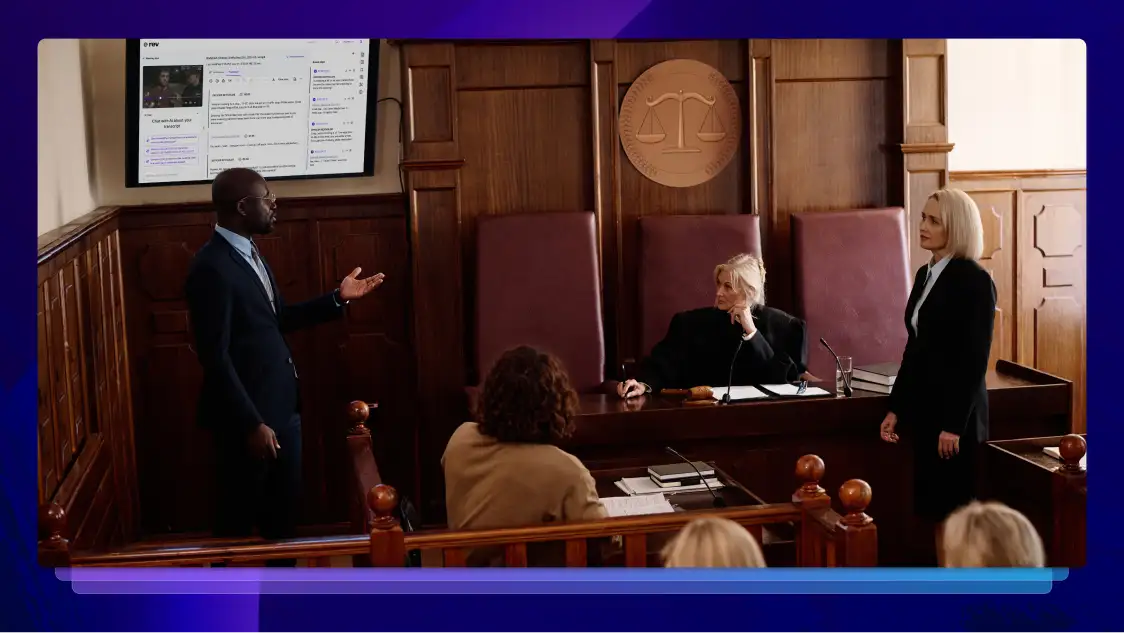
Successful trial outcomes are built long before the first objection is raised in the courtroom. In the weeks and months leading up to the proceedings, lawyers, paralegals, and entire legal teams pore over discovery, interview witnesses, and assemble exhibits into a narrative strong enough to withstand scrutiny. It’s painstaking work — but often where a case is won or lost.
That process has always been filled with the classic legal clutter: stuffed binders, color-coded tabs, and endless late nights. But what if getting ready for trial wasn’t so tedious?
Many legal teams are already streamlining preparation with transcription tools and trial prep software that trim hours of effort while sharpening their strategy. Here’s how you can use technology to transform the work of trial prep.
What Is the Meaning of Trial Prep?
Trial prep involves gathering, organizing, and assessing the evidence, witnesses, and arguments necessary to present an effective case in trial court. It’s a collaborative effort between attorneys, paralegals, legal assistants, investigators, and expert witnesses to review every relevant detail before the official proceedings begin.
In most cases, trial prep involves:
- Evidence management: Reviewing discovery, cataloging exhibits, and verifying admissibility.
- Witness preparation: Scheduling, coaching, and anticipating cross-examination.
- Case strategy: Aligning legal arguments with facts to form a compelling narrative.
- Logistical coordination: Managing deadlines, filings, and courtroom presentation tools.
The exact scope depends on the type of case. Civil trials often emphasize document review, financial records, and expert testimony. Criminal pre-trial and trial work, meanwhile, requires more attention to constitutional protections, evidence admissibility, and witness credibility. Prepping for personal injury trials, however, is an entirely different process.
What Is a Pretrial?
A pretrial is the stage of a case where attorneys and the court address key issues, exchange information, and decide the direction of the trial. It’s both a planning phase and a filter to weed out irrelevant evidence before the case gets to court.
During pretrial, attorneys file motions to include or exclude evidence and exchange witness lists. Courts set deadlines, schedule hearings, and discuss settlement options. These discussions can sometimes lead to a resolution outside of court. Most cases also include a final pretrial conference, where the judge and attorneys confirm exhibits, witnesses, and remaining issues before trial officially begins.
The Steps of a Typical Trial
The phases of a trial vary somewhat by jurisdiction, but the overall process follows a similar sequence. Each step involves weeks or months of careful trial prep by legal teams.
Common Trial Preparation Challenges + Solutions
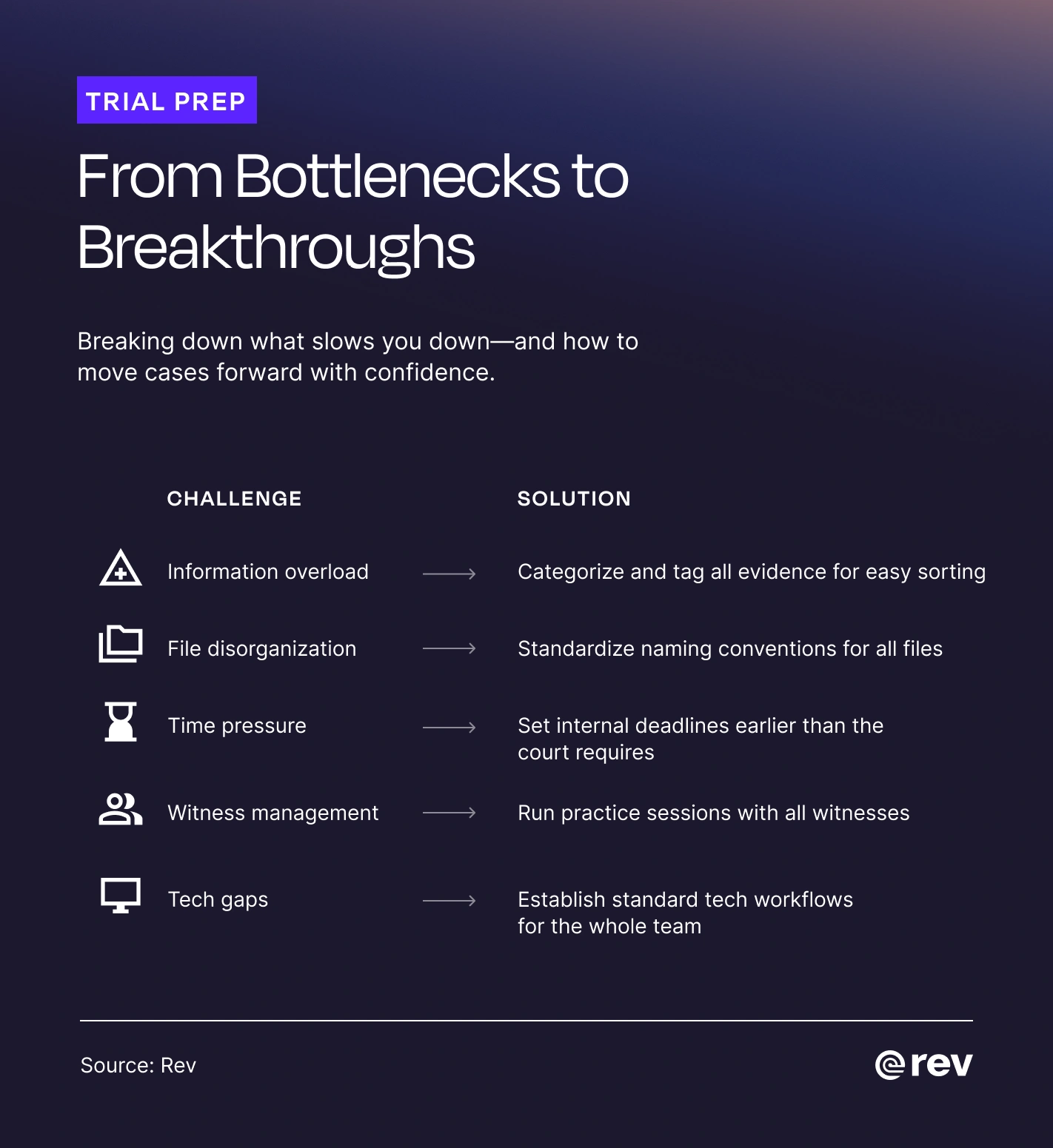
During trial prep, lawyers and paralegals balance strategy with logistics, often running into obstacles that threaten deadlines. Below are some of the issues that come up in trial prep, along with strategies for managing them.
Information Overload
A single case file can include thousands of pages of medical records, contracts, deposition transcripts, and exhibits, not to mention hours of video or audio evidence. Manual review can take days or weeks, pulling valuable time away from strategy and client communication.
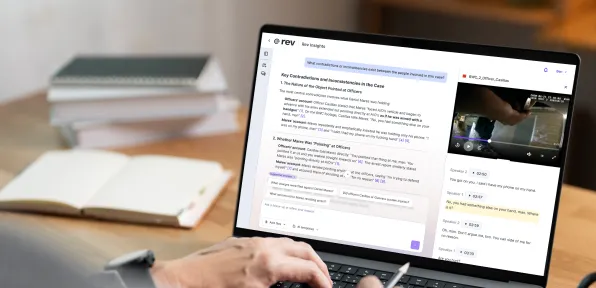
AI-powered analysis tools like Rev help teams reclaim those valuable hours. By converting recordings into searchable text with concise summaries, these tools let you verify facts faster, uncover critical details, and focus on building the strongest case.
File Disorganization
Poor file naming and inconsistent storage conventions make even the simplest searches more complicated. Standardizing file naming protocols from the start will help keep everything consistent and easy to find.
“Properly preparing your case file with file names, keywords, document descriptions, and so on is a big help when you are trying to find things in a large case file literally on the fly,” says Kimberly DeCarrera, fractional general counsel, CFO, and law firm adviser at Springboard Legal.
“Having documents listed as ‘email 1… email 2… email 3’ doesn’t do you much good. But having them listed as email with sender and recipient names and subject line is a lot better.”
Time Pressure
Trial dates are set in stone, and new evidence or rulings often appear late in the process. With limited hours, teams sometimes sacrifice depth of prep for speed — a trade-off that can backfire in trial court.
To stay on schedule without hurting the quality of your prep, build your timelines backward from the trial date and set internal deadlines earlier than the court’s. Use regular status check-ins and mock run-throughs to keep your evidence gathering and review process timely and thorough.
Witness Management
Witnesses are integral to building a compelling case, but scheduling conflicts, fading memories, or insufficient rehearsal can weaken their impact. It’s essential to lock in witness availability early and run practice sessions before they appear on the stand. Include exhibits, prior testimony, and Q&A outlines to help witnesses feel confident presenting their testimony and handling questions from opposing counsel during cross-examination.
Tech Gaps
Many firms still rely on manual processes or disconnected tools, which slow down collaboration and threaten case outcomes. Even without a complete tech overhaul, it’s possible to clean up the process through centralized communication and documentation.
A shared case calendar is essential. However, take it a step further by creating standard workflows for exhibit prep, such as consistent naming, numbering, and version control. Regular cross-checks, where team members verify that all exhibits and filings match the latest updates, help ensure everyone works with the same file version.
Is Trial Prep Stressful?
Trial prep is often quite stressful, as legal teams deal with heavy workloads, firm deadlines, and competing priorities. The pressure is heightened by the fact that every finding (or missed detail) could directly affect their client’s life. That said, teams that build effective systems for investigation, communication, and management often find the work becomes less all-consuming.
“Over the years, I’ve learned that consistency in preparation is everything,” says William K. Holland, personal injury attorney at Holland Injury Law LLC.
“We’ve built a rhythm around early case investigation, making sure we understand the full picture from the very beginning. That means getting medical records quickly, locking down witness statements before memories fade, and preserving evidence immediately. I’ve also placed a lot of focus on communication, both with my clients and within my team. We keep everyone on the same page at all times.”
Trial Prep Checklists
Whether you’re a lawyer or paralegal, breaking down how you prepare for trial into clear phases can help you stay organized even under pressure. Below are time-phased checklists for lawyers and paralegals, so your team can see exactly what needs to happen at every stage.
Trial Preparation Checklist for Lawyers
Lawyers focus on building the trial narrative — crafting arguments, preparing witnesses, and making sure the legal strategy holds up under courtroom scrutiny. Here’s what lawyers need to focus on every step of the way:
60–90 Days Before Trial
- Define overall trial strategy.
- Identify and secure the availability of fact and expert witnesses.
- Draft initial jury instructions and voir dire questions.
- Review discovery and select potential exhibits.
- Begin prepping expert reports and testimony outlines.
30–60 Days Before Trial
- File and argue pretrial motions.
- Conduct in-depth witness prep (mock direct and cross-examinations).
- Finalize exhibit plans and prepare objections/responses.
- Draft outlines for opening and closing statements.
- Coordinate with the court on scheduling and tech setup.
7–30 Days Before Trial
- Rehearse opening and closing arguments.
- Lock in witness prep and finalize order of appearance.
- Confirm the admissibility of exhibits and the presentation plan.
- Conduct a mock trial or roundtable strategy review.
- Test trial presentation software and backup courtroom tech.
Trial Week
- Final run-through of opening and closing statements.
- Sync exhibits with trial presentation software.
- Reconfirm witness availability.
- Prepare backup binders and digital files.
- Hold daily team briefings to adjust strategy.

Trial Preparation Checklist for Paralegals
Much of the order and consistency in trial prep comes from paralegal support — managing evidence, handling logistics, and giving attorneys the right information at the right time. Paralegals do a lot of work in the months leading up to trial, including:
60–90 Days Before Trial
- Organize discovery into a searchable index via a legal analysis platform.
- Apply uniform file naming conventions (date, sender/recipient, and subject line).
- Draft subpoenas and deposition notices.
- Summarize depositions and transcripts (using transcription software).
- Start exhibit prep (scanning, labeling, numbering).
30–60 Days Before Trial
- Build digital trial binders for attorney review.
- Track down witnesses and verify availability.
- Maintain and update the pretrial deadline calendar.
- Coordinate schedules and responsibilities with vendors (e.g., court reporters, tech specialists).
- Draft preliminary demonstratives, timelines, and exhibit packets.
7–30 Days Before Trial
- Finalize exhibit lists, witness lists, and deposition designations.
- Cross-check compliance with court orders.
- Prep courtroom exhibits for digital display.
- Verify document production and authentication.
- Assemble witness prep packets (bios, prior testimony, linked exhibits).
Trial Week
- Prepare the war room with binders, monitors, and backups.
- Test courtroom tech (trial software, video playback, and annotation tools).
- Confirm witnesses’ schedules and send reminders.
- Maintain a real-time exhibit log during trial.
- Provide attorneys with daily updates, notes, and transcript summaries.
The Ultimate Trial Sidekick: Your Tech Stack
These lengthy trial preparation outlines are a reminder that getting ready for legal proceedings is no small undertaking. It’s even more overwhelming when teams rely on binders, sticky notes, or ad hoc systems.
That’s why technology should be your trusted partner in trial prep. Software can’t argue a case or cross-examine a witness, but it can simplify workflows, help organize files, and give lawyers and paralegals room to concentrate on strategy.
At a minimum, every legal team should have the following tools:
- Transcription software: Industry-leading legal transcription tools like Rev convert depositions, hearings, and interviews into accurate, searchable text, with instant summaries that can save hours.
- eDiscovery and analytics platforms: eDiscovery solutions like Relativity, Everlaw, or DISCO use AI-assisted review and predictive coding to speed up discovery and organize documents.
- Case management software: Legal tech platforms like Clio, MyCase, or Filevine centralize deadlines, filings, and communication to track every detail.
- Trial presentation tools: Applications like TrialLine or OnCue let attorneys seamlessly display exhibits in court, annotate documents, and create persuasive visual narratives.
- Video analysis tech: Software like iNPUT-ACE, CaseGuard Studio, and JusticeText enable detailed review of surveillance, dashcam, or bodycam footage with frame-by-frame analysis, synchronized transcripts, and secure redaction.
Together, these modern tools make trial prep more productive. Hannah Parkhots, data collection project manager at Unidata, explains how a strong tech stack helps her team:
“Utilizing eDiscovery platforms and AI-powered analytics tools can uncover crucial evidence faster and more accurately. Tools like predictive coding and case management software help organize and analyze large volumes of documents systematically, saving hundreds of hours previously spent manually searching,” says Parkhots.
“Digital trial presentation software enhances courtroom clarity and persuasion through interactive exhibits and real-time annotations, directly strengthening the legal argument.”
Tech-Powered Prep Wins Trials
The most dramatic moments of a case unfold in the courtroom, but your team’s performance will ring hollow without rigorous, careful trial prep. The firms that shine combine an airtight strategy with tools that prepare every fact, witness, and exhibit for the spotlight. By organizing evidence, streamlining transcripts, and sharpening presentations, tools like Rev help legal teams bring clarity and confidence to every courtroom.