


Spoliation Of Evidence: Risks, Sanctions, & Prevention
Modern litigation depends on preserving digital evidence. Learn what spoliation means, when the duty to preserve begins, and how legal teams can avoid sanctions.


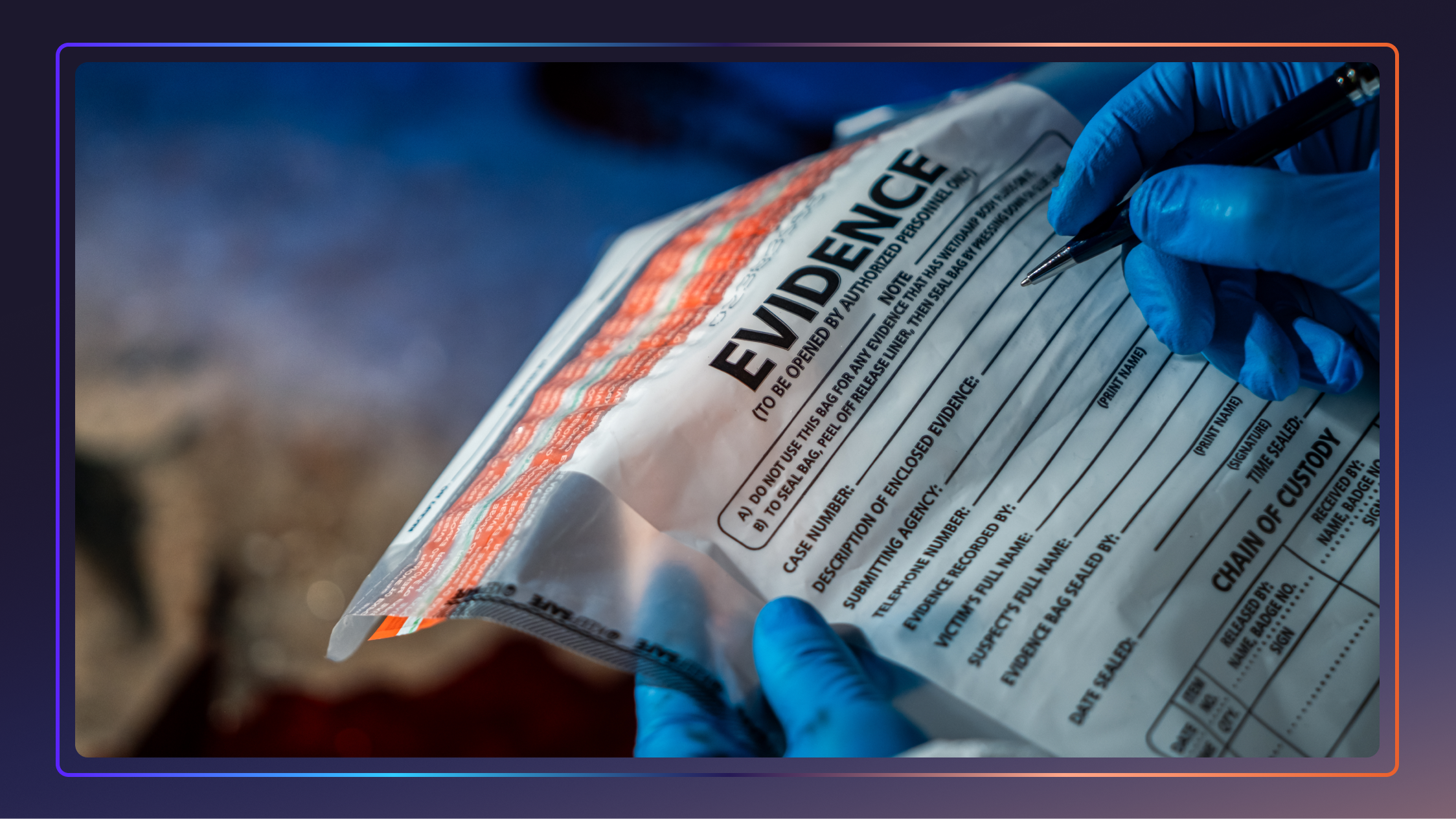
Balancing the scales of justice has always been a delicate act that hinges on shared principles like impartiality, transparency, and due process. But it’s also equally dependent on the willingness of everyone involved to handle evidence in good faith by preserving all relevant information in case it’s needed during trial.
That responsibility has become much more complicated in the modern era of electronic evidence. Today’s cases involve thousands of emails, texts, surveillance footage, social media posts, call recordings, and other forms of digital evidence spread across devices and platforms. When that data is lost, altered, or deleted, a case can be dramatically changed or even thrown out.
This process of altering or damaging evidence is known as spoliation, and understanding how it works is critical to managing cases well. Here’s what every legal professional needs to know about spoliation — and the preservation methods and tools required to avoid it.
What Is Spoliation Of Evidence?
Spoliation of evidence is the destruction, alteration, loss of, or failure to preserve evidence that might be relevant to a legal proceeding. Sometimes referred to more broadly as “destruction of evidence,” spoliation can involve everything from deleted messages to lost documents. Rule FRCP 37 (c) also applies here, as it clarifies how a party may seek sanctions against the other (if state law allows) for spoliation of evidence.
While the term itself may sound malicious, spoliation is not always the result of deliberate misconduct. Evidence is often lost due to simple negligence, poor preservation procedures, or a failure to recognize that certain information may become important later in a case. And anyone — plaintiffs, defendants, witnesses, organizations, and even attorneys themselves — can be involved.
However it occurs, though, the loss of relevant evidence can have serious legal consequences once the duty to preserve evidence kicks in (more on that in a moment).
What Type Of Evidence Can Experience Spoliation?
Nearly any type of evidence can be subject to spoliation if it is lost, altered, or improperly preserved. Today, this applies to much more than just physical records. Emails, texts, social media posts, surveillance footage, call recordings, cloud-based documents, and metadata (timestamps, access records, device information, etc.) are all subject to preservation rules.
What Is An Example Of Spoliation Of Evidence?
Imagine a company involved in a workplace injury lawsuit where security camera footage captured the incident. If that footage is automatically overwritten a few days later because nobody preserved it once the incident came to light, that could qualify as spoliation.
Other common examples of evidence spoliation include:
- Deleting emails or text messages related to a dispute
- Discarding damaged products or physical evidence after an accident
- Altering metadata or document timestamps
- Failing to preserve social media posts or direct messages
- Replacing or wiping mobile devices that may contain relevant evidence
- Losing audio or video recordings tied to a case
- Allowing automatic deletion policies to erase cloud-based files or communications
- Destroying handwritten notes, contracts, or paper records connected to litigation
Again, destruction of evidence doesn’t have to be intentional to have legal consequences. Simply allowing evidence to be automatically deleted can be enough to support a claim.
Why Spoliation Matters In Modern Litigation
As these examples illustrate, the spread of electronically stored information (ESI) has dramatically expanded the potential for spoliation. Preserving a file box or a few pieces of hard evidence is one thing, but managing and protecting an array of emails, text messages, cloud-based files, mobile device data, surveillance footage, and audio recordings is a much larger undertaking.
Unlike traditional paper evidence, much of this information can be automatically deleted, overwritten, altered, or lost through normal day-to-day operations without proper preservation steps.
“Modern evidence has value in addition to its visual content,” adds Alan Heimlich, president and attorney at Heimlich Law.
“Video, audio, text messages, and cloud files contain time stamps, edit history, access information, device information, and deletion options. As such, the preservation of this type of evidence will require a technical map prior to collection, since a hasty export may result in obtaining the file itself, but removing the contextual information that is necessary to prove the authenticity, order, or who controlled the document.”
In other words, preserving evidence today often requires much more than simply saving a document or downloading a file.
With so many potential points of evidence destruction or loss, Federal Rule of Civil Procedure 37(e) has become especially relevant. This rule gives courts the power to impose sanctions when relevant ESI is lost due to negligence, particularly when additional discovery would not be enough to restore or replace the information.
When Does The Duty To Preserve Evidence Begin?
The duty to preserve evidence generally applies as soon as litigation becomes “reasonably foreseeable,” not simply when a lawsuit is formally filed (editors' note: see FRCP 37 - Committee Notes on Rules—2015 Amendment for 37(e) for more information). That moment is not always entirely clear, and courts have plenty of wiggle room to interpret the specifics of each situation.
Practically speaking, any number of situations can become a trigger — a demand letter, workplace complaint, regulatory inquiry, serious accident, or even internal discussions about likely litigation. In some cases, one legal team may also send a formal spoliation notice or preservation letter requesting that relevant evidence be retained.
The important thing to remember is that there isn’t always a single obvious moment. Generally, courts consider whether a reasonable person should have anticipated that the evidence could become legally relevant. Generally, the common law applies to the entire discovery procedure. Because of this, you might face sanctions for failing to preserve evidence accordingly. Some states even have their own laws (like tort or criminal suits) that can be filed against you.
Once the preservation duty exists, legal teams must take reasonable steps to protect evidence and pause any standard procedures that could result in data loss. Nowadays, that typically requires strong eDiscovery workflows, coordination between legal and IT teams, and organized evidence management practices throughout the process.
What Is A Litigation Hold?
A litigation hold is the formal lever organizations use to initiate preservation efforts once litigation seems likely. These directives, sometimes called legal holds or preservation holds, typically instruct employees, IT teams, and other custodians to protect potentially relevant evidence and suspend routine deletion practices.
Types Of Spoliation Sanctions
Courts can impose a range of penalties for spoliation of evidence, depending on how the evidence was lost, how important it was to the case, and whether the conduct was negligent or intentional. These generally fall under the following five sanctions:
- Monetary sanctions: Courts may order a party to pay fines, attorney fees, or the costs associated with recovering or recreating lost evidence.
- Adverse inference instructions: A judge may allow a jury to assume missing or destroyed evidence would have been unfavorable to the party responsible for losing it.
- Exclusion of evidence: Courts may prevent a party from introducing certain evidence, expert opinions, or legal arguments if spoliation compromised the fairness of the case.
- Additional forensic discovery: In electronic evidence cases, courts may require expanded discovery efforts, forensic analysis, or restoration attempts to recover lost data.
- Dismissal or default: In severe cases involving intentional destruction of evidence, courts may dismiss claims entirely or rule automatically in favor of the opposing party.
How To Prevent Spoliation + Preserve Evidence
Preventing spoliation starts with recognizing that modern evidence preservation isn’t limited to saving a few important documents before trial. Legal teams now need systems and workflows that preserve digital evidence as it is created, collected, shared, and reviewed across multiple devices and platforms.
“Digital evidence is more important in some cases today than physical evidence,” says Martin Gasparian, Owner and Attorney at Maison Law. “One of the biggest mistakes legal teams make is not preserving digital evidence as they gather it. In the past, many teams waited until after they filed a case, but while you’re building your case, many things can go wrong that can corrupt or lose your data altogether.”
Any text message, surveillance clip, or slice of metadata could become important later. Legal teams must establish litigation holds early, maintain secure backups, preserve original media whenever possible, and use centralized systems that help organize and track evidence throughout the case lifecycle.
It’s a lot to manage, but technology can fill in many of the gaps for legal teams. Tools like Rev can support evidence preservation workflows by helping teams securely manage transcripts, audio, video, timestamps, and searchable records in one place.
That’s especially important for handling deposition transcripts and recordings, where preserving the integrity and accessibility of the underlying record may affect both admissibility and long-term evidence management during litigation. Ultimately, attorneys still have a duty to review this information, and they should not rely solely on the summaries developed by any AI.
The Future Of Evidence Preservation
Digital evidence has permanently changed the task of preservation for legal teams, and the pace of transformation is only likely to continue in the years ahead.
AI alone has made digital evidence summary 120 times faster, and more teams are embracing it to help them analyze and preserve evidence. On top of that, cloud collaboration and multimedia communications will only make the task of preserving and proving authenticity more challenging.
Meanwhile, the volume of ESI will likely only grow. Messages, recordings, AI-generated content, edit histories, and cloud-based activity logs may all become relevant in future disputes. Organized preservation workflows and centralized evidence management systems will become more crucial.
For legal teams, the task is clear. As Adam Dayan, founder of Consumer Law Group LLC, sums it up: “We need to keep asking better questions about where the information is.”
Preserve Evidence With Confidence
True balance in the legal system depends on both sides having access to a reliable and complete factual record. In the era of widespread digital evidence, legal teams need consistent practices and reliable systems for organizing, preserving, and accessing evidence from the moment a case has legs until litigation is complete.
Rev helps legal professionals manage transcripts, audio, video, and searchable records in one centralized platform designed for modern evidence management. Give your team a more reliable way to preserve, organize, and access critical evidence throughout the lifecycle of a case.