
Forensic Audio Transcription — Giving Legal Teams a Head Start
Forensic transcription is crucial to fast and accurate evidence review. Click to see how you can give your team a leg up by outsourcing this crucial task.


It’s no secret that lawyers are overworked. High caseloads, witnesses to interview, clients to prep…the to-do list can often seem like it never ends. Add to that the hours needed to parse through all documents, videos, and other files related to a case, and it makes sense why some lawyers' yearly workload is large enough to warrant five full-time attorneys.
But the reality is, most firms don’t have the budget to hire enough partners to reduce their caseload to a manageable level. This is where technology enters the picture.
Digital evidence tools like forensic transcription can turn reams of digital media and video evidence into actionable summaries, giving lawyers back valuable time while ensuring nothing slips through the cracks. And when the stakes are this high—after all, missed evidence can mean the difference between an innocent person going to jail or walking free—lawyers and their tools can’t afford any missteps.
Below, we break down what forensic-grade transcription is, why it’s critical for evidence review, and how Rev’s speed and accuracy can help give legal teams a head start.
What Is Forensic Audio Transcription?
Forensic audio transcription is the process of turning digital video forensics and other types of files into accurate, reliable, and court-ready evidence.
Unlike some types of traditional transcription, forensic transcription often requires verbatim accuracy, strict quality checks, and audio enhancement to clarify speech and provide speaker identification. Basically, the goal is to get the transcript to reflect the record as accurately and clearly as possible.
In some cases, audio forensic experts may be brought in to certify transcripts in order to make them more persuasive. And depending on the jurisdiction, transcripts may also need certification from forensic audio experts to be admissible in court. Standards such as those recommended by the Scientific Working Group on Digital Evidence (SWGDE) emphasize the importance of reproducibility, chain-of-custody, and documentation of all methods.
By turning hard-to-hear recordings such as wiretaps, 911 calls, interviews, and surveillance videos into searchable text, forensic audio transcription ensures judges, jurors, and attorneys understand the evidence without relying solely on manual playback.
Common Issues With Digital Evidence
Digital evidence is booming, and its importance in solving criminal investigations cannot be understated (some studies estimate 90% of current cases include digital evidence). But even with all this use, digital evidence is riddled with challenges:
- Poor Quality of Original Recordings
- Surveillance footage and recorded phone calls often contain background noise, making it hard to understand what was actually said.
- High Volume of Evidence
- A single case often includes hundreds, if not thousands, of hours of recordings. Combing through these manually takes time lawyers don’t have, leading to key details being missed.
- Accessibility
- Audio files aren’t easily searchable or shareable. But when they are turned into transcripts, they can be annotated, distributed, and uploaded into eDiscovery tools easily.
- Human Bias
- Even the best attorney can be subject to bias. Relying on what something “sounds like” in court risks mistakes that have real-life consequences. Transcripts provide an objective record, minimizing bias.
- Redaction Needs
- Legal proceedings often deal with sensitive details, which will need to be redacted when sharing with certain parties. Digital transcripts make it much easier to redact information than raw audio.
Forensic Transcription Advantages for Legal Teams
Even with the variety of issues with digital evidence of all kinds, forensic transcription can help transform messy, overwhelming files into clear, reliable evidence. Here are the main advantages of forensic transcription for legal teams:
1. Faster Review
Scrubbing through a video takes time, including plenty of rewinds and replays to ensure you heard everything correctly. Transcription cuts that effort in half, offering a quick and accurate read of what happened, making reviewing a breeze.
“Listening isn’t always enough because you can miss things,” says Adam Dayan, attorney and founder of Consumer Law Group.
“To get everything down perfectly, you may have to keep listening to a recording on repeat, which is time-consuming. So transcriptions are really important to make sure you’re getting the right details. You see the words clearly and catch details that you may otherwise overlook.”
How to get a head start: Order transcripts early in the discovery process so your team can surface pivotal evidence immediately.
2. Improved Accuracy and Clarity
Even a single word can shift how your case strategy evolves. The right forensic audio transcription service can deliver transcripts with 99%+ accuracy, capturing not just dialogue but also relevant sounds or tones. This clarity ensures evidence is presented without ambiguity.
Quick tip: Consider using human transcription or a human-AI hybrid offering over AI-only tools. The higher cost is well worth avoiding errors.
3. Searchable Text for Quick Analysis
Say you’re in the middle of a heated argument in court, and you can’t quite remember what a witness said in the 44th minute of a three-hour audio recording. With a searchable transcript, you can easily find the needed information and continue with your argument without taking a recess to manually search the audio.
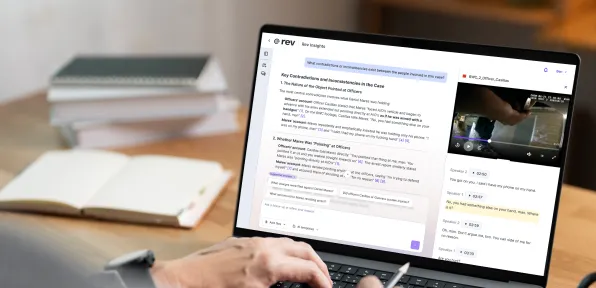
How to get ahead: Use platforms like Rev that allow multi-file searches and AI-driven analysis to find contradictions or specific quotes quickly.
4. Stronger Case Prep and Presentation
Transcripts strengthen investigations, motions, briefs, and cross-examinations by providing exact quotes that require little to no interpretation. In addition, jurors and judges benefit from the ability to read along as audio plays, reducing confusion and getting everyone on the same page (no pun intended).
Case prep tip: When reviewing transcripts before the case, highlight important moments or key phrases within your transcription analysis platform, so you can easily return to them later.
5. Better Use of Attorney Time
Outsourcing transcription frees attorneys to focus on case strategy and client communication, rather than on playback. This process can also save teams money compared to doing transcription in-house. Plus, it helps reduce lawyer burnout, which our recent study shows is affecting 80% of attorneys.
Crunch the numbers: Compare the hourly cost of your attorneys to the per-minute price of transcription services. We bet that outsourcing will almost always win.
How to Pick the Right Forensic Transcription Service
Whether you’re in law enforcement, the head of a law firm, or a forensic analysis expert, selecting the right transcription provider is crucial to actually lightening your workload. When comparing services, prioritize:
- Accuracy & Expertise: Look for verbatim transcript offerings, human transcription options, and high levels of accuracy.
- Security: Ensure your provider will encrypt your information, require NDAs for all human transcribers, and work under compliance and regulation standards.
- Quick Turnaround: A helpful transcription service should offer standard and rush delivery, so you can get what you need, when you need it.
- Format Support: Digital forensics can come in a variety of formats. Before you sign on the dotted line, make sure the service you choose is compatible with various file types and that it offers enhancements or certified transcripts.
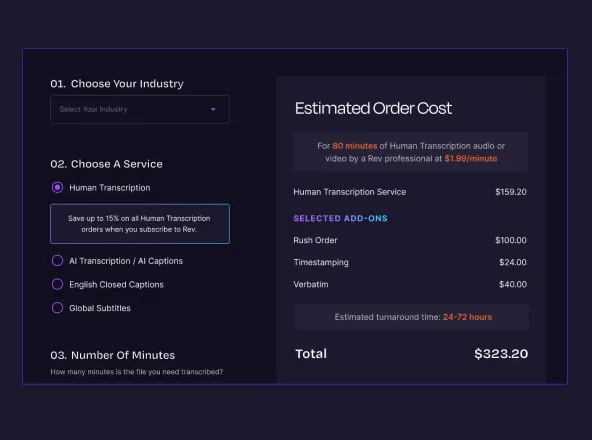
- Transparent Pricing: Providers with clear, scalable pricing and human/AI options mean you won’t have to worry about last-minute financial surprises.
Bottom line: If your case involves high-quality recordings and speed is the priority, AI with human review may suffice. For noisy, multi-speaker evidence destined for court, full human services are essential.
How Rev Helps Legal Teams
Rev meets all of the above requirements and then some, offering a variety of customizable services to fit your unique needs. Rev is built to help lighten the load of legal professionals without sacrificing quality.
Rev combines cutting-edge AI with skilled human transcriptionists to deliver:
- Accuracy and Speed
- Human transcripts are guaranteed at 99% accuracy with delivery in under 12 hours, and there are AI options for faster turnaround with the best ASR on the market.
- Searchable, Annotated Files
- Easily find keywords or contradictions across multiple transcripts within the Rev platform.
- Clip Sharing
- Find a piece of information that breaks the case wide open? Share the clip directly with your team, straight from the editor.
- Security
- All uploaded files are encrypted and confidential, trusted by AM Law 100 Firms nationwide.
- Ease of Use
- Upload multiple files at once and get transcripts in formats that are ready for case prep.
- Deposition Summaries
- Our SmartDepo offering provides deposition summaries and memos with 100% page-line accuracy.
- Subscription Offerings
- In addition to pay-by-the-minute offerings, Rev also offers a subscription service for long-term needs (hint: subscribe and you can save up to 30%).
Looking Ahead: The Future of Forensic Tech
Just like any other form of technology, forensic transcription and tools are always evolving. From better audio analysis to high-tech video enhancement, all aspects of forensic tech are poised to get an upgrade in the coming years. Here’s a look at the future of this criminal justice technology:
- Authentication
- Deepfakes and AI audio and video are on the rise. Because of this, verifying the authenticity of digital evidence will be as important as transcription itself.
- Real-Time Tools
- Future tools will likely offer live wiretaps or hearing transcription, alerting legal teams to key phrases instantly.
- Automation
- Just as transcription has become automated, so will other forensic tasks such as risk assessment, DNA analysis, and pattern recognition.
The future points to speed and integration. In fact, the BBC estimates that the forensic tech industry will be worth $42.1 billion by 2027. But no matter the high dollar value of these legal AI tools, accuracy will always require expert oversight.
Gain an Edge With Forensic Transcription
In legal cases, even the smallest details can change the outcome of someone’s life. Forensic audio transcription ensures you don’t miss what can make or break your case. By transforming complex audio and video into accurate, searchable text, your team gains clarity, saves time, and hopefully lessens the tendency for burnout.
Don’t let crucial evidence stay buried in recordings. Give your team the head start it deserves.


.webp)
.webp)
.webp)
.webp)