
23+ Deposition Questions For Deeper Analysis
Discover the key types of deposition questions, with examples and tips paralegals can use to strengthen case prep and uncover critical facts.


In legal discovery, the entire trajectory of a case can hinge on the smallest details. This is especially true during depositions, where a well-chosen question can cripple witness credibility and tip the scales in your legal team’s favor.
These turning points don’t happen by accident. They come from hours spent preparing outlines, organizing exhibits, and drafting deposition questions that connect the dots. While attorneys do the questioning, paralegals often build the roadmap that makes those pivotal moments possible.
That’s why developing sharp, targeted depo questions is so vital for paralegals. In this guide, we’ll cover the most common types of deposition questions and share advanced tips to help your team structure a line of questioning that uncovers the facts and strengthens case strategy.
The Role of a Paralegal in Depositions
Depositions may be led by attorneys, but paralegals play a central role in making them effective. From gathering and organizing exhibits to researching a witness’s background, paralegals clear the way for attorneys to focus on strategy in the conference room. They also help draft outlines and anticipate the opposing counsel’s potential lines of questioning.
Well before witnesses enter the room, paralegals can shape the flow of a deposition by flagging gaps in the record and ensuring the attorney has a clear plan to follow. As attorney Anna Blood of Blood Law explains: “Ultimately, the most important questions are those that extract the information you need to build your case, evaluate settlement opportunities, or prepare for trial.”
It’s a paralegal’s role to craft questions that accomplish those goals. And to do that, they’ll usually build a strategy around four critical types of deposition questions: background questions, narrative-building questions, exhibit-oriented questions, and impeachment questions.

Background and Foundational Questions
Every deposition begins with background and foundational questions — the standard inquiries that confirm a witness’s identity, role, and basic knowledge. These questions may seem routine, but they establish credibility, lay the groundwork for admissibility, and provide context for the more complex questioning that follows.
From a case strategy standpoint, foundational questions are where paralegals can add significant value. By preparing sample deposition questions that cover the basics, they help attorneys set a professional tone and uncover early details that can point to larger issues.
These are some of the most common deposition example questions paralegals draft, with tips for guiding clients to answer them:
1. For the record, what is your full name?
- If the answer is incomplete, be sure to follow up for full details, such as a middle name or any aliases.
2. What is your current occupation?
- Don’t permit vague answers. Get their job title, employer, roles, and responsibilities.
3. Have you ever testified under oath?
- Encourage them to state when, where, and in what capacity. This can give insight into how comfortable they may be in a deposition setting.
4. Can you explain why you are here today?
- Make sure they understand the case and why their testimony is important.
5. How do you know the parties involved in the case?
- The goal is to clarify these relationships and uncover any relevant connections that may be important to the case.
6. What documents did you review to prepare for today?
- Make sure they list everything, as this reveals what they relied on and may point to additional sources of discovery.
Narrative-Building Questions
After establishing the basics, attorneys typically move into more open-ended prompts that allow witnesses to tell their story in detail. These narrative-building questions are meant to establish a clear sequence of events, test the consistency of witness testimony, and bring new facts to the surface. Even more importantly, they help align the deposition with the overarching case theory and give attorneys room to probe.
For witnesses, this portion of the testimony feels loaded with tricky deposition questions, since they invite expansive answers rather than simple yes-or-no responses. But that’s also what makes them powerful. The best deposition answers often come when witnesses speak freely, giving attorneys (and paralegals) more material to cross-check against documents, prior statements, or other testimony.
Some key depo questions for uncovering the narrative include:
7. What happened on [specific date]?
- Encourage the witness to stick to a chronological order. If they skip steps, guide them back gently to fill in the gaps.
8. Who else was present during that meeting or conversation?
- Clarify each person’s role — this often reveals new custodians or overlooked participants.
9. What steps did you take after receiving [document/email]?
- Compare their answer to timestamps, emails, or logs to test consistency.
10. Can you describe the process you followed for [task/action]?
- Push for specifics. Vague responses can mask important details.
11. How did you communicate your decision/actions to others involved?
- Here, answers may point to additional documents or communications that need to be requested in discovery.
Exhibit- and Expert-Oriented Questions
These two types of depo questions are designed to dig into the nitty-gritty details of the case, exploring the elements that typically carry the most weight at trial.
Exhibit-based questions tie a witness directly to the documents in evidence — emails, contracts, reports, body camera footage, or correspondence — and confirm their authenticity. Expert-oriented questions go a step further, probing the qualifications, methods, and assumptions behind an expert’s opinion.
For paralegals, preparing deposition examples in these areas means thinking strategically: Which documents need authentication, and where might an expert’s reasoning be vulnerable? The goal is to lock witnesses into clear, defensible answers that can be used later in trial or settlement discussions.
Here are some common questions for this phase.
For exhibits:
12. Do you recognize this contract/email/document?
- Push for confirmation of authorship, date, or purpose to solidify its use as evidence.
13. Who created this document, and what was your role in its creation?
- You’re trying to tie the witness directly to the origin of the record and establish responsibility for its content.
14. Is this your signature on this document?
- If they hesitate, compare against known signatures to verify authenticity.
15. Were you copied on this correspondence?
- Ask about their role in the communication to establish involvement.
For experts:
16. Can you explain your qualifications and experience in this specific field?
- Establish credibility but also probe for gaps in expertise related to the case.
17. What methodology did you use to form your opinion?
- Listen for whether the approach is widely accepted in the field or open to challenge.
18. What data did you rely on, and did you exclude anything?
- Probe any omissions. Excluded data can reveal bias or weaken credibility.
19. What alternative explanations did you consider before reaching your conclusion?
- Test their thoroughness and look for any biases.
Impeachment Questions
Credibility is at the heart of this line of questioning, where attorneys seek to uncover inconsistencies, reveal bias, or set up impeachment at trial. Even the strongest factual answers can be neutralized if the witness doesn’t appear trustworthy, and that makes impeachment questions some of the most strategically important in the deposition outline.
Here, paralegals should focus on identifying prior statements, disciplinary records, or conflicts of interest that attorneys can turn into targeted questions. In terms of guiding the team’s witnesses, the emphasis should be on answers that are simple, factual, and consistent.
Sample deposition questions in this category include:
20. Have you ever been disciplined, terminated, or investigated professionally?
- If yes, drill down into dates, reasons, and outcomes to assess relevance to credibility.
21. Do you have any financial interest in the outcome of this case?
- Keep pressing until they provide a full answer — even small financial ties can raise bias concerns.
22. Have you ever been accused of dishonesty in your professional role?
- Even if the witness tries to minimize, getting this on record can impact credibility at trial.
23. Did you give a different statement to [investigator/agency] on [date]?
- Have the prior statement ready to confront them with if they try to backtrack.
24. Were you aware of [contradictory evidence/document] at the time you made your earlier statement?
- Force them to reconcile prior testimony with current evidence.
How to Structure Depo Questions
Each question in a deposition is important, but the net effect can be lost if an attorney asks them haphazardly. As Martin Gasparian, attorney and founder at Maison Law Modesto, explains: “Your line of questioning should be used to uncover inconsistencies, clarify facts, and establish a clear record for the trial.”
A simple outline might look like this:
- Begin with background and foundational questions to confirm identity and set the stage.
- Move into narrative-building questions to develop a clear sequence of events.
- Introduce exhibit- and expert-oriented questions to test documents and opinions.
- Conclude with impeachment questions that challenge credibility.

What’s critical is that every section builds on the one before it. For paralegals, this means not simply drafting questions but also connecting them to the case’s larger goals. It’s also important to leave room for follow-up questions and deviate from your outline when needed. A simple “Is that all?” might uncover details you couldn’t have possibly prepped for.
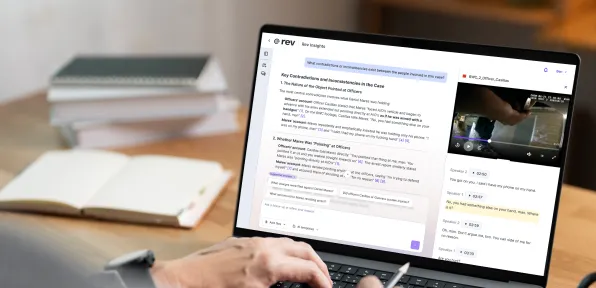
Tools like Rev’s transcription and insights platform make this entire process easier by turning prior deposition transcripts, interviews, and case files into searchable, summarized insights. With a clearer view of past testimony, paralegals can quickly bring the next deposition outline into focus and clarify the best line of questioning.
Benefits of Diving Deep Into Deposition Prep
The deeper you go in deposition preparation, the stronger the foundation for the entire case. Thorough outlines and carefully structured questions help keep testimony relevant and minimize the risk of surprises when you least want them — at trial. Well-prepared deposition evidence also creates a cleaner record, so attorneys easily can reference testimony during motions, negotiations, or courtroom examination.
For paralegals, the benefits extend beyond a single deposition. Investing in detailed prep sharpens your ability to anticipate the opposing counsel’s strategy, identify gaps in the evidence, and strengthen overall case theory. In time, you’ll improve case outcomes and build trust with attorneys who rely on you to keep discovery moving efficiently.
Rules of Depositions You Need to Know
Depositions are tightly governed by the Federal Rules of Civil Procedure (FRCP) in federal cases, and knowing these boundaries is just as important as preparing the questions themselves. FRCP 26, for example, frames what attorneys can ask about and what witnesses must disclose.
FRCP 30 is the backbone of deposition practice. It sets the “10 deposition rule” (no more than 10 per side without court approval), caps each deposition at one day of seven hours, and establishes requirements for notice, objections, and methods of recording. And once testimony is taken, FRCP 32 governs when depositions can be used in court proceedings, such as impeaching a witness or substituting testimony if someone is unavailable.
It’s important to note that these rules apply only in federal proceedings. Every state has its own civil procedure rules, and paralegals must be familiar with their jurisdiction’s specific requirements for things like scheduling and admissibility.
Advanced Tips for Paralegals
Once the fundamentals of deposition prep are in place, paralegals can bring even more value by anticipating what might derail a deposition before it happens. Reviewing draft questions in advance with the attorney helps spot potential objections, and preparing likely follow-ups ensures that attorneys can press forward when a witness answers the questions in a vague or unexpected way. Thinking ahead keeps the questioning tight and saves time in the room.
Technology opens the door even wider for deep, detailed depo prep. Tools like Rev make it easy to transcribe and investigate each deposition in depth, uncover contradictions, and distill large files into precise summaries. After a deposition, revisiting the transcript with Rev’s Insights allows paralegals to highlight key admissions and identify areas for further discovery. Over time, this kind of proactive review sharpens your instincts and helps build better outlines for future depositions.
Go Deeper in Deposition Prep With Rev
Strong deposition prep (and even cross-examination prep) is built on precise questions — and paralegals are at the center of making that happen. With Rev’s transcription and Insights platform, you can turn depositions, interviews, and case files into accurate, searchable summaries that reveal patterns, highlight contradictions, and sharpen your questioning strategy.
Ready for the kind of depo prep that drives case strategy forward?