





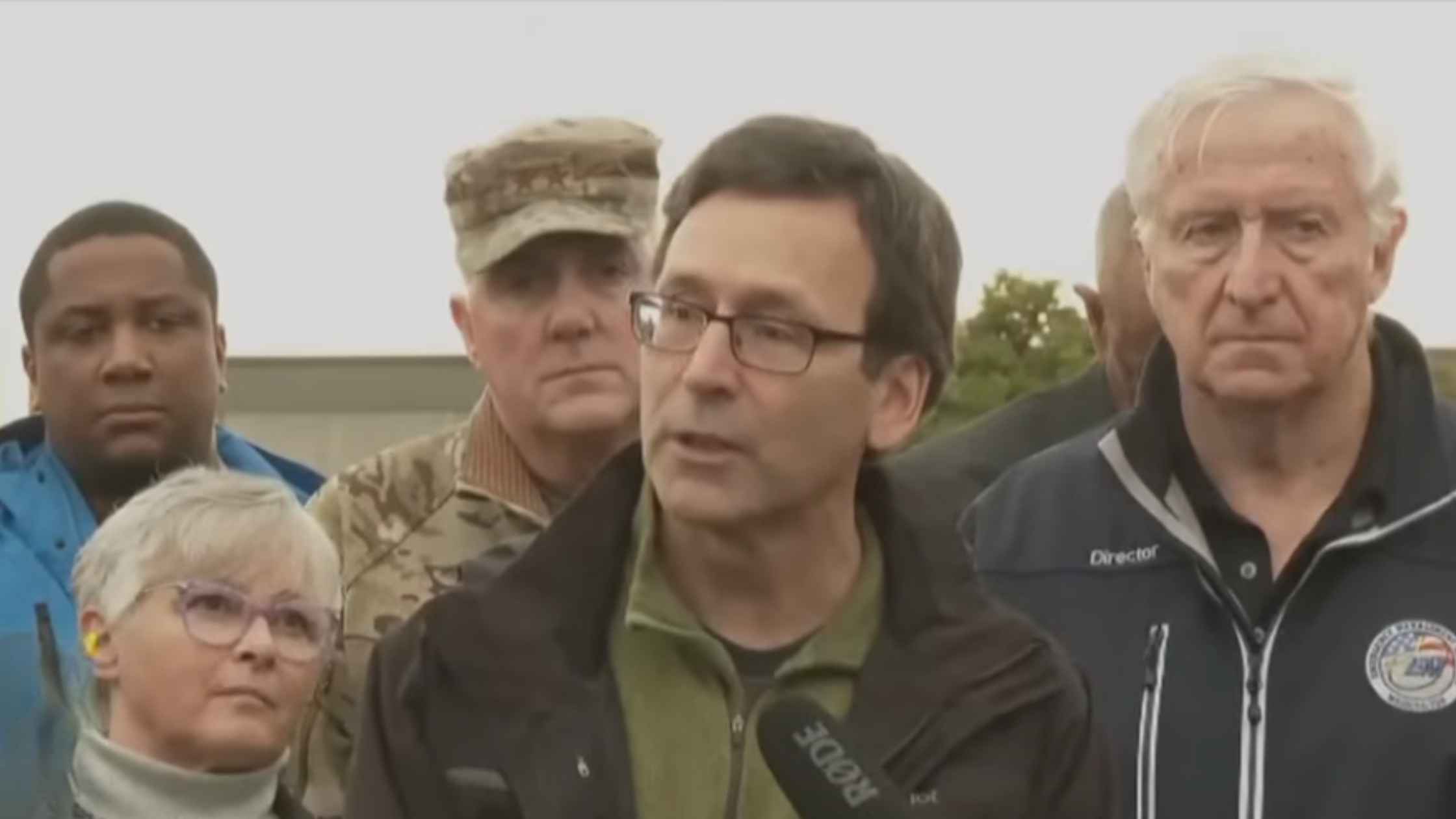


Bob Ferguson (00:00):
I think it's exactly the kind of call that people say Washington or American people want between cabinet member and the governor when there's a crisis like this. [inaudible 00:00:10] gracious. She asked how we were doing here in Washington state. [inaudible 00:00:17] emergency declaration in a nutshell just to make sure we're clear, helps us navigate emergency work that's going on right now. Rescuing individuals, for example, clearing debris from highways. A separate conversation will come when we go back to the federal government, obviously for assistance in the very, undoubtedly very significant financial resources we will need as we dig out from this major, major event. That's a separate request that we make to the federal government. Now's not the time for that. We're very focused on what's right in front of us. We just want to make sure we're clear about what this emergency declaration means. It helps us get through the short term, but there will be a separate conversation and I obviously preview that for the secretary, that this was going to be very, very significant for the state of Washington.
(01:06)
I also want to say a special thank you to our entire congressional delegation. Paul signed a letter requesting that the president sign that emergency declaration. Individuals like Senator Campbell were making phone calls to their extensive contacts within the White House and the administration. This has been a bipartisan effort to request and to get this emergency declaration. So I just deeply appreciate the bipartisan work at the federal and local level from many voices to make this request and to make the case. Making this case was extremely important to the state of Washington. Literally, we communicate essentially a letter to the federal government, that was 48 hours ago. I was sitting next to General Welsh and others down at Camp Murray, literally drafting that, editing that document to make sure it said exactly what I wanted to say to the federal government so they understood the gravity of the situation we were facing.
(01:58)
And once again, I just want to say we deeply, deeply appreciate the support of this federal government at a time of real need here in Washington state. We're also deeply appreciative and obviously information is preliminary. Reports are coming in real time to put it very mildly. But for the past 48 hours, two to three days, there have been no reported loss of life at this time. I want to emphasize, of course, information is very fluid. The situation is very dynamic, but we're exceedingly grateful and thankful that our prayers have been answered that this time no loss of life has occurred. The situation is truly historic. Rivers like the Skagger River and Cedar Rivers literally facing historic, experiencing historic levels of flooding. And so this is something that the people of the state of Washington have not faced before, this level of flooding. And so we encourage, of course, individuals to follow the orders from their local officials when it comes to evacuation orders.
(02:53)
It's deeply important, not just for those individuals and their safety, but for the safety of first responders who are coming to rescue individuals who do not follow those evacuation orders. Thank you for putting in through your media streams examples of the rescues that have happened, which are to put it mildly very, very dramatic and obviously put first responders at tremendous risk to save people from their cars or from their homes. So please, please follow those orders from your local officials who know the situation on the ground. And just before I turn this over to Senator Cantwell, I'll just emphasize again, the situation is extremely unpredictable. We saw that in Burlington last night where there is a situation where literally in the middle of the night, about a thousand folks had to flee their homes in a really dire situation. It is very unpredictable. We are all doing the very best we can to provide the best information, but we want people to know it is very unpredictable.
(03:44)
Lastly, I'll just say that, and we just came from this briefing with King County officials. We appreciate the mayor hosting us with the city. And what I'm seeing in every conversation I'm having for these past several days is strong cooperation, and that's probably an understatement, but strong cooperation at every level of government, with local officials, with tribes, with individuals, with community organizations. Every time I ask somebody and I ask this all the time, "Is there anything else you need?" The answer I get is, no, we're getting everything we need. We'll let you know if we need more. And that's exactly the answer obviously that I as governor want to hear, but that only happens. I only get that answer, I'm mindful of this if that level of cooperation is happening on a very deep level. And we are seeing that and we're going to continue doing that to make sure that Washingtonians are as safe as possible. So again, thank you all for being here. I'm going to turn now to Senator Maria Cantwell. Senator.
Maria Cantwell (04:37):
Well, thank you, Governor. Thank you for your tremendous leadership in this very big emergency in the state of Washington. I want to thank our Council Executive Girmay for his leadership as well, the Tuckwilla Mayor, all the King County Council members that are behind us and all the local elected officials that are working 24/ 7, all the first responders that are working 24/7 and the people of Washington who are helping their friends and neighbors when they need it most without being asked, just stepping up and helping. We know that we have had the 16 counties around the state see unbelievable impacts from what is supposed to be a hundred-year event, but it hasn't been a hundred years since the last time we had this. And so the issue is that places like Sioux Mass, which is a border crossing to be flooded out and a border crossing closed. To have Highway 2, which is anywhere from seven to $10 million a year of economic impact to be closed.
(05:42)
To have the Natchez Highway 12 be closed, another pass that helps us get back and forth in the commerce that we have in our state to be closed. All of these issues in addition to the flooding impacts in the communities and the downtowns and the dislocations, yes, we in our delegation, all of the Washington delegation led by Senator Murray and the governor sent a letter to the administration. And the good news is that federal support is on the way to help those local officials and first responders who have been working 24/7 get a little bit relief.
(06:22)
I hope they do focus on these infrastructure issues, the ones that cost us so much to our economy and allow people to get free to flow back and forth across our state. I hope they'll help with these evacuations and I hope Washingtonians will continue to heed evacuation notices. The reason the forecasters federally at NOAA do this work is to tell us the likely outcome of this level of precipitation. So when they say it's going to be catastrophic, Washingtonians please heed them and help us respond to this by evacuating in a timely fashion.
(07:00)
So we are just so grateful for this federal help and support. We're so grateful that our local community and everybody here has really responded to this catastrophic event with such resilience. And hopefully the nation will learn why we were able to be so prepared, the governor, to be on it so fast to really get these results that we've had so far. It's not over yet, but we're glad we're at this moment with a little bit, well, let's not say blue sky, but a little bit less rain and an opportunity to take a deep breath and hopefully get this support out here to get more support to open these communities back up. Thank you, Governor.
Girmay Zahilay (07:43):
Thank you so much, Senator. Thank you so much, Governor, for the opportunity to speak today. Thank you to our media partners for covering this really critical information. I'm Girmay Zahilay, new county executive, and I just want to reiterate what we've heard that King County and Washington State have experienced some of the most severe and dangerous weather our region has seen in years. This is not a routine storm event. This is historic flooding that has put lives and businesses and critical infrastructure at risk all over our region. On December 8th, in my first week and a half on the job, I had to proclaim emergency in King County. In response to these conditions and last night, I issued an additional emergency order granting expanded authority so our county teams can move quickly, clear the debris, close unsafe roads, accelerate emergency repairs, and take any action necessary to protect life and property.
(08:38)
As you just heard, we're also grateful that the president has signed a federal emergency declaration that includes King County. This declaration is going to allow our region to access federal resources and assistance to support emergency response and recovery. While there is not yet direct federal assistance available for individuals and businesses, this declaration is a step in the right direction. It allows us to document impacts, coordinate with FEMA and work toward unlocking additional support for our communities as recovery continues.
(09:10)
Here is where things stand today in King County. Our flood patrol unit is out in the field around the clock, monitoring river levels, inspecting levees and sharing real time information to keep people safe. During one of those patrols yesterday, county crews discovered a sinkhole right here on the Segali Levee along the Green River in Tequila. I want to shout out some of our team members.
(09:33)
I believe Gary is somewhere out here, but they were out here all night filling that sinkhole. These are some of the workers who have been putting in the work to keep us safe. Immediately, King County's Department of Natural Resources and Parks coordinated with the US Army Corps of Engineers, the City of Tuquila and King County Road Services to get this filled. Road crews deployed a special operations team that worked through the night until 1:00 AM to reinforce and
Girmay Zahilay (10:00):
Stabilize the levee and protect surrounding community. Thank you all again so much for doing that work. I couldn't be prouder of the coordination that I've seen. County agencies working shoulder to shoulder with cities. I know many of our mayors are in the space right now. Fire districts, neighborhood counties, the state and our federal partners to respond in real time to these evolving conditions. I also want to give a big shout-out to our flood control district. I know our executive director, Michelle Clark is here. Our vice chair of flood control, Sarah Perry is here. Reagan Dunn couldn't be here, but the hundreds of millions of dollars of investment in our flood infrastructure are the reason why these conditions didn't produce even worse results than we're seeing right now. So thank you to the flood control.
(10:46)
I want to pause and thank all the people that have been responding to these conditions right now. Our county teams and first responders have been working long hours in brutal weather conditions during extremely dangerous conditions. Deputies from the King County Sheriff's Office rescued a man who was trapped on top of his car in floodwaters just the other night. That rescue saved a life. I also want to recognize a King County wastewater employee who became trapped inside one of our treatment facilities during flooding and continued working for days to keep critical plant operations running. He was finally able to leave at 4:30 AM this morning. That commitment protected public health for millions of people. Anybody know his name behind me? Tyler.
Speaker 1 (11:32):
Tyler?
Speaker 2 (11:32):
Tyler Stinson.
Girmay Zahilay (11:33):
Tyler Stinson. Yes. We have to shout out all of our amazing employees. To every first responder, engineer, dispatcher, public works employee and emergency manager, thank you. Thank you so much. Your service is making a real difference. And I need to be very clear about this next point, we are not out of the woods yet. I want to reiterate that this is an unpredictable situation. Our communities in Duvall and Carnation were called islands over this week as they were completely cut off from all directions due to flooded roads. We've been supporting our residents there in every way that we can and our teams continue to monitor the water levels and hope to return to full access for residents over the coming hours and days. This remains an unpredictable situation. Rivers are still high. Ground is saturated. Please follow road closure rules. Do not drive through flooded areas.
(12:27)
If you are in immediate danger, call 911. And please listen to law enforcement and emergency officials when they tell you not to enter an area. Remember, if you do not listen to their orders, you are not only putting yourself at risk. You are putting our first responders at risk as well. Because if something goes wrong, they are the ones who are going to have to go into dangerous conditions to save you. So please help yourselves and help our first responders stay safe. King County's Emergency Operation Center is fully activated right now. Our top priorities are protecting lives, safeguarding property and positioning our region for recovery. For the most up-to-date information, please visit kcemergency.com.
(13:10)
Finally, in the days ahead, we're going to be asking residents and business owners to share information about flood impacts. This documentation is essential to help qualify King County for additional federal assistance as our US Senator just mentioned. We're going to continue to show up. We will continue communicating clearly and we will continue doing everything in our power to keep our communities safe. Thank you all so much.
Speaker 3 (13:36):
Good afternoon and thank you for coming to the city of Tukwila. I'm sorry it's under these conditions. But I want to first just express our concern for the communities to the north, to the east, to the south that are experiencing much more difficult situations than what we have here in Tukwila. And our hearts go out to them. I also want to express tremendous appreciation and gratitude to the many, many, many staff members at the city of Tukwila, at the county, the US Army Corps of Engineers, my neighboring city, Kent to the south. There's so many people that come together with the emergency management to see the problem and get on it right away, to see crews out here last night doing work. We've avoided some disaster, but there's still much more to do. I can't imagine what would have happened had the levee not held, but there was a quick ability to see the problem quickly and to fix it quickly. That comes with investments in the levee system.
(14:33)
And so here in Tukwila, we are grateful. We are appreciative. There's more to do. There's more investments to make in this levee system, but I want to just today express the appreciation for everyone that's been working through the night, through the week here. And we are grateful here in Tukwila.
Robert (14:48):
Thank you. Good afternoon, everyone. I'm Robert Ezelle, Director of State Emergency Management and I just want to give you a quick overview of what we're seeing across the state. We've had two very significant storms roll through our state dumping large amounts of water. We've had two waves of flooding. Last night, we saw all but one of our rivers crest, several of them reaching maximum flood stage, and we have one more on the east side of the state that will crest sometime tomorrow.
(15:26)
We've seen coming up that it's going to take a while for the floodwaters to recede. There's a lot of water that fell in the mountains and it's going to take its time to work through the river drainages. So they're not going to drop quickly, and so we need to keep our eyes on what's going on in the situation that we're experiencing. And then coming up, we see more weather coming early next week, which is going to cause rivers to rise again. Most are not going to raise to the level that we've been seeing. Most are going to stay in the minor flood stage, but we're going to see a handful rise up to perhaps a moderate flood stage and the Skagit River could rise again to a major flood stage close to what we saw going through Burlington and Mount Vernon this morning.
(16:19)
And so the situation remains very fluid. It's dangerous. And again, as everyone going before me has encouraged, please heed the warnings of first responders and keep yourself safe. In the State Emergency Operations Center, we've got folks from across state agencies. We have our federal partners from FEMA, from the Army Corps of Engineers. We have voluntary agencies, Red Cross, all partnering together to provide assistance to our local partners. And so it's been an all hands on deck, 24 and seven operation to provide help to the counties and the cities that need it.
(17:01)
And so with that, again, I just plea for everybody to heed the warnings, to be safe out there because this situation is not over and is not going to be over yet for a number of days. Thank you. There you are. There you are. Trying to find a way to let you through.
Speaker 4 (17:25):
Commander Welsh was coming up. Hi, I'm Brian Nielsen. I'm with the Washington Department of Transportation. Just wanted to give an update on what's going on around. What our crew's doing, both WSDOT's crews and our local partner crews, they're out on the roads in the byways. They're inspecting conditions, monitoring conditions, and addressing issues as they find them, clearing drains, clearing culverts. They're monitoring water depths on roadways. They're closing roads when necessary. If you see a road closed signed, it's closed for a reason. Either road's washed out or there's too much water on the road to cross safely. So please heed those road closed signs when you see them.
(18:12)
Across the state, throughout the day today, there's been around 20 highways, state highways closed across 11 of our 39 counties. That number of 20 is variable. We've been opening roads as we've been able to, but we've also been having to close additional roads as we've identified wash-outs and landsides and the like. This is a dynamic situation. As I said, roads are opening and closing. The river levels are still high. Roads are washing out. Again, heed those road closure signs when you see them. There's a reason for that.
(18:56)
What can the public do? Stay informed. Plan ahead and stay informed. You can use the WSDOT travel map. WSDOT's on social media and a number of platforms and our free mobile app. Use those resources to know what conditions are before you leave and monitor those conditions as you travel.
(19:18)
Standing water is a real hazard. As little as six inches of water can cause your cars to stall and then you're stuck in the middle of someplace you don't want to be. As little as a foot of water will cause most cars, many cars, to float and you'll completely lose control of the situation. So if you can't see the road, don't attempt to cross. There might not even be a road there anymore. Again, what can the public do? Stay informed, plan ahead, heed your road closed signs and please remember to drive safe for conditions and look out for those crews
Speaker 4 (20:00):
… who's out there, when you see the flashing lights, whether they're amber, blue or red or green, that means there's people working on the road. So please slow down, move over, stay safe yourselves and keep our crews safe. Thank you.
Bob Ferguson (20:15):
Thanks so much.
Speaker 4 (20:15):
Appreciate it. Thank you, Governor.
Bob Ferguson (20:19):
One last point then we'll be happy to take your questions. This is not just a one or two day crisis, right? These water levels have been historic and they're going to remain very high for an extended period of time. I say that because that puts pressure on our infrastructure. The infrastructure has for the most part withstood the challenge so far, but that's once again, one more reason why we emphasize how dynamic and unpredictable this situation is there is a lot of pressure on our infrastructure and we're mindful of that and want to make sure the public is aware of that as well.
(20:50)
With that, we're happy to take any questions that any of you have and others may be coming up. If you come up to help answer question and you've not spoken yet, please introduce yourself for the folks that are here. That'd be great. Yep.
Jim (21:02):
What specifically does the FEMA emergency, or the emergency declaration the President sign open up in terms of money for the state or local government or for people? Does it guarantee any money or does it just allow the teams to come out and participate in a damage assessment?
Bob Ferguson (21:14):
So I'll repeat the question for everybody to hear. So the question goes to the emergency declaration that we received, does it guarantee any money or is it more focused on the emergency response? What I'd say was it does not guarantee any money. We are of course going through that document. There are some differences from our request and what came back from the federal government. I don't want to get out ahead of that. We need to go through and just compare that.
(21:33)
So my understanding, for example, is Cowlitz County was on our list of counties we were requesting assistance from and Cowlitz we don't believe was on the list that came back. We don't know if that's inadvertent or if that was intentional, so we're going to follow up on some of the details of what we received back from the federal government. So I think the fair response to your question is no guarantees of financial resources. I did discuss that though with Secretary Noem. She did mention the fact that there's a potential for resources to help us out in the short term with the situation that we're facing.
(21:59)
But as you might imagine, there's a lot going on right now. The team is going through that. We're going back in touch with FEMA to make requests along those lines. But Secretary Noem did say to me in our conversation that there'd be resources very potentially available. She gave me her cell number. She encouraged me to reach out to her directly if those weren't forthcoming. And so I'll be following up directly with her. The team is coordinating with FEMA in real time. As soon as we get more details on that, of course, Jim will provide that to you. Just things are happening fast, we want to make sure we get our information exactly right.
Speaker 5 (22:28):
Could I follow up on that?
Bob Ferguson (22:29):
Sure.
Speaker 5 (22:29):
Does that mean, that last line in the press release, we talked about 75% of emergency protective advisors. Does that mean we're only receiving 75% of the usual funding you get in a situation like this?
Bob Ferguson (22:39):
I may turn to … I believe I know the answer. I don't want to get that wrong. But I think I know what that means, but I'm going to turn to Robert. Robert, go ahead.
Robert (22:46):
Yeah. It means that the capabilities that we get, there's a 75% federal cost share and then the state and local will pay 25% of the cost for those resources.
Bob Ferguson (22:55):
That's standard, correct?
Robert (22:56):
Yeah.
Bob Ferguson (22:56):
Yeah. So that's standard. I just want to … Yeah, exactly. Other questions that folks have? Oh, sorry. Yes. So go ahead.
Speaker 5 (23:02):
I have one more just my second one was … I've been into a lot of low income communities where people have lost everything. I know this funding isn't specifically to help those individuals, but what is the timeline that you're looking at for seeking funding that would help some of those communities?
Bob Ferguson (23:17):
So we will be moving as quickly as we can. I've already had briefings with the team about how quickly can we move before we make that request. There is a process for that, as you know. And so we need to, in fact, I think as alluded to, I think maybe Grami mentioned, others, we need to coordinate with local jurisdictions to get the information of the overall cost and damage to the state, to estimate that, to make that and present that to the federal government. So there's a process for that.
(23:39)
But I've already communicated with my team. We've been talking with National Guard, local elected officials that we're going to move as quickly as we possibly can to gather that information and make that request in as timely way as possible because we're very mindful of exactly what you said, whether it's individuals or whether that's impacts to local jurisdictions, to our infrastructure, there's going to be massive impacts as we dig ourselves out from this.
(24:03)
And so the one thing I can guarantee is we'll move as quickly as we can. Once we have a sense of the timing of that, we'll obviously let the public know as soon as we have that. But that will take some period of time to gather that information to make our request as strong as possible.
Maria Cantwell (24:15):
But they do. FEMA's declaration, which the Governor got done in record time, I think. If you look up the time at which you actually filed that to the response, they can help with the clearing of the roads. And as you can hear from DOT, we need a lot of help on that and there's massive infrastructure damage on this. So that's so helpful to have them helping with that. They can help with evacuations and they can help with shelters. To your last point, they can help with shelters. So this is an emergency declaration. You will then ask for a disaster declaration later, and that disaster declaration is when you could get individual support.
Bob Ferguson (24:53):
Thank you, Senator. Anything else we missed on that? Wonderful. Thank you. Hey, Jake. Yeah.
Speaker 6 (24:59):
Do you have a sense of, an estimate of how many people have been rescued and the total evacuated?
Bob Ferguson (25:03):
I'll repeat the question for folks to hear it and I'll turn to others. We've been talking about that. So the question is, do we have a sense of how many folks have been rescued? So that was a question that I asked in the briefing earlier. So I think we have folks from King County who can speak to a sense, it's not precise number but a sense of that. And I'll see if Robert or others can speak if we have a number statewide.
(25:21)
Just before folks come up. Obviously we're getting reports. We're trying to accumulate that as quickly as we can. I just want to say any number we give you, it's preliminary and we appreciate you understanding that we're moving as quickly as we can to get that information.
Robert (25:32):
Can we get director-
Bob Ferguson (25:36):
On account-
Maria Cantwell (25:36):
[inaudible 00:25:36] there you are.
Bob Ferguson (25:37):
There you are. Yep.
Brendan McCluskey (25:37):
Sure. Thank you, Governor. Brendan McCluskey. I'm the director of emergency management for King County. In King County, it's been dozens and really the remarkable ones are the dramatic ones you're seeing where our King County Sheriff's Office and others are sending out the helicopter that we have or the Marine Rescue Unit to pick people off of cars and off the top of trees and out of houses. So dozens rescued, many dramatic ones.
Bob Ferguson (26:03):
Is there anything we can say in terms of a statewide sense? I know it's not precise.
Robert (26:06):
We don't have a number.
Bob Ferguson (26:07):
So we don't have a number. We'll try and provide something as soon as we can, but it's just we're relying on information coming up to us from local governments and individuals. But just in King County alone, dozens. And so obviously across the state in multiple counties, we're seeing more. Thank you.
(26:23)
Any other questions that folks have?
Speaker 6 (26:26):
I'll give you another one.
Bob Ferguson (26:27):
Okay, go for it.
Speaker 6 (26:28):
Do you have a sense of when people will be able to return to their homes who have been evacuated, especially in Skagit County?
Bob Ferguson (26:35):
So the question goes to, do we have a sense of when individuals can return to their homes? For example, in Skagit County I don't believe we have that information. So let's go ahead, Robert, if you want to add.
Robert (26:44):
I would not try and put a timeline on that because people are not going to be allowed back into their homes until it's deemed by competent authorities to be safe to do so. And so it's something that you can also help us with messaging is tell people, don't try and get back into your homes early because the situation still is fluid and dynamic and follow the directions of your local authorities on that one.
Maria Cantwell (27:11):
Did you want to say something?
Speaker 7 (27:12):
No, I was going to back them up.
Maria Cantwell (27:13):
[inaudible 00:27:14]
Speaker 7 (27:13):
Okay.
Bob Ferguson (27:14):
Go for it.
Speaker 7 (27:15):
It's going to be days, folks. If you look at the conditions that existed out there that put people out of their homes, it's going to be days, in some cases, weeks before those rivers are at a level that it's comfortable and safe for everybody to get back in there. So if you're in the area, you've been displaced, you have my deepest sympathies and empathy going into this holiday season, but this is a long haul.
Bob Ferguson (27:40):
Thanks. Any other questions that folks have?
Speaker 6 (27:43):
Governor, one more question specifically for you.
Bob Ferguson (27:44):
Yep.
Speaker 6 (27:45):
I know you're releasing your budget proposal next week. Is this event affecting that at all? Was there, before you got the emergency declaration, was there talk of tapping the rainy day fund as part of the response?
Bob Ferguson (27:55):
The question goes to a proposed budget that by law I need to announce by the 23rd of this month. I think the question is that impacting the budget in terms of timing or just the budget itself? I think what I'd say to that is yes, of course. I mean, It's been a pretty intense several days obviously for me and the entire team, as you might imagine, and the work that we're doing with everybody else all across the state. So of course, just speaking for myself, I've not had the ability to focus on the budget in the last several days in the way that I typically would at this time leading up to it.
(28:29)
What I would say is, the original plan was to release the budget this next week. We're not sure we'll meet that just given the events of the past few days, and the team understands that. And so the good news is most of the work had been completed before this crisis arrived, but there are still some decisions that need to be made and the team is working very hard to put together that budget as well and the budgets across state government.
(28:55)
So I don't want to say exactly when that'll be. We had conversation earlier today about our timing, but really the first, second, and third priority right now is the situation. It really is. So we'll meet our deadline. It may be a different rollout than we've had in the past. We had plans for rolling out things at different times. We may just have to change that because of what's going on. And so we decided earlier today in a meeting to revisit things at the end of the weekend to see when we thought we could roll things out and make our decision then.
(29:21)
But it really is depending on the situation here, what's going on on the ground, because that's really the priority. Obviously the budget will come out on time, we'll do that, but just maybe a little bit later. In fact, it will be a little bit later, I think is fair to say, than we'd have originally planned.
Speaker 6 (29:35):
And was there talk before you got the emergency declaration, or still, of tapping the rainy day fund as part of the response?
Bob Ferguson (29:39):
Yeah, we'll get into that. I mean, I think we're making sure we have the resources. So I'm in touch with the National Guard. I'm in touch with local elected officials. I ask everybody I interact with, "Do you need anything else from state government?" And so we're going to make sure we use the resources that are necessary to address situation, that's for sure. Obviously we have a budget challenge, but we're going to make sure folks have the resources that they need right now. Yeah. Jim, yeah.
Jim (00:00):
Jim (30:00):
The state has had some issues with the Trump administration on bomb cyclone aid, for example, which I think there was maybe an emergency declaration there, but then the public assistance that the state asked for didn't follow. Can you give us any insight into the dynamic now? Obviously, you've got this initial declaration signed. Do you view that as a positive sign that things will go different this time? Do you think that you will have a conversation with the President or anybody else beyond Kristi Noem? How do you see that proceeding?
Bob Ferguson (30:29):
Sure. Senator, by all… After I share a few thoughts, feel free to add any thoughts you have. I think you had multiple questions. Sorry, Jim, if I don't get them all, but remind me if I miss one.
(30:40)
So I think your overall question is how do I see things moving forward with the federal government? And so I think what I would say is I'm not focused on the past. I've expressed my thoughts about that. Right now I think is a time that's extremely important that I as governor and everybody who's standing here with me and others across the state is a time of important to be extremely united with the crisis we're facing. And that's why I was so thankful that every member of our congressional delegation, for example, signed that letter to get it out there. And we will be making a very compelling case to the federal government and to the President when the time is appropriate, as quickly as we can, as we dig ourselves out from the situation on the implications financially for the state of Washington. And I'll be doing everything in my power, working with our partners to make sure we make that case.
(31:35)
I think you asked about President Trump. Will I be speaking to the President? I mentioned Secretary Noem. I welcome a conversation with the President to say thank you for granting this, but also to make additional requests when the time is right. We've made that request through channels for the past few days as well, that I've been open to a conversation whenever is appropriate for the President. And I asked Secretary Noem to pass on my thanks to him directly for this declaration.
(32:02)
So I guess just what I'd say, Jim, is not to focus on the past, focus on the future, but it will be extremely important to receive additional support from the federal government and we'll be doing everything we can to make sure we do that in a thoughtful way. Senator, anything you want to add on that?
Maria Cantwell (32:19):
Well, I just think disaster declarations and emergency response has become a pretty big national topic and not necessarily because of political issues, but the unbelievable cost that America is seeing across the country, whether it's hurricanes or fires or floods. And so I do think there's a lot of discussion nationally about how to improve the system.
(32:41)
But on this particular instance, and I did talk to Transportation Secretary Duffy this morning about this, is that the cost here to our economy and to the nation's economy by not getting further help on these repairs, if you really are having cross- state highways or aspects even of our commerce along I-5 impacted, then it really is costing the whole nation. So we hope that they'll take that into consideration and really understand what the disaster really is going to do to everyone and hopefully look at it positively.
Bob Ferguson (33:18):
Thank you again, everybody. I know you're all extremely busy. We appreciate your time on behalf of everybody here. And Mayor, once again, thank you for hosting us at City Hall where we had… I just should mention, I'm not sure if I explained enough, but we had a lengthy briefing at City Hall with many folks who are here and others helping to update us on what's going on, answer questions, provide information. That information we're deeply grateful to the city for providing that.
(33:49)
And look, just to conclude, for Washingtonians, our prayers are with you. Please, please follow the orders you're hearing from local governments. And we so appreciate all of you covering this crisis to help out the people state of Washington, get the information they need during really challenging times. So we just so appreciate all of you being here. Thank you so much, everybody.
Speaker 8 (34:07):
Thank you so much, Governor. Thank you. Can I just remind people that going downhill is even harder than coming up here.
Bob Ferguson (34:12):
Yeah, I bet. That's right.
Speaker 8 (34:12):
Jagged rocks everywhere, heavy equipment.
Bob Ferguson (34:12):
Appreciate it.
Speaker 8 (34:12):
Let's be careful.
(34:12)
(silence)