


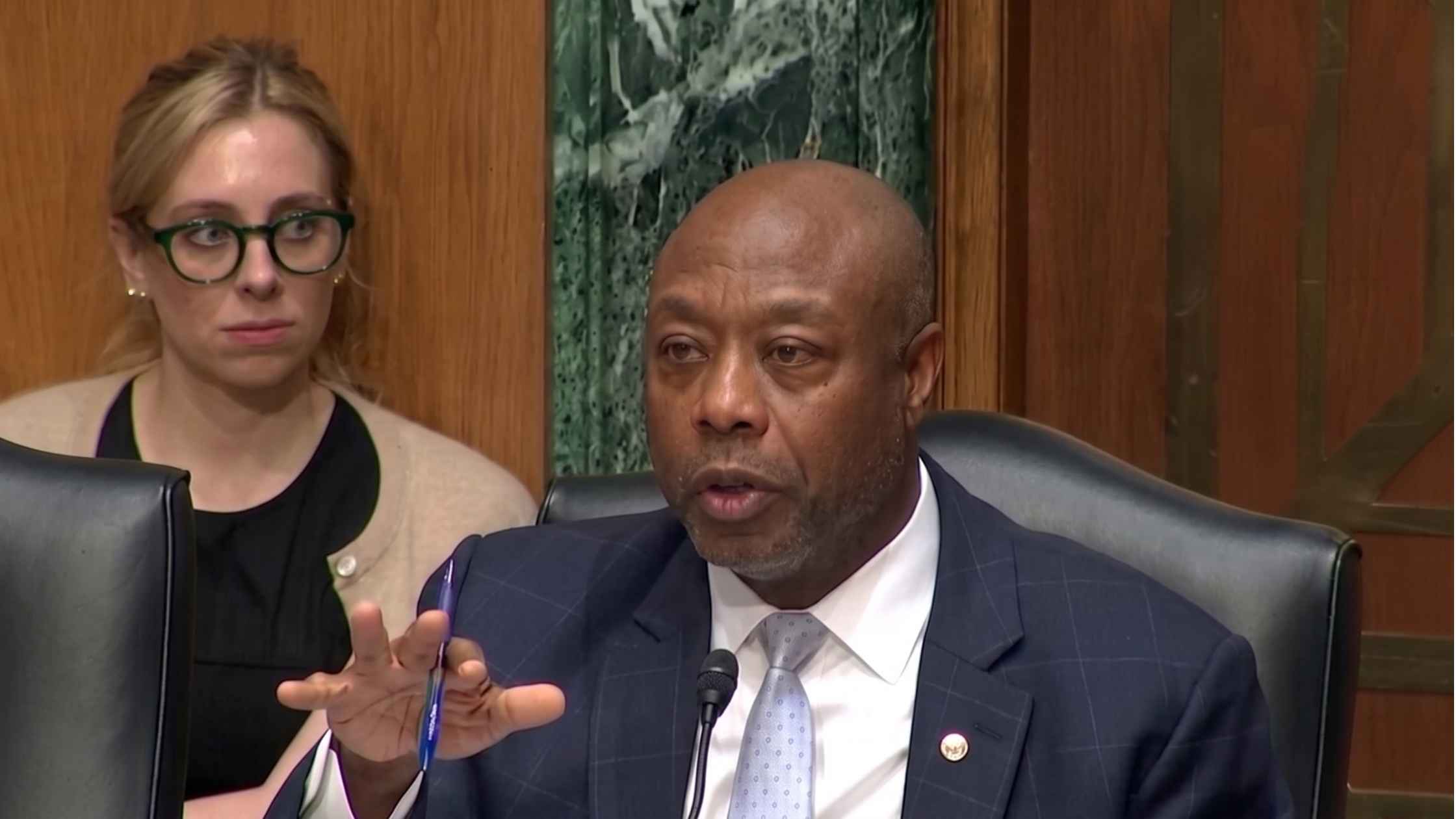
Tim Scott (00:00):
... hearing to order, let me first thank the witnesses for taking the time and making the investment of your talent for this committee to appreciate the issues that are challenging so many Americans around the country. So I really appreciate you guys being here.
(00:13)
Our committee seeks to answer a simple question. How do we make life more affordable for families in South Carolina and, frankly, around the country? That is a question I hear all the time at home. How do we make this economy work for families who are already working hard, but too often, there's just too much month at the end of the money? Housing is too expensive. Food is too expensive. Borrowing is too expensive. Everyday life is simply too expensive. A family in Walhalla, South Carolina, trying to buy their first home, a small business owner in Greenville trying to expand, or senior citizen in Rock Hill, South Carolina, living on a fixed income should not have to wonder whether Washington understands what it means to choose, I mean this sincerely, to choose between prescriptions or groceries.
(01:14)
Affordability is not created by government programs. More red tape or more spending we cannot afford. Affordability comes from promoting competition, innovation, and opportunity. That is why Senate Republicans have been focused on results that will bring relief to everyday Americans. We are approaching the one-year anniversary of the Working Families Tax Cut Bill, a bill that has put more money in the pockets of Americans who desperately need it. Because of this bill, 97% of Americans received a tax cut this year. 97%. And the people who benefit the most are people earning less than $200,000 a year. Hardworking American families will take home more, nearly $300 a month more because of the Working Families Tax Cut Bill.
(02:09)
Let's not forget, every single Democrat in the Senate voted against cutting taxes, which would have led to a $5 trillion, $5 trillion tax increase. This committee has already advanced efforts to improve housing opportunity, create clear rules for digital assets, strengthen our markets, and make the financial system work better for everyday Americans. Our 21st Century ROAD to Housing Act, which just passed the Senate by historic margins, I think it was 85-4 yesterday, almost nothing happens in the Senate, nothing happens in Senate 85-4. We cut red tape. We are unlocking housing supply and preserving local control. I look forward to President Trump signing that legislation into law.
(03:02)
The GENIUS Act, signed into law last year, established the first-of-its-kind regulatory framework for payment stablecoins, fueling financial innovation in America and creating economic opportunity. The next step is solidifying American leadership in digital assets, in completing market structure legislation, and I'm proud of this committee's work to advance Clarity Act on a bipartisan fashion. Beyond legislation, we also have pushed for better implementation of my Credit Score Competition Act. So millions of Americans who are today credit invisible will have an opportunity to earn the kind of credit scores and interest rates that they deserve by populating all of their information on the credit scoring agencies. And we have supported thoughtful regulatory rightsizing that helps protect consumers without driving up the cost of credit. Unfortunately, too many in Washington still believe the answer to every problem is more government. We saw this during the Biden administration. Reckless spending and heavy-handed regulation made life more expensive and made it harder for businesses to invest lenders to serve their communities and builders to build. We should be clear, regulations, they have a cost. When Washington makes it harder for a bank to lend, a business to invest, a builder to build, and an entrepreneur to grow, those costs do not disappear. They show up in higher prices, fewer choices, and fewer opportunities for American families. That is why cutting red tape is also an affordability issue. Agencies should protect consumers, not be weaponized for a political agenda. The Biden administration should never have used the CFPB to target disfavored financial sectors, restrict access to credit, or punish responsible lenders. That made it harder for families and small businesses to access credit while making financial products more expensive. Senate Republicans are working to bring these costs down at the same time the Biden administration was working to raise those prices.
(05:22)
Families in South Carolina and across the country are still living with the consequences of the Biden-era policies in their monthly bills, their mortgage payments, and their household budgets. Families do not need more slogans. They need lower costs, better opportunities, and a government that gets out of the way as Americans try to build a better life. Today, I look forward to hearing from our witnesses about practical steps we can take to lower costs, expand opportunity, improve affordability, and reduce unnecessary regulatory burdens without growing government. Senator Warren, you are now recognized.
Elizabeth Warren (06:03):
Thank you, Mr. Chairman. I want to thank you for holding today's hearing on affordability. It's only Tuesday and our committee has already had a big week.
Tim Scott (06:11):
We had, indeed.
Elizabeth Warren (06:13):
Yesterday, the Senate passed our 21st Century ROAD to Housing Act, and now the House is on its way to passing it, too. This is the biggest housing bill in more than 30 years. It will help build more housing, bring down costs, and, for the first time ever, stop private equity from snapping up homes that families are trying to buy. And your leadership helped make that happen.
Tim Scott (06:36):
Thank you, ma'am.
Elizabeth Warren (06:37):
Our housing bill is an affordability accomplishment that everyone on this committee can be proud of. But it is not nearly enough to offset the economic policies of President Trump and the devastating impact that they have had on American families. So, let's set a baseline. When Trump took office, inflation was down to 3% and headed down. The first thing he did was slap tariffs on nearly every item from nearly every country. These tariffs will cost the average American household more than $2,500 this year. Now, the Supreme Court struck down these tariffs as illegal, and the administration has not lifted a finger to give consumers a refund on the very high prices that they pay. Then came Trump's illegal war with Iran, which caused energy prices to skyrocket. The impact of the war continues to jack up costs for every single sector of our economy. Families have spent $43 billion more on gasoline alone than they would have if Trump had never started this war. Trump spent billions to cut renewable energy projects, the kind of energy that would actually lower utility costs. And Trump and Republicans have sent health insurance premiums soaring, with next year's premium hikes already on track to rival last year's record-breaking increases.
(08:19)
In between these disastrous policies, it has been nonstop Trumpian extravaganza of corruption and incompetence. Anti-consumer mergers that will drive up costs for everything from cable TV to credit cards get rubber-stamped under the shadiest possible circumstances. The CFPB, which has returned more than $21 billion directly to families that have been scammed, has been hollowed out and sidelined. DOGE fired the USDA team responsible for preventing screwworm, and now an outbreak threatens to bankrupt ranchers and send already high beef prices through the roof. And one white-collar criminal after another gets DOJ dismissal or a Trump pardon, sending a clear message that it is okay for wealthy insiders to rip off families and consumers.
(09:26)
And what's the result? Inflation now sits at its highest level in three years, 4.2%, nearly double what it was last year. Americans are paying more for groceries, for healthcare, for gas. The Federal Reserve is forecasting higher inflation, higher interest rates, and slower growth. And the American people can see plain as day that as the economy gets worse, Trump gets more chaotic. Trump focuses on building his golf course and his giant ceremonial arch, getting the right marble for his taxpayer-funded gold-encrusted ballroom, with no thought to the rising costs that are bearing down on Americans.
(10:12)
The same guy who ran for office saying he would tackle inflation on day one now calls affordability a "hoax" and a "made-up word." He says, "I don't think about Americans' financial situation." He says that he "loves the inflation." Trump doesn't care about hard-working Americans. He cares about making himself richer by cutting crypto deals and making thousands of stock transactions with companies whose value he can boost with deregulatory policies or giant government contracts. Trump's billionaire friends are along for the ride. They're getting richer by the hour, while American families are stuck with the bill. The world just got its first trillionaire, and the Trump family's wealth is up by at least $2.3 billion since just last year. And meanwhile, Americans' real wages since Trump was sworn into office 18 months ago have fallen.
(11:25)
Mr. Chairman, I am glad that we are having this affordability hearing today. It is a stark reminder of the president's failures. Americans want Washington to make affordability our first priority. And instead, all Donald Trump is offering are higher prices, more chaos, and unprecedented corruption. I look forward to our conversation today.
Tim Scott (11:49):
Thank you. I now recognize our first witness, Mr. Cody Carbone, chief executive officer at The Digital Chamber. You now have five minutes.
Cody Carbone (12:01):
Chairman Scott, Ranking Member Warren, members of the committee, thank you for the opportunity to testify today. I'm honored to be here this morning.
(12:09)
My name is Cody Carbone, chief executive officer of The Digital Chamber, the world's largest digital asset and blockchain trade association. Our members span more than 250 companies from the world's largest exchanges and banks to startups, innovators, builders, and developers. I'm here to talk about how digital assets can make life more affordable by calling attention to a hidden tax most families never see but they feel: the cost of moving money and the cost of moving assets.
(12:38)
It's simply too expensive and takes too long to move money and assets today. Nearly one in four American households live paycheck to paycheck. And the Federal Reserve reports more than a third couldn't cover a $400 emergency without borrowing. For those families, a credit card swipe fee or a three-day hold isn't just an inconvenience. It's an overdraft, a late fee, or a payday loan. Yet digital assets and blockchain are the first real chance in decades to help people move the money they've earned more easily, to make sending money as simple and efficient as sending an email and to end that tax.
(13:17)
Today, I will discuss how digital assets can help lower costs in three areas. First, the cost of moving money across borders. Americans send more money abroad than any nation on earth, more than $ 100 billion last year. It costs 6.5% to send, more than double the international target, and takes three to five days to arrive. That's more than $6 billion a year skimmed out of working families' pockets. A worker sending $100 home to a foreign country sees only $93.50 arrive. However, if they were using a dollar-backed stablecoin, that family keeps the full $100 and receives it in seconds. The same wall hits the freelance designer in South Carolina paid by a client in Europe or a manufacturer in Ohio paying an overseas supplier, which is why business-to-business payments are already the single largest use of stablecoins today. The rails work and cheaper cross-border payments make American businesses more competitive.
(14:20)
Second, closer to home, more competition in everyday payments. There's real cost embedded in how we pay today, and Americans deserve more choice. A regulated stablecoin is one more option. Cheaper to process, settling in seconds. And it's a tool banks can offer, too. Under the bipartisan GENIUS Act, banks themselves can issue these products. This isn't about taking anything from the system we have. It's letting a cheaper, compliant rail compete, so a merchant can pass a discount to customers at the register.
(14:53)
And third, the biggest purchase most families will ever make, a home. Today, thousands of dollars vanish into the process of transferring a home, closing costs of up to 5%, often more than $10,000, much of it just to establish who owns what and to move the money. Tokenization attacks that directly. It records ownership clearly, settles in seconds instead of weeks, and strips out the layers of middlemen who each take a cut. Independent analysts estimate that cut of tokenization can cut transaction costs by 35 to 65%. This is big in housing, but the same approach reaches car titles, equities, treasuries, small business invoices, and more. And it opens the door the other way, too. Tokenization provides for fractional ownership, which lets a family own a piece of a wealth-building asset for as little as a dollar instead of being locked out like they have for decades. Tokenization is real, it's growing, and the savings are already proven in the institutions using it today.
(15:56)
This committee deserves real credit. The GENIUS Act is working, and finishing the job through the Clarity Act is the best chance Congress has had to set clear rules of the road. Clarity is closer than has ever been, and I'd urge the Senate to finish it this year. Clear U.S.-based rules are what unlock tokenization for ordinary Americans, keeping this activity on shore and creating good-paying jobs. Because in the end, the cost of moving money and moving assets is real. And it shows up in every household budget. The Digital Chamber is proud of our role in helping Americans shed that burden and working with this committee.
(16:32)
Thank you for your time, Mr. Chairman and Ranking Member Warren, and I look forward to your questions.
Tim Scott (16:36):
Thank you very much. All right. Next witness will be Mr. Kevin Brown, the president of the National Association of REALTORS. You are now recognized. And thank you all for your support of the housing bill as well.
Elizabeth Warren (16:46):
Yes.
Kevin Brown (16:47):
Thank you. Thank you, Chairman Scott, Ranking Member Warren, members of the committee. Thank you for inviting me to testify at today's hearing on America's affordability agenda.
(16:57)
My name is Kevin Brown. I'm the 2026 president of the National Association of REALTORS, the largest trade association in the country with nearly 1.5 million members. I'm also a broker-owner with Better Homes Realty Rockridge in Oakland, California.
(17:11)
Every day, realtors work with families and individuals who have saved, worked hard, and maintained good credit, yet still cannot find an affordable home. The numbers are staggering. Housing remains one of the largest drivers of economic growth in the country, making up nearly a fifth of the U.S. economy, but the supply of homes to purchase has collapsed. The American population has grown nearly 30% since 1995, yet the existing housing stock has actually dropped more than 25%, from 1.58 million units in 1995 to 1.18 million units today. The median annual home price has skyrocketed to over $400,000, and the average age of the first-time homebuyer is now 40 years old. This is not sustainable. Thankfully, under the leadership of this committee, meaningful changes are on the way. The 21st Century ROAD to Housing Act is the most consequential housing legislation in decades. The bill strengthens many existing programs and streamlines others while cutting red tape and removing barriers to housing development. In particular, the bill reforms federal housing programs such as the HOME Investment Partnership Program and the Community Development Block Grant Program to be more flexible and effective.
(18:31)
The legislation modernizes financing for rural manufactured and modular housing and updates FHA multifamily loan limits to reflect today's market. It also streamlines federal environmental review and increases coordination across agencies. On the state and local side, it provides resources and incentives, not mandates, to help communities build and preserve homes. The Housing Supply Frameworks Act requires HUD to work with stakeholders to develop guidelines and best practices for addressing zoning policies that block housing production. The bill includes funding to develop pre-reviewed design libraries of ADUs, duplexes, and townhouses that can help streamline permitting. It also creates planning grants to support affordable housing strategies at every level of government and a home renovation pilot to help families preserve the home that they already own.
(19:26)
The House and Senate now agree. We look forward to this legislation being signed into law, adding to other successful reforms from Congress, such as Opportunity Zones and Low-Income Housing Tax Credits. We know the 21st Century ROAD to Housing Act will have the same meaningful impact, but as we all know, there is more work to be done. We know it will take time to build more homes, but we also need to ensure that communities don't adopt short-sighted, quick-fix things to address affordability. In my home state of California, we have seen policies that do more harm than good. While solutions like rent control may be popular, the on-the-ground results only water down personal property rights, discourage more development, and push mom-and-pop housing providers from the market. Property ownership works best when property rights are strong. That's what allows consumers to build and protect equity, the foundation of long-term wealth. While rent control may be seen as a way to protect tenants, in practice, it limits housing opportunities and makes them more expensive. This is why it's critical that the federal government take the lead in meaningful, lasting solutions.
(20:38)
Realtors look forward to working with Congress on additional reforms and policies, such as More Homes on the Market Act, a bipartisan bill that would double the capital gains exclusion threshold on a primary residence for the first time in nearly 30 years, while adjusting the caps to reflect future inflation. Just like people were locked into their homes at lower interest rates, seniors are often locked in because of the home equity penalty. This legislation expands existing housing stock and gives seniors opportunity to tap equity that they have counted on for retirement. In turn, move-up buyers can then buy homes, thus freeing up houses for first-time homebuyers. Additional policy solutions are included in my written testimony.
(21:26)
We know there is no silver bullet that will quickly fix a supply and affordability crisis, but the solutions this committee has championed will help the housing market for decades to come.
(21:36)
Thank you, Chairman Scott and Ranking Member Warren. I look forward to your questions.
Tim Scott (21:40):
Thank you, sir. Next, we'll hear from Dr. Morgan, president of The Century Foundation. You are now recognized.
Julie Margetta Morgan (21:49):
Chairman Scott and Ranking Member Warren, thank you for inviting me to testify before the committee today.
(21:54)
As a public policy think tank dedicated to improving the lives of all Americans, The Century Foundation has been acutely focused on how rising costs are affecting working families. While President Trump is calling affordability a hoax or a fake word and confessing that he does not think about Americans' financial situations, families are dealing every single day with the cost-of-living crisis that Donald Trump promised he would fix. From his first days in office, President Trump has gone back on his campaign promises, layering one price hike on top of another. Starting on so-called Liberation Day last April, the Trump administration set off a series of tariffs that have cost American consumers an average of about $1,700, increasing prices on a wide variety of must-have items, from groceries, clothing, and school supplies, to building materials and electronics.
(22:43)
The Trump administration and Republicans in Congress then pushed through massive tax cuts for the wealthiest Americans, paid for by increasing the cost of healthcare, higher education, energy and food for ordinary families. While the wealthiest Americans got a boost, those tax cuts for the ultra-rich cost the lowest-income families about $1,200 a year. In fact, any benefits the average families may have seen from Trump's tax plan were completely wiped out by a war with Iran that is keeping gas prices at nearly $4 per gallon and has cost families an estimated $100 billion to date. On the Trump administration's watch, some of the biggest expenses for ordinary families have become even less affordable. New car prices hit record highs. Health insurance premiums have spiked. Home prices rose again this last year. And rent and mortgage payments both remain alarmingly high.
(23:35)
And prices are only one side of the equation on affordability. Wages are the other. Since returning to office, the president has directly cut the wages for home health workers and farm workers, wreaked havoc on the agencies responsible for ensuring that workers can exercise their rights, and in 2025, ushered in the worst year of job growth since 2020. The cumulative impact of these policies has been disastrous for working families.
(23:59)
Our research shows that half of Americans report skimping on healthcare services or taking on debt to deal with their rising healthcare costs. Half have had to tap into savings to meet their day-to-day expenses. In one survey, one in three respondents reported that they or someone in their household has skipped meals to save money in the past year. Americans are increasingly forced to use debt to make ends meet, but high-cost loans are pushing families further over the edge. Outstanding credit card balances stand at around $1.25 trillion, with delinquency rates of more than 13%, the highest level since the Great Recession. Student loan delinquencies have also shot up under the Trump administration from nearly zero to about 25%. Auto debt has exploded. Bankruptcy filings increased almost 12% between 2025 and 2026. Home foreclosure filings are up 26% from the last year and are the highest they've been since 2020.
(24:57)
This mountain of debt adds a new dimension to the affordability crisis. Driving down the prices of individual goods and services won't fully alleviate the pain that families are feeling or the drag it places on the economy. Lower gas prices next week don't mean all that much when you're still paying off your price of the pump of the last week or last month's groceries at a 24% interest rate.
(25:20)
Not everyone is losing in the Trump economy, however. The Trump administration has engaged in a relentless corrupt agenda of self enrichment, deregulation, corporate pardons, and sweetheart deals for the wealthy and the well-connected. Some of the beneficiaries are represented here in this room, like the banks that continue to derive excess profits from overdraft and credit card late fees that cost consumers $15 billion a year.
(25:45)
This committee has the power to advance legislation that would help save Americans billions of dollars. I applaud you all for starting with housing, an area of critical need, and I saw this morning that Senator Warren and Senator Moreno are working to save Social Security as well. But with 110 million Americans unable to pay off their credit card balances each month and banks tucking massive profits into historically high interest rates, there is much more to be done. The affordability crisis is not a hoax. It's a backbreaking reality for the vast majority of Americans. This committee must take action to address it.
(26:19)
I look forward to your questions. Thank you.
Tim Scott (26:23):
Thank you, ma'am. We'll now hear from Ms. Lindsey Johnson, the Community Bankers Association.
Lindsey Johnson (26:30):
Thank you. Chairman Scott, Ranking Member Warren, and members of the committee, thank you for the opportunity to testify.
(26:36)
My name is Lindsey Johnson. I'm president and CEO of Consumer Bankers Association, the nation's only trade association exclusively focused on retail lending.
(26:45)
For as long as there's been an American economy, banks have helped families and small businesses build within it. That work often begins with something simple, safeguarding a paycheck, and it grows from there. Banks take deposits and put them to work in communities, helping consumers establish credit, finance and education, buy a car, purchase a home, or start or expand a small business. For millions and millions of Americans, a credit card or a small loan can take a family from credit invisibility to financial opportunity. The same is true for small businesses. Many begin with a founder's personal credit card, grow into a small business loan, mature into an enterprise that takes payments, manages cash flow, hires employees, and serves their communities. At every stage, banks are alongside them. But the true measure of a bank is not just what it does in good times. It's what it provides when life doesn't go according to plan. When a paycheck and a bill don't line up, when a car breaks down, or when hours are cut, bank products can be the bridge between a difficult month and a genuine crisis. A credit card, an overdraft service, a home equity line of credit can help a family absorb a shock, stay current, and keep moving forward.
(27:55)
Banks also provide another layer of support for consumers that they may not see: fraud prevention, payment security, and technology that makes modern commerce possible. Banks do well when their consumers, small businesses, and their communities do well. Today's economy and consumers are remarkably resilient, but affordability is a real concern for many families as essentials like housing, healthcare, food, and transportation, what we refer to in our written testimony as a four horsemen of affordability, continue to pressure household budgets.
(28:25)
As costs have risen, families, particularly those at the bottom of the K-shaped economy, feel it more acutely. Consider the median household making around $68,000 after taxes, or roughly 5,700 bucks a month. Essentials like housing, vehicles, healthcare comprise around two-thirds of their budget. And if you add child care in there, it consumes around 75% of the budget before utilities, gasoline, retirement savings, and other reoccurring costs. By years in, this household has a net savings of around $540 or roughly $45 a month. It's an incredibly thin margin where a single unexpected expense can upend a family budget. And 75% of Americans experience-
Lindsey Johnson (29:00):
... within the family budget. And 75% of Americans experience at least one expense shock a year. On average, that expense shock's around $5,000. For consumers like this, low-cost financial products from Main Street banks can help manage and smooth out those unexpected expenses. Conversely, credit cards and other products and service shock absorbers comprise a very small amount of the consumer's budget, as credit card interest accounted for roughly 1% on average of the household budget in 2024, for example. And overdraft and other fees are even less. Congress, this committee, and the administration deserve credit for advancing solutions focused on core sources of affordability challenges, including pending bank capital rules that are going to enhance banks' abilities to lend, bipartisan work on housing expansion and supply, and support for small business lending.
(29:51)
CBA also appreciates the focus on fraud and scams, a fast-growing threat costing Americans billions every single year. Combating it requires stronger coordination, accountability, law enforcement engagement, and more engagement across technology, telecom, and non-bank marketplaces. As policymakers consider additional solutions, it is so critical to preserve the financial tools that help families manage those unexpected expenses. Quick fixes, like credit card rate caps, may seem appealing, but they simply reduce access to credit and they make it harder for consumers who need it most to access that credit, and instead pushes them to less-regulated alternatives. A better approach, detailed in my written testimony, is to address affordability challenges at their source while maintaining responsible access to credit. Banks cannot solve structural affordability and income challenges alone, but we can and do help families manage through it, ensuring access to essential credit and liquidity in a competitive and sustainable way.
(30:53)
The last six years have presented some of the most unprecedented challenges to the economy and consumers in modern history, yet banks' role to support consumers and small businesses during this time led to much greater resiliency for families, for businesses, for communities, and the broader economy, as banks were the driving force in the fastest post-pandemic recovery in modern history. Banks will continue to serve as foundational partners in American life and will support stability and help families achieve their own American dream. Thank you again, and I welcome your questions.
Tim Scott (31:26):
Thank you very much. Each member of the committee will have an opportunity to ask questions of any of the witnesses for up to five minutes, and then we'll move on. I'll start. One of the things I said during my opening comments was that because of the Working Families Tax Cut bill, 97% of Americans saw their taxes go down, and the focus of those tax decreases were on people making less than $200,000 a year. 100% of Democrats voted against the tax cuts for 97% of Americans. $5 trillion is just a mind-numbing amount, but $250 a month is something I can understand. Giving Americans 250 additional dollars because of our Working Families Tax Cut bill that showed up in tax returns, an increase on average of 11%, is just another way the Republican majority is working on behalf of the American people making 2026 the year of affordability, working in the right direction.
(32:42)
I'd also add to that, comparisons matter. The contrast between the Biden administration years, where the average family was losing more than $1,000 of purchasing power a month, and inflation got as high as 9%. And oh, by the way, don't forget. Bas prices, June of 2022, $4.88 a gallon on average. On top of all of that, one of the most oppressive regulatory environments in modern history brought to us by the Biden administration. Digging out of that hole has taken time, without any question. And when I think about the regulatory burden put on top of the average person in this country, I think about the regulatory options, like Basel III, an initiative coming to the table that fortunately, and thankfully, we were able to dodge that really devastating bullet to the American people.
(33:50)
Now, most people may not be as familiar, Lindsey Johnson, as you are with the Basel III provision. Let's talk about that for a few minutes, because my understanding is the more money you park on the sidelines, the fewer dollars you have for first-time home buyers, starting a small business, purchasing a car. And you add on top of that one regulatory option, another one through the CFPB, spying on businesses, looking for ways to bring more owners' pain into the lives of just working class small business folks trying to make their ends meet. That regulatory pressure, on top of the economic uncertainty, created an instability that I'm not sure that we fully appreciate or have absorbed completely. Thoughts, Ms. Johnson?
Lindsey Johnson (34:50):
Well, I'll start with the conversation around Basel and just capital proposals and regulatory burden generally. You know, your comment is right. We have to get that balance between safety and soundness, and allowing a bank to be a bank, and wanting a bank to compete with all the other non-banks in the atmosphere. More competition means more safe product options. And what we saw before under the Basel III proposal that was released in 2023 was something that outstripped even international standard. It would've made US banks far less competitive, pushed banks outside of certain lending segments, and mortgage, banks are already a much smaller portion of that market than they were before. The more we can get that competition in the marketplace, costs will actually lower, because competition, that's what it's there for.
(35:42)
So that's one example, and then I would say on the CFPB, look, the CFPB, we need a CFPB that's credible, and durable, and stable. We need a CFPB that does a true cost-benefit analysis, a rigorous cost-benefit analysis, to understand how the rules that it's writing are actually going to impact consumers. And oftentimes, whether it was credit card late fee or overdraft, they simply overlooked it. Consumers were going to lose access to these products, by their own admission, on credit card late fees. 74% of people were going to see their costs go up, and that small portion of people who were frequent late payers would see some benefits, but they didn't take into account that their credit score was going to be hurt long term, driving their costs up. We've got to do a better job of having an honest conversation that's apolitical at these agencies, so that we can really drive cost savings to consumers.
Tim Scott (36:33):
With my time that I have left, with just only about 30 seconds, because I'm the chairman, so I can't tell time, Mr. Brown, you said that you have more solutions in your written comments. In about 15 seconds, could you provide us with one solution you think would make housing more affordable that you haven't heard so far?
Kevin Brown (36:51):
Sure. More homes on the Market Act, which is an also bipartisan bill before Congress, provides for a doubling of capital gains, the capital gains exemption, from 250 and $500,000 for a married couple to 500,000 for a single person, a million dollars for a married couple. That would free up... There are people on the sidelines right now, just waiting because they either don't want to pay the tax or can't afford to pay the tax, and so that would free up inventory. You don't have to put any shovels in the ground. There would be instant inventory into the marketplace, where buyers would come in, buy that property, which would free up some housing also for first-time home buyers, so-
Tim Scott (37:31):
Thank you.
Kevin Brown (37:32):
And thank you for your work on that, by the way.
Tim Scott (37:33):
All right. Appreciate that.
Kevin Brown (37:33):
Thank you.
Tim Scott (37:33):
Ranking member.
Elizabeth Warren (37:36):
Thank you, Mr. Chairman. You know, I'm really glad that we are holding a hearing about President Trump's affordability agenda, and I am glad that my Republican colleagues don't seem to agree with President Trump's claim last week that, quote, "Affordability is a fake word made up by Democrats." In fact, I want to ask our witnesses about that. So, raise your hand if you agree with the president that affordability is a hoax made up by Democrats. I'm giving you time here. Okay. No hands up, and I assume that means none of you, Democrats or Republicans, agree with President Trump that the affordability crisis facing American families is a hoax, and that seems right to me.
(38:26)
You know, President Trump's agenda has driven up costs so that families are putting more of everything, from groceries to gas, on their credit cards. Trump's own top economic advisor, Kevin Hassett, recently bragged that, quote, "Credit card spending is through the roof." He's right. Over 100 million Americans have credit card debt now, many of them putting groceries and gas on their credit cards just to be able to make it to the end of the month. And delinquencies are at the highest level since the crash of 2008.
(39:01)
So let's talk about affordability. In January, President Trump promised to cap credit card interest rates. He politely asked the biggest banks to put in place a one-year 10% cap by January 20th. Now, Ms. Johnson, your organization represents some of the biggest banks in the country. We are more than five months past Trump's January 20th deadline. Which banks have implemented the one-year 10% cap on credit card interest rates that President Trump promised to deliver?
Lindsey Johnson (39:42):
So thank you for the question. There's a couple of things I'd love to say. One, banks offer 0% APRs today.
Elizabeth Warren (39:49):
I'm sorry, I had a specific question. Donald Trump told the banks that they should lower their credit card interest rates to 10% by January 20th. He said that's what he would deliver for the American people, promised to everyone in America, and I just want which banks have actually lowered their credit card interest rates to 10%. Can you give me their names?
Lindsey Johnson (40:13):
There are definitely options that are low-cost APR options.
Elizabeth Warren (40:16):
I'm sorry, which banks have lowered their credit-
Lindsey Johnson (40:18):
But the problem is-
Elizabeth Warren (40:18):
... card interest rate to 10%? Are there any that are at 10%? Can you name one?
Lindsey Johnson (40:26):
I can tell you that there are options today available.
Elizabeth Warren (40:27):
Can you name-
Lindsey Johnson (40:28):
They don't have a cap-
Elizabeth Warren (40:29):
... one bank-
Lindsey Johnson (40:29):
[inaudible 00:40:30] percent that they will offer.
Elizabeth Warren (40:31):
... that has lowered its credit card interest rate as President Trump-
Lindsey Johnson (40:35):
And no bank-
Elizabeth Warren (40:35):
... politely asked?
Lindsey Johnson (40:35):
... wants to cut off credit to people-
Elizabeth Warren (40:37):
Has there been one?
Lindsey Johnson (40:38):
... with below 800 credit score.
Elizabeth Warren (40:39):
Has there been one?
Lindsey Johnson (40:40):
Including advocates who-
Elizabeth Warren (40:41):
Has there been one? One?
Lindsey Johnson (40:45):
There are options in the marketplace for sure, but-
Elizabeth Warren (40:47):
So not a single one has followed through on what President Trump told them to do. So, President Trump and the big banks, they don't provide the 10% cap on credit cards. Ms. Johnson, how much more have Americans paid in interest on credit cards than they would have paid if the cap the president promised had taken effect? What's the number?
Lindsey Johnson (41:12):
So again, I want to go back to the rate card-
Elizabeth Warren (41:14):
What's the number?
Lindsey Johnson (41:16):
So we have not done that calculation.
Elizabeth Warren (41:17):
I'll bet you haven't-
Lindsey Johnson (41:17):
I do want-
Elizabeth Warren (41:18):
... done that calculation.
Lindsey Johnson (41:18):
I do want to-
Elizabeth Warren (41:19):
But here's the thing, I have.
Lindsey Johnson (41:20):
I'm sorry.
Elizabeth Warren (41:21):
It's $57 billion in credit card interest rate above 10%, that Americans have paid since January 20th. By the way, if you just do the math, that's $368 million a day. Now, President Trump promised he was going to make banks lower credit card interest rates for families by January 50th, January 20th, and so far, families have been paying 368 million a day for Donald Trump's broken promise. Now, we know that families have less money to spend and are falling behind on their bills thanks to Donald Trump's economic policies. Dr. Morgan, if you can tell me very briefly, how are people coping with these tighter finances?
Julie Margetta Morgan (42:10):
I mean, families are really struggling. As I said earlier, one in three are skipping meals, they're skipping medications that are prescribed by their doctors, they're skimping on healthcare services, and they're turning to debt. I think it's important to know that's a both-and, right? We're seeing people both cut back on the things that they need to live their lives and also put their expenses onto high-cost debt, both credit cards, buy now pay later, paycheck advance loans.
Elizabeth Warren (42:37):
Thank you. You know, President Trump may love inflation, but it's killing American families. Congress needs to work together to fix the president's failed economic agenda and to make life more affordable for all Americans. Thank you, Mr. Chairman.
Tim Scott (42:52):
[inaudible 00:42:55]
Speaker 1 (42:56):
Thank you, Mr. Chairman. Look, I really appreciate the fact that the chairman and the ranking member have come together to have this discussion on where the costs are right now for American consumers, and I think it's really important that we talk about all of the impacts. I noted that there's always a desire to have your cake and eat it too, and sometimes that's not possible, particularly when we talk about how we go about financing activities in our daily lives. I'm just curious, Ms. Johnson. You represent a lot of banks that issue a lot of credit.
Lindsey Johnson (43:33):
Mm-hmm.
Speaker 1 (43:34):
How many people today have credit cards in America?
Lindsey Johnson (43:39):
A couple hundred, actually almost 282 million people have credit cards. Yeah.
Speaker 1 (43:45):
282 million people have credit cards today? Can you imagine not having credit and being able to survive in today's digital economy? I'm just curious. I mean, we use them to get on an aircraft, but we also use them to literally do digital shopping, anything over the internet at all, telephones, we pay for with a credit card in most cases. Just thinking back about this thing here, one of the greatest threats to a lot of people being able to survive on a day-to-day basis is if they couldn't get credit. What would happen? I'm just curious. I think the president really wanted to find a way to try to suggest that he wanted the marketing side of things to be able to be incentivizing and to offer people low-interest rates, but a lot of credit card companies offer 0% interest rates for short periods of time. Can you talk a little bit about what would happen if... And I presume you've done the work on it because you represent the banks that really issue these cards. What would happen? What would be the impact if government were to step in and artificially say, "You have to have an interest rate of 10% or less on credit cards?" What would happen to the number of people that would have availability of credit cards today?
Lindsey Johnson (45:08):
So it's such an important question and it's the right question, because ultimately, it's the best way to make sure that someone only with an 800 credit score has access to credit.
Speaker 1 (45:17):
You said what?
Lindsey Johnson (45:18):
Only people with an 800 credit score would have access to credit. [inaudible 00:45:22]
Speaker 1 (45:21):
So how many people don't have an 800 credit score today out of those hundreds of millions of people that have credit cards?
Lindsey Johnson (45:32):
It would restrict credit for around 75 to 80% of the current market. We anticipate-
Speaker 1 (45:36):
75 to 80%-
Lindsey Johnson (45:37):
... that that would be around-
Speaker 1 (45:38):
I'm sorry, but say that-
Lindsey Johnson (45:39):
... 150 million-
Speaker 1 (45:39):
75 to 80% of the current credit card holders?
Lindsey Johnson (45:44):
Yes.
Speaker 1 (45:45):
And how would that happen? Would they simply lose them on day one, or what would happen?
Lindsey Johnson (45:49):
It would be fairly quick. It would be fairly immediate. Because ultimately, risk-based pricing allows issuers, and there's 4,000+ issuers that compete for consumers' business every single day, to go out there and make sure that consumers have access to this necessary liquidity and source of credit in a very sustainable way. You can't do that for free, and part of this is making sure that we have plenty of options. And you mentioned the 0% balance transfers. There were 60 billion in balance transfers last year, in 2024, alone. We are focused on making sure that consumers understand those different options, but to simply take away a source of credit for consumers seems incredibly punitive.
Speaker 1 (46:34):
You know, in the 1980s, we had a tough time on the ag markets in South Dakota. We had usury rates in place, and because we had usury rates in place, there were banks that simply wouldn't loan to farmers anymore, because, well, it was been a tough time. A lot of the guys were struggling, and yet in order to put seed in the ground in the spring of that year... Bill Janklow was governor at the time, and he looked at it and he says, "Look, I don't care if it does cost a little more interest rates. We've got to get these guys some credit so they can actually put their crop in the ground." It's the reason why South Dakota at that time eliminated their usury rate. In doing so, banks charged more than what the traditional usury rate was, but we had farmers that survived because they could actually borrow the money.
(47:24)
My concern with this whole discussion is that you say we've got over 4,000 different banks that issue credit cards today. I'm just wondering. It seems to me that these folks that have got these great ideas about issuing 10% credit rates, out of the 4,000, I'm sure one or two of them could do that today, but I'm just curious why we don't have some new startups by these folks that have got these great ideas, and they could issue 10%. In fact, they could go to 8%, and they could get a lot of people coming in. I wonder how long they would actually be able to continue to offer that rate based just upon the individuals that might not be able to qualify for a regular card, but would love to have that interest rate. Is there a reason why we don't have a lot of people offering that 10% interest rate today?
Lindsey Johnson (48:10):
It's just simply not sustainable. The worst thing we can do for a consumer is to extend them a product that they cannot afford to pay back. One of the things... And I do want to just push back on a couple of the different comments about the overall balances if I've got a second, because-
Tim Scott (48:26):
About 10 seconds.
Lindsey Johnson (48:26):
Okay-
Speaker 1 (48:27):
Could you loan me 30 seconds?
Tim Scott (48:29):
I loaned myself 30, so-
Speaker 1 (48:30):
Thank you.
Tim Scott (48:32):
[inaudible 00:48:31] there.
Lindsey Johnson (48:32):
One of the most important things to understand is that through the pandemic, over the last six years, really eight years, 40 million new people came into this market, so when we talk about balances being $1.2 trillion, that's because we've got a lot more people who have access to this very important source of liquidity. You did have higher prices, so balances also went up. That is what drove APRs. APRs are not a bank profit. APRs are how we extend credit.
Tim Scott (49:04):
Thank you.
Speaker 1 (49:04):
Thank you. Thank you, Mr. Chairman.
Tim Scott (49:05):
Yes, sir. Senator Van Hollen.
Chris Van Hollen (49:07):
Thank you, Mr. Chairman, and thank you for holding this hearing. I think it's indisputable that families all over the country are seeing prices and costs go up. In President Trump's first year, families paid 310 more dollars for groceries than they did in 2024. They paid 110 more in electric bills than the year before. Now, I think we all recognize that the economy is complex and price increases cannot always be attributed to the policies of the president or administration. In this case, it's pretty clear they can be. Because of the president's tariffs, families have paid $1,700 more in tariff costs. Gas prices are up 40% thanks to President Trump's catastrophic war in Iran. And so as of last month, inflation now stands at 4.2% annualized rate, which is the fastest growth in three years.
(50:08)
Now, we have heard President Trump say recently that he, quote, "Loves inflation." He's also said that affordability is a fake word made up by Democrats. So Dr. Morgan, just to sort of level-set on facts, is the affordability crisis a hoax made up by Democrats, or are people experiencing price increases because of the Trump administration policies?
Julie Margetta Morgan (50:35):
It is not a hoax. This is something that families are dealing with every single day.
Chris Van Hollen (50:40):
And so I want to talk briefly about the other side of the affordability equation, right? On the one hand, we all face costs and prices. On the other hand, our ability to afford them depends on the income we've got, what money we have in our pockets or bank accounts. And so I do think it's worth taking another look at what was President Trump's signature legislative policy accomplishment. He would call it an accomplishment. I think it was really bad for the country. And that was what they called their Big Beautiful Bill, which provided huge tax cuts to the very wealthy at the expense of everybody else. Dr. Morgan, it's correct to say that the wealthiest taxpayers benefited the most from that so-called Big Beautiful Bill, right?
Julie Margetta Morgan (51:32):
That's correct. The wealthiest taxpayer benefited the most, and the bill actually cost the lowest-income families money because of the cuts to Medicaid, and SNAP, and other programs.
Chris Van Hollen (51:43):
Right. And just to emphasize the point, I think we should look at this chart that shows that the richest 1% of income earners got 22% of the benefit of those tax cuts, and overall, the top 20% income earners got 72%. I will also say, this distorts the picture over time, because some of the tax cuts that went to sort of middle class families included things like the no tax on tips, which actually, I think is a good idea, although I think if you're in that income level and your income's not just in the form of tips, you should also get a break. But those were all sunset, right? Those tax cuts for working people are going to sunset in a couple years, right?
Julie Margetta Morgan (52:32):
That's right.
Chris Van Hollen (52:32):
And so this will get even worse in terms of the distributional impact. In fact, so bad is the situation that the White House tried to reframe and relabel its bill to Working Americans Tax Cut Act. I mentioned that because I have introduced a piece of legislation called the Working Americans Tax Cut Act that gives 100% of the tax cut benefits to people who are not in the top 20%, compared to the Trump Republican plan that gives 72% of the benefits to people who are in the top 20%.
(53:10)
Let me just turn with my remaining time to overdraft fees, because families paid more than 12 billion in overdraft fees last year. They can often be small. I mean, you can go and get a cup of coffee and not realize that your three-buck cup of coffee ended up getting you a $35 overdraft fee. And banks love these. I mean, the rates can be as high as 16% effective annual interest. In fact, they did so well that there was one sort of middle bank executive whose bank rakes so much in on overdraft fees that they named their boat Overdraft.
(53:53)
Now, in 2024, CPB tried to work to rein these costs in, but when the Trump administration came in, they lifted it, and the impact has been, as I say, $!2 billion in overdraft fees. Isn't it true, Dr. Morgan, that overturning these rules hurt consumers and helped boost bank profits?
Julie Margetta Morgan (54:16):
Absolutely. You know, the cost to Americans for dialing back this rule is about $5 billion. And you know, I think it's really important to put this in the context of what we're hearing from the representatives of the banks here today. You know, the banks will kind of frame overdraft fees as something that's necessary to provide a service, but overdraft actually used to be a courtesy to bank customers and it's turned into a profit center for the banks. So we see the banks and their lobbyists fighting really hard to keep these fees in place in order to maintain those profits at the expense of consumers. And then we see the Trump CFPB really shifting from an organization that represented consumers to an organization that represents industry interests.
Tim Scott (55:03):
Thank you so much.
Chris Van Hollen (55:03):
Thank you.
Tim Scott (55:03):
Senator Tillis.
Thom Tillis (55:04):
Thank you, Mr. Chairman. Ms. Johnson, have you looked at the what I consider to be largely failed attempts to cap credit card rates in other jurisdictions?
Lindsey Johnson (55:20):
We certainly have. I mean, there's-
Thom Tillis (55:20):
Give me an idea of how the movie ended.
Lindsey Johnson (55:22):
Yeah. Look, it never works. We have a ton of data. We've got a ton of history to learn from. Illinois's a great example.
Thom Tillis (55:28):
I was about to ask you about Illinois. What I've seen in the Illinois example, at least one, I believe Senator Marshall's the other cosponsor of the amendment on credit cards, so this is not just a Democrat-Republican thing. We have an honest disagreement among Republicans. Go through a few of the things that happened when Illinois did the arbitrary rate cap.
Lindsey Johnson (55:49):
Look, they even had a 36% all-in rate cap, and what ultimately happened was nearly 40% of subprime borrowers simply lost access.
Thom Tillis (55:59):
44%. Let's see, loans to subprime borrowers decreased by 44%. Loans to deep subprime borrowers decreased by 57%. 40%... Let's see, financial wellbeing sentiment dropped by 40%. 11% reported an improvement. So it doesn't look like it's something that you would consider to be a best practice, does it?
Lindsey Johnson (56:21):
No. Absolutely not.
Thom Tillis (56:23):
Has it been implemented in any international jurisdictions or other countries that you've studied?
Lindsey Johnson (56:28):
Look, there's the-
Thom Tillis (56:30):
How were the results there?
Lindsey Johnson (56:31):
Again-
Thom Tillis (56:32):
Remarkably similar, right?
Lindsey Johnson (56:33):
Terrible. Yeah.
Thom Tillis (56:33):
Just like my god. I mean, you know how-
Lindsey Johnson (56:35):
Time and time again.
Thom Tillis (56:36):
... this movie's going to end.
Lindsey Johnson (56:36):
It just didn't work.
Thom Tillis (56:37):
I don't care-
Lindsey Johnson (56:37):
[inaudible 00:56:38]
Thom Tillis (56:38):
... which release it is, whether it's Toy Story 1 or Toy Story 5. You know, it's my god. It's not going to end any differently.
Lindsey Johnson (56:46):
Correct.
Thom Tillis (56:46):
I don't even know why we're having this discussion. And then the whole concept of not being able to rate for risk.
Lindsey Johnson (56:53):
Yes.
Thom Tillis (56:53):
In anything.
Lindsey Johnson (56:56):
Risk-based pricing is so important [inaudible 00:56:57]
Thom Tillis (56:57):
I mean, you're helping people from themselves. I get that it used to be... An overdraft fee used to be a courtesy. And you know what? The last time I checked, a lot of the banks still give you one or two passes. But when it becomes a chronic problem, at what point are you expected to actually know how much is in your bank account before you write a check? That's what this is. It's nothing more than that. It's financial literacy. I'll put money into financial literacy. I'll put money into real time, "Don't write this check because you're about to get money and you've gone over the customary limit that banks will actually write off." Everybody's talking about, like, banks get you. It's a profit center. I don't know of any bank that doesn't give you a forbearance on the first two, three, four, or five overdraft fees, but folks, at what point do you actually have to own responsibility for a bank account? I mean, to me it's that simple, but maybe I just don't get it. We talk about affordability as if it's something new, and that's bogus too. Affordability is always a problem, folks. It's just a matter of where it is on the margins.
Thom Tillis (58:00):
Always a problem, folks. It's just a matter of where it is on the margins. I've said this repeatedly in this committee. I know when I had an affordability problem, it's when we weren't living in a house anymore. We were living in a trailer. And I saw the overreach of regulatory and environment, and the Carter Administration put me back in a trailer park, because they were well-intentioned but poorly implemented policies. Every time we try to artificially gloss over some of the problems that we have here, with financial literacy, making sure that people really understand to spend within their means, government tries to help me out, and I'll be damned if it's not the times it sends me back into that trailer park. When we start paying attention to the people who are really on the bubble, and I'll tell you right now, we got a real problem, because we got some rich people making a lot of money, but we've got some people on the bubble that are hurting.
(58:53)
And instead of talking around all this stuff and coming up with all these artificial constructs that have been empirically proven to fail. Point to one. In fact, I've got a minute left, if somebody's got an example of one of these arbitrary rate caps that have worked, I will yield my time and you can explain it to me right now. I got 45 seconds left, I want somebody who has expertise in this field to explain it to me right now. When did it succeed? I've got a list of failure. All I've asked was a simple question, point to the one time in the whole history of the world, and credit cards globally, where it's worked once.
Elizabeth Warren (59:35):
I got it, and that is when the giant corporations-
Thom Tillis (59:38):
No, you didn't answer my question.
Elizabeth Warren (59:39):
No, no, I'm not-
Thom Tillis (59:40):
All I asked was... I'm sorry, I'll reclaim my time, Mr. Chairman. I just want one. I'll go for a second round if somebody needs more time, one example of where this precise policy worked.
Elizabeth Warren (59:55):
I have one example.
Thom Tillis (59:56):
It's going to be a short discussion. As a matter of fact, I've got five seconds left now, and there's still no one here that's going to be offering up one successful example.
Elizabeth Warren (01:00:04):
I'm here.
Thom Tillis (01:00:05):
My time has expired, Mr. Chair.
Sentor Smith (01:00:16):
Mr. Chair.
Elizabeth Warren (01:00:18):
I just can't bear anymore attacks on President-
Tim Scott (01:00:25):
Ranking member. Ranking member. Let's do this. Let's abide by the rules.
Sentor Smith (01:00:29):
Mr. Chair.
Tim Scott (01:00:29):
Rules by the chair.
Sentor Smith (01:00:31):
Mr. Chair, I've got-
Tim Scott (01:00:33):
Senator Smith, if you are willing, I will give the ranking member 30 seconds, and I'll give you a 30-second rebuttal, and then we'll go to you. I'm happy to hear this. If there's an example, I want to hear the example.
Sentor Smith (01:00:45):
I was going to defer to the ranking member to answer this question, and then I would love to have my five minutes to talk about affordability in small towns.
Tim Scott (01:00:54):
Ranking member, we are being civil, by the way. This is great. A public discourse, a public discussion where there's strong disagreement is actually good for the public to hear.
Thom Tillis (01:01:03):
It's not a partisan thing, because we have people on my side and y'all feel the same way. [inaudible 01:01:10].
Tim Scott (01:01:12):
30 seconds.
Elizabeth Warren (01:01:13):
Thank you. I just wanted to remind my colleague that back during the COVID crisis, the financial institutions all were given free access to overdraft their accounts at the Fed. It saved them literally billions of dollars, because they could get free access to money when they didn't have money in their accounts. And the government politely asked them to extend the same courtesy to their own customers, which they refused to do, and they raked in billions more in profits.
Tim Scott (01:01:51):
30 seconds up.
Elizabeth Warren (01:01:52):
So it worked for the big boys, it just didn't work for the little guy.
Thom Tillis (01:01:55):
So it's never worked before, but I look forward to somebody presenting the first successful implementation. Thank you, Mr. Chair.
Tim Scott (01:02:00):
All right. Senator Smith, it's your time, but... Senator Smith it's still your time.
Sentor Smith (01:02:07):
Well, thank you, Mr. Chair, and ranking member. And I'm going to shift this conversation to... I want to understand, and have a bit of a conversation about how this so called affordability agenda is working in small towns and rural places. And Dr. Morgan, I have a question for you. I come from Minnesota. This is a place where food and agriculture are economic drivers in my state, and farmers are telling me that things are tough, that in fact, it is so much harder to afford to run their businesses than it was just a couple of years ago. Farm Bureau says that farm bankruptcies were up nearly 50% last year, and Minnesota has the most farm bankruptcies of any place in the country in the first quarter of 2026.
(01:02:53)
So what's driving this? I mean, first, fertilizer prices, diesel prices, input costs for farmers are going... They're the highest that they've been in years. And then of course, the chaotic tariff policy has made it very, very difficult for Minnesota producers to find access to markets that were their markets even just a year or so ago. So, it's pretty clear to farmers in Minnesota that this is a bad situation for them. I'm wondering, could you talk to us a little bit about, excuse me, how this affordability agenda looks like for farmers in this country?
Julie Margetta Morgan (01:03:29):
Yes, absolutely. So, you hit on many of the main points here. Fertilizer prices spiked after the Trump tariffs went into effect. In fact, the Trump Administration had to actually exempt a number of fertilizers from those tariffs, and then they jumped again with the war with Iran. So, we're seeing both fertilizer prices up high. As you mentioned, diesel prices are up, electricity prices are up as well, and all of these are squeezing small farmers who are just trying to stay afloat, and who often have very thin margins. I think it's really important to point out that for people living in rural communities, that's kind of just the tip of the iceberg, right?
Sentor Smith (01:04:09):
Yes, right.
Julie Margetta Morgan (01:04:10):
So, in addition to what they're dealing with in their small businesses, we've found that school districts across the country are really struggling with many of the same affordability challenges that individual families are struggling with, including higher electricity prices, higher gas prices, especially in rural areas where busing is a really big component of a school system's budget. And then the cuts that the Trump Administration and Congressional Republicans have made on healthcare.
Sentor Smith (01:04:36):
Right. I'm really glad you raised this, because this is a huge issue. You think about the economic impact of rural hospitals is just one example on the economic vitality of small towns, not to mention the importance of having access to healthcare in small towns and rural communities, and so talk a bit about that, and what those impacts are on rural communities, in terms of their ability to afford stuff and get access to the stuff that they need.
Julie Margetta Morgan (01:05:03):
Yeah, absolutely. So, we're seeing a double whammy here from the impact of tariffs, which have also had an impact on healthcare pricing for the services that hospitals offer, as well as the impact of the cuts to Medicaid, the failure to extend the ACA tax credits. And so rural hospitals are the ones that are being hit the hardest. And what we're seeing is that they're pulling back on services, so people are having to drive farther and farther to get access to really basic services like emergency services or maternity health. So, it's turning into a really big crisis. It's the kind of situation where people can really feel the affordability crisis every time they try to get a doctor's appointment or seek emergency services.
Sentor Smith (01:05:44):
And so I want to just take a minute also to talk about the impact on food. So first, you've got the question of what is the residual impact on global food prices with the lack of access to fertilizer that's happened because of the Iran war, and what that means about food prices going up potentially as we get into the second half of this year. And that'll of course, have an impact on all communities, not just rural communities. Could you address that?
Julie Margetta Morgan (01:06:08):
Yes. The price of food has gone up pretty much across the board. The Century Foundation and the Groundwork Collaborative have put out a number of reports tracking the cost of foods. We typically tie them to holidays, so you see the cost of hams going up, the cost of hamburgers going up around Memorial Day, Halloween candy. So, you have this rise in price that we're seeing people, and I know the CBA alluded to this, putting onto their credit cards, but we've also had this enormous dialing back of SNAP benefits.
Sentor Smith (01:06:40):
Right.
Julie Margetta Morgan (01:06:40):
So, four million people have lost access to SNAP benefits and are really struggling to find food, which is where we see these findings that about one in three people are actually skipping meals in order to try to endure this affordability crisis.
Sentor Smith (01:06:55):
And if you add on to that, that the so-called one big beautiful bill included this big cost shift onto counties. Many of them read counties, who are now having to pay for more of those SNAP benefits that they've done in the past. And that's putting a huge pressure point on county budgets, and is forcing counties to think about additional cuts to SNAP, which is also going to make it that much harder to afford your life in small towns and rural communities. Thank you, Mr. Chair.
Tim Scott (01:07:20):
Yes, ma'am. Senator Kennedy.
Senator Kennedy (01:07:29):
Thank you, Mr. Chairman. I have to say I'm a little disappointed. You all seem like fine people, and here's... I can't see... Mr. Carbone, you seem to be here to promote cryptocurrency. I love cryptocurrency, but I don't think that's the problem with our economy. Mr. Brown, you're here to promote realtors. I love realtors, but that's not going to solve our economic problems. Ms. Johnson's here to promote banks. I love banks. Dr. Morgan is here to bash Trump without telling us that she formerly was part of the Biden Administration and worked for Mr. Chopra at the CFPB, and that your policies caused inflation to go to 9%. I think those would have been relevant things to tell us. I guess you thought we weren't going to look up your background.
(01:08:48)
Can we agree that the problem of affordability is the prices are too high? Duh. Does anybody disagree with that? And prices are too high because of inflation. Does anybody disagree with that? And inflation, despite Dr. Morgan's political beliefs, is not just a Trump problem, it was a Biden problem. Was it not? Okay, so here's my question to you. Let's start with you, Ms. Johnson. How do you get prices down? That's what we're here for. How do you get prices down?
Lindsey Johnson (01:09:35):
Well, we think a lot of the things that you all are doing, focusing the committee on the sources-
Senator Kennedy (01:09:40):
Tell me how to get prices down.
Lindsey Johnson (01:09:41):