Mr. Scott (00:11):
They don't have the information they need. Our country has allowed the U.S. health care system to operate in the shadows without price transparency or true consumer choice, and the result is a complicated system of inflated prices shrouded in secrecy that forces American to ask the wrong questions instead of asking, is this the best doctor for my needs? We ask, is this doctor in my network? Instead of asking if the cost of the surgery or medicine could be more affordable or better quality elsewhere. We ask, how much is the copay? Trying to navigate the bureaucracy to get answers to healthcare costs and pricing can be incredibly intimidating, especially for vulnerable populations like many in our aging community. With health care emergencies happen, we don't always have time to research and shop around for our best option, but for a huge section of our healthcare needs, there is clearly a better way to operate for everyone from patients to doctors.
(01:07)
What I'm talking about is known as shoppable services and they include elective surgeries, lab tests, prescription drugs, and more. These kinds of healthcare services make up roughly 40% of all healthcare costs and there are significant potential to introduce consumer-driven free market reforms like price transparency into this space to help drive down healthcare costs for all Americans, including our aging population. We know some sites and pharmacies charge more than others for these exact same shoppable services. For example, hospitals charge more than ambulatory surgical centers. In Medicare, we try to address this problem through site-neutral payment reform, but in the commercial insurance space, things get more complex. That's because in the current commercial marketplace, it's up to every insurer to reach a cost arrangement.
(01:56)
With healthcare providers, those agreements have different reimbursement rates and those differences get passed on to consumers at different rates. Because of these agreements, the cost differences are not always tied to quality, meaning two patients could be receiving the same treatment, but one could be paying significantly more because of the cost agreement made behind closed doors and they could actually get a completely different quality and different service not tied to price at all.
(02:23)
For example, MRIs are essentially fancy cameras that take life-saving pictures. You have a digital camera, you have a phone, how much your neck picture costs? Yet there is a wide disparity in pricing and cost passed onto the patient depending on their insurance provider. Lab tests, they're the same. The cost of a test can vary widely by providers, but you're receive the same quality lab result no matter what you or your insurance provider is paying. Generic drugs, which is up to 90% of the drugs dispensed at a pharmacy, there typically isn't upfront price transparency for consumers to price shop. That makes no sense. I typically quote more specific pricing examples, but providers don't like to publicly list their prices and rely on hiding the actual cost of services they're providing. Not only does this secrecy make it difficult for consumers to make smart market-driven choices, it allows prices to inflate and drives up costs for everyone.
(03:19)
Price transparency is not a partisan concept. It's common sense. When patients can see prices, they can make informed choices. When providers compete on price and quality, costs go down. Because we don't operate this way right now, there's too much inflated pricing in the healthcare system, and that's true whether you're in New York or whether you're in Florida. The current system simply does not incentivize people to seek lower cost options. Healthcare doesn't have to be any more complicated than a lot of other things. I spent most of my life in business and I've run one of the largest healthcare companies in the world. I learned pretty quickly that when you make things simple, give people price transparency and focus on outcomes of quality, the result is lower costs, healthier patients, and a better system for everybody.
(04:07)
Today, we have the opportunity to hear from witnesses who have put what I've said into action and look forward to hearing how they are working to provide service for our aging population and all Americans. I'm also eager to hear their thoughts on how we can work to empower patients to make decisions and reduce some of the inflated costs in our healthcare system. Hope today's hearing will be the start of a discussion on how price transparency and competition can drive down costs, improve quality for all Americans, but especially our aging population. Now, I welcome the ranking member, senator from New York, Senator Gillibrand for her opening statement.
Mrs. Gillibrand (04:42):
Thank you Chairman Scott and thank you for calling today's hearing. Thank you to all our witnesses. This is going to be an excellent hearing. Everyone in this room today is here because we all agree that the cost of healthcare is too high. In the richest country in the world, it is unacceptable that one in three adults skip or postpone getting healthcare that they need because of the cost. It's unconscionable that one in three adults do not take their medication as prescribed because of costs. This afternoon, we'll hear from a wide range of witnesses who will share their expertise on how Americans' ability to shop for health plans, medical services and drugs can help them access the care they need at a cost they can afford. Every year during open enrollment, tens of millions of Americans visit the health insurance marketplace to shop for a plan that works for their family.
(05:34)
They're able to see if plans include the doctors that they need or the medications that they need and weigh the differences between them based on premium costs, deductible amounts, and other factors that matter to their households. It's the ultimate shoppable service. Unfortunately, at the end of this year, crucial tax credits that help hardworking families afford the marketplace health plans are going to expire. On average, these families will have to pay more than twice as much for their premiums in 2026 and many enrollees will have to pay more. Its costs they definitely can't afford. Nearly 5 million Americans will likely lose their healthcare coverage and become uninsured. These enhanced tax credits particularly help many of the 5 million adults between ages 50 and 64 who buy their insurance through the marketplace.
(06:24)
These enrollees are people who've had to scale back hours at their job to care for aging parents, people forced to work part-time until they retire because of a physically demanding career or people who retire early and can't get private insurance because of pre-existing conditions. Over half of the people said to lose tax credit eligibility altogether are within this age range, many with incomes just above the eligibility cutoff for the standard tax credit. By January, they could pay tens of thousands more in premium costs. That's a lot of money out of your pocket when you're trying to save for your retirement. In nearly every state, because of age rating, older adults can already pay nearly three times as much as younger adults do for the same plan. Losing tax credit eligibility will compound those higher costs. These older enrollees also have a greater healthcare need. Even if their premium costs increase dramatically, they're more likely to keep their bank breaking coverage and be forced to make difficult choices between basic necessities, whether it's food or rent.
(07:31)
Older adults who ultimately lose their coverage may avoid seeking care until their needs become an emergency and will then enter the Medicare program at 65 in poorer health and ultimately require more cost intensive care. I've heard from a lot of constituents across the state about the positive impacts that these enhanced premium tax credits have had on their ability to live… And potentially have to make those devastating choices that will make it very difficult to survive. One constituent asks, do I pay for my healthcare coverage and be healthy or pay for the food that I feed my family? This is what it comes down to. I'm always going to choose my family. So, now, if I go to a doctor for my debilitating migraines or my diabetes or emergency care, I'll have to pay more out of pocket because I can't afford the premiums.
(08:24)
Another constituent shared, I depend on my health insurance for daily medication, frequent appointments and procedures. I'm a New Yorker that has worked full-time since I was 19 and still can't get ahead in life. I can't afford to see the doctors without insurance and my employer plan is unaffordable. What am I supposed to do? These enhanced premium tax credits have been a key driver of the record 24.3 million Americans being signed up for coverage in the marketplace. They play a vital role in bringing down the cost of accessing high quality care for many enrollees. The cost of care is still incredibly high and this is not the entire solution, but it will address an urgent affordability crisis that's happening right here, right now. For example, people in Idaho have already started signing up for coverage and in less than 10 days, people will across all the other states too. If Congress doesn't act to extend these credits before enrollment begins, Americans will experience sticker shock at the rate hikes and may decide to drop coverage with only a very slim possibility of them ever being able to come back.
(09:32)
I stand ready to work with my colleagues on this to reach a bipartisan deal and extend the critical tax credits that will allow consumers to shop for healthcare plans that cover the cost of medical services and drugs and what they need to get for their healthcare. I look forward to the discussion about how to lower costs. I know you all have some really great ideas that I want to hear about, and I'm excited that this committee is working on how we best lower costs. Thank you.
Mr. Scott (10:00):
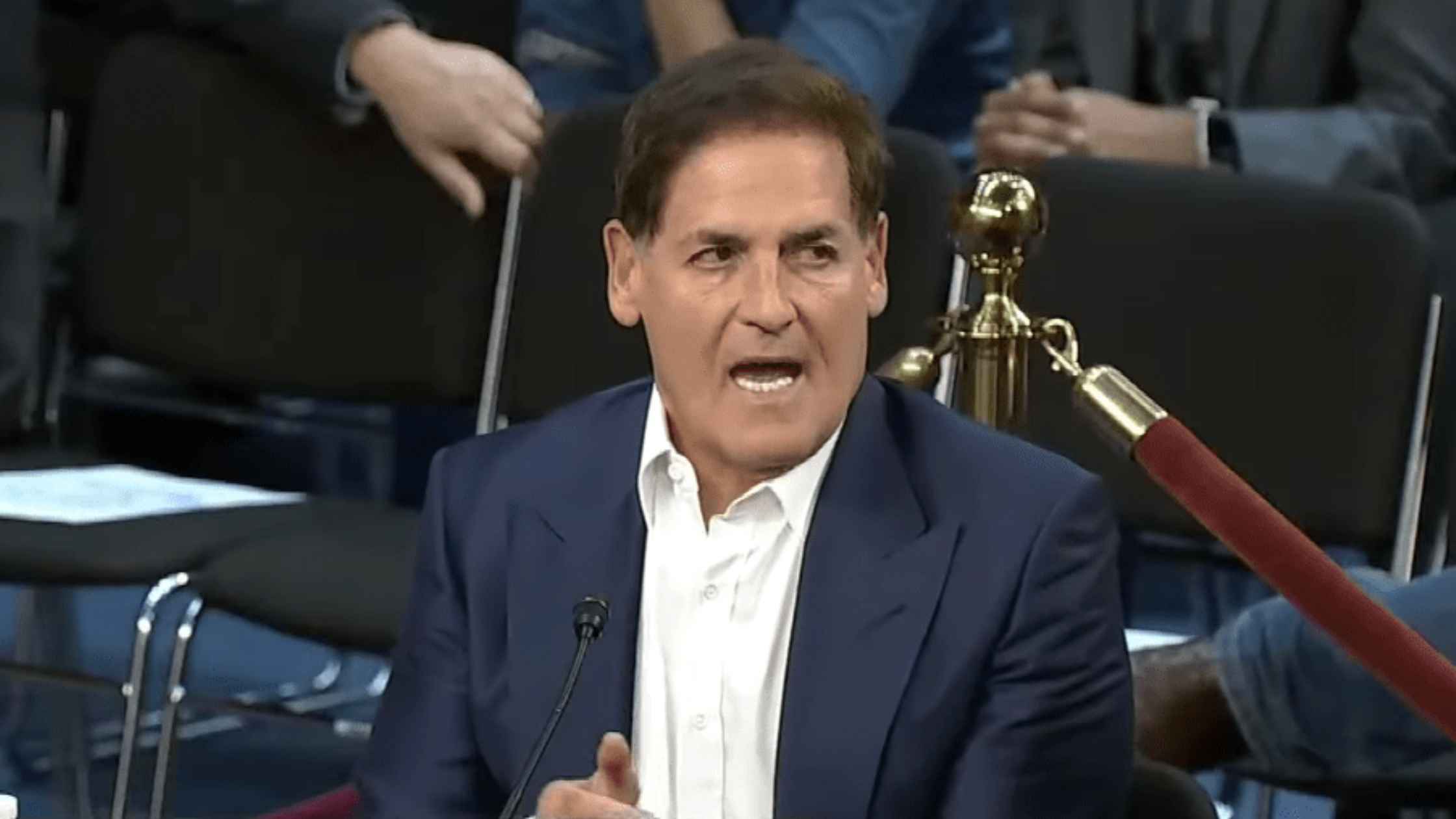
Thank you. I'd like to welcome our witnesses, all of whom are at the forefront of challenging the status quo in today's healthcare system. First, I'd like to recognize Mark Cuban our second shark this year, Mr. Cuban is the co-founder of Cost Plus Drugs company, an innovative online pharmacy that's changing how Americans purchase their medications. At his company, he lists the medication's actual costs as a 15% transparency markup and sells directly to consumers. For millions of Americans struggling with high prescription costs, especially seniors on fixed incomes, this model has shown that transparency and competition can deliver real savings. Thank you for being here. You may begin your testimony.
Mr. Cuban (10:47):
There you go. My Shark Tank companies hate selling on Amazon, but most don't have a choice. About 162 million Americans shop there and if you want to reach them, you have to play by Amazon's rules. Amazon knows this and takes full advantage, adding and raising fees, and even launching competitive knockoffs. They get away with it because they control the marketplace and because 162 million people shop there, which makes Amazon incredibly sticky. What does that have to do with healthcare? Insurance companies work the same way. Over 300 million Americans have some kind of coverage, commercial, ACA, Medicare or Medicaid. Every one of those plans hires a pharmacy benefit manager or PBM to run their drug benefits. The biggest PBMs, all owned by the largest insurance companies, control pharmacy benefits for about 270 million Americans. That's a lot of power and that's also 70% more people than Amazon reaches. Like Amazon, PBMs control the store shelves, but their shelves are called formularies.
(11:58)
The list of drugs your insurance will cover, and if a drug isn't on the formulary, it's invisible to doctors and patients, but here's the kicker, unlike Amazon which wants lower prices, PBMs actually prefer higher prices. They say they negotiate lower drug costs, but they don't. They auction off access to their formularies to the highest bidders. Drug companies pay the rebates and fees PBMs demand so their drugs can be covered and prescribed. If they don't pay, they lose access to millions of patients and plenty of doctors, costing them billions. These rebates and fees are based on a percentage of a drug's list price called WAC, the wholesale acquisition cost. The higher the list price, the more money PBMs make. Because PBMs are so powerful, that inflated list price becomes the reference point for the entire drug supply chain. Take a hypothetical $600 brand name drug. The PBM strongly suggests the manufacturer set the price at $600 with a 50% rebate and another 10% in fees, leaving the manufacturer with $240 net.
(13:07)
Meanwhile, wholesalers buy the drug at that same $600 list price. How many industries do you know where the wholesalers pay the full list price? The three major wholesalers all use the same list price and get paid almost identical fees. There's zero competition and their fees are also because they're tied to list price, they make more money when prices rise. Pharmacies buy from wholesalers at about a 5% discount. You'd think PBMs would reimburse them more than their costs so they can make a profit. They don't. When a pharmacy fills a brand prescription for an insured patient is often reimbursed less than what it paid for it, and if it doesn't fill enough of those money-losing prescriptions, PBMs or wholesalers can penalize them. It's no wonder independent pharmacies are disappearing. Now, what does the patient pay? If they're uninsured, they pay that $600 list price. If they're insured but haven't met their deductible, they still pay the full $600. That's crazy.
(14:08)
We were told that PBMs negotiate lower prices for patients, but they're so bad at their jobs, they can't even get patients a deal that's better than the retail price, but the rebates and fees that they collect on that $600 flow straight from the patient's pocket to theirs. Patients are getting ripped off because PBMs and wholesalers insist on using inflated list prices instead of transparent net prices because the whole system is built around list prices, everyone, PBMs, wholesalers and insurers have an incentive to keep prices rising and they almost always do. It's costing patients tens of billions of dollars and forcing many to go without the medications they need. But here's the saddest part. Self-insured employers, states, the federal government, they all keep on signing contracts that lock in this broken system. We blame PBMs, but the real problem is the CEOs, administrators, and state officials who keep renewing these contracts.
(15:05)
Every one of them complains about rising healthcare costs, while signing deals that make prices go up. Big brand problem is part of the problem too. They hate PBMs but still play along. If manufacturers, wholesalers and payers moved to net pricing, meaning the price after all rebate and fees, patients' out-of-pocket costs could drop by half overnight saving patients billions every year. There's a reason the U.S. has the highest drug prices in the world. We're the only country that uses PBMs. And there's a reason we have some of the lowest price generics. PBMs can't control generic pricing from companies like Cost Plus Drugs, so what do we do? One, count all cash payments towards deductibles. Two, base patient out-of-pocket cost on net price, not list price. Three, separate formularies from PBMs to end their power. And four, end specialty tiers. It's just an excuse to charge more. Fix that, and we finally put patients, not PBMs back at the center of American healthcare. Thank you.
Mr. Scott (16:10):
Next, I'd like to introduce Dr. Keith Smith, co-founder of the Surgery Center of Oklahoma and the Free Market Medical Association. Dr. Smith is a nationally recognized leader in healthcare transparency and free market reform. More than 25 years ago, he helped establish the Surgery Center of Oklahoma, one of the first facilities in the nation to post all-inclusive upfront prices for every single surgical procedure covering the surgeon, facility and anesthesia all in one transparent bundle. His center consistently delivers care at a fraction of the cost of traditional hospital settings while maintaining exceptional outcomes and patient satisfaction. In addition to his clinical work, Dr. Smith co-founded the Free Market Medical Association, which brings together physicians, employers, and patients to promote transparent market-driven solutions in healthcare. His leadership has inspired similar models across the country, proving that when providers compete on price and quality, patients win. Dr. Smith, thank you for being here today. Please begin your testimony.
Dr. Smith (17:11):
Thank you. The Surgery Center of Oklahoma was founded in May of 1997. The goal was to gain control of the medical and financial treatment of our patients. The problem was that even a minor surgical procedure performed at a large hospital meant bankruptcy for many patients, including insured patients. Consistent with their attempts to maximize revenue, big hospitals denied physicians many times the tools and supplies they thought appropriate to treat patients, and yet hospitals continue to book ever-increasing profits even today. I've changed this model. Our model is grounded on mutually beneficial exchange while we save patients tens of thousands of dollars. Currently, the only ones walking through our door are patients paying for their own care, about half the population because if someone else is paying, they don't shop or care how expensive something is.
(18:05)
We were excluded from insurance from the very start, which meant that we had to be creative. We started quoting patients' all-inclusive prices. It was simple math. What fee did the surgeon think was fair? What was fair for anesthesia, and what was the time and materials-based charge for the facility? It turns out that our prices were usually less than the patients in-network deductible and copay. Today, our total charges are still only one-sixth to one-tenth of what large hospital systems near us charge for the same procedure and even more extreme price discrepancies are routine. In fact, we recently performed a tonsillectomy on a child for $3,875 after the family had been quoted $72,000 by a Dallas area hospital. Our prices remain half what Medicare pays big hospitals and less than what Medicaid payments are to the hospitals for the very same procedure. The Surgery Center of Oklahoma quoted prices over the phone to patients until 2009, which is when I launched the first website displaying all-inclusive surgical prices.
(19:19)
I had three goals in mind, all of which I would argue have been achieved. First, I wanted sticker-shocked patients to easily find us. Second, I wanted to start a price war so patients far from Oklahoma could use our pricing as leverage in their market. Third, I wanted to better understand why the same market discipline other industries must endure was seemingly not a thing in healthcare. The first patients to arrive after posting our prices were Canadians. These patients are forced to wait in lines longer than the misery they can endure without care. Then it was the uninsured, the beneficiaries of self-funded health plans and members of cost-sharing ministries. Approximately half our patients travel from out of state or out of the country to Oklahoma City for their surgical care. As news of the success of our model has grown, so as the number of facilities and I'm happy to report large hospitals who have now copied us. Price matching in the industry has had a deflationary effect even on the price gouging facilities as they stand to lose business and patients if they don't compete.
(20:27)
Our model also increases the quality of care because physicians with unpredictable outcomes shy away from this tightly disciplined space. The good surgeons would rather perform a surgery at my facility due to better conditions and the higher pay they actually receive. While building the surgery center and changing the market, my mission has now grown. I now also run Atlas Billing Company, which facilitates payment bundles for the Surgery Center of Oklahoma and is now curating and implementing surgical bundles for many other facilities now attempting to accommodate price-sensitive buyers and… I'm also a co-founder of the Free Market Medical Association, a mission-driven organization that works to bring buyers and sellers together in the United States, promotes market discipline in the industry and now has 37 state chapters.
(21:20)
To the industry big shots or as I call them, the cartel. The healthcare system in this country isn't broken. It's working exactly as it was designed, meant to enrich the corporate elite and intermediaries at the expense of patients and the American people at large. Fortunately, the alternative approach I've described is becoming more widespread. As insurance deductibles, balloon and delays and denials become more commonplace, affordable, high-quality care is fortunately available for victims of the system. I predict that shoppable medical services will become particularly critical for older Americans as an increasing number of physicians opt out of or severely curtail their exposure to Medicare. Thank you.
Mr. Scott (22:07):
Thank you, Dr. Smith. Now I'd like to introduce Dr. Don Moulds, the chief health director for the California Public Employees Retirement System. CalPERS. Dr. Moulds oversees one of the largest public health purchasers in the United States, covering more than 1.5 million public employees, retirees, and their families. Under his leadership, CalPERS pioneered the use of reference-based pricing where they set clear benchmarks for elective procedures like joint replacements and allowed patients to shop for care that meets both cost and quality standards. Dr. Moulds brings valuable insight into how large purchasers can use data and competition to make healthcare markets work the way every other market does to the benefit of the consumer. Thank you for being here. Please begin your testimony.
Dr. Moulds (22:56):
Chairman Scott, Ranking Member Gillibrand and members of the committee, thank you for inviting me to testify on behalf of the California Public Employees Retirement System. My name is Don Moulds. I serve as chief health director for CalPERS. With more than 1.5 million members, CalPERS is the largest commercial health benefits purchaser in California and the second-largest commercial purchaser in the nation. We contract with numerous large health insurance companies to provide our members with a variety of health plan offerings. In 2024, we spent about 12 and a half billion dollars to purchase health benefits for active and retired members and their families. CalPERS employs a range of innovative cost containment strategies to address rising medical costs. Among these is reference-based pricing, which has proven to be an effective tool for addressing shoppable services that tend to vary greatly in price.
(23:49)
In 2011, CalPERS implemented a reference pricing program for hip and knee replacements, which are good examples of services with significant cost variation across facilities. Through this program, 46 California hospitals that met quality standards agreed to a fixed price of $30,000 for these surgeries. Members who chose reference price facilities paid standard co-insurance, while those who opted for non-participating facilities were responsible for any costs above the reference price in addition to their standard co-insurance. Within two years, the program increased the portion of members that used the preferred facilities from about 50% to 64%, but what was particularly noteworthy was that the non-reference price facilities reduced their charges to meet the CalPERS reference price. As a result, price variation decreased dramatically. The average price dropped from $35,000 to $25,000, while the non-reference price facilities dropped their prices from $43,000 to about $27,000. While we anticipated savings from the consumer choice effect, the most significant impact was the downward pressure on the market overall, the program remains in place today and our analysis reveals sustained savings of approximately $4 million annually through 2020.
(25:14)
In 2012, CalPERS introduced a second reference pricing program for colonoscopy, cataract and arthroscopy services, establishing a set reference price for procedures performed in hospital outpatient settings to incent members to choose ambulatory surgery centers, which are comparatively less expensive and higher quality. As with hip and knee replacements, we saw members choose the more cost-effective sites of care resulting in $5 million in savings per year, an average reduction of 21% for these procedures. CalPERS extended its ambulatory surgery center reference pricing program to 12 additional procedures in 2018. Last year, CalPERS implemented a member incentive program to encourage members to use independent labs instead of much more costly hospital-owned labs. Early data suggests that preferred lab use increased by a modest 4% in that first year and saved our members 2.4 million in the first year. This program is different from earlier reference pricing programs in that it eliminates cost sharing for members using the low-cost labs but does not increase their cost sharing for using higher-priced labs.
(26:26)
Reference-based pricing has showed promise, but it does have its limits. For smaller purchasers without the data resources of CalPERS, access to transparent pricing information is critical. Moreover, research suggests that if implemented as broadly as possible, reference pricing only saves about 5% of total cost of care. Overall savings are limited by the small number of procedures where reference pricing makes sense. While reference pricing is well-suited for non-emergent elective procedures with significant price differences, many healthcare services are far less shoppable. This is one of the reasons why CalPERS adopts a broad-based approach for reducing costs. For example, we have included cost-trend guarantees in our newest contracts with our third-party administrators and our pharmacy benefits manager in order to achieve critical financial alignment. Addressing high-cost markets is also a priority.
(27:22)
CalPERS pays prices that are about one-third higher in northern California than it does in southern California, largely because of a comparative lack of provider competition in the north. Thank you again for inviting me to participate in today's hearing. CalPERS is proud of the savings we've achieved through our reference pricing programs, which is one part of the kind of broad-based approach that is necessary to rein in healthcare costs. I welcome your questions.
Mr. Scott (27:48):
Great. Thanks for being here. Now I'd like to turn it over to Ranking Member Gillibrand to introduce her witness.
Mrs. Gillibrand (27:55):
Thank you, chairman Scott. I want to move to introduce our final witness, Dr. Jeanne Lambrew. Dr. Lambrew is the director of healthcare reform and senior fellow at the century foundation. Previously having served in President Obama's administration, first as director of the Office of Health Reform at the U.S. Department of Health and Human Services, where she worked to ensure passage of the Affordable Care Act. Dr. Lambrew served as President Obama's deputy assistant for policy where she helped to guide the implementation of the Affordable Care Act. Most recently, Dr. Lambrew served as the commissioner of Maine's Department of Health and Human Services following her appointment by Governor Janet Mills. Thank you for being here and you may begin your testimony.
Dr. Lambrew (28:37):
Chairman Scott, Ranking Member Gillibrand and members of the committee, thank you for the opportunity to testify today. As you've heard from other witnesses, competition, streamlining and shopping can optimize value. However, the nature of illness and injury and their costs means that most people can't finance healthcare on their own. This is why
Dr. Lambrew (29:00):
Every industrialized nation has some sort of health insurance system. As such, I'll discuss shopping and transparency for health plans rather than health services, with a focus on older Americans purchasing coverage on their own. The Affordable Care Act created a shopping platform called Health Insurance Marketplaces. Marketplaces offer health plans that have different levels of coverage, shoppers can see if their doctors or drugs are covered, and some marketplaces are active purchasers, requiring insurers to use some of the strategies discussed here today. This shopping experience is enhanced by premium tax credits, these credits are competitively set based on a benchmark plan. Currently, eligible employees pay no more than 8.5% of income for that benchmark plan, with lower income people paying lower percentages. These tax credits are like vouchers, with your tax credit, you can shop for any plan in the Marketplaces, and while improvements can and should be made, the Marketplaces work.
(30:04)
Premium growth has averaged just 2% in the past five years, choices have expanded and enrollment doubled since 2020 to 24 million people. About half of these people are self-employed or small business workers, and many are rural residents or veterans. Marketplace coverage is especially important for older Americans. Nearly one in four Marketplace enrollees is age 55 to 64. Nearly one in 10 older Americans relies on coverage purchased on their own, and the uninsured rate among people ages 50 to 64 has dropped by 50% due to Marketplace changes and the other ACA reforms.
(30:47)
This is about to change, the budget reconciliation law and recent rules will reduce Marketplace coverage. Moreover, the enhanced premium tax credits currently in place will end in December. As a result, the average marketplace enrollee will pay more than twice as much out of pocket, for premiums starting in January. There is no historical precedent for such a large one-year increase for so many Americans. The cost increase will be even higher for people with incomes above 400% of the federal poverty level, if the cutoff of premium tax credits is reinstated.
(31:22)
Over half of people losing tax credit eligibility will be people ages 50 to 64. For example, a sixty-year-old couple with income of` $85,000 will face an average increase of $22,000, this represents 27% of their household income. And the income varies by location, the same couple will pay 28,000 more in Savannah, Georgia, and about 31,000 more in [inaudible 00:31:51].
(31:51)
To put this into context, if this couple paid that extra amount until they become Medicare eligible, it'll consume over 60% of the typical retirement savings. Others will simply be unable to afford these premiums, they'll become uninsured. Older people losing coverage are at greater risk of unmet needs, worse health, and premature death.
(32:14)
The impact will extend to other Americans as well, Medicare costs are likely to rise to pay for the unmet needs of previously uninsured enrollees. The individual market stability and affordability will be reduced according to all insurance commissioners across the country. And in the words of the American Hospital Association, there will be an impact on the entire community, even those with coverage, because of an influx of uninsured patients into emergency departments causing longer waits, stressing the whole healthcare system, and the inability to get the care that they need.
(32:48)
In conclusion, Americans want clear choices and affordable options, for health coverage as well as healthcare. Extending tax breaks for private health insurance can help achieve that goal. Thank you for the opportunity to present this testimony.
Mr Scott (33:04):
Thank you. Now we'll go to questions. We'll start with Senator Tuberville.
Senator Tuberville (33:07):
Thank you, Chairman. Thanks all of you for being here today, and talking about a subject that's very important to all Americans across the country. And as Dr smith said, an out-of-control health care system, which it is. Mr. Cuban, innovative companies like Cost Plus Drugs have already proven that bypassing traditional PBMs can deliver real savings at pharmacy counters. President Trump has announced TrumpRx, a new website to connect patients directly with the best prices. How might Trump and Rx and direct patient programs improve affordability for patients? Your basic, why are you doing this?
Mr. Cuban (33:43):
Yeah, I mean, we'll work with TrumpRx. I mean it's incredible, it's stupendous, it's like the most incredible program ever. And so we're excited to offer them our API, so that they'll be able to download our daily prices, so when they go down, everybody benefits. Plus, I like what they're doing with the MFNs, because as I mentioned in my comments, our brand drugs are more expensive because PBMs are involved, and with TrumpRx and the MFN program, that allows manufacturers to work around the PBMs, and work directly to patients. So I think it'll save seniors, it'll save everybody a lot of money.
Senator Tuberville (34:20):
You think this is the future?
Mr. Cuban (34:23):
I don't think it's solves the ultimate problem of how the system is designed, but I think it's something that we obviously agree on, because that's what Cost Plus Drugs is, we publish our entire price list every day.
Senator Tuberville (34:34):
Your company posts drug prices with full cost breakdowns, how does this transparency help save patients money?
Mr. Cuban (34:41):
I mean, with CostPlusDrugs.com, any patient can just go look at their price for their medication, and so there's no uncertainty. But more importantly, by seeing our markup of only 15% and seeing our costs, that builds trust. I always tell everybody in our company that what we really sell in this industry is trust. And so I think that's what's really allowed us to grow so quickly.
Senator Tuberville (35:03):
So if you sold Ozempic and somebody else went through PBMs, how much cost would they save?
Mr. Cuban (35:10):
Well, if you look at what's happening now, where the PBMs work with sponsors, they're typically being charged $1,300. And if you look at the direct-to-consumer programs that are being put out there by Novo and Lilly, it's $499 or less, and probably falling, so there's already a significant difference. And the crazy part is that difference of $800 typically goes right into the pocket of the PBM, who then decides how much they're going to give to the employer. So it's a huge amount, as of right now.
Senator Tuberville (35:43):
Thank you. Dr. Smith, the Surgery Center of Oklahoma has proven that real price transparency can lower cost and improve patient access, which is something we often hear discussed, in the context of PBMs and prescription drugs. What inspired you to create this transparent surgical model, and what parts of the traditional healthcare system, much like PBMs in the drug space, were you trying to get around?
Dr. Smith (36:09):
Well, we started the Surgery Center of Oklahoma because, frankly, practicing in a big hospital as an anesthesiologist, I served as an accessory to a financial crime. Surgeons were also being denied the tools, many of them required to appropriately treat patients, due to the cost-cutting measures at hospitals trying to maximize the revenue. So I didn't grow up in a home like that, I grew up, it was a golden rule, mutually beneficial exchange.
(36:40)
And so as a hospital-based physician, the only way I could escape that was to own and control my own facility, and where I was responsible to the patients, not just for the medical treatment, but also the way, financially, we dealt with them. So if a patient asks, "What can you do about this bill?" My answer was, "Everything," including not charge them. So we were in a good position to be charitable on an individual basis, and that's really the answer. We started it because we wanted to be in control of the medical and the financial journey the patient had, and their healthcare experience.
Senator Tuberville (37:21):
Some patients … some people argue that patients won't shop for care or that it is too complicated to understand. Do you think that is true, and what savings have you seen for patients when prices are available?
Dr. Smith (37:33):
Well, patients will not only shop for care, but they'll vote with their feet. Half the patients we see at Surgery Center of Oklahoma do not live in Oklahoma, and we see patients from Europe and Africa, all over the United States, and self-funded employers see such an insane price difference between our prices in the local hospital, where they're doing business. They waive all out of pocket for those employees and a companion, to fly to Surgery Center of Oklahoma and have their procedure, and not just us, but those who've copied us.
(38:05)
So people will shop, and they'll travel, and furthermore, they'll hold our price up in front of their local hospital and tell them, "Match this, or I'm going to Oklahoma City." We had a patient from Georgia that was going to be charged 40,000 for a urologic procedure, and our online price was 4,000, and the hospital matched our price, because that would've been the second patient that month that came to Oklahoma City, and they didn't want to see that. The patient reached out to me later and said, "You saved me $36,000, and you didn't even perform the surgery." So there is a market that is developing, it's a competitive market, it's driving prices down, it's driven prices down in Oklahoma City, I know, and quality goes up at the same time.
Senator Tuberville (38:55):
Thank you for what you're doing. Thank you, Mr Chairman.
Mr Scott (38:58):
Senator Tuberville, Ranking Member Gillibrand.
Mrs. Gillibrand (39:02):
Thank you very much. Ms Lambrew, why do so many adults between the ages of 50 and 64 rely on the enhanced premium tax credits, and how do you anticipate adults between the age of 50 and 64 will be impacted if these enhanced premium tax credits are not renewed? How will they be able to save for retirement, what will the impacts be?
Dr. Lambrew (39:24):
Yeah, just to start with, we know that as people approach age 65, they often go to part-time work, some retire early, some are forced to retire early, working in a hard construction job or some other physical job. They just can't make it until age 65 when they can enroll in Medicare, which is why we really see 23% of all of our Marketplace enrollees are in that age group, versus 15% of the rest of the population. So it definitely is a more important source of coverage for that group. It's also important for rural areas, where we also know residents are older. Farmers typically don't get employer-based insurance, they have to buy coverage on their own. We just know that these demographics make it more important for them, and the numbers are pretty stark, that the cost of health insurance across the board is high, too high. We should look at all available options to lower employer coverage, Medicare, Medicaid, and Marketplace coverage.
(40:18)
But for these people right now to be facing these kind of numbers, again, an average of over $20,000 for a couple at 60, that is impossible for a lot of these families to deal with. But your choices are, if you're chronically ill, do I pay that amount to maintain my coverage, or do I become uninsured and what does that mean? And I do wish many of these programs that we're talking about today would be a solution for those people. They will help, I have no doubt that these will help, but I think there's more that will be needed for people who are older, chronically ill, who are about to face large coverage … out-of-pocket premium increases.
Mrs. Gillibrand (40:56):
Thank you, Doctor. Mr Cuban, can you speak to this conversation about unaffordable deductibles? Can you talk a little bit about what this will result in, whether it's increased hospital visits, emergency room visits, what does this vicious cycle of unaffordable health care cost lead to, and how does it stress the healthcare system?
Mr. Cuban (41:21):
Well, no matter what your premiums are, and you pay them, if you can't afford your deductible, you don't really have insurance. And what ends up happening, is either you go to the emergency room, you do nothing at all, or you're at the mercy of the provider, hoping they can provide some sort of financing for you. Either way, it creates very difficult situations for seniors, for entrepreneurs, for anybody in that situation. And as I alluded to in my comments, we don't do anything to help people who are unable to afford their deductibles, and in fact, we make it more difficult. Dr smith alluded to the fact that the cost of a surgery could be extremely high, and if you can't afford your deductible, you can't get it. In the case of pharmacy benefits, if you have a drug like Eliquis where the list price is $600, and you have a $4,500 deductible under an ACA Silver plan, you're going seven months having to pay full list price, and if you can't afford to do that, you're out of luck.
Mrs. Gillibrand (42:21):
Right. Dr Smith, you mentioned how increasing the number of physicians are either opting out or severely limiting their exposure to Medicare patients. Why are physicians increasingly dropping Medicare, and how are these patients going to get the care they need? What factors are driving up the cost of providing care, particularly for older adults, and what can be done on the federal level to provide greater stability, for these practices to enable them to treat older adults?
Dr. Smith (42:53):
I think Medicare, it's a burdensome quagmire. It's heavily regulated, I probably get 10 emails a day asking me to pay somebody to attend a course to figure out how to navigate this new regulation that's come out, so it's very burdensome. Also, the payments to individual physicians, the independents have not really kept up, and frankly, they've been wrong. Top-down pricing seems to always be wrong. It's either too high or too low, and that's what happened when RBRVS came into place in '92. True pricing comes from market activity, and that's absent in the Medicare program.
Mrs. Gillibrand (43:44):
That's right.
Dr. Smith (43:44):
So when an anesthesiologist like me is paid $78 for the anesthesia required for a surgeon to do a knee replacement, that's a message, and message sent, message received. The last open heart surgery for which I provided anesthetic in 1992, Medicare paid me $205. So I knew it wasn't personal, prices are just signals, and that wasn't personal, that was just an idea of what my time was worth. And I walked away, and I haven't accepted Medicare payments since, I treat patients free of charge instead of file claims. But-
Mrs. Gillibrand (44:23):
Thank you, Dr Smith.
Dr. Smith (44:24):
… it's payments and it's regulatory burden, and frankly, risk.
Mrs. Gillibrand (44:28):
Yep. Thank you.
Mr Scott (44:30):
Thank you. Senator Johnson.
Mr Johnson (44:32):
Thank you, Mr. Chairman. Again, excellent hearing, I think it's kind of notable when you have a hearing on how to improve outcomes and lower costs, most Republicans show up, we have the Ranking Member here on the Democrat side, it's pretty interesting.
(44:46)
We're looking ahead to how to do that, but I think in order to fix a problem, you have to really define what the problem is, and you have to look at the past. I don't want to dwell too much on the past, but right now there's been a lot of talk about extending the enhanced temporary subsidies that were put in place to help people through the pandemic. So I have talked a little bit about Obamacare, and Ms Lambrew, you were part of the Obama administration after the passage, but leading up the implementation of it, correct?
Dr. Lambrew (45:14):
[inaudible 00:45:16].
Mr Johnson (45:15):
So you were there when President Obama was out there saying that Obamacare would lower the average premium for a family by $2,500 a family. Correct?
Dr. Lambrew (45:25):
I was there when we talked about slowing the growth of healthcare, yes.
Mr Johnson (45:28):
President Obama made that claim, right? $2,500 lower premium per family, correct?
Dr. Lambrew (45:34):
Over time with slower growth.
Mr Johnson (45:36):
That hasn't panned out, has it?
Dr. Lambrew (45:39):
It has.
Mr Johnson (45:39):
It has not.
Dr. Lambrew (45:40):
We have seen slower growth in the health insurance marketplace.
Mr Johnson (45:42):
Premiums … inflation's gone up 39% since 2013. I've seen … again, it's very difficult, because you have a whole range of premiums, but just one benchmark premium's up to 118%. That's three times the rate of inflation, so no, that did not occur. Premiums have skyrocketed because the faulty design of Obamacare, President Obama said, "You could keep your doctor, you can keep your healthcare plan." That was PolitiFact's 2013 Lie of the Year. Correct?
Dr. Lambrew (46:10):
Today, there is no lower percentage of people with employer-based coverage than there was before the law was-
Mr Johnson (46:14):
And people lost their doctors, for example, Obamacare outlawed high-risk pools, which worked beautifully in states, they worked beautifully in Wisconsin. As an employer we used them all the time, they worked great. You outlawed those, you outlawed short-term plans. So again, that was PolitiFact's 2013 Lie of the Year.
(46:33)
Let's just look at enrollment history. Obamacare impacted Medicaid expansion, and there's problems with that, but let's focus just on the individual market. That was the other thing that Obamacare … again, fix all these … this marketplace for individuals. There were about 12 million people prior to Obamacare taking advantage of the individual markets. You completely disrupted that, got rid of high-risk pools, got rid of short-term policies. Before the pandemic there were 14 million people on the Obamacare exchanges, so 2 million more people on these individual policies. Then all of a sudden with the enhanced premiums, all of a sudden we're up to 24 million people. Now, are you aware of the problem we're having with the no premium policies? Of phantom policies, where you have unscrupulous agents and brokers signing people up without their knowledge? They get a commission, the premium tax credit goes directly to the insurance companies. We've seen estimates 20 to $30 billion per year of premiums going to the insurance companies on phantom policies. People make no claims on them, are you aware of that?
Dr. Lambrew (47:42):
I am aware that there are agents and brokers that have been falsely signing people up. Last year, action was taken, 500 of them were unsubscribed.
Mr Johnson (47:51):
We've gone from-
Dr. Lambrew (47:51):
This year the HR-1 did include many policies to address that, but the reality is that those people are the victims, and we are trying to make sure that we keep them covered when they [inaudible 00:48:04]-
Mr Johnson (48:04):
My point being, it went from 12 million to 14 million, now up to 24, that's not 24 million real people.
Dr. Lambrew (48:10):
The uninsured rate in the country-
Mr Johnson (48:11):
But they are the millions that aren't even there, so-
Dr. Lambrew (48:13):
… The uninsured rate in this country has dropped, sir.
Mr Johnson (48:13):
Again, you're saying this is going to be a huge problem. Now, isn't it true that the original design of Obamacare, there were no subsidies for people making more than 400% of the poverty line? Correct?
Dr. Lambrew (48:24):
Yeah. There are currently three to four times more subsidy for people with-
Mr Johnson (48:28):
Just answer the question, the original design of Obamacare, nobody working or making more than 400% above the poverty line, got a subsidy, correct?
Dr. Lambrew (48:35):
People who have employer-based coverage get a subsidy, people with Medicaid get a subsidy. People before the Affordable Care Act buying coverage on their own. The retiree-
Mr Johnson (48:42):
Okay, so the enhanced subsidies-
Dr. Lambrew (48:42):
… could not get help-
Mr Johnson (48:42):
… the enhanced subsidies-
Dr. Lambrew (48:44):
… from the federal government.
Mr Johnson (48:46):
… The enhanced subsidies started providing subsidies for people above 400% poverty. Your charge here on page six, this is talking about people, higher out of pockets, that didn't qualify for subsidies in the original Obamacare. The subsidies aren't going away when the enhanced premiums go away, the original design of Obamacare stays in place. Correct? Correct?
Dr. Lambrew (49:15):
We know that people have been significantly helped by the improvements that were made in 2020, and people will be hurt if they leave. So were many pandemic policies, telehealth-
Mr Johnson (49:27):
Those were temporary enhanced-
Dr. Lambrew (49:28):
… Tax credits.
Mr Johnson (49:29):
… Those were temporary enhanced subsidies. And the Democrats in their law, they scheduled them to expire this year. Right? Republicans had no part in that at all.
Dr. Lambrew (49:38):
The 2017-
Mr Johnson (49:39):
No part of that at all, that was designed by democrats to expire.
Dr. Lambrew (49:41):
… Tax Bill also extended, the policies that ended that just got extended, without being paid for. Tax extenders happen all the time.
Mr Johnson (49:46):
So again, you are claiming harm to people that never qualified for the subsidy under the original Obamacare. Now you're also saying, because you're quoting people at the hospitals, if these enhanced subsidies expire, as they were meant to do by Democrats, it's going to be a calamity for the hospital industry. All that's happening is we're going back to the original Obamacare. So what you're saying, is going back to the original design of Obamacare is going to be a calamity for hospitals?
Dr. Lambrew (50:14):
Going back to 1965 practices for medicine are also a calamity. We figured out something that worked, it should be extended, people have been helped by it. Costs have been growing slower than private employer-based coverage, choices have gone up. Could it be improved? Without a doubt, but I think it is a fact that the uninsured went down, cost growth have not been excessive. We have more choices, deductibles have actually gone down. We really have seen in the last few years people able to choose deductibles that are now on average $400, not the higher amount. So I think the numbers show that the policy has met a number of goals.
Mr Johnson (50:53):
My point is that these enhanced subsidies expire, all that happens is we go back to the original design of Obamacare, which didn't work, didn't lower premiums. People couldn't keep their doctor, couldn't keep their healthcare plan. It's been a disaster, and the reason Democrats want to extend these subsidies, the reason we have subsidies is to mask the fact that Obamacare drove premiums sky-high. And what this hearing's about is how can we bring those actual premiums down, deliver better outcomes. And we've got some great examples here. Doctor from Oklahoma is doing some marvelous things, it's called bringing consumerism, the free market principles, back into healthcare. Republicans were interested in that. Democrats aren't. Thank you, Mr. Chairman.
Mr Scott (51:39):
Thank you, Senator Johnson. Senator Husted.
Mr Husted (51:42):
Thank you Mr. Chairman. I appreciate you hosting this hearing today, and I know that I want to start out by … healthcare inflation is a problem for everybody, in the American economy, it's the number one driver of inflation in the 21st century. What we have now doesn't work. And so hopefully we can constructively have conversations about how we make it work. And one of the ways that we have driven down some costs are over the counter drugs, moving prescription drugs to over-the-counter drugs, it saves American consumers $170 billion annually. Working with Senator Hassan, we have a streamlining marketplace, access and reform for therapeutics called Smart OTC Act, which will help the FDA identify drugs that could be candidates for over-the-counter, and help companies move those to over-the-counter more quickly through the FDA. So I would encourage us all to look at that as we move forward.
(52:44)
Now, Mr. Cuban, thank you for the example that you used with the monopoly and Amazon, that's in consumer products, which we know is troublesome. Higher … monopolies create higher prices, lower quality in general, but that's in a consumer marketplace. Healthcare, oh my gosh, people don't have choices at all. They have no choice for most people about where they go consume that healthcare. And I think that you make a great point, but the healthcare system seems to be conspiring to create a monopoly, marketplace monopolies across all aspects of what it does, for a service that everybody must have, which makes the pressure of cost and quality even more stark. And so I do have, Mr. Moulds, I want to ask you a question about anti-competitive contracting for healthcare, because we know it creates a monopoly environment, it increases costs.
(53:57)
I'm going to give you four examples, and I want you to react to these. All or nothing clauses, anti-steering, anti-tiering clauses, most favored nation clauses, gag clauses, which create anti-transparency. All of those carve up marketplaces, don't allow for competition. I want your thoughts on what eliminating them might do to improve patient benefits, quality, and lower costs.
Dr. Moulds (54:30):
So we've actually been involved in litigation on some of these at CalPERS in California. The all or nothing clauses in particular were the subject of a lawsuit there. And in general, they are some of the challenges, but by no means the only challenges. We are seeing in California increasing consolidation, not just in the North, I mentioned that our costs are about 35% higher in the North, but in the South where we've historically seen pretty good, comparatively good competition-
Mr Husted (55:06):
If consolidation, though, in contracts that restrict, isn't that-
Dr. Moulds (55:10):
So some of the-
Mr Husted (55:10):
… combination, isn't that lethal?
Dr. Moulds (55:13):
Potentially, absolutely, yes. So some of these provisions we don't see as commonly in contracts in California anymore, but we still have consolidation.
Mr Husted (55:26):
Mr. Cuban, you understand markets pretty well. You have a reaction to those? Yes.
Mr. Cuban (55:31):
Yeah, I think it's awful. As an example, we wanted to build on CalPERS, and it was fair, they told us that we didn't carry certain brands, but we just asked, why not add Cost Plus Drugs to your network? Because if we're cheaper, buy from us, and if we're not, don't buy from us. Cost Plus Drugs doesn't have exclusives with anybody, we just stand by the fact that we think we'll be better for patients because we're less expensive. And so we were told, and this isn't just CalPERS, any of the big PBMs, when I go and speak to a CEO, I give them the test. And the test is just, ask your PBM if you can add Cost Plus Drugs to your network, and only use us if we're less expensive. A hundred percent of the times they've been told no.
Mr Husted (56:16):
Mr Moulds, do you have something you want to add to that?
Dr. Moulds (56:18):
I just will. I want to just start by saying that Mr. Cuban's work in this space has actually been enormously helpful to us. Having his prices out there have helped us negotiate prices in our contracts, so we are grateful for that. We did negotiate in our most recent contract that starts in January, provision that allows us to carve out, so we continue to look at where we can get cheaper-
Mr Husted (56:43):
So is that a yes?
Dr. Moulds (56:46):
That is always open to the conversation, not a yes.
Mr Husted (56:51):
And I'll just close with this, is that you talked about consolidation. You have these tools that are used inside the marketplaces, where people want to consolidate, they want to limit others competing in their space, which allows them to basically command whatever price they want. No market would work well like that, but in a healthcare marketplace where people don't have choices, I can decide if I'm buying water, I may decide to buy something else. But in healthcare, I don't have a choice. I know that's what Mr. Smith's trying to do, create choices, but I am hopeful that we can eliminate some of these tools that are being used to carve up markets and drive up prices. Thank you, Mr. Chairman.
Mr Scott (57:39):
Thank you. Mr. Warnock.
Mr Warnock (57:43):
Thank you, Chair Scott and Ranking Member Gillibrand for organizing this meeting, or this hearing, I should say. Nine months ago in this committee, I warned that seniors in Georgia could see a $20,000 annual increase in healthcare premiums, should
Mr Warnock (58:00):
… should Congressional Republicans let enhanced affordable care tax credits expire. And here we are just over a week before the start of open enrollment and we're in an even worse place than we were nine months ago. Mr. Cuban, most Americans probably know you as an investor in startups and innovative small businesses. I'm a fan of Shark Tank.
Mr. Cuban (58:27):
Thanks.
Mr Warnock (58:28):
In that role and as an entrepreneur yourself, is it fair to say that you know a little bit about how small business owners and entrepreneurs think about their money and startup expenses?
Mr. Cuban (58:39):
I would say so, yes.
Mr Warnock (58:40):
And would you say that among those considerations and expenses, that includes their healthcare expenses?
Mr. Cuban (58:47):
Yes.
Mr Warnock (58:47):
And how their healthcare costs factor into their plans for growth and sustainability?
Mr. Cuban (58:51):
Yes, sir.
Mr Warnock (58:54):
Let me show you something. This is the cost of the premium for a senior, 2025. This person is 62 years old, small business owner in Georgia, taking home just $65,000 in 2025. The other side shows the cheapest option for that same Georgian, so $228.17 cents a month. Now with the expiration of these tax premiums, $1,142.71 cents, that's quite a jump. How would this monthly jump affect that Georgian's ability to grow her small business or even just make ends meet?
Mr. Cuban (59:43):
It makes her make a lot of hard choices, either to try to find the money to pay for the premiums or to go without insurance. And I think the greatest challenge has been in all of this is that small business owners, Americans that are on the ACA, haven't had enough time to plan for it. It's one thing to know that your premiums are going up. It's another thing not to know how much and how soon. And so now we're just, in Texas, people are just now starting to see open enrollment and more we'll see in a couple of weeks. And as a small business looking to the ACA for their employees, it's going to be terrifying for them.
Mr Warnock (01:00:19):
And if they forgo insurance, is it fair to say that, well, that would drive up premiums for everybody?
Mr. Cuban (01:00:26):
Yeah, of course. Because healthy people are going to be most likely not to take insurance.
Mr Warnock (01:00:30):
And this gut punch for small businesses impacts the overall economy because small businesses are such a big part of our economy.
Mr. Cuban (01:00:40):
Well, of course if you take… There are 33 million companies in this country, 30 million of them are solopreneurs, one-person entrepreneurs companies, and if you're taking $800 give or take a month out of their pocketbooks, they can't invest it in inventory, et cetera, et cetera, so it makes it much more difficult to run your company.
Mr Warnock (01:01:00):
I would imagine that come November 1st, more of my colleagues on the other side of the aisle will start hearing from folks in their own states who won't be able to afford their healthcare next year. In fact, millions of people across the country are starting to log on today to see their plan premiums for next year double. And that's not the exception. That's quite prevalent. People are seeing their premiums double as you see here, triple, quadruple. All because my friends on the other side of the aisle refuse to fund the government and fund health care. Dr. Lambrew why are older Americans especially harmed, older Americans, especially harmed by the expiring premium tax credits?
Dr. Lambrew (01:01:43):
Well, in addition to there being more of them in the marketplace than would be in the general population, we also know that older people have greater healthcare needs, so we look at the average healthcare costs for a 55 to 64-year-old. It is three times the average healthcare costs of an 18 to 24-year-old, so their needs are greater. That also means that if when these price increases hit them, it will probably force those harder choices. Again, do I follow the advice of my doctor? Do I take a medication as needed or skip pills or forego them? Do I choose between my retirement savings, my groceries? There was a story, or excuse me, a woman from Georgia who's a 57-year-old said, "This amount may not seem much to the government or to the insurance companies, but for me it would most likely mean sacrificing essentials, groceries, gas, basic necessities that I rely on."
Mr Warnock (01:02:41):
Given that reality, do you think it's a good idea for Congress to wait until December 31st to address prices?
Dr. Lambrew (01:02:46):
I do not. The people are shopping in Idaho already. They're looking in 12 verse 13 states at the actual prices they're going to pay and a week from Saturday they're going to go in. And we know from last year's experience, three million people came in the first two weeks. And if they come in and their prices are going to be much higher than they expect, they may never come back.
Mr Warnock (01:03:07):
Thank you so much. This is a crisis, it needs to be addressed right now. And I would urge my colleagues to join us in funding the government and extending these healthcare premiums for the healthcare of millions of Americans. Thank you very much, Mr. Chairman.
Senator Scott (01:03:20):
Thank you. Senator Moody.
Mrs. Gillibrand (01:03:22):
Thank you Senator Scott. I appreciate you calling this hearing. I'm one of the newest US senators and it pains me to say about every hearing I'm in, we hear more and more ways government can throw money at a problem to fix it. And it's so great that we're having a hearing on, outside of government throwing more money at a problem, ways that we might actually bring down prices. And I appreciate all of you being here today, taking time to be here. Many of you have experiences in this area and have great suggestions and experiences on this topic. I think the next step is our chairman might hold a Shark Tank for healthcare ideas on how to bring… Just be ready. That's the next invitation I'm sure. In most every other industry we expect a fair and free market, and it's always expected that you would know the prices as consumers when you're shopping. And it seems to be the only area where we don't have transparent pricing and we especially need to focus on it when shoppable services represent 35 to 40% of US healthcare spending.
(01:04:37)
If the data's right and we spend $14,570 per person per year on healthcare, that is more per capita than any other country on earth, and that just is insane to me. Thankfully, we have leadership that's digging in and trying to figure out how we can come up with new ideas to tackle prices. But what was shocking to me is that, and when I look back over the course of my own medical history, it's so clear and it's been there all along, you never find out how much things cost until months later when bills start showing up. In fact, only 17% of Americans know how much their healthcare products or services cost before they receive them. That is insane. And no wonder no one is shopping. It's a captive market of consumers. I was so appreciated hearing your testimony, Mr. Smith about the Surgery Center of Oklahoma and how you challenged other facilities to offer competitive pricing. The one example you gave was one family was quoted 72,000 for a procedure at a major hospital, and then when they found their way to you, they only paid $3,875.
(01:05:57)
Since you opened your facility, how many other facilities started like yours, either in your state or nationally that you know of?
Dr. Smith (01:06:09):
If you include all of those on the continuum who are either posting prices or agreeing to enter into single case agreements for a single case for a price to those who will quote a price over the phone but won't write it down, it's in the hundreds, it's not in the thousands. But it's such a dynamic situation because every time a big hospital or surgery center that's not inclined to reveal prices is faced with losing a patient to me, to WellBridge Surgery Center in Indianapolis, to Texas Free Market in Austin. And anyone that's a member of the Free Market Medical Association, they have to step up now and match those prices or they lose those patients. And it's about half the people in the country that have sticker shock, either directly or indirectly through their proxy buyer or their self-funded employer. And so-
Mrs. Gillibrand (01:07:15):
When you started were there any federal regulatory or statutory hurdles to you starting this clinic up or have you been faced with those since you started? Is there anything that we can do to make it easier for places like yours to start?
Dr. Smith (01:07:29):
The two hurdles that I think this movement faces are, one is the overpayment that is sent to hospital-owned doctors and facilities by Medicare because they use that extra money to consolidate the industry and to run independent physicians and facilities out of business. That site neutrality is what I think people are… And I don't advocate paying the independents more. I advocate paying the hospitals less.
Mrs. Gillibrand (01:08:06):
How quickly after you started did you start seeing the market adjust around you?
Dr. Smith (01:08:10):
I'm sorry.
Mrs. Gillibrand (01:08:11):
After you started your first surgery center, how quickly did you see the market adjust to start trying to be competitive with you or did you not see that?
Dr. Smith (01:08:19):
We did not see that really until I posted the prices online in 2009. When we opened in 1997, the response of the industry was to try to crush us through the state legislature. In 2009 when we posted the prices, that's when we began to see price matching, not just in Oklahoma, but all over the country because patients will travel to have surgery performed.
Mrs. Gillibrand (01:08:49):
Thank you, chairman.
Senator Scott (01:08:51):
Thank you. Senator Moody. Senator Warren.
Senator Warren (01:08:53):
Thank you Mr. Chairman. Thank you for holding this hearing and thank you ranking member. Military families keep us safe and DOD's TRICARE program is supposed to keep those military families healthy. Since 2009, TRICARE pharmacy benefit has been administered by Express Scripts, the nation's largest pharmacy benefit manager or PBM. Express Scripts decides which pharmacies are in network or out, so when one of those nine million military families needs to pick up a prescription, Express Scripts decides where they can go to have it filled, and then they pay the pharmacy. Now, Express Scripts is owned by the multi-billion dollar health insurance company, Cigna, and Cigna also owns a mail order pharmacy called Accredo that participates in TRICARE.
(01:09:48)
In other words, Cigna owns the company that pays the pharmacies and it also owns the pharmacy chain that is getting paid. The result, well Express Scripts can under-reimburse the other pharmacies and give inflated payments to its corporate cousin, Accredo. Express Scripts has been caught doing exactly that kind of self-dealing in other government programs. But right now the Department of Defense refuses to check how much it is costing taxpayers in TRICARE. Mr. Cuban, you understand this business so let me ask you, would requiring Express Scripts to disclose the difference between what it pays its affiliated pharmacies and the unaffiliated pharmacies help save taxpayers money or cost taxpayers money?
Mr. Cuban (01:10:48):
It would save a lot of money and it would keep smaller independent pharmacies in business.
Senator Warren (01:10:51):
Okay, that makes sense to me. It seems pretty common sense here. More transparency would save taxpayer money, but the Congressional Budget Office disagrees with you and me on this. According to the CBO, price transparency would cost taxpayers money because other pharmacies would allegedly band together to demand higher reimbursements. That's their argument here. Mr. Cuban, you talk with pharmacists a lot, do you think that independent pharmacists don't know that Accredo right now is getting a sweetheart deal and that the independents are just waiting for information to be told so that they could demand more money?
Mr. Cuban (01:11:39):
I can't speak for all the independents, but I can speak for costplusdrugs.com. And so I went to TRICARE and I have done this in the past many times and looked up the price of some common low-cost drugs. Just recently I looked up Tadalafil. And our price is lower, whether it's 30 or 90 pills than the TRICARE price is for anybody who is in network but off base. And if they're out of network, we're dramatically lower, so we don't need to band together to know that we can be cheaper. All we have to do is look at some of their prices and it's obvious that we're cheaper.
Senator Warren (01:12:16):
Okay, so this information is actually already out there.
Mr. Cuban (01:12:19):
Yeah. Just by looking at… And I'm just talking about the copays. We're not even talking about what the taxpayers still have to pay to Express Scripts, Accredo, which is more, they're not doing this for nothing. And so taxpayers are getting ripped off, period, end of story.
Senator Warren (01:12:36):
And this is where I want to see more transparency.
Mr. Cuban (01:12:38):
Correct.
Senator Warren (01:12:39):
You think that's a good thing?
Mr. Cuban (01:12:39):
That's a great thing.
Senator Warren (01:12:40):
Okay, that's a great thing. Good. I'll settle for that answer. All right, so DOD claims that this hasn't affected military families, but that is based on data from-
Mr. Cuban (01:12:52):
They said it hasn't.
Senator Warren (01:12:54):
Has not. This has not affected military families based on data from, you guessed it, Express Scripts. When the government accountability office reviewed just a little slice of this data they discovered quote "persistent inaccuracies, including misreporting the number of people who lost access to their local pharmacies because the pharmacies were pushed out of the TRICARE network." They left for the very reasons you described. But that was just a one-time review, so I'm pushing DOD to audit this information every single year. Dr. Lambrew, you served as commissioner of the Maine Department of Health and Human Services, so you understand the importance of program integrity. Do you think that auditing this program would help save taxpayers money or cost taxpayers money?
Dr. Lambrew (01:13:52):
Senator, it would save money.
Senator Warren (01:13:54):
It would save money. I just want to point out here, Mr. Chairman, self- dealing by the pharmacy benefit managers keeps the cost of prescription drugs high both for the taxpayers and for consumers. I'm going to keep pressing CBO to update their analysis of the PBMs, and I hope to work with all of my colleagues to pass proposals to rein in self-dealing by the PBMs in TRICARE and beyond, including my bill with Senator Hawley that would say that the same company cannot own a PBM and a pharmacy at the same time. Look, we need to stop these giant corporations from ripping off American taxpayers and get a little more competition in the drug market. Thank you, Mr. Chairman.
Senator Scott (01:14:44):
Thank Senator Warren. Senator Justice.
Senator Tuberville (01:14:48):
Mr. Chairman, thank you. Ranking member, thank you. Thank you to all the witnesses. I better turn the thing on. But first and foremost, I mean this from the bottom of my heart, this discussion needs to happen on and on and on. We know we're dealing with a train wreck here, a runaway train wreck, and absolutely something's got to be done. Now, I don't have a clue in the world why on earth transparency is bad. But let me just say this before I go any further, I've got to just tell you just this story real quick. We're in a government shutdown right now and really and truly from my standpoint, I'm not very happy with the Democrats. But at the same time, I was just going down the hall just a little while ago and there was a lady standing there that was a custodian. And she was talking to a friend of hers and the friend doesn't know what to do and because the friend is so upset, the friend's crying and she's crying.
(01:15:57)
I would tell us all just one simple thing because I'm not here for anything. Really and true when it really boils down to it, at the end of everything we do, there's a name and there's a family and we should all take that to heart. Now with all that being said, on top of all that, I would say to you just this, I'd go back to when I was a governor and I've got to read to you one thing, I'd even halfway forgotten about this, but I signed a bill when I was a governor not long ago, House Bill 2263 into law, a first of its kind legislations that crack down on the PBMs. It requires insurers and PBMs to pass along negotiated drug savings directly to the patients helping to lower cost in West Virginia with commercial insurance. Let me tell you, I speak in really common terms. I've just got a very quick couple of questions. But in a state like ours, Mr. Cuban, many people rely on independent pharmacies, what kind of pressures are the PBMs putting on these pharmacies?
Mr. Cuban (01:17:17):
It's horrific. I mentioned in my testimony that first of all, the wholesalers buy drugs at the list price and then they sell it to the pharmacies at just under the list price, which means those independent pharmacies, small businesses are out a lot of money. For instance, on an eloquence $600 point price, they're out $570 and they need to collect that money back as soon as possible. What PBMs do, is not only wait to get the value of the float, but they also under reimburse them, so instead of paying them at least the $570 so they can break even, they pay them less knowing that there's only so much they can take where they'll either A, go out of business or B, send the prescription to one of their captive pharmacies.
(01:18:04)
And that in turn means they're not supporting their patients. And let me tell you something that a lot of people don't appreciate, that last five feet between the patient and the pharmacist is some of the most important time any patient will ever spend because if they're getting medications that conflict with each other, then some really bad things can happen. We under appreciate pharmacies and the big PBMs are literally purposely, as far as I can tell, putting them out of business.
Senator Tuberville (01:18:38):
Well, I couldn't agree more. Let me just end by saying just simply just this, all of us, all of us realize the problem. All of us have got to have enough guts to do something about the problem, don't we? That's what it really all boils down to. Like I said, I didn't come here for anything. I've got white hair and I ride around on a scooter and I've got a baby dog. For crying out loud, when it really boils right down to it, I speak the truth and I ask people to help. And with all that being said, the last thing I'd say is just this on a lighter note. Mark, when is Kyrie going to be able to play?
Mr. Cuban (01:19:23):
Hopefully November. Let's go Mavericks.
Senator Tuberville (01:19:25):
Well, I would absolutely love it. And the last of my last I would say is just simply this, this is my prediction from a basketball coach that has coached 1,350 games, a semi-pro team, Mavericks will win it all this year. I guarantee it.
Mr. Cuban (01:19:39):
Your mouth, they're God's ears. Thank you.
Senator Tuberville (01:19:43):
Thank you so much.
Senator Scott (01:19:44):
Thanks Senator Justice. Senator Kelly.
Mr Husted (01:19:47):
Thank you Mr. Chairman, and thank you to all of our witnesses for being here today. I'm going to start with Dr. Lambrew, thank you for your work on implementing the Affordable Care Act, which made coverage more affordable for millions of folks across the country, including in Arizona, the state that I represent. Now with the expiration of the enhanced ACA premium tax credits and some new federal enrollment restrictions taking effect, the progress, I think is fair to say that the progress we've made is at risk. In Arizona many older adults and working families rely on marketplace coverage for insurance before they are eligible for Medicare. I've spoken to many of them and when Senator Justice talks about names and families, these are real people. I've talked to many of them over the last couple of weeks. But looking beyond next year's enrollment, the combination of the tax credit expirations and the administration's new rules and Medicaid funding cuts that are coming, this could leave Americans with higher premiums without a lot of options. In Arizona, these aren't abstract numbers, they are real families, real people.
(01:21:08)
A guy I spoke to just a couple of days ago named Dennis is 66 years old, he's on Medicare, his wife's not, lives in Lake Havasu City. He worked in ship repair for over 33 years, never went to college, just went to high school, but became a project manager. His wife is 62. She depends on ACA coverage until she's 65, so they've got three years of trying to deal with this. They pay $440 a month for her insurance through the ACA, but they get a $720 tax credit, so when these tax credits lapse her premium will go from 444 to $1,100 a month. And this threatens their retirement plans. This guy's worked really hard. They've got six kids that are nieces and nephews that they raised. They're not going to be able to live out their retirement dreams now because their excess income that they had is going to go for insurance, that's it.
(01:22:16)
But it gets worse for other people. Robin, a 60-year-old woman from Sedona, she says the expiration of ACA subsidies could lead to significant increases in her healthcare costs because she also gets a premium tax credit. She said it's going to make her have to decide between rent and healthcare. It's that simple for millions of people across the country, having a place to live or having healthcare insurance. And she told me that she is not looking for a handout. She's looking for a hand up, so can you speak to the broader economic and health system effects that we could see if these policies lead to large coverage losses? How is it going to affect states like Arizona and West Virginia and Florida and New York and Kansas, places that have rural areas, what should we expect to see?
Dr. Lambrew (01:23:15):
Thank you for that question. To talk first about the uninsured and then about reduced enrollment. We had hit a record low percentage of Americans who are uninsured in 2022 and 2023 and 2024. We actually have never done better, but the Congressional Budget Office projects that a few years out, the number of uninsured in this country will increase by 50% as a result of these changes, plus the Medicaid changes that are on the horizon. We know from our hospitals and health systems and other providers who try to provide care to people who may not be able to pay, may not be able to afford it, it will strain the healthcare system, which could mean more rural hospitals closed, mean more clinics really struggle to keep their hours, to keep their nurses to really survive in a climate with less reimbursement.
(01:24:08)
There will be health system effects not just for those directly affected, but anybody in that rural community who may not be able to get the services that can no longer be sustained. There's also a broader economic effect. Mr. Cuban talked about small businesses needing this kind of support for their workers to stay healthy. We have an estimate that 339,000 jobs could be lost just because the expiration of these premium tax credits because it affects hospitals, it affects communities that are around those hospitals. And that translates into 2.5 billion lost revenue every year for state and local governments. Those are just two examples of the health system and the economic effects of not continuing these tax credits.
Mr Husted (01:24:53):
I've got some other questions. I know I'm out of time. This is obviously a complicated issue. Healthcare in the United States, incredibly complicated. I've got some questions I want to submit for the record to Mr. Cuban and to Mr. Smith. But thank you again for all of you for being here.
Senator Scott (01:25:16):
Thank you senator Kelly. Senator Marshall, thank you. Welcome to our committee hearing. You're up.
Senator Marshall (01:25:23):
Thank you so much chairman, and I appreciate the invite to come, and welcome to our guest as well. Could you imagine going into a restaurant and you look at the menu, you have your choice between a good Kansas City strip or some day old chicken with gravy and cream on it to make it taste good and not knowing what the price tags are? Could you imagine you need a new pickup truck to pull the fishing boat with and you go online, you look at a Ford and a Chevy and a Dodge, of course the Dodge is the best, but you want to look at the price to help figure out which is the best deal? But for some reason in healthcare, it's the only industry in America that doesn't have a price tag with it, so consumers have no idea. When a patient would come to me and I would say, look, you need an infertility surgery, they would say not, what does it cost? They would ask, "Does my insurance cover it?"
(01:26:16)
For seven, eight years, we've been working on legislation, a price tags bill. And I want to just briefly describe it to you all, if you don't mind, what it does. I want to make sure I get this right. It requires public reporting of negotiated rates, cost and cash prices for services at hospitals, surgery centers, imaging centers, and clinical labs, so price tags for the hospital, much like SCOA is doing. Number two is it ensures group of health plans have access to claims data and prevents third party administrators from restricting data access. Anyone who's ran a business, isn't it frustrating? We're trying to convert from a traditional insurance to a self-funded model and the insurance companies won't give us our
Senator Marshall (01:27:00):
… own data. Whose data is that? We fixed that. And number three, it requires patients to be provided an itemized bill for each distinct service as well. I'll start with Dr. Smith. What impact would that have on healthcare costs specifically across the country in your guesstimation?
Dr. Smith (01:27:20):
I think it would have a real positive effect on costs because more companies would self-fund. And self-funded companies are essentially our proxy buyers for individuals, so they have the same sticker shock that an individual does. If a company has their own data and they can actually look at claims, they can compare what they paid… We've paid $75,000 for a gall bladder-
Senator Marshall (01:27:48):
I think you got a great point. The only one whose health insurance costs are not going up are self-funded plans that have a direct primary care doctor running the folks in there as well. Do you think it would bring down the prices, though? The hospitals you're competing with, would they bring their prices down?
Dr. Smith (01:28:03):
Oh, absolutely, because the self-funded companies with sticker shock would patronize price transparent facilities like mine and the hospitals would have to match that or they'd lose all that business.
Senator Marshall (01:28:14):
Mr. Cuban, you could talk about the pharmacy industry, how PBMs hide it, or you could just talk generally about healthcare, what the impact of a price tags bill would do, do you think?
Mr. Cuban (01:28:23):
It would be great. I mean, for my companies, we're already starting the process of direct contracting, and the only way you can direct contract is if you know the prices. By knowing the prices, we can make our own determinations about what our cost of care would be, because once we have our claims, we can look at our historical claims and extrapolate to see where they're going. But point two to that is it would crush the big insurance companies because it allows us, and this is what we're doing, to age direct contract with providers and, B, just work with a third-party administrator to handle all the services and just figure out the care navigation with a third party as well. It's rare that insurance companies take all the insurance risks these days. This is just one more way to accelerate the move from them towards companies in particular taking responsibility for all of their own care.
Senator Marshall (01:29:15):
Dr. Moulds, would you have anything to add to what the impact of the price tags bill?
Dr. Moulds (01:29:19):
No. Anything that can be done to increase price transparency from our perspective is going to be a good thing. We have a much better sightline into prices because of our size. We require a lot of information through our contracts. There's still opacity out there, but for folks who are smaller employers, for example, they often don't and they don't have the same kind of sightline and it's incredibly important for them as well.
Senator Marshall (01:29:47):
My belief is whatever we can do to turn patients into consumers again is going to help bring the cost of healthcare down. If you want to be a consumer, you have to know the prices as well. Mr. Cuban, do you want to talk a little bit just about the opaqueness of the traditional PBMs and how they truly are hiding the cost from my mom and dad when they go to their local pharmacists?
Mr. Cuban (01:30:09):
Cost Plus has been in business three and a half years and we're still the only pharmacy that publishes their entire price list. As Mr. Moulds mentioned, he used us as a reference price. When the FTC investigated the PBMs, they used Cost Plus drugs price list as a reference price. They're doing all they can to prevent transparency. They also do the same thing with contracts. Anytime you have a contract with an employer in particular or state or federal government, they always put in there, "There may be other fees that we charge you." And then they'll play games like with rebate GPOs.
(01:30:43)
What a rebate GPO is… You would think a PBM is big enough to just negotiate with the brand manufacturers and get the best rebates they can, but that's not what they do. They create these intermediary subsidiaries called rebate GPOs that, in turn, go and negotiate with the brand manufacturers. In any given example, 60% in rebates give back 40% to the actual PBM, who in turn goes to the plan sponsor and says, "Here's the whole 40%," not disclosing that they kept 20% through their rebate GPO. Those are the types of things and there's a long list more, but I will say the one thing for every employer or anybody listening is if you're paying any fees as a percentage of a price of a drug, you're getting ripped off.
Senator Marshall (01:31:29):
That's why we call it our delinking bill takes care of that as well. The bad news is they're moving these GPOs offshore so they don't have to pay any of our laws.
Mr. Scott (01:31:37):
[inaudible 01:31:38].
Senator Marshall (01:31:38):
Thank you so much, Chairman. Thank you for holding this hearing.
Mr. Scott (01:31:41):
Thank you, Senator Marshall. Senator Gillibrand.
Mrs. Gillibrand (01:31:48):
For Dr. Moulds, CalPERS has implemented reference-based pricing for certain procedures like knee and hip replacement surgery or colonoscopies. CalPERS has also incentivized its members to use independent laboratories for shoppable lab services. You emphasize in your testimony that there is no one-size-fits-all solution for rising healthcare costs. What factors does CalPERS consider when deciding to adopt reference-based pricing for certain procedures or services? And what are the limitations in using reference-based pricing more broadly? Are there certain procedures or services for which this doesn't work or creates a problem?
Dr. Moulds (01:32:26):
Thank you for the question. Yes, there are some things that are better fitted for shoppable responses. The most recent reference pricing program we have is with labs. We are essentially eliminating cost-sharing for our members who forego the hospital-owned lab and they go to independent labs that we've pre-negotiated a much lower price. The reason that we're structuring that is entirely a carrot-based intervention rather than a stick and carrot intervention like some of our other programs is the one thing that we don't want to have happen is have our members go down to get their labs, find out what their cholesterol numbers look like, et cetera, find out that it's prohibitively expensive, and then never get it done. So we have to be thoughtful about when we do it, about the implications of foregone care.
(01:33:29)
CalPERS members either work for the state of California or a public sector entity like a city or a county or a school district or a fire district. They stay with their employers for a very long time. Their long-term health is incredibly important to us. One, because it's what we're in the business of doing, make sure that they stay as healthy as possible, but also if they are foregoing care, particularly preventative services, we're going to see those costs later on down the line in the form of worse conditions that are far more expensive to treat.
Mrs. Gillibrand (01:34:09):
Dr. Smith, can you talk a little bit about the improving Medicare physician fee schedule? Because we talked a lot about the problems. Can you talk about how to fix those problems and what your best recommendations would be for this committee?
Dr. Smith (01:34:25):
Yeah, I'm no good at policy. I'll take a swipe at it. I think one of the first things that maybe should be considered is eliminating provisions on balance billing. If a physician thinks their service is worth $500 and a Medicare beneficiary agrees, but the fee schedule only pay them $100, there should be no prohibition on an arrangement between that physician and that Medicare beneficiary for what they consider, without any interference, a mutually beneficial exchange. Right now, there is a hard limit on the fee schedule and no one can charge beyond that. I would probably start there. That will make the Medicare beneficiary a pretty intense shopper and that tends to drive prices down as well.
Mrs. Gillibrand (01:35:28):
I feel like this hearing has been very useful. We've gotten a lot of good ideas about how we reduce costs from each of you. Some studies show that healthcare consolidation also leads to increased healthcare costs. To any of you who want to talk about this, to what extent do you agree with these findings? And could you please describe your experiences with healthcare consolidation increase in healthcare costs, starting with Mr. Cuban?
Mr. Cuban (01:35:55):
I mean, I don't have anything specific to add to that other than our own experiences that when a PBM owns a pharmacy, when an insurance company has an investment in 10% of the doctors out there, they are going to optimize for their top line. I can tell you that when you look at the biggest insurance companies, they have 2,500-plus subsidiaries. The inner company transfers for just one of them alone is equal to 0.3% of the USA GDP. You know that they're gaming the system in every way they can, and if you disintermediate them or just separate them, you'll see prices fall because they won't be able to arbitrage the financial system.
Mrs. Gillibrand (01:36:37):
Any. And I've seen it where even different funds acquire whole sets of healthcare practices and they do it because they know they can make money. But what I've noticed as a patient and what my constituents have noticed as patients is that services decline, that you're not actually getting the quality of care that you had before. Can you talk a little bit about that as well, any of you? Also, what does this do to rural areas? I think one of the biggest hard hit areas is going to be in rural areas, because when you're a provider in rural areas, you don't have the economies of scale. You don't have the ability to do cost-cutting. But honestly, people need healthcare to survive.
(01:37:21)
Part of my conclusions about this is that if we look at healthcare as much more of a human right, as opposed to a business model, you have a different approach. Some of the things that you've offered are consistent with that. Let the customer know how much things cost, publish it in advance, let the market work better. Giving those information to consumers, to the patient is vital to get costs down. Also in your last recommendation, Dr. Smith, you were just saying give patients more control, because they may be willing to pay a little more than Medicare will cover to get the benefit of that doctor and that's also interesting. Anyone can answer the question.
Dr. Moulds (01:38:06):
I mean, just elaborating on some of the earlier figures that I was citing about the differences between the North and the South and California, we see a more than two-to-one difference in prices when we compare our least competitive counties to our most competitive counties on hospital prices. The most efficient 10% are at about 62% of Medicare. The least efficient 10% are above 350% of Medicare. Tremendous price variation. Mostly, you can tie it back to a lack of competition. Just generally speaking, anything that can be done to oversee consolidation is going to be of critical importance for us. Absent that, having other tools to get at those kinds of differences in areas that really… When we talk about shoppable services, we provide a travel benefit for our members who are getting hips and knees if they need to go out of county. Without that, we wouldn't be able to do reference pricing in counties that uniformly are above 300% of poverty… I'm sorry, above 350% of Medicare. It's a tremendous problem in California.
Mrs. Gillibrand (01:39:27):
Dr. Lambrew?
Dr. Lambrew (01:39:28):
I will just quickly add that I think this issue of consolidation within seats, especially areas that are rural, is a great concern to state policymakers as well as federal policymakers, because they're kind of on the front line right now of some of these negotiations between large health systems and insurance companies. How do they manage this cost growth that they can't actually totally control because self-funded plans are outside of state's purview? I think we'll see a lot of bills next year, I think, at the state level on this topic. But I will just go back to rural because I think many states are thinking hard about whether some of the funds from the rural health transformation program that's rolling out this fall can be used for different types of payment models for those rural hospitals that may be critical access hospitals. Some of these hospitals just don't have enough volume, even if you paid them 300% of Medicare to support the day-in day-out services. Thinking creatively and differently about how we support access to rural services, not just hospitals, I think will be on the horizon as well.
Dr. Moulds (01:40:33):
If I could add just one point on the rural issue, rural areas are not driving healthcare costs in California. We understand that, in some rural areas, it is more challenging to provide healthcare services. Some of them are still more expensive than they should be, but that's not what's going on. It is the populated areas where you still have very high prices that are driving healthcare costs in California.
Mrs. Gillibrand (01:41:03):
Got it. Thank you, Mr. Chairman.
Mr. Scott (01:41:05):
Thank you. Mr. Cuban, how does the level of transparency… You're Cost Plus, right? You know your prices and are your costs and you add 15% and you just tell everybody, so everybody knows. How's that changed behavior? How how's that changed? What have you watched how it changed behavior?
Mr. Cuban (01:41:27):
People start shopping more, to answer your question directly, because now they know when they go to the pharmacy counter and they're shocked by a price… We get emails and calls and letters all the time. "I thought this medication was going to cost me $900. I went to Cost Plus and it was $21." And then they tell people Cost Plus is growing and we don't spend a penny on advertising. The reason is when you save somebody money on their healthcare and their medications, they're going to tell everybody.
Mr. Scott (01:41:55):
How many employees do you have at cost plus
Mr. Cuban (01:41:57):
70 maybe, and that includes manufacturing.
Mr. Scott (01:42:00):
Okay, all right. How do you structure your health plan?
Mr. Cuban (01:42:05):
Our own health plan?
Mr. Scott (01:42:06):
Mm-hmm.
Mr. Cuban (01:42:07):
We created something called Cost Plus Wellness, where we're going and we're doing direct contracting with providers around Texas and where we have employees. I met with a lot of CEOs and CFOs of hospitals and found out where the insurance companies were taking advantage of them. They underpay their contracted rate with high deductibles. You turn the hospital into a subprime lender with the delays from the pre-authorization. We said, "We'll do none of those things. If you give us a better reference price, we'll pay you cash up front, no deductibles, and no pre-authorization." We're able to get a much better price. What we're going to do that's different by the end of the year, we'll have costpluswellness.com, where we're going to publish all our actual contracts. Because when we talk about transparency, it's one thing to talk about prices, but most companies don't have the sophistication to understand the contractual details. We'll publish them for anybody to copy. And then for our employees, they have no out-of-pocket when we work within a system. And for our employees, for any drugs from Cost Plus Drugs, they have no out-of-pocket as well.
Mr. Scott (01:43:13):
So if they go outside the system, what happens?
Mr. Cuban (01:43:16):
If it's for healthcare, someone's in a car accident somewhere, then we have a healthcare navigator, what we call our Healthcare CEO. That will call the hospital and say, "Hey, we'd like the cash price." Because part of the craziness of this healthcare industry is the biggest insurance companies will negotiate a $25,000 rate for a hip replacement and any Tom, Dick, or Harry walking in off the street can probably get it for 15. We'll negotiate directly to get the better price.
Mr. Scott (01:43:44):
Do your employees have any costs at all in healthcare?
Mr. Cuban (01:43:47):
In some of them, yeah. Depending on which one of the companies they're in, they do, but for the Mark Cuban companies directly, they do not.
Mr. Scott (01:43:53):
Okay. And so when you do, why do you have them have any skin in the game?
Mr. Cuban (01:43:58):
Why don't we? Because-
Mr. Scott (01:44:00):
Why do they have… Do they any charge at all? Why do the employees have any charge at all? What's the rationale for that?
Mr. Cuban (01:44:07):
On the side that does have… Yeah. I mean, it's really just because, as a startup, we're progressing through all this. The goal is to get them so they don't have any responsibility, because we want to use it to retain them. Now, I get where you're going with your question. You want smart shoppers going out there to be able to make the best decisions, but we'll have a healthcare CEO, CFO who goes out there and does the negotiating for them.
Mr. Scott (01:44:31):
So they won't have a choice?
Mr. Cuban (01:44:32):
Well, they'll have a choice. I mean, they'll have the opportunity, but if it's not going to cost them anything, nobody complains.
Mr. Scott (01:44:39):
Right.
Mr. Cuban (01:44:40):
Because what we're saying is if you have a favorite doctor that you've always used and we're switching for whatever reason, we'll go to that doctor and say, "Hey, we'd like do a direct contract with you. What will you charge us?"
Mr. Scott (01:44:52):
What if they say, "No, I'm not going to do that"?
Mr. Cuban (01:44:54):
Then we'll pay their going rate because we want our employees to be happy.
Mr. Scott (01:44:58):
Okay. Dr. Smith, are government policies and regulations helping you or hurting you?
Dr. Smith (01:45:05):
Well, indirectly hurting us, I think, because we pay tax, unlike the not-for-profit hospitals, as you pointed out earlier today. We also are alarmed at how aggressively hospital systems are acquiring physician practices and hiring physicians. That has decreased the number of independently-
Mr. Scott (01:45:35):
Why would they do that?
Dr. Smith (01:45:37):
Well, yeah, it's vertical integration and it's consolidation. It's all the above. The number of independent practicing physicians is dwindling in the country. This movement is curtailed to the extent that they have no entrepreneurial instinct or vision at all, but I operate, for the most part, out of the government regulatory sphere. We accept no government payments. We just accept payments directly from [inaudible 01:46:12]
Mr. Scott (01:46:12):
Could you open up another surgery center right now?
Dr. Smith (01:46:16):
Could I?
Mr. Scott (01:46:16):
Yeah. Is there any government limitations?
Dr. Smith (01:46:20):
The only government limitations on opening up a surgery center or a hospital is if you wish to accept federal payments. That's illegal for a hospital.
Mr. Scott (01:46:29):
Why would that be illegal?
Dr. Smith (01:46:31):
That was a provision in the Affordable Care Act.
Mr. Scott (01:46:34):
What's the rationale for that? I mean, what you've said is you're way cheaper than Medicaid and you're way cheaper than Medicare. Shouldn't they want a lot of competition like you?
Dr. Smith (01:46:45):
Yeah, I can only speculate that the prohibition on opening new physician hospitals, it's actually worse than that. The prohibition expanded to or it included expanding existing physician-owned hospitals. I was told that that was part of getting the American Hospital Association to the table to endorse the bill, but that's just what I was told.
Mr. Scott (01:47:11):
Mr. Cuban, you know who's on your health plan, right? It does take Cost Plus. You know who's on your health plan, right?
Mr. Cuban (01:47:18):
I have a bunch of different companies but generally.
Mr. Scott (01:47:20):
But I mean, the CEO of the company would know who's on the plan, right?
Mr. Cuban (01:47:25):
Not necessarily, no.
Mr. Scott (01:47:26):
They wouldn't know who's-
Mr. Cuban (01:47:28):
I mean, generally, yes, but I've got a lot of different companies.
Mr. Scott (01:47:31):
Okay. But would you be okay if there was just an agent that could just sign up somebody and you paid 100% of it?
Mr. Cuban (01:47:39):
No, of course not.
Mr. Scott (01:47:40):
Okay. Would it surprise you that in the COVID… What Senator Warnock was talking about, that the way it works is an agent can sign anybody up they want as long as they know their name, address, and birthdate, and then the money goes directly to the insurance company. Does that make sense to you?
Mr. Cuban (01:48:02):
Of course not.
Mr. Scott (01:48:03):
Okay. Do you think there might be fraud that people would take advantage of?
Mr. Cuban (01:48:08):
I mean, I think salespeople are going to find ways to make money, aren't they? No matter what.
Mr. Scott (01:48:14):
Dr. Moulds, how many different reference things are you doing? How many different procedures?
Dr. Moulds (01:48:24):
18 at the moment.
Mr. Scott (01:48:29):
Okay, and how much-
Dr. Moulds (01:48:31):
18 different procedures. They're structured differently, but in three buckets essentially.
Mr. Scott (01:48:36):
Okay. And you've said that the prices in certain places of the hospitals are higher than others. Why would that be?
Dr. Moulds (01:48:44):
As I've said, I think a lot of it has to do with competition. Some of it is independent of that. I mean, certainly there are places where it is harder to run a hospital than in other places.
Mr. Scott (01:48:55):
Let's say Sacramento. How many hospital delivery systems are there?
Dr. Moulds (01:49:00):
There one, two, three, four.
Mr. Scott (01:49:07):
How many do you contract with?
Dr. Moulds (01:49:08):
All of them.
Mr. Scott (01:49:09):
You contract and is there different pricing?
Dr. Moulds (01:49:12):
Yes, negotiated through generally speaking and negotiated either through the insurance companies that we contract with or through our third party administrator.
Mr. Scott (01:49:24):
How big of a customer are you?
Dr. Moulds (01:49:27):
Well, we are the largest purchaser in California.
Mr. Scott (01:49:31):
So if somebody said they're not going to talk to you, would it impact their business much?
Dr. Moulds (01:49:35):
Yes.
Mr. Scott (01:49:36):
Okay. You were talking about rural hospitals and I think all of us want to make sure rural hospitals stay in business. Would you do a hip surgery at a rural hospital?
Dr. Moulds (01:49:51):
Any hospital-
Mr. Scott (01:49:52):
If they do hip surgeries, would you do it? Would you pay for it?
Dr. Moulds (01:49:55):
Any hospital that is of sufficiently high quality and… Yes.
Mr. Scott (01:50:01):
How many surgeries would you want them to have?
Dr. Moulds (01:50:07):
I'm not that kind of doctor, but as I understand it, generally there are multiple knees as in a single knee more than once or multiple single hips is pretty rare.
Mr. Scott (01:50:22):
Dr. Smith, before you went to a rural hospital, would you want to go to a physician that did one a year?
Dr. Smith (01:50:28):
Yeah, I would pick the physician and I'd say they'd need to do 100 a year. If the surgeon had confidence in a facility and the crew there, that would be the biggest indicator that they know what they're doing.
Mr. Scott (01:50:43):
A typical rural hospital, did they get a 100?
Dr. Smith (01:50:49):
They would not do 100, no.
Mr. Scott (01:50:50):
So you probably wouldn't want to go there for your care?
Dr. Smith (01:50:52):
No.
Mr. Scott (01:50:53):
Right. Mr. Cuban, do you think you could apply the same principle to some other areas of healthcare? Could we do it with MRIs and CT scans?
Mr. Cuban (01:51:09):
Of course. Yeah, particularly with those because it's just equipment and some technicians and some qualified doctors.
Mr. Scott (01:51:13):
Have you worked with the Department of War or are they contracting with you?
Mr. Cuban (01:51:17):
No.
Mr. Scott (01:51:17):
Why not?
Mr. Cuban (01:51:18):
I have no idea.
Mr. Scott (01:51:19):
Have you talked to them?
Mr. Cuban (01:51:20):
I have not talked directly, but when the DOD went out for one of their bids, the requirement was that thick and it just wasn't worth the time.
Mr. Scott (01:51:28):
Okay. The same for the VA and same for TRICARE?
Mr. Cuban (01:51:33):
Yeah, same.
Mr. Scott (01:51:34):
Senator Warner was saying that you were checking the price. I think you said something. How did you find that? You were able to look at the TRICARE book and you could see what their price was that-
Mr. Cuban (01:51:44):
And actually just their copays. We were cheaper than their copays.
Dr. Smith (01:51:48):
God.
Mr. Scott (01:51:49):
Why would you be cheaper than their copays?
Mr. Cuban (01:51:51):
Because they're stealing.
Mr. Scott (01:51:52):
I mean…
Mr. Cuban (01:51:59):
It makes no sense, does it?
Mr. Scott (01:52:00):
Can they-
Mr. Cuban (01:52:01):
There's a reason why they don't publish their price list. To Dr. Moulds' point, prices vary by customer to customer to customer. That's how they maximize their margins and that's how they're able to control. Dr. Moulds was smart enough to get a carve out from his PBM. Most companies that are not big enough are able to do that. The PBMs will require that you buy from their pharmacy , hat you buy from specialty. The fact that there's a specialty tier for generic drugs or any drugs… Every drug is special in its own way. If you're being offered a specialty tier, you're being ripped off.
Mr. Scott (01:52:38):
Yeah. Dr. Moulds, do you know anybody else that's gotten a carve out and you're just so big that you can get whatever you want?
Dr. Moulds (01:52:47):
We can't get everything we want. We certainly try to get the things that we think we need, but we do not get everything that we would like to have in our contracts. I'm not aware of other entities offhand that have carve outs. It would not surprise me if larger purchasers sometimes-
Mr. Scott (01:53:08):
Have you been able to get into any employers that way?
Mr. Cuban (01:53:11):
There's more and more carve outs now for GLP-1s, because PBM did solder access to their formulary and excluded another GLP-1. Some of those large customers are able to get carve outs for GLP-1 specifically. But typically, we'll get those big companies to start working with transparent PBMs that include us in their network.
Mr. Scott (01:53:37):
Dr. Moulds, what will it take for Mr. Cuban to get your business? I mean, how can he get in and be… Because you did it because of somebody like him, right?
Dr. Moulds (01:53:50):
As I said, it was very helpful to have his prices published and to be able to use them in our negotiations. We looked very expansively in our most. We just renegotiated our PBM contract for a January 1st, 2026 start. We look comprehensively at a number of different solutions, including multifaceted ones of the kind that Mr. Cuban has mentioned. There are a lot of things that PBMs do in addition to buying drugs. They distribute drugs, they help manage formularies, et cetera. Breaking that up is something that we always have as a vision for our future. It is an enormously complicated thing to take on. We have taken pieces of that and incorporated it in a broader approach right now, but we're not precluding a future where we do something that breaks apart what they provide and contracting independently for those solutions.
Mr. Scott (01:54:55):
Is there something that the PBMs are doing that you can't do?
Mr. Cuban (01:54:59):
No.
Mr. Scott (01:55:00):
Okay.
Mr. Cuban (01:55:00):
I mean, let me clarify that. We don't have access to all brand drugs. And what we're told from the brand manufacturers is the reason they don't sell to us is because it's been intimated to them from the big PBMs that, if they do work with us, they will see their portfolios diminished on their formularies. Formularies give the big PBMs 100% of their power if they didn't have control of formularies. Look, there's no specific skill set that they have that the state of California couldn't recreate for creating their own formularies. They just go out and negotiate that formula and effectively auction off access to that formulae. If you disaggregated, by law, formularies from PBMs, companies, patients would have better experiences, because they would be more dependent on their doctors and the entire rebate system would collapse like that. When the entire rebate and fee system
Mr. Cuban (01:56:00):
… collapse. The price of medications would fall depending on the medication, 30 to 80%. And so their control of formularies gives them every bit of leverage.
Mr. Scott (01:56:11):
So why do you think PBMs are started?
Mr. Cuban (01:56:13):
Why were they started? Yeah, back in the day it was about negotiating pricing and that's what they did. But they don't negotiate prices today. If they negotiated prices, they would just publish a price list. Hey, and I wouldn't be in business, right? Because big, they should be able to buy for a lot less than we can. But they don't negotiate prices. What they negotiate is what they auction off is access to their formulary. And you see that a big part of the problem as a result is going back to when we talked about deductibles, right? All the stuff about the ACA. Well, you would think of PBM if they truly were about negotiating prices to the benefit of patients, they wouldn't make patients pay full list price for a medication until they hit their deductible. But what happens when that insured patient has that $2,500 deductible and it's a $400 medication, out of the 400, let's just say 200 of it goes right to the PBMs pocket.
Mr. Scott (01:57:18):
Dr. Smith. Have you calculated for just the surgeries that you do, that you have prices of how much Medicare would save or just even Medicaid in your state? Take Oklahoma, do you have any feel for what, taking Medicaid, have you ever looked at what you could save if everybody just got your prices?
Dr. Smith (01:57:35):
I think I can answer that in a roundabout way. Oklahoma County is the largest county in Oklahoma and they have 1100 employees. And the first year we were directly contracted with them. Those 1100 employees save 750,000 out of pocket. And the Oklahoma County Health Plan saved $3.25 million. Those prices we were offering were less than what Medicaid pays the hospital, but that's 1100 lives. So I think if you extrapolate that out to the number of Medicare, Medicaid beneficiaries, it could be tens of millions, dozens of millions of dollars easily.
Mr. Scott (01:58:22):
So if Medicare and Medicaid had complete choice, that people go wherever they want and we gave the money to the enrollee, you think they could buy better prices?
Dr. Smith (01:58:37):
Oh, yes. Yeah, you would essentially turn Medicare into the same sort of cooperative arrangement that cost sharing ministries have embraced where the member pays and then they're reimbursed. So that would cause extreme shopping. Yes.
Mr. Scott (01:58:54):
They would bring them in and make them shoppers.
Dr. Smith (01:58:56):
Yeah.
Mr. Scott (01:58:58):
Mr. Cuban, you're starting to produce sterile injectables. Was that an easy process? Was the government really a good partner in helping you get that done?
Mr. Cuban (01:59:07):
No, it wasn't an easy process. And if I can add one more thing on the cost for Medicare and Medicaid, there have been multiple studies that showed if Medicare bought, I think it was oncology drugs through cost plus drugs, it would save $6 billion a year, a billion dollars a year for urology drugs. But to go back to your question, on our manufacturing facility, we had to work with the FDA and it was slow, but it was efficient and we were able to get it done. And honestly now, since the change in administration, we're extending that and they've been very good to work with and much quicker.
Mr. Scott (01:59:40):
So are you like three times, four times, five times the international inject? Same thing. Are your costs way higher than if you did this in Vietnam or India or China?
Mr. Cuban (01:59:52):
No, because mostly robotic or all robotic. And I'd say we're really close to being as cheap, if not cheaper than overseas.
Mr. Scott (01:59:59):
All right. So by the way, do you tell people where drugs are made?
Mr. Cuban (02:00:04):
I'm sorry?
Mr. Scott (02:00:06):
Do you tell-
Mr. Cuban (02:00:07):
Oh, where the source country is? Yeah, we don't at this point in time, it's something we're discussing. We have one drug that's made in China that might move to two. We have a bunch that are made in India, but we check and we do batch checking and all that. And we're increasing the number that we get done here. Part of the challenge we have is the big wholesalers have these contracts with American manufacturers, and I forget the term, but it's like either deliver or your sol. And that really makes things a lot difficult for us when it comes… for them to be able to compete with pricing.
Mr. Scott (02:00:44):
So what do you think your prices, and especially as you build up more volume, what do you think your prices are going to be on injectables versus something [inaudible 02:00:51]
Mr. Cuban (02:00:51):
Well, they're already cheaper than anywhere else, right? And in terms of competitive with international, we should be less expensive and we're changing how we do it. We've created these mobile pods so that we'll be able to not only make sterile injectables, but we'll be able to make N-of-1 cell and gene therapy so we can park one of these mobile pods outside a hospital. And when they're doing all kinds of genetic… my partner Alex over here knows this stuff better than I do. But when they're doing N-of-1 analysis, we'll be able to convert it to a biologic that they can use with a child and it'll cost a 10th of what it currently costs.
Mr. Scott (02:01:29):
Do you think you could open up generic drug manufacturing at the same price as India and China?
Mr. Cuban (02:01:34):
Yes.
Mr. Scott (02:01:36):
Okay.
Mr. Cuban (02:01:37):
Now we might not have the scale initially.
Mr. Scott (02:01:39):
But once you get to scale.
Mr. Cuban (02:01:40):
Yeah, yeah. But I mean, it's robotics. It's all robotics.
Mr. Scott (02:01:42):
If you're about a billion pills a year. You think you can get there?
Mr. Cuban (02:01:45):
Yeah.
Mr. Scott (02:01:46):
Okay.
Mrs. Gillibrand (02:01:46):
I have to go.
Mr. Scott (02:01:46):
Okay.
Mrs. Gillibrand (02:01:51):
Should I just go?
Mr. Scott (02:01:52):
Yeah.
Mrs. Gillibrand (02:01:53):
I just want to thank you guys so much for your testimony. I have to leave, he's insatiable, he's got more questions, but I want to just tell you, I appreciate your testimony and this committee is doing some really important work on how we can help older Americans and this affordability hearing has been magnificent. So thank you so much.
Mr. Scott (02:02:11):
Okay. Okay, thanks. All right, so we have to stop now? Okay. I mean, I could go on for a little bit longer. Dr. Smith, why do you think hospitals aren't doing this?
Dr. Smith (02:02:31):
Well, they are now, many of the hospitals in the Oklahoma City area that tried to put me out of business early on are now the recipients of referrals that I send them. We fortunately had enough national exposure that patients from all over the country now ask for pricing for procedures that can only be performed in a hospital. So when a CEO or a CFO gets a call from me, it's about a patient from Florida or Arizona or Nevada who needs a colon resection or a brain tumor removed. So I cobble those prices together and quote them to the buyer, either the individual or the self-funded employer, cost-sharing ministry. And invariably those prices are extremely reasonable. So then I pay that hospital. And so these hospitals are coming into this movement. They've kind of put their toe in the water, but it is spreading because they're not afraid of the carriers.
Mr. Scott (02:03:37):
Because they have to.
Dr. Smith (02:03:38):
They're not afraid of the carriers with a single case agreement.
Mr. Scott (02:03:41):
Yeah. But if the Affordable Care Act didn't outlaw what you're doing, you probably feel like there'd be a lot more of these around the country.
Dr. Smith (02:03:48):
Oh, yeah.
Mr. Scott (02:03:49):
So, Dr. Lambrew, what do you think of high-risk pools?
Dr. Lambrew (02:03:56):
There's a fair amount of research on how they operated back then. I looked at Texas's when I was living in Texas and there was a concern that for people with pre-existing conditions they would often have to wait months to get into it. They were often getting cap payments so that they would run out of insurance, which is why I think most people who have cancer or work with people who have some sort of disease much prefer integrating those people into mainstream health insurance. Now we really have a situation where anybody can get health insurance with a pre-existing condition and not worry about whether their coverage will be there for them. Affordable Care Act has maximum out-of-pocket limits. It makes sure the essential health benefits are covered and it really makes sure that, hopefully we all don't need that kind of health insurance, but when we need it, it's there.
Mr. Scott (02:04:44):
So here's actually what's happened. Since the Affordable Care Act came in to be in, the premiums have skyrocketed. Back then a catastrophic had a $5,000 deductible. Most of these AC plans now have unbelievable deductibles. So it's what people didn't want to get. And supposedly the ACA was going to say, "Everybody's going to get all this stuff covered." Well, now what's happened is premiums are up over a hundred percent. Co-payments are up, deductibles are up. I mean, the deductibles are ridiculously high. Here's what's happened with these extended credits. So what we're talking about, some people are talking about is these extended credits, the ACA, nothing goes away. Nothing that nobody's losing, you are up to 400%. Let me give you an example. You can make up to a hundred, let's see, 400% would be $128,000 for a family of four, a couple of 30. And basically there's almost no change. But you can be worth $2 million bucks and make 225,000 bucks and the federal government is still subsidizing your healthcare. So the only way we're ever going to get this fixed is we're going to have to start doing what you guys are doing. Number one, we've got to let people buy the insurance they want to buy. Do you want to be told how to cover your employees? No. You'd like to say, "For my employees, I'm going to do it this way, and if I don't like it, I'll change it." You can't do that. Number two is, if we are going to help people, if you want to help your employees, you probably should let them shop. We don't do that. And then we wonder why healthcare costs, they're out of control. So what I like about what you guys are talking about is we got to shop for this stuff. We do. We're going to get better price. And, Dr. Smith, you said at lunch today, is there a correlation between, and in most businesses, a correlation between price and quality about healthcare? What do you think?
Dr. Smith (02:07:08):
Well, it's inverse. It's inverse because-
Mr. Scott (02:07:12):
The opposite what you would think.
Dr. Smith (02:07:13):
It is, it's completely upside down. If you have so much uncertainty that you can't quote a price, you're probably not very good at what you do. And that's the logic behind it.
Mr. Scott (02:07:23):
Yeah. Well, first of, thanks for being here. Thanks for taking all the questions. So one thing we're trying to do up here is get everybody more informed about healthcare so we can make better decisions. The healthcare system that we have created, you would never create. It doesn't work. It costs way too much money. We don't have the outcomes we need. We're spending more than other developed countries with worse outcomes. I mean, in business you would be bankrupt. So if any senators have additional questions for the witnesses or statements to be added, the hearing record will be open. Until next Wednesday at five PM. I want to really thank each of you for being here.