
Speaker 1 (00:12:24):Hello and welcome to everyone. Thrilled that you all are here. And as we began this hearing today for my fellow Tennesseans, I want them to know we are certainly keeping them in our prayers as they work through this incredible ice storm that we have had. But I am grateful that you all are here for this hearing. If you were to ask any of my fellow Tennesseans what's wrong with ticketing today, they will not hesitate to tell you that the system feels rigged against them. They follow the rules, they get in the queue so that they can make a purchase so they're in there in advance, and they do everything right. And then they watch the tickets vanish in seconds, and they come back on the secondary markets at three or four times the price. Now sometimes, they have these tickets in their cart and they move to checkout. And before they can click to buy, the ticket vanishes. It is gone.(00:13:45):And then sometimes, the other problem is they go to the resale site and they think they're buying a ticket. Again, they're following the rules. They want to go to the show. They want to go to the concert. They want to go to the sporting event. But the ticket really does not exist because the scammers and the scalpers are selling speculative tickets. And I hear from a lot of these constituents that are buying these tickets that don't exist or priced at exorbitant prices. Now, it might be the nurse who has just finished working a double shift, and so she logs on the minute the tickets go on sale. And before she can click to buy, it says sold out, or maybe it's the dad who has promised their 16-year-old for their birthday, they're going to get to go to a concert, the first big concert. And if I went around this hearing room and I said, "Tell me the first concert you went to," nearly every one of you could name that event for me. You could talk about that day. Some of you would talk about what you wore.(00:15:18):Some of you would talk about what you set and the friends that went with you for that event. And of course, the disappointment mounts because the tickets are gone. Fans are not angry about the fact that tickets are popular and that events are popular. They're fans, and they want this experience. What they're mad as hell about is that the system is stacked against them. The ticket industry should desire to do better. They should want to do better for fans of these artists and sports teams and shows. But consumers have lost faith that the rules apply not equally to the marketplace and to them. They favor the bots, the brokers, all the bad actors that are in this marketplace. Now, for years, many of you know this, about a decade, I've been working to address these ticketing issues because fans deserve fairness, transparency, and a real chance to see the artist they love, the teams that they love.(00:16:45):And that is why Congress passed the bipartisan bicameral Better Online Ticket Sales Act, The BOTS Act, to stop the use of these automated tools and the other schemes that are cheating consumers that are circumventing safeguards and undermining trust in the live entertainment marketplace. For years, the FTC failed to use the tools at their disposal to go after the scalpers. And by the way, they didn't have any help from Ticketmaster going after these guys. Now, that changed when President Donald Trump went into office. And he was joined in the Oval Office by my friend Kid Rock, and President Trump issued an executive order on combating unfair practices in the ticketing marketplace. The order specifically urged the FTC to rigorously enforce The BOTS Act. Chairman Ferguson immediately answered that call, and I'm pleased that The BOTS Act is finally being enforced as intended. There's so much that we are going to discuss today, including the ongoing enforcement action being pursued by the FTC against the Live Nation and Ticketmaster.(00:18:08):The FTC suit alleges that bad actors routinely bypass ticket limit enforcement measures to buy large blocks of tickets, which were then sold on Ticketmaster and Live Nation's own resale platform. How about that? Going to get you coming and going. Instead of holding these brokers accountable, and by the way, they know that these bad actors are out there. The FTC alleges that Ticketmaster turned a blind eye to these violations and violated The BOTS Act simply because Ticketmaster wanted to make an extra buck. They're looking for that extra percent on every sale. Over three years ago, Mr. Joe Burkhold, the Live Nation president then, sat before me under oath in the Senate Judiciary Committee, and said that Ticketmaster does everything in its power to stop scalpers using bots and other means of circumvention from hoarding tickets and harming consumers. If the lawsuit against them is any indication, that is far from the truth.(00:19:26):I will tell you this, if the local utility company and the local bank can block the bots that are trying to get in their system every single day, every day, a powerhouse like Live Nation Ticketmaster, honest to God, ought to be able to figure this out, and I am tired of waiting on them to do something about it. It is negligent. I'm also looking forward to discussing the consumer protection issues specific to the secondary market, like speculative tickets, deceptive URLs, exorbitant resale prices, and a number of other issues addressed in legislation that this committee has worked on for years. Here in Congress, we're going to continue to fight for the fans and for the artist, and ensure a fair ticketing marketplace. At this time, I recognize the ranking member for his opening statement.Speaker 2 (00:20:32):Thank you, Madam Chair. Thank you all for being here. We deal with a lot of emotional issues in this building, and there's no difference here. People care about music in a very powerful way. I think this is an important discussion around the live entertainment industry today in this country. Fans across the country dedicate their time and their energy to attend live entertainment, like [inaudible 00:21:03] concerts and sporting events. Live events brighten our days. They help bring communities together and create a sense of purpose and unity. When you're part of an audience with a major musical event, you become part of a community in the duration of that performance. These events allow performers to show off their talent, oftentimes at the highest level, and they're creating memories that will last a lifetime. Somebody who grew up in the '60s and went to Woodstock, I realized that's no proof of product, but I have seen my whole life people having those memories change their lives for the better.(00:21:53):But what was a once was an easy, clear, reliable experience for fans to get online or walk up to a box office and buy tickets has turned into a confusing marketplace. Today, a consumer will have to pay an additional administrative fee, a delivery fee, a payment processing fee for every ticket they purchase. It's a checkout gauntlet. I was in the restaurant business and we opened brew pubs across Colorado, and our North Star was to always make sure that our customers, in music, you'd call them our fans, that they had the best possible experience, that there'd be the highest probability that they would come back and be a repeat customer. The cheapest customer to get is the one that you've already had. If they ordered a craft beer, our job was to make sure that the craft beer was the best craft beer that they could get.(00:22:47):Today, a fan can purchase what they believe is a legitimate ticket to an event, only to be turned away once they get to the venue because what they bought was a fake or a speculative ticket. This deception means less fans for supporting performers. It erodes the trust in the entire entertainment industry. Obviously, it disappoints fans. We want fans to experience Colorado's landmark venues, Fiddler's Green Amphitheater, the Fillmore Auditorium, or God bless it forever, Red Rocks Amphitheater. I've had some of my greatest performance memories, not me performing, trust me, although I did once play the banjo on the stage to Red Rocks, but I'll stop bragging.Speaker 1 (00:23:33):Maybe you can get hired.Speaker 2 (00:23:35):Yeah, exactly. Well, I've tried, it didn't work out. I'll never be hired to do music, that's for sure. But I think whether it's at large sold out arenas or small pubs with an open mic, every corner of Colorado is brimmed with talented performers waiting for their chance to engage and entertain and move people. And that's why Colorado, we feel it's the heartbeat of the live music scene in the West. It's become a leader by passing customer protection laws to make sure that those critical fans are not pissed off. Our state has passed legislation to guard against speculative tickets and pass measures to make all in ticket pricing transparent for all fans. Here in Congress and across the federal government, we need to continue being the same drum of customer fairness to make sure that every American is protected by these common sense guardrails. Federal Trade Commission, the FDC, has begun enforcing its junk fees rule to promote upfront pricing and fight against deceptive advertising for both products and services.(00:24:48):Congress also passed The BOTS Act, as the chair had mentioned, in 2016 to stop ticket scalpers from using bots to buy all available tickets for a show, just to be able to resell them to the highest bidder. Despite this progress, we need to work together to make sure, across government and industry, that we can do more. A level playing field with fair competition, clear rules, strong enforcement is going to help every aspiring artist to sell as many tickets as they can, sell out every place they can, and make sure that every performer gets that chance to reach new fans, and every consumer that chance to create new memories. This committee has shown that on a bipartisan basis, Democrats and Republicans can come together and begin to make common sense reforms reality. The Ticket Act led by Senator Schmitt and Markey ensures that every consumer sees the price transparency they need from first click so they aren't blindsided at the checkout.(00:25:48):The Maine Ticketing Event Act improves data sharing between ticket platforms and helps the FTC catch the bad actors, use bots to hoard tickets and rip off fans. And beyond regulation, I am proud to partner with Chair Blackburn on the American Music Tourism Act, which will grow the entire music ecosystem through economic development, not just regulated. Each of these bills have passed this committee with bipartisan support. Now we need to make sure that we get them all signed into law so consumers can reap the benefits of these protections. This is about more than just a lower service fee, it's about protecting the live experience that brings so many people together. Let's get the junk fees out of the way so we can get back to enjoying the music of, well, of John Denver and Rocky Mountain High. Chairman Blackburn, I yield back.Speaker 1 (00:26:32):I thank the gentlemen, and we might let Red Rock or some of your Colorado venues be a little Nashville. We'll take that on. I want to say a thank you to each of our witnesses today. What a great panel. We are grateful that you are here. And at this time, I'd like to introduce our witnesses. Our first is Mr. Robert Richie. Perhaps he is better known as Kid Rock. Kid Rock is a well-known singer, songwriter who has sold over 25 million albums around the world. He brings firsthand experience, drawing sold out crowds to events across the country. Our second witness is Brian Berry, Executive Director of Ticket Policy Forum, and Advocacy Coalition representing the nation's six major online ticket marketplaces. Mr. Berry has spent the last decade working at the intersection of live events, ticketing, competition, advocacy at the federal and the state level. Our third witness is Dan Wall.(00:27:45):Dan Wall is the Executive Vice President for Corporate and Regulatory Affairs at Live Nation Entertainment. Live Nation Entertainment, the parent company of Ticketmaster, is the largest ticket vendor in the world. And our final witness, David Weingarten, chair and co-founder of the Colorado Independent Venue Association, representing over a hundred promoters and venues. He also serves as Vice President for concert and events at Z2 Entertainment. At this time, Mr. Richie, you are recognized for five minutes for your opening statement.Robert Richie (00:28:26):There it is. Good afternoon. Thank you, Senator Blackburn and committee members for this opportunity. My name is Robert Richie, PKA Kid Rock. I'm proud to say I've been packing arenas, amphitheaters, and stadiums with the greatest fans on earth for over 25 years. I'm also a capitalist. I'm here today because I love God. I love this country. I love live music and sports, and I believe music fans and artists have been getting screwed for far too long by the ticketing system. I'm in a unique position to testify because unlike most of my peers, I am beholden to no one, no record companies, no managers, no corporate endorsements or deals. To put it plainly, I ain't scared. I ain't scared to speak out on these issues like many artists, managers, and agents are for fear of biting the hand that feeds them. I'm here because hardworking Americans who love live music deserve better, and because artists deserve control over their own work.(00:29:28):And let's be clear, this problem is older than timeouts and participation trophies. 30 years ago, members of the Rock Band Pearl Jam sat in these same seats warning Congress about ticketing abuse. In 2009, Congress was told under oath that merging Live Nation and Ticketmaster would benefit artists and fans. The CEO of Live Nation called the merger an experiment, and promised would increase competition, empower artists, and lower costs. He also said, and I quote, "A system that empowers artists benefits everyone." I almost need a rim shot after that. The CEO of Ticketmaster at the time also testified in 2009 and said, "We believe the combination of our two companies will benefit artists, fans, theaters, sports teams, museums, and all the other facilities, performers, and spectators who use our services." The economic foundation that supported artists in the past is crumbling.(00:30:35):Piracy is threatening their livelihood. Secondary ticketing is driving up prices for the fans with absolutely no benefit to the artist. Needless to say, that experiment has failed miserably. Independent venues have been crushed. Artists have lost leverage. Fans are paying more than ever and getting blamed for it. Should Ticketmaster and Live Nation be broken up? Probably. Would that alone fix things? Not sure it would. But I am sure of this, no artists should be forced to sell their tickets without a say in who sells them and how they are sold. What other business in America doesn't control or at least have a say in their own inventory? If artists had real choice, real competition would follow, and tickets would end up in the hands of real fans at the prices we, the artists set. It's no secret, none, that this industry is full of greedy snakes and scoundrels, too many suits lining their pockets off talent they never had and fans they mislead.(00:31:41):The truth is, much of this could have been, or still could be, solved through technology, especially proof of humanity tools. It hasn't happened yet because there's just too much money in the secondary ticket market. Ticketing companies didn't fail to stop this, it seems they chose not to.Robert James Ritchie (00:32:01):Now meanwhile, the problem has been addressed with much success overseas. In parts of Europe, resale ticket prices are capped and it seems to be working. I've been advocating for a 10% price cap here in the States on the resale of a ticket. And in fairness, Ticketmaster and Live Nation have supported this cap. Where I'm confused is this. I don't think Ticketmaster needs a law passed to do this. If that's true, then it only proves these companies have been reactive, not proactive. I would implore Congress-this is important-to subpoena the contracts and deals between artists, promoters, buildings, ticketing companies, agencies, and vendors, because as I understand it, you will find mountains of fraud and abuse.(00:32:51):Now, my positions and solutions are as follows:(00:32:54):1. Artists should control who sells their tickets and how.(00:32:58):2. Resell ticket price caps work and protect real fans.(00:33:04):3. The BOTS Act should be enforced. Brokers and bad actors must be stopped and all should face serious penalties and consequences.(00:33:13):All in pricing is great, but it doesn't fix the system. Outlawing speculative ticketing is obvious. The problem is that ticketing lobbyists push these reforms as cover while fighting to keep tickets in an open market and lets them exploit fans under the guise of capitalism. Do not be fooled by these tactics. Congress and many others have been fooled since the mid 1990s, fooled again in 2009 and so on. This wasn't an experiment, it was a monopoly dressed up as innovation. So I'll close now with the words of one of my favorite rock bands, The Who, and say it is my sincere hope we won't get fooled again. Thank you. Rock on.Dan Wall (00:34:03):Thank you, Chairman Blackburn, Ranking Member Hickenlooper and other members of the subcommittee. I am Dan Wall, Executive Vice President for Corporate and Regulatory Affairs at Live Nation. I thank you for the invitation to appear today. Just like the members of the subcommittee, we love the live entertainment experience, the magic of the show or the big game, and we are proud of our contribution to the explosive growth in the industry. Today, there are more shows than ever before, more artist touring, and more tickets available to fans at every price point. We're also proud that Live Nation and Ticketmaster have led the industry in working with artists in particular in finding solutions to the problems in the ticketing marketplace that frustrate fans. We're proud that our resale marketplace stands alone in putting the interests of artists and fans first, in sharp contrast to the ticket broker-driven business models of the secondary resellers represented at this table. And we actively support public policy initiatives and reforms on transparency and unfair resale practices, the kinds of things addressed by the MAIN Event Act and the TICKET Act. And on these issues, Live Nation consistently stands with artists, with venues and with fans, and in opposition to ticket brokers and other resale marketplaces.(00:35:22):We are acutely aware of the frustrations fans feel about their ability to get tickets to in demand shows, the kinds of things that you mentioned in your opening statement, Madam Chair. How are so many tickets getting into the hands of scalpers? Well, the short answer is through an increasingly sophisticated technology package that is automating the business of ticket scalping.(00:35:47):For a long time, we thought of this as the bots' problem and that remains a problem. Through Senator Blackburn's leadership, the principle law on this subject is the BOTS Act of 2016. The problem is only escalating. Our data shows an extraordinary escalation in bot attacks. Four years ago in 2022, we were blocking roughly 37 million bots per day. Yet in the fourth quarter of 2025 alone, we blocked 566 million bots per day on average. That is a 15 fold increase in three years. And obviously we can't block that many unless we're being attacked by that many or more.(00:36:27):And the problem is not just bots. We are facing a proliferation of ticket harvesting technologies. The scalpers' technological toolkit has expanded and now includes software that allows users to manage multiple browsing sessions simultaneously, proxy services that mask a user's true IP address, and software that creates a massive number of fake ticket accounts. Incredibly, Ticketmaster now receives up to 25 million account signup attempts every day, 99.7 of which we reject because our technologies determine they are not real fans.(00:37:05):We are fighting back with the most sophisticated defenses out there, including most recently identity verification, which is the technology that Kid Rock mentioned. Live Nation is also giving artists new and powerful tools to fight scalping, such as our face value exchange, a service that permits tickets to be sold for what the first purchaser paid and no more. We know, as the Chair has said many times, that doing all of this and addressing these problems is our job. We don't shirk that responsibility at all. We in fact are stepping up to it like never before, and yet our artists and fans still need help, which we hope will be the focus of this hearing.(00:37:49):Now, I know that some of you will want to ask about the FTC's lawsuit against Ticketmaster for allegedly violating the BOTS Act. My October 17 letter to Senators Blackburn and Luján goes into this in some detail. What I want to say now, Madam Chair, especially to you and Senator Luján, is that your letter to our company after the lawsuit was filed did get us thinking about this as more than a legal issue between us and the FTC. You pointedly asked us why Ticketmaster allows brokers to maintain multiple accounts and use them to join on sales to buy tickets. That prompted us to take a harder look at our own policies and implement changes that we hope creates a better experience for fans. We've made big changes. Ticketmaster policy is now to limit everyone and every entity, ticket brokers included, to only one Ticketmaster account. We will no longer let any broker maintain, buy concert tickets with, or post resale tickets for concerts using more than one account, and we will not allow any broker to post more tickets on our resale marketplace than the posted ticket limit for the show.(00:38:53):In closing, I submit to you the real question is how we are going to get others to do the same thing. The broker-first resale sites will never do this voluntarily. Their business is 80 to 100% broker-driven. About 3% of our income comes from the sale, the resale of concert tickets. So when you look at it from that perspective, the question is, what can we do to get them to comply? Thank you.Brian Berry (00:39:27):Thank you, Chairwoman Blackburn and members of the subcommittee. My name is Brian Berry and I serve as Executive Director of the Ticket Policy Forum. Thank you for inviting me. First and foremost, we appreciate the committee's work on the TICKET Act and the MAIN Event Act. The Ticket Policy Forum represents America's leading online ticket marketplaces, StubHub, SeatGeek, Vivid Seats, GameTime, TickPick, and Events Ticket Center. Importantly, these companies are not just resale marketplaces. The world has evolved. They each have unique business models, but several of them seek to challenge the status quo in so called primary ticketing and are directly working with teams, venues, and promoters to give fans better access to tickets and much better access to technology and to give these partners in the industry enhanced options when it comes to the distribution of tickets.(00:40:24):To be candid, real progress in breaking through and getting into the primary ticket has been tough. I don't need to tell you that. Mostly because the monopoly makes it that way as the Justice Department has detailed in its complaint against Live Nation and Ticketmaster. As an industry, however, we get fans into the events they love. We help to ensure no seat goes empty. It's our obsession. Our member marketplaces serve tens of millions of fans every year, providing safe, guaranteed ticket transactions and trusted options when it comes to both buying and selling tickets. Further, we are proud that our online marketplaces brought ticket resale off of street corners where fraud and counterfeits were rampant and into the online space where they are protected, it is transparent, it is tax paying, the way it should be.(00:41:19):There's one thing that nearly every one of us will agree on, and that is that the system, including the ticketing segment, should work better for fans. Too often for reasons long before a ticket is even manifested or put on sale, fans are set up to feel confused, frustrated, and shut out entirely. But blaming ticket resale for all the problems in this system, ticket resale being the very end of the chain, completely misses the mark. Significant harm to fans originates at the source in the currently rigged system where one dominant player maintains its powerful grip today over artist management, promotion and tours, venue operations and venue ownership, venue ticketing, primary ticketing, and ticket resale.(00:42:05):This committee and the executive branch have repeatedly studied this issue and reached several important conclusions about how to improve the fan experience. So I'd like to tell you about that. There's four items.(00:42:16):Number one, the FTC now requires all-in upfront pricings so that fans are no longer misled about what the cost of their tickets will be. We can all agree that it took too long, but it was the right outcome. The Department of Justice, as you know, has sued Live Nation Ticketmaster repeatedly, has readdressed consent decrees, and now we'll begin one of the biggest monopoly trials of our lifetimes along with 40 state attorneys general. Please, Department of Justice, stay the course and finish the job.(00:42:49):Congress, Madam Chair, as you know, passed the BOTS Act, and the FTC is investigating and suing several alleged violators, including Ticketmaster. The FTC should continue to enforce the BOTS Act, and we agree the act could benefit from enhancements to help with enforcement through the MAIN Event Act.(00:43:08):And in part, thanks to this committee's leadership, the House of Representatives passed the TICKET Act to address things we can all agree upon, refund protection, deceptive websites, and deceptive speculative tickets. This committee passed it by voice vote. Now, this bill, if it were to become law, would require significant re-engineering and investment and change from our member marketplaces, and we accept that. We embrace that because it's the right thing to do for the fan. We urge this committee to send it to the president to be signed into law.(00:43:44):You're going to hear a lot of disagreement today. However, there is far more, believe me, that the four of us sitting here agree on than we disagree on. Go after illegal bots. Ban deceptive websites and ban deceptive speculative ticketing. Our platforms support stronger fan protections that include more transparency, less deception, and more enforcement of fraud and abuse.(00:44:08):What we can't support and don't, however, is completely locking fans out with other options, eliminating legitimate resale, driving resale into fraudulent black markets, and giving more monopolistic control to one company under the false banner of reform. I encourage you to resist framing this debate about a zero-sum fight between good and bad players because the fight is about the fan. For the consumer, it's about banning bots, it's against deception and against fraud. Thank you.David Weingarten (00:44:47):Thank you, Chairman Blackburn, Ranking Member Hickenlooper, Ranking Member Cantwell, and the members of the subcommittee. My name's David Weingarten, and I'm grateful to be here to discuss all of this. I'm Vice President of Concerts for Z2 Entertainment. We operate three independently owned venues across Colorado, the Boulder Theater and Fox Theaters in Boulder, Aggie Theater in Fort Collins, and exclusively book several more across the state producing approximately 700 live shows annually.(00:45:14):We didn't choose to become policy advocates. We chose to run small businesses, employ local workers, and bring live music to our communities, but the scale and aggressiveness of the ticket scalping market has left us with no choice but to speak up.(00:45:29):So what's going wrong? Fans are unnecessarily price gouged on reseller sites when cheaper tickets are still available from our box office. Billions of dollars in Google ads steer fans into the scalping market. StubHub alone spends $800 million annually to have their website and ticket listings appear on search engines ahead of ours. StubHub had active listings advertising $40 parking spaces at the Merriweather Post Pavilion right here. The problem? Parking is free at the Merriweather.(00:46:03):Every night, our box office staff deals with fake tickets that don't scan, for seats that don't exist, for events that were never scheduled at all. Ticket Network listed tickets for a Joey Valence & Brae Show at the Fox Theater. The problem? The show didn't exist. One fan paid more than $300 to a scalper for two Big Bad Voodoo Daddy tickets at the Boulder Theater, which cost $27 on our site. The reseller also promised "guaranteed first eight rows." The problem, the show was standing room only.(00:46:38):The most extreme version of this is what resale sites call concierge or seat saver tickets, which are not tickets at all. Fans are led to believe that they're buying a real seat, but they're unknowingly paying overpriced for a price gouge promise that someone might try to find a ticket later. It's purposely deceptive. For example, the Howling Wolf in New Orleans was charging $10 to a show before a single ticket had been sold. Despite that, StubHub was listing a speculative ticket for $964. We found seat saver tickets on Vivid Seats for Beyonce in Houston, Atlanta, New Jersey, and Las Vegas for rows at the venues that did not exist. This is the core of the concierge model. Charge first, source later. Maybe.(00:47:26):That is why the music industry does not support the House TICKET Act as written. It claims to ban speculative tickets, but creates loopholes that allow this deception to continue under a fancy new name. You couldn't sell a car, a hotel room, or a plane ticket you don't own, and call it a service. Live shows should not be any different.(00:47:47):When something goes wrong with these fake tickets and overcharged tickets, fans don't blame the scalper who sold it to them. They blame the venues and the artists. We are responsible for paying artists, staffing, safety, production, payroll, rent, performing rights organizations like ASCAP and more. Scalpers and their platforms do not pay any of these costs. Nothing. And they definitely do not deal with the upset and angry fans at the door.(00:48:21):At Z2, we've been forced to print out and keep this reseller customer support sheet because fans are angry and confused that this is quite literally the only thing that we can do to help. Anyone who's tried to get help from these sites knows that phones don't get answered, emails go nowhere, and travel expenses aren't reimbursed.(00:48:46):The question before Congress is not whether fans are being harmed, they are, it's whether federal policy will finally catch up to the realities of ticketing in the United States. Congress should ban speculative ticketing with zero loopholes for schemes like seat saver, embrace bipartisan movement in the states by passing a national ban on resale above face value and a cap on outrageous resale fees, ban deceptive URLs, spoof websites, and predatory search engine advertising, support the US Department of Justice's effort to break up Live Nation and Ticketmaster, and close the BOTS Act enforcement gaps by passing the Blackburn Luján MAIN Event Ticketing Act.(00:49:29):Artists should be able to control how their tickets are sold. The fans should be able to trust the platforms that they use. An independent venue should not have to fight for survival while scalpers make billions off of our risk. We need Congress to act now. In an era defined by division, live music continues to create connection and common ground. Making it affordable for Americans is definitely worth fighting for. Thank you for your time.Marsha Blackburn (00:49:59):Thank you, all. [inaudible 00:50:02] Excuse me? Yeah, I'm good. We're going to begin our five-minute round of questioning and work through the members as they come to the dais. Mr. Wall, I want to come to you. I want to thank you and your team for collaborating with us as we planned our hearing today and your appearance is, it is certainly appreciated. I will say I was quite disappointed when I read the FTC complaint against Live Nation Ticketmaster as well as your response. I couldn't help but remember our hearing from the judiciary committee that I referenced earlier, and it was after Taylor Swift's, your platform had such a meltdown and your president, Ticketmaster's president, told members of the committee unequivocally that your company does everything in its power to stop the circumvention of your ticket purchasing limits and security measures. So given the allegations in the FTC's complaint, how can you possibly stand by that sentiment saying you do everything you possibly can?Dan Wall (00:51:21):Well, thank you, Madam Chair. Of course, it is in litigation and it's not going to surprise anyone that we contest a lot of the most basic allegations in that case, but let me just say that the reason that I feel that I can say that quite confidently is because when we left that hearing, we got the message. We understood that we had to up our game and we have made increase after increase in the resources that we throw into the battle against not just the bots, but all of the different techniques that we-Marsha Blackburn (00:51:53):Does Live Nation Ticketmaster employ a chief technology officer?Dan Wall (00:51:58):Yes.Marsha Blackburn (00:51:59):You do.Dan Wall (00:52:00):And in fact, we have a brand new CEO who is a technologist.Marsha Blackburn (00:52:03):What is your expectation of that CTO?Dan Wall (00:52:08):Our expectation on this particular issue is to make every effort possible to get the tickets that an artist like Mr. Ritchie wants to sell to his fans in there.Marsha Blackburn (00:52:17):Have you consulted with other companies in similar nature to yours or other companies, like I said, financial institutions that fight bots every single day?Dan Wall (00:52:26):Of course.Marsha Blackburn (00:52:27):Have you all consulted with them to see what they're doing?Dan Wall (00:52:30):Of course. And the new-Marsha Blackburn (00:52:31):So you've consulted with them. Have you picked up any of their best practices?Dan Wall (00:52:36):Absolutely.Marsha Blackburn (00:52:37):And so why are you not able to block the bots?Dan Wall (00:52:41):We are blocking over 500 million-Marsha Blackburn (00:52:43):But you're not getting all the bots. If the local power company had your approach to this every day, they would have a bot scoop in and get user data, they would get information, they might even corrupt the system, because they get these cyber attacks daily. It is inexcusable. Inexcusable that you all cannot find a way to keep transparency and fairness in this marketplace. Mr. Berry, do other of your members have problems such as Ticketmaster has?Brian Berry (00:53:27):So our members have similar teams of employees who take care of those problems as well. And we have a company that is well known and is trying very difficult to break into the primary and has done a little bit of that and does not experience those problems and does ticket football stadiums as well.Marsha Blackburn (00:53:47):So you had mentioned if a broker couldn't be a part of a resell system, it would be a black market. So what is the process somebody goes through to become a broker? Is it just an email address? Is it a physical address? What is the process you require of people?Brian Berry (00:54:07):So to become a broker, we are online marketplaces. So in order to sell tickets on an online marketplace, I don't know if there's a process to become a broker.Marsha Blackburn (00:54:15):I'm fully aware you're and online marketplace.Brian Berry (00:54:16):Sure.Marsha Blackburn (00:54:17):In other words, do you know the people that are there? Do you have the information? Do you do enough of research to know that this is actually an ongoing concern and not a scalper?Brian Berry (00:54:32):So every seller that is on a marketplace has to set an account and be verified and provide their information and their address, et cetera. If there's ever a problem as a marketplace, like any marketplace, in our case tickets, we only do one thing and that's tickets.Marsha Blackburn (00:54:45):Mr. Weingarten, you're kind of rolling your eyes on that. You got a response to that?David Weingarten (00:54:55):I don't think that that's even possible for the amount of-Marsha Blackburn (00:54:58):So you don't believe what they're saying?David Weingarten (00:55:00):I do not.Marsha Blackburn (00:55:01):Okay. That's great. Mr. Ritchie, I want to comment to you. I know you've got the reputation, not only in Nashville, but around the country. You do a barn burner of a show and you're not-Robert James Ritchie (00:55:19):Thought you were going to say something else.Marsha Blackburn (00:55:19):Not quite. But you take care of your fans. You are known for taking care of your fans. So how has this price gouging in the marketplace affected your fan base? What do they tell you?Robert James Ritchie (00:55:34):They're pissed. It prices them out of the market, many of them, especially the working class folks. And like I've explained before, people don't realize why this is so different than another business where maybe if a grocery store is gouging on the price of something, you might be able to go to another store close by if you have those means to get that a little better price. When you're talking about your favorite artist, I'm looking back when I was a child and some of my favorite artists, I would've done anything to get into those shows. And so some of these people, they're maxing out their credit cards and they're in debt. They're missing a house payment, things like this. So the way it affects them is terrible.(00:56:11):You see it all the time, go into any artist message board who's popular and tickets come and it's a conundrum to get them, and just look at those messages. "Oh, I wish I could go. I wish I could afford it. I'm priced out," blah, blah, blah. It's really just common sense, which is we keep talking about, I've heard it from Mr. Hickenlooper and down here, they're trying to run this disguise again of speculative ticketing and all-in pricing. These things are great and we do all agree on them; it doesn't solve the problem because what they hide in these things, which I believe they've done in Colorado and that they're doing in California or they've done, is they do all these wonderful things, it goes, "Oh, they're doing all this stuff for ticketing." What they don't do or what they do is they sneak in or they see, "We must keep tickets on the free market." And all that does is give the scalpers, the bad actors, the bots, a license to ill. That's it.(00:57:02):So they keep running this game. Don't be fooled. The only way I've seen it that we can fix this is ... And Live Nation, also Ticketmaster agree on this oddly enough that there needs to be a price cap. They've tried this in Europe. Just look at it. It works there. Do I want to be a follower of Europe? Not really, but you know what I mean? If they did something that's kind of working, we ought to take a hard look at that.Marsha Blackburn (00:57:23):Yeah. My time's expired. Senator Klobuchar.Amy Klobuchar (00:57:27):Thank you very much, Senator Blackburn. I actually chaired the hearing in judiciary that Senator Blackburn took part in. And Mr. Ritchie, thank you for being here. I remember that well because we had trouble getting artists that wanted to come forward. We found a guy, Clyde Lawrence of the band, Lawrence. And what I remember most is that he ended up being a great witness, but he kept turning to the person behind him and everyone on TV thought it was his lawyer. It was his saxophone player. And that hearing-Robert James Ritchie (00:57:55):I have the same lawyer present.Amy Klobuchar (00:57:57):There you go.Robert James Ritchie (00:57:58):None!Amy Klobuchar (00:57:59):But it made a difference because we gathered evidence that we gave to the Justice Department and with Senator Lee. And what we found out at that hearing was that Live Nation Ticketmaster size is unbelievable. No company should have 80% of ticket sales at major concert venues, own 40% of the top 50 amp theaters in the US, and control 60% of promotion revenue. We also discussed many of the issues that you've talked about today about the bots and about what's happening in the resale market. And I've been frustrated while some things have improved and we've appreciated the company's worked with us on some of these, but it just continues to be a problem. Mr. Berry, I'd start with you. Why does breaking up Live Nation Ticketmaster help?Brian Berry (00:58:51):Thank you, Senator, for the question. I believe this case that faces the entire nation right now will answer the question of whether or not a monopoly can be held accountable and do better or run roughshod over our government and the market. Simply put, in terms of specifics, there's been this conversation around exclusive contracts and venues. We agree a venue should be able to decide. A venue should be able to decide, but not extorted into making a decision because that affects the downstream effects.(00:59:25):In the world of ticketing, one of the greatest examples, and it's in the amended complaint, Senator, had to do with the Ticketmaster SafeTix technology. It was announced as anti-fraud and counterfeit technology. The way it's being used is to foreclose competitors and abuse fans. It abuses a fan after the fact when months down the line, because they don't deliver tickets when you buy them, you pay for it and you get them six months later where they disappear, they get canceled. Worse yet, you leave fans with legitimate tickets outside of venues not able to get in because their tickets have been taken back by Ticketmaster.Amy Klobuchar (00:59:59):Thank you. Thank you. Mr. Weingarten, as an independent owner, could you talk about for a concert venue how this issue, this anti-competitive practices affect independent venues?David Weingarten (01:00:14):Well, when you've got one company that controls that much, and it's not just the amount of money that they have, they've got a significant amount of leverage managing artists, they've got all or nothing ticketing deals, touring deals that won't allow for any other plays unless they're in these venues and these are multi-multimillion dollar deals. If you're radiusing out any other sort of play within a market or close by-Amy Klobuchar (01:00:47):Radius clauses that you're talking about.David Weingarten (01:00:49):Radius clauses, that's correct. And if I'm sort of a known promoter that has brought an artist up for a while and I want to continue to work with that act and put them in maybe a larger space, they wouldn't be renting to me. I mean, the list goes on and they're a behemoth for sure, and it makes things very difficult for independent promoters.Amy Klobuchar (01:01:23):Thanks also for focusing on some of the deceptive practices, that bill that Senator Cornyn and I did, the Fans First Act. Some of those provisions are in the TICKET Act.David Weingarten (01:01:33):Yes, thank you.Amy Klobuchar (01:01:34):Mr. Wall, as we look at advancing some of this legislation, but also as we look at what's happening with that case, and I believe you've got to let the Justice Department do their job, I know that Live Nation has hired a number of lobbyists, that always happens, but Trump-lined lobbyists to apply pressure to overrule the antitrust division and settle the case. The former deputy assistant AG for antitrust, Robert Alford, someone I've called as a witness in judiciary several times, appointed and subsequently fired by this administration, warned about these lobbyists' influence over the case. Would you agree that the Justice Department's antitrust lawsuit should be resolved based on the law?Dan Wall (01:02:16):100%.Amy Klobuchar (01:02:16):And the facts and not political pressure?Dan Wall (01:02:18):100%. And I expect that to be resolved in our favor. One thing I wanted to tell you, Senator Klobuchar, because you brought it up, is that in that lawsuit, in the ticketing market that isn't gerrymandered, but simply takes the full range of opportunities in large concert venues, our share is actually under 50%. So that's the government economist's number, not ours. So I think that you should take some comfort in that.Amy Klobuchar (01:02:46):Okay. Mr. Ritchie, I have a feeling you don't take comfort in that, but-Robert James Ritchie (01:02:50):Well, I was just going to add, I know no one likes a tattle, but from what my sources tell me, you might want to ask Mr. Wall, is that my friend President Trump, that Live Nation has also hired a couple of his friends, Rick Grenell and Kellyanne Conway. That says a lot right there.Amy Klobuchar (01:03:09):Yeah.Marsha Blackburn (01:03:09):Okay, Senator Schmitt-Amy Klobuchar (01:03:12):Okay. On that note, but could I just ask one last question on the subject here of just what you think the effect is on smaller bands, not ones that fill the whole arenas like you, of monopoly?Robert James Ritchie (01:03:24):The smaller bands, I mean, if you get popular as a smaller band, a smaller band, it's almost the same problem. You're just selling out a smaller venue and no tickets and they get jacked up in prices and all the same things still happen.Amy Klobuchar (01:03:35):All right. Thank you very much.Robert James Ritchie (01:03:37):Thank you.Marsha Blackburn (01:03:37):Thank you. Senator Schmitt.Eric Schmitt (01:03:39):Thank you, Madam Chair, and I want to thank you for having this hearing. The reason why I introduced the bill is I agree. I think that for me, and I think a lot of Americans, these live events, whether it's a concert or a sporting event, it brings people together. You do have those memories. I remember the first concert was Tom Petty and the HeartbreakersSpeaker 3 (01:04:00):At what used to be called Riverport in the St. Louis area and just love going to concerts. You just hate seeing people get priced out. Big Cardinals fan, you see people getting priced out. There's playoff tickets. I mean, look at the college football playoff, the National Championship game. I mean, these Indiana fans, the worst program in the history of college football. I can't get in the arena and I understand there's limited capacity, but I just think that there's... The more transparency that we have, I think is really important. I think Mr. Ritchie, what I hear you saying is we should do that, this is broad bipartisans, we should do that, but there's more to do, right? There's more to do than just the transparency because you're just seeing regular people that are just getting boxed out, right?Mr. Ritchie (01:04:43):Yes. Those are things we can all agree on, the speculative ticket, transparency, all that stuff, but it does not solve the problem of getting the tickets into the hands of the fans at the prices the artist set. Like I said, I'm a capitalist, I'm a deregulation guy, but something needs to be done here. This has gone on for 30 years. It's only gotten worse.Speaker 3 (01:04:59):Right, right. I appreciate you coming here today because I think you lending your voice to this is important. I wanted to ask, Mr. Wall, in a lot of these sporting events, the dynamic pricing and inventory holdbacks are now kind of routine with only a fraction of the seats, I'd say, often actually released to the general public. Given this kind of structure that exists, what is Ticketmaster's policy on disclosing to fans how many seats are truly available for the event at the moment of sale? And do you support greater transparency standards on that point?Mr. Wall (01:05:36):Thank you, Senator. We definitely support greater transparency. I do have to say that there's a wrinkle in this in that certain kinds of information are primarily useful to ticket brokers that are trying to size the market for how much they can charge. And we draw some lines there. I want to take this opportunity to say that we do not ever hold back a ticket. Ticketmaster wouldn't have the authority to do this anyway, but we do not hold back tickets from the primary ticketing market. We don't secretly send them over to brokers or anything like that. And that is one of the fundamental ramifications of the fact that a concert promoter with a CEO like Michael Rapinoe owns Ticketmaster. That puts us on this side of the aisle instead of this side of the aisle, because we're going to make the decisions that are good for Mr. Ritchie and other artists.Speaker 3 (01:06:34):And I'll stay with you just for just a sec. Ticketmaster recently announced several policy changes, including limiting entities to a single verified account. You mentioned that and removing broker management tools. How would this legislation, the Ticket X requirement for full transparency compliment that or help that as far as the internal changes that you're already making in that regard? Or does it?Mr. Wall (01:07:00):I don't see a particular connection to it, but we're going to vote yes on transparency pretty generally, just because we agree that that's an important part of the market. And a lot of these issues, particularly in the resale markets, there's so much opaqueness. There's so much misdirection that as a society, we've got to do something about that.Speaker 3 (01:07:23):Okay. Thanks. Thank you, Madam Chair.Senator Lujan (01:07:29):Thank you, Madam Chair. Mr. Barry, music venues and promoters traditionally guarantee that every ticket sold by their box office admits them to the shows. How do your ticket resale platform members verify that a ticket is real prior to it being listed on their resale platforms?Mr. Barry (01:07:48):Thank you, Senator, for the question. We advocate, as your office knows, for interoperability and greater connections between the primary and secondary. Great example, sir, would be Paciolan. That's a company that Ticketmaster was required to divest during the merger large in the collegiate area. When there's a ticket purchased or resold, there's a connection on the backend so that there's verification and when it goes for sale, there's a guarantee it goes through. This is not just trusted, but it's verified. We'd advocate for that across the entire ecosystem. When 80% or more of popular concert tickets are controlled by one company that will not share that information, there has to be a lot of trust and there has to be a lot of customer support. The greatest thing we can do as marketplaces then is hold the sellers accountable.Senator Lujan (01:08:37):So Mr. Barry, do all your members guarantee that the ticket's good?Mr. Barry (01:08:43):All guarantee refund protection or compare pricing.Senator Lujan (01:08:46):That's not what I'm asking. Do all your members guarantee when you buy the ticket, you're going to get in? I mean, the answer's no. We can just say it. The answer's no.Mr. Barry (01:08:55):The guarantee-Senator Lujan (01:08:55):I can move on to the-Mr. Barry (01:08:56):... is that your ticket will work?Senator Lujan (01:08:57):Okay, let me move on to the next question. I'll help you with this, sir. You're not going to say it, I'll say it. The answer is no. And we know it's a problem. We need to fix it. So if you're saying that you want everyone to guarantee it, then make them. Don't allow them to be a member unless they guarantee it, and then we don't need to pass legislation. So I hope we can work on that one together. Mr. Barry, which of your companies allow speculative ticketing and which ones ban it?Mr. Barry (01:09:25):So multiple companies don't allow it on their platforms. And the challenge with speculative ticketing, sir, is that there are a lot of tickets that you may presume are speculative that have already been provided through different allotments that no one knows about because it's completely opaque and secret. There can be multiple pre-sales. There can be deceptive secret holdbacks of tickets. Now, I understand today that was challenged, but through subpoena authority, the New York State Attorney General obtained this information. So when we see some of these tickets, they are not speculative.Senator Lujan (01:10:00):Let me ask you the question.Mr. Barry (01:10:01):As for speculative, sir, we would support a ban on deceptive speculative tickets as the Ticket Act has prescribed.Senator Lujan (01:10:08):Would you support a ban on speculative ticketing?Mr. Barry (01:10:12):Yes, sir. And that's why I call for this committee to pass the Ticket Act.Senator Lujan (01:10:15):So will you do me a favor? And Mr. Ritchie, I appreciate your response earlier to all my colleagues on the committee. I had the amendment. I had the amendment to get rid of speculative ticketing. And then I was told by some of the offices, take it down because it's going to take the whole act down. And I talked to the main author, Ms. Blackburn. We said, "Well, okay. We need the act." But if everyone here agree we should get rid of speculative ticketing? Mr. Ritchie, yes or no?Mr. Ritchie (01:10:46):Yes.Senator Lujan (01:10:46):Mr. Wall?Mr. Wall (01:10:47):In stronger terms than he-Senator Lujan (01:10:48):Mr. Barry, I heard you say yes. You want to repeat that?Mr. Barry (01:10:51):Yes, Senator passed the Ticket Act.Mr. Wall (01:10:53):Absolutely. Get rid of speculative-Senator Lujan (01:10:56):Let me ask a question just real quick, Mr. Barry? You support getting rid of speculative ticketing, yes or no?Mr. Barry (01:11:01):Yes, sir. It's a big change in the industry. We think it's the right thing to do for the fans.Senator Lujan (01:11:06):Thank you. Mr. Weingarten?Mr. Weingarten (01:11:06):Absolutely. 100%.Senator Lujan (01:11:09):Okay. Well, Mr. Chairman, I'm glad you're here, sir. And we hear this and all the staff in here hears it and maybe we can just offer this up next time we have any bill that comes in since we're in the Senate. There's nothing that restricts us on offering whatever we want to do. It's in the committee's jurisdiction. So I look forward to doing that with everybody here as well. Mr. Wall, let me jump to you here real quick, sir. September 2025, the FTC brought suit against Ticketmaster alleging that the company knowingly allowed brokers to use multiple accounts to obey ticket limits. Now, I'm aware that you dispute these allegations and there's ongoing litigation, but my question is, how many bot related circumvention referrals has Live Nation made to the FTC since the Bots Act passed in 2016?Mr. Wall (01:11:51):I'm not sure the exact number, but there came a point when they told us to stop doing that because they understood that the bots problem was an ongoing problem.Senator Lujan (01:12:00):So have you disciplined, Mr. Wall, any brokers, or your company disciplined any brokers or banned them from buying or listing tickets on Ticketmaster based on their circumvention of your technological controls?Mr. Wall (01:12:10):Yes.Senator Lujan (01:12:11):I appreciate that. Madam Chair, I'm going to turn this back over to you. I know everyone here knows that I've been proud to work with Senator Blackburn on this issue as well. I now am proud that I heard from everyone in the industry that we can get rid of speculative ticketing. I look forward to working with the Chair and the Ranking Member of the full committee to bring that up. And all the staff that are in here, I hope you just author it. If the Chair wants to put his name on it, I'd be happy to turn it over, but let's get that done. Let's get rid of it. Thank you for the time.Madam Chair (01:12:38):And thank you, Senator Lujan. Senator Cruz?Senator Cruz (01:12:43):Thank you, Madam Chair. Welcome to all the witnesses. Mr. Ritchie, let me say as a Texan, I'm particularly happy to see you bringing cowboy hats back to the United States Senate. It warms my heart.Mr. Ritchie (01:12:53):Yes, sir.Senator Cruz (01:12:55):Let me start with you, Mr. Ritchie. In your testimony, you talk a lot about how music fans and artists have been harmed by systemic problems within the ticketing system. You've been doing this for over 25 years with a ton of success. What do you see as the biggest problem for music fans?Mr. Ritchie (01:13:14):Well, just like we're saying, we keep going back to these speculative ticketing. Transparency, all this stuff, great. Everyone does agree on these small things, but it does not solve this problem. The biggest problem I see as an artist is getting the tickets at the prices I set into the hands of the fans. And like I said, I'll say it again. I'm a capitalist. I'm a deregulation guy. There's no way around this but to put a price cap on this or technology figure it out, but technology hasn't yet. Maybe they don't want them to. I mean, when people are making a lot of money in the secondary market, and I even told the CEO of Live Nation a couple years ago, I go, "You guys would've probably gotten away with this a lot longer if you just would've paid the artist some of the money in the secondary market," which they never did.(01:13:56):They never shared that. But either way, I'm here for the fans, that's it. I would actually take a pay cut off this. I would rather have more fans and take a little less money or have packed buildings and play to that, because let's face it, as a front man and a lot of front men, we have a little bit of egos, all of us. And rather than take that little bit extra money-Senator Cruz (01:14:13):Fortunately, no one in politics has that.Mr. Ritchie (01:14:14):Yeah, not at all. So it's getting the prices we set, getting them to the hands of the fans.Senator Cruz (01:14:21):You also talked about how artists have lost leverage in the ticketing system, and obviously, venues make relationships with ticket sellers. Can you explain what it means, how performers have lost leverage and what might change if artists had more control over ticket sales?Mr. Ritchie (01:14:40):Well, I mean, just with this, speaking of the secondary market, if I went to Ticketmaster, I don't know, a couple months ago, I got a tour coming up. I could go like, "Hey, we've agreed on a price for the ticket, with the building, with the fees, everything. Okay. I want to buy all 15,000 tickets." No way that's happening. You can only get a certain amount for your fan club that you want. Maybe I want to do special things there. Maybe I want to do things, like I said, have first class tickets available like an airline, but then also have some really cheap tickets around there without doing dynamic pricing, which kind of takes one ticket right next to another ticket for no reason, just jacks it up. I'd rather be transparent about this going into it like, "Yes, we know we have first class customers, people who have worked hard and done well. We want to provide them very expensive tickets, so they're going to be there towards the end. Also, want to have very cheap tickets, but I want to lay this out across the board." Just all sorts of unique things we could do with those tickets, whether it's giveaways, fan clubs. Some people have corporate deals they want to do things with. And it's not like they haven't worked with us on that. I'm not saying Ticketmaster doesn't, but just the freedom to say like, "I don't want my ticket resold at all." I'd rather a couple percentage, a few hundred people kind of get screwed over and say, "I can't sell my ticket back. I got to eat it." Because I know right now if that happened, that 95, 96% of those people would have a great experience at buying the ticket. And some of these things now, I've heard in the last six months, we can do that. We can do that. I'm like, "Well, why couldn't we do that for all these years?" And it seems like, like I said, people are being reactive instead of proactive.Senator Cruz (01:16:12):Let me ask the other witnesses, do you agree with Mr. Ritchie, number one, that as an artist, he could not buy, say, all 15,000 tickets. And if you agree that on the status quo he can't, why not?Mr. Wall (01:16:27):I can answer to that, Senator. The reason is because in the United States, the tickets are issued and owned by the venues. The ticket is literally a license to come onto the premises during the show. And so, there are venue interests here that are reflected in thousands of contracts. And what the venues will defer to Mr. Ritchie or any other artist on are on the pricing, resale restrictions, things like that, but they're not going to give up their property rights and the tickets.Mr. Barry (01:17:05):We too are rooting for fan success, Senator Cruz. We believe that the artist and the artist's success and event success, we want to see sold out. We help achieve 100% sold out. But at the end of the day, I agree, the artist, they should set whatever price they want to set. I think Kid Rock, if I may, I think he's absolutely right. He wants to set different tiers of his pricing, he can, and fans should have that option. They should also have the option if they choose to recover their costs if they can't use it or to be able to resell it. Ticketmaster doesn't make it very easy, sir. Sometimes these price caps come with price floors.(01:17:42):It happened to me, and I'm in the industry. Last year up in Baltimore to see Billy Joel and Stevie Nicks, took my kid up there. One of us couldn't make it due to business and we weren't allowed to even resell it for $50. It was a $180 ticket. They set a floor. That seat went empty. An empty seat doesn't buy beer, hot dogs, or merchandise. So we think there ought to be options for consumers.Madam Chair (01:18:07):I don't think anybody disagrees with the fact that there should be some resale available for those types of events that occur. That being said, when a bot or somebody comes in and purchases hundreds of tickets or whatnot, and we are looking at it as a venue, as a sold out performance, so we staff as such with 100% staffing, the whole lot. And we're also paying the artist for that sold out show as well. And unfortunately, when those brokers can't get their tickets sold, we'll see a drop count, which is how many people are actually through the door of 60 to 70%. So now we've lost 30 to 40% of the income from food and beverage, which is how we make our money as a venue. And so, and to put the salt on the wound is that these brokers, these scalpers will then claim fraud on all of the unsold tickets and will get their money back from these credit card companies. And we'll get charged that as well. They're called chargebacks.(01:19:19):So not only do we lose 30, 40% on those tickets that go unsold for the food and beverage, we get double charged on the chargeback and there's no way for us to make our money back at all.Senator Cruz (01:19:31):All right. So my time has expired, but Mr. Ritchie, I'll give you a chance if you want to respond to those comments. I don't know if you have any response.Mr. Ritchie (01:19:39):I think we're all, for lack of a better term, rock and roll, we're all kind of smoking the same dope.Senator Cruz (01:19:44):All right. That spices up the hearing even more.Madam Chair (01:19:49):Thank you, Senator Cruz. Senator Cantwell, you're recognized.Senator Cantwell (01:19:54):Thank you, Madam Chair. Senator, have you gone Senator? Do we want to let her go?Madam Chair (01:19:59):Sure. It's fine. Senator Blunt Rochester, go ahead.Senator Blunt Rochester (01:20:02):Thank you very much, Madam Chair. And thank you also to the Ranking Member. A special thank you to Ranking Member Cantwell for letting me go before her. And to the witnesses, thank you so much for being here. I appreciate the work of Senators Blackburn and Lujan on the Main Event Ticketing Act and also Senator Schmidt and Markey on the Ticket Act. I came to Washington to fight for Delaware families, the fans, artists, and consumers. To me, live events shouldn't be a luxury, but all too often fans are actually facing a stacked deck online from hidden fees to misleading listings, to speculative tickets, to bots that scoop up all the inventory in seconds. As everyone has said, I think many of us have experienced it. I too experienced it for Beyonce tickets. When I served in the House, I offered an amendment that was included in the previous version of the Ticket Act to crack down on deceptive ticketing websites or fake URLs.(01:21:14):And I'm committed to building on that work and making online ticketing fairer, more transparent, and more affordable for fans. Mr. Barry, we know cybersecurity is a major threat to online ticket consumers. As Anthropic found in a November 2025 report, cyber security attacks are now beginning to use AI agents to execute cyber attacks by themselves. Mr. Barry, is the online ticket industry prepared for the AI agent cybersecurity threat?Mr. Barry (01:21:52):Senator, it's a constantly evolving challenge, and the bottom line is the industry has to meet that challenge.Senator Blunt Rochester (01:21:59):So you would say...Mr. Barry (01:22:02):Yes.Senator Blunt Rochester (01:22:02):Yes.Mr. Barry (01:22:03):And primarily when we examine the bot problem, because it is a problem, what you've heard today, these are attacks. There's no place in the system for them. Jumping ahead of a consumer in line and scooping up the tickets just shouldn't be something that can be done by technology candidly. That just speaks to an anti-fan approach, but it happens in the primary sector. So when tickets first go online is when these attacks happen. We have a member of our forum that does a very good job. We're talking 99% records. They can provide the specific numbers, but it's very high in terms of keeping them out.Senator Blunt Rochester (01:22:45):Yeah. I would say I remain still very, very much concerned. For example, the Associated Press reported last year that a crew in New York illegally and without the AI tools, this was without the AI tools, used email redirects to take over accounts and then resold more than 900 digital tickets for pricey events, including the Taylor Swift concerts. Considering this and many other examples, Mr. Wall, what steps has Live Nation taken that will reassure consumers that the ticketing marketplace will be fair and secure.Mr. Wall (01:23:21):Thank you, Senator. It's obviously an important question with AI and all the various manifestations, and we are very much looking at both the positives and the negatives of AI. Your question about the defenses, one of the things we're seeing, Mr. Ritchie mentioned earlier about how an important tool that we use to stop the bad actors is identity verification. Well, of course, now what we're seeing is AI agents pretending to be humans to try to pass the identity verification. Right now, I think we're on top of that issue, but it is one of the major initiatives that we've announced at the company as an across the board investment in the AI technologies, both on the kind that can serve the fan and the kind that can protect the fan.Senator Blunt Rochester (01:24:04):And I know you just mentioned that new steps have been taken to address it. Mr. Weingarten and Mr. Wall, one popular tactic is used, it's called the Wall Garden model in exchange for stronger security and the model requires consumers to give up some of their personal data and convenience by locking tickets into a special app that prevents using these tickets with screenshots or wallets, yet reports like the one from 404 Media suggests resellers can still bypass these walled gardens. Mr. Weingarten, from the independent venue perspective, do ticket transfer restrictions genuinely reduce fraud?Mr. Weingarten (01:24:51):You know what? I'm not quite sure if that actually reduces fraud or not, but I do know that at some points, it is necessary to be able to transfer tickets if you can't make a show or something like that. But I'm not quite sure. And I'd never heard of the Wall Garden, either. So I'm sorry that I don't know about that answer.Senator Blunt Rochester (01:25:11):That's okay. I will submit some more questions for the record for the witnesses. But again, bottom line, this is truly about the fans. It's about the artists. And it's about making sure that we in this age also care about what's coming next, whether it's AI or quantum and how it's going to be attacking these systems. So, thank you very much. I yield back, Madam Chair.Madam Chair (01:25:31):Thank you, Senator. Senator Cantwell, you're recognized.Senator Cantwell (01:25:35):Thank you, Madam Chair. And thank you for holding this important hearing and for you and Senator Hickenlooper, but I want to thank you particularly for your advocacy for the music industry and for your steadfast approach in helping on all sorts of legislation that is trying to make sure that content created by artists are protected and that it's not replicated with AI and a variety of other things. So I'm definitely supportive of the Speculative Ticket Act that Senator Cruz and I, we passed here, but it hasn't gone all the way through the process. Definitely, I think Senators Markey and Schmidt, I think Senator Schmidt was here earlier and mentioned that he's supporting that. Definitely in support of upgrading the Bots Act of 2016, I don't think it's strong enough, but I think the larger issue here, first of all, love music in the Northwest.(01:26:25):We are a big music state. And Mr. Ritchie, appreciate you mentioning Pearl Jam. We have lots of venues. We have lots of places for artists to perform. We're very proud of that, but we're not proud if we can't get the artists in those venues. And the sea change that's happened in the meantime that we've had this conversation is the fact that Live Nation and the tickets are now 80% of the market. So the Department of Justice, along with 40 attorney generals, including my home state, are currently suing Live Nation and Ticketmaster, including monopolizing live events industry. So Mr. Weingarten earlier, this conversation came up about the radius clauses in contracts. And so, what are we doing to look at this management structure? It was very interesting. The Seahawks said, "You know what? Do not resell your tickets last Sunday. Do not." They literally sent a message to all the season ticket holders.(01:27:30):They said, "Don't do it, or we'll take your tickets away from you." And believe me, I didn't see any Rams fans in that stadium, like a few, like 12, okay? But the fans knew they were serious. Now, they could have made lots of money off those tickets, but the venue in this case said, "Don't do it." So they do have the power to do something here, they just don't use it. And that is an interesting point to Mr. Ritchie's earlier testimony, why don't they, particularly when the artists are trying to protect the fans and protect their fan base. But Mr. Weingarten, it's even worse when the marketplace doesn't function and Mr. Ritchie can't go to one of your venues because somebody already wrote a clause that says that he can't or that you can't go within certain miles. So what are we doing to create a competitive environment?(01:28:22):Again, we have lots of venues that are in the five to 7,000 seat range created by lots of outdoor sites, tribes. We have 29 tribes, they're creating venues. There's lots of opportunities for people to go, but not if somebody's shutting the market down because they control 80% of the market. So what do we do to get at these contract clauses that would give other artists like Mr. Ritchie the availability to go where they want? So why can't he or some of these other artists just agree to go to another venue at a lower price?Mr. Weingarten (01:28:56):I think that asking Kid Rock and his management about those deals would probably be a good idea, but also it's not necessarily-Senator Cantwell (01:29:10):I'm not asking you whether we need to see the contracts that show that these kind of manipulative practices are actually being deployed that curtail artists from signing up in your venues. That's what I want to know.Mr. Weingarten (01:29:20):I think that when you're talking about multimillion dollar national touring, all in touring deals, and they want to make sure that they are playing in those Live Nation/Ticketmaster rooms, the artists will play in just those rooms only. And even with some of these bigger festivals that are playing in LA or in other places, they make these incredibly massive radius clauses that no artist can play anywhere within the western half of the United States for a specific period of time. And so, they are locked in contractually to not do that. And when you're talking about, again, these multimillion dollar contracts, that's something that happens. I do think that with radius clauses, when you're talking about different artists and playing in the same market and whatnot, I do think that there's some discussion that needs to be had around announcements so you're not cannibalizing the different ticket sales. But when we're talking about the fact that somebody can't play in Colorado because they're playing at a festival in Los Angeles or something like that, those are definitely more egregious.Senator Cantwell (01:30:35):If Brandi Carlile wants to play The Gorge and she makes an agreement to play The Gorge, but Brandi Carlile also wants to go to Walla Walla and have an event, she should be allowed to go.Mr. Weingarten (01:30:47):She should.Senator Cantwell (01:30:48):And because otherwise, you're just price gouging.Mr. Weingarten (01:30:51):Right.Senator Cantwell (01:30:51):You're not giving the artists the flexibility, you're basically taking the consumer and you're price gouging, running up the price. And so, I just think these clauses are the ones that are... Again, with a control of 80% of the market, Mr. Wall, it's just too much. And I know that's what's happening to artists. I mean, Mr. Ritchie, do you have a comment about this? You seem to know a little bit.Mr. Ritchie (01:31:13):Well, as much as I'd like to agree with you, if you have a radius clause, if I'm going to play a big place and I sell out that place and I want to play another place that's in that radius, I'm kind of battling myself. It's like having a great restaurant and I'm going to open up another great restaurant right next door. I'm going to split my audience and it just might not make the most sense, but what I'm here... That can be debated until the cows come up. I think I'm right-Senator Cantwell (01:31:38):Well, I'm saying they're curtailing these venues from getting these future events over-Mr. Ritchie (01:31:42):I think what you're talking about-Senator Cantwell (01:31:43):Over a time period. So what I'm saying is you want to let the pressure off for your-Mr. Ritchie (01:31:47):Well, I think what you're talking about is if Live Nation owns 80% of this market, they own most of the venues and the management and this, that, and the other ticketing company and an act's coming up and they know they're going to blow up, right? They're going to be a big act, but they're still in like the 5,000 seater range. Live Nation has bought the Fillmore or whatever that's 5,000 seat, but there's an independent promoter that owns another one. Live Nation can come in, if they're going to get a $10,000 guarantee and they can say, "We're going to invest in their future. We're going to get $15,000, $20,000." And that small promoter can never compete with them or they're going to give them some backend deal here or there. Is that illegal? I don't know. Is it bad business, good business? I'm not sure, but there's something to be said when you own most of the market, which nobody really in Congress voted for. They were all kind of against the merger.Senator Cantwell (01:32:32):Yeah. Thank you. Thank you, Madam Chair.Madam Chair (01:32:33):Thank you. Senator Lummis?Senator Lummis (01:32:36):Yeah, thank you, Madam Chairman. I'm not on the subcommittee, but I'm on the commerce committee. And when I was downstairs in my office just now and heard some of this testimony, I cleared my schedule to run up because I've gotten so many complaints since I've been here about Ticketmaster specifically. And so, when I have a chance to ask you some questions, Mr. Wall, I'm pleased to. Can you explain... First of all, welcome.Mr. Wall (01:33:03):Thank you.Senator Lummis (01:33:03):And welcome to all of you. Is Ticketmaster a monopoly?Mr. Wall (01:33:10):No, we are not.Senator Lummis (01:33:11):And tell me how you come to that conclusion.Mr. Wall (01:33:15):Because we are near the end of the road in the antitrust case and the math has been done. And if you just look at the addressable market for large venues, the government's economist is putting our market share under 50%, so that's not a monopoly share. They have an alternative argument that looks at 20% of that market and says that we have a monopoly of that, but there's no such thing as a monopoly of 20% of a market. That's why.Senator Lummis (01:33:42):So what defines a monopoly?Mr. Wall (01:33:46):It's typically that you have the ability to charge monopoly prices, reduce output, things like that.Senator Lummis (01:33:54):Okay. If you control artists, venues, and tickets, And a person who chooses your venue has to use Ticketmaster or an artist that you have a relationship with, that sounds like a monopoly to me because you have relationships with artists and with venues and with tickets. And when you're able to combine the three, it forces artists to use your venues and your tickets. It requires venues to use your artists and your tickets. And it takes choice away from both the artists and the venues. And to me, that sounds like a monopoly.Mr. Wall (01:34:39):I understand, Senator, and that's the story we hear a lot, but if I could just give you a couple of data points without getting too argumentative about this. We may be the largest venue owner in the sense of the number of venues, but we don't have any stadiums, we don't have any arenas. So where all of these big shows play the major concert venues, we own hardly any of them. What we own... The only venues that we own that even fit within this market the government's claiming are amphitheaters, which are a small part of the whole. And as far as artist choice, the one thing I will just say is know us by the company we keep. We're on this team. We don't wear the same uniform by any means, but we are on the artist's team here.Mr. Ritchie (01:35:27):I'd like to start calling the shots then.Mr. Wall (01:35:29):Yeah. But it is important to point out that on almost everything, our position is exactly what Mr. Ritchie's is. And it's because his position is very typical of what the artist's position is.Senator Lummis (01:35:43):Mr. Ritchie, how would you respond to my question?Mr. Ritchie (01:35:47):Well, I think monopoly is having no competition. I think it's the opposite of this number and that number. I can't keep up with you, Mr. Wall, with the numbers, but it's lack of competition. And I think if there's more competition, let's say inMr. Ritchie (01:36:00):The ticketing market, then that would make things better for the fans and for prices and for the artists. And I would say let the artists bear the blunt, take the risk and reward. You know what I mean? If I say that I want tickets to be sold with a no resell, you can't resell them, period. My fans are going to go like, I couldn't go and Kid Rock's a jerk. Whatever, that's fine. They pretty much bear the brunt of it now and StubHub does and rightfully so. Rightfully so, because they don't give us the freedom to do what we want with our inventory. They don't exist without me and everyone else. That's a fact. I think we can all agree on that.Speaker 4 (01:36:37):Mr. Berry, how would you respond to my questions?Mr. Berry (01:36:41):First and foremost, on the monopoly question, Senator, I'm looking forward to the Justice Department and 40 State Attorneys General bipartisan team of Attorneys General figuring that out. The Department of Justice that stay the course, finish the job. If they're watching today, don't settle. Let this play out.(01:36:58):As a fan foremost, that's how I got into all of this. I'm pretty sure if it's someone in the schoolyard that can bully and beat everybody up, that sounds like a monopoly to me and that's what's happening.Speaker 4 (01:37:09):Mr. Weingarten. Sorry.Mr. Weingarten (01:37:14):Yeah. The artists hold all the marbles. The artists and the artist team, they hold all the marbles and we want to play with the marbles. So we're going to do everything that we can to make sure that the artist is happy and get them what they need.(01:37:32):At the same time, when you're dealing with a monopolistic corporation or you're dealing with a bunch of StubHub and secondary, and scalpers and whatnot, that pay none of the costs, none of these costs are getting paid by these scalpers. None of them. We pay them constantly. And when that's happening, it's not equitable, it's not fair. There's no competition. Their profit margins are enormous because they're not sharing in any of the risk.Speaker 4 (01:38:13):Mr. Ritchie, do you hold all the cards?Mr. Ritchie (01:38:16):No, hardly. I just want to say there's so much money in this business. There's enough to go around for everyone. That's a fact. But the one thing we can agree on, there's a lot of merit here to everything we're talking about, but we have to get the middleman out of the way. Just let me get the tickets to the fans at the prices I want to set.Speaker 4 (01:38:34):Madam Chairman, thank you.Madam Chairman (01:38:36):Senator Hickenlooper, you're recognized.Senator Hickenlooper (01:38:41):I was enjoying being incognito. Long before I ever dreamed of getting into politics, I was out-of-work geologist and opened a large restaurant in Denver called the Wynkoop Brewing Company. Brewed its own beer. Took us two years to raise money. My mother wouldn't even invest, although you don't really care about that.(01:38:59):We put a jazz club in the basement, so I became a venue. And so we were the place between Chicago and San Francisco. So Freddie Hubbard would come and play a weekend. We didn't ever get any of the big acts, but we did well enough to lose $30,000 or $40,000 a year, which I looked as collateral damage because people came in and ate in the restaurant upstairs. But I did get a sense of how it worked.(01:39:27):Got to be friends with a guy named Doug Kaufman, who was a local promoter. He was trying to renovate this beautiful old theater from the '20s, the Ogden Theatre. And I knew him from that. And he was putting on a show at Red Rocks, and he had Spin Doctors, Gin Blossoms, and Cracker. This was in 1993 or 1994. And his father, who would always loan him the money when time came due to make the big down payment for the lead act, which in this case was the Spin Doctors, his father would do it. His father was renovating his house so he couldn't do it. So he came to me. And I got my restaurant. We co-signed the $40,000 loan so we'd give all that money to the Spin Doctors who turned out to be out of fashion by the time the concert started.(01:40:11):And Doug had promised me that... You could tell how much they'd already sold, 25% of the seats, two months out. And he said, "I guarantee you. I guarantee you you won't lose money." And we didn't. And there's a poster somewhere in the universe where it's produced by Nobody in Particular Presents, that's Doug Kaufmann's company, and the Wynkoop Brewing Company.(01:40:32):But I saw just how arbitrary, how fast it all happened. I ended up... Basically, I took all my ill-gotten gains and put them back into gift certificates to help him renovate the Ogden Theater. But it created this, once I became mayor and the city of Denver owns the Red Rocks, I became obsessed with why can't we do more acts and more things? And it turned out we could. It turned out the mayor gets to make that final decision. And I think that's where a lot of my passion from this kind of comes from, is seeing how it works up close and personal.(01:41:06):Let me start, Mr. Weingarten. Thank you for joining us today and your work in the Colorado music industry has helped keep us a leader in music. Now that the Center from Washington is gone, I can say really on a per capita basis, way beyond Washington. Next year, Boulder's actually going to start hosting the Sundance Film Festival.(01:41:29):As you mentioned, when fans purchase a ticket, they expect to be allowed to enter the show to get what they paid for. Can you paint a picture for us when Coloradans attend one of your venues and realize they're the victim of buying speculative tickets or fake tickets? What happens?Mr. Weingarten (01:41:43):Yeah, and that is a daily occurrence. Anytime that we have shows, we have issues. It doesn't matter how big the act is or how small the act is. People are coming into our box offices at the Fox Theatre, the Boulder Theater, the Aggie and Fort Collins, and not only is the fan helpless, but the venue is helpless because we have no... The only way that we can help them, as I had mentioned before, is that we can give them... We have these sheets printed out, laminated sheets printed out that say the customer support of each of the different... The scalper sites, so they can call.(01:42:24):But the problem is that, one, the phones don't get answered. The emails don't get... People don't respond to the emails, and it's always after the fact. And so what happens is we're at a loss. We have no recourse that evening. And so we're left with a father who brought his teenage daughter to a show. Maybe they've come in from out of town, they've bought... They have hotels. They've went to the restaurant. They've done everything they did. They're out of that money. Where's the recourse there as well? So we see this on a daily basis, and it's a massive problem.Senator Hickenlooper (01:43:10):Oh, well, we will do our best to fix that. Mr. Richie, and I'm sure you've been astonished seeing just as we all have, that the revenue that an artist makes is now no longer your royalties. It's where you perform, at least for most people. I think you might be in a different league in that.(01:43:31):But you've worked with countless venues and performers and middleman and promoters and platforms. And as much as you love seeing fans sold out, I wanted to ask just a question about dynamic pricing, and whether there isn't a way to get the artist more money from that. If that ticket's going to be resold, shouldn't the artists get a piece of that, a cut of that? And wouldn't that justify that open market after tickets have been sold?Mr. Ritchie (01:43:58):I don't know if it justifies it, but it definitely would've shut everybody up for a little while longer, if they would've let the artists share it.Senator Hickenlooper (01:44:07):That's all we hope for in the Congress, right?Mr. Ritchie (01:44:09):Secondary market or whatnot. But I think that was kind of... They started this thing called platinum ticketing, and that's kind of what it was. They kind of shared a little, some of that revenue with the artists. It was just this... It's like, no, no, we don't want any of this. And to be honest with you, back in the day, I didn't really understand it. I don't think most acts do either. You got these managers who aren't really managers anymore. Manager used to just look out for one act. Now they have these conglomerate acts. They have 10, 20, sometimes 100s of acts. So they got to play nice with everybody. They can't just go, screw you, this is what my artist wants to do, blah, blah, blah. And they're going to take as much money as they can because they usually get paid a percentage off the top.(01:44:44):So I'm not a fan of any of that. Like I said, I would rather just have them like an airline. I'm going to have some first class seats. I'm going to have some economy seats. You're going to know what they are right up front.Senator Hickenlooper (01:44:54):Yeah. Well, I'm out of time. I do appreciate all of you being here. When I first got elected governor, we had the One Republic, Lumineers, and Nathaniel Rateliff and Night Sweats, all came and donated their time to play for our inaugural. That was fun.Mr. Ritchie (01:45:11):That's a good show.Madam Chairman (01:45:13):And like most good fans, you remember those special nights-Senator Hickenlooper (01:45:18):Exactly.Madam Chairman (01:45:18):Around a concert and around a venue. Senator Markey, recognized.Senator Markey (01:45:23):Thank you so much. Madam Chair, thank you to ranking Member Hickenlooper for holding today's important hearing. And with my New England Patriots now playing Senator Cantwell's Seattle Seahawks in a Super Bowl less than two weeks. This hearing comes at a fitting time because prices are sky-high. In fact, right now they've doubled the price to go to Denver for the Patriots Denver game in that beautiful snow globe that you created.(01:45:59):He was governor and mayor in Denver. Okay. So just incredible. But it's just absolutely crazy how high the prices are for a single ticket to these games. And it also comes just a few months ahead of the World Cup in the United States where ticket demand and ticket prices are just absolutely astronomical right now. So consumers are understandably frustrated by the state of ticketing today, from hidden fees to ghost tickets, to deceptive advertising, misleading ticketing practices plague the industry, and it's time for them to end.(01:46:37):And that's why Senator Schmitt and I have introduced the Ticket Act to clean up these unfair and harmful practices. And we're doing it on a bipartisan basis. And I thank Senator Cruz and Senator Cantwell for signing up for this legislation and moving it through by a voice vote last year. And I'd like to ask for this letter from the Consumer League, National Consumers League, in support of the Ticket Act to be included in the record by-Madam Chairman (01:47:10):Without objection.Senator Markey (01:47:11):I thank you. The National Consumers League and other groups such as the Sports Fan Coalition have been critical advocates for pro consumer and pro competition policies, and I'm proud to have their support on this bill. And now I want to get each witness on the record about important policies in the Ticket Act.(01:47:33):And I recognize, as Mr. Richie said earlier, that the Ticket Act doesn't solve every problem. We're aware of that. But I do want to get some of the basic answers on the record, in terms of what's in the bill itself. And so the first would be on all-in pricing. Starting from my left, you agree that ticket sellers and marketplaces should disclose the full price of a ticket upfront? Mr. Richie?Mr. Ritchie (01:48:04):Yes.Mr. Wall (01:48:05):Absolutely.Mr. Berry (01:48:07):Yes, Senator.Mr. Weingarten (01:48:08):Yes.Senator Markey (01:48:09):Thank you. Good. Next, speculative ticketing. Do you support a ban on speculative ticketing?Mr. Ritchie (01:48:17):Yes.Mr. Wall (01:48:18):In all circumstances without exceptions.Mr. Berry (01:48:21):Pass the ticket act and ban speculative ticketing.Mr. Weingarten (01:48:25):Absolutely.Senator Markey (01:48:26):Thank you. So I thank you so much for that. As we move to disclosure requirements, do you support prohibiting misleading resale advertising and use of deceptive URLs?Mr. Ritchie (01:48:42):Yes.Mr. Wall (01:48:42):Yes.Mr. Berry (01:48:44):Yes, Senator.Mr. Weingarten (01:48:46):Yes.Senator Markey (01:48:47):And last will be refunds. Do you support providing consumers with a full refund when an event is canceled?Mr. Ritchie (01:48:57):Yes.Mr. Wall (01:48:58):Yes.Mr. Berry (01:48:59):Yes, Senator.Mr. Weingarten (01:49:01):Of course, yes.Senator Markey (01:49:02):Thank you. And thank you. Those answers were almost as good as the Patriot's defense against Denver on Sunday. So sorry about that. But I hear unanimous support for the key provisions in the Ticket Act from the main stakeholders in the ticketing industry. And I look forward to working with my colleagues to get this [inaudible 01:49:28]. It's a good start. Thank you. Good start.Madam Chairman (01:49:32):Thank you, Senator Markey. I want to go to a second round of questions before we close this out. And Mr. Wall, I want to come to you, because in the FTC's complaint, executives at Ticketmaster knew that scalpers were violating the ticket purchasing limits. And it seemed, from what I've read, that it was a big inside joke that you all knew this, but you were allowing it to happen. Your C-suite knew of this. One of your executives even wrote in an email that we have, stating that you, and I'm quoting, "turn a blind eye as a matter of policy."(01:50:26):Now, you have emphatically denied that this conduct really had any sort of malfeasance. You all have denied that, but I want you to answer. Why would you have to turn a blind eye, as your executive put it, if there was no wrongdoing that was taking place?Mr. Wall (01:50:55):I think that is taken very much out of context, Senator, but let me just cut to the chase here. Our actions-Madam Chairman (01:51:02):I'd be happy to provide you the email.Mr. Wall (01:51:04):I have the email. I've seen it.Madam Chairman (01:51:05):Okay.Mr. Wall (01:51:05):But our actions-Madam Chairman (01:51:07):It's not out of context.Mr. Wall (01:51:10):Speak louder than anything else. We showed up. We walked the walk. We actually put the money in. We improved our defenses. Our bot defenses are second to none in the world.Madam Chairman (01:51:20):They're obviously not up to par. You've got bots still getting through. And you've got scalpers that are still scooping up these tickets. So we've got a disconnect to going on here somewhere.Mr. Wall (01:51:31):And Senator, we will always take the position that so long as tickets are still going on this way, then we're not up to par. That's our position too.Madam Chairman (01:51:39):Okay. Well, let's accept that. And let's say there's work to be done. So do you accept any responsibility when a fan is hit with a speculative or ghost ticket?Mr. Wall (01:51:53):Never, because we do not allow those on Ticketmaster, we haven't for years.Madam Chairman (01:51:56):But it's happening. Mr. Berry, how about your members?Mr. Berry (01:52:00):I'm sorry, Senator. Do our members support-Madam Chairman (01:52:03):Take any responsibility?Mr. Berry (01:52:06):Absolutely, Senator. We serve tens of millions of fans every year.Madam Chairman (01:52:09):Okay. And Mr. Wall, why can't Ticketmaster work with artists and do what Mr. Richie has recommended, where you would have tiered opportunities for fans? Why can't you all make that happen?Mr. Wall (01:52:29):So Ticketmaster never sets prices itself. However, Live Nation and Ticketmaster do offer the tiers, the platinums. For example, we stand alone. We're the only resale site that will consistently... If Mr. Richie says he doesn't want us to turn on resell on our Ticketmaster marketplace, we won't. If we do, we will pay him-Madam Chairman (01:52:53):Mr. Ritchie.Mr. Wall (01:52:53):A portion of it.Mr. Ritchie (01:52:55):That's the first time... I've heard very recently from Michael, the CEO, that we could do this cap or not have resell. He goes, "yeah, we've done it for other artists for a while now." For Pearl Jam, which is maybe why they're not here making a stink today still. They might have a side deal from what I've seen. I'm like, "Why don't-"Madam Chairman (01:53:13):So it's not standard offer then?Mr. Ritchie (01:53:14):They're like, "you can have this deal too." I'm like, "why haven't you told us this?" "Oh, we're really bad at advertising." I'm like, "Come on, that's BS."Madam Chairman (01:53:22):Yes.Mr. Ritchie (01:53:22):Yes.Mr. Wall (01:53:23):There's nothing unusual about these arrangements I'm talking. Every artist that we promote has the option to tell us.Madam Chairman (01:53:30):How can it not be unusual if the artists don't know that this is the option?Mr. Ritchie (01:53:34):Right. You've got no idea.Mr. Wall (01:53:36):I would be happy to put in the record the list of dozens of artists that have them right off the TM+.Madam Chairman (01:53:42):And you need to start supplying.Mr. Wall (01:53:43):I know who the artists are.Madam Chairman (01:53:44):I would recommend that you submit a list. Let me ask you to submit a list of artists who are able to control their ticket sales, who are able to turn off the secondary market and who are able to work with you how they want to tier these tickets. Let me move on to-Mr. Wall (01:54:02):If I may, Senator.Madam Chairman (01:54:04):Well, no, I'm moving on.Mr. Wall (01:54:05):We value exchange. We are the only one that offers artists the opportunity to do face value exchange-Madam Chairman (01:54:11):I've got another question for you.Mr. Wall (01:54:13):Since we've invented it a few years ago.Mr. Ritchie (01:54:15):I've never heard of it. I'm very close with a-Madam Chairman (01:54:18):Okay.Mr. Ritchie (01:54:18):Lot of people in Live Nation [inaudible 01:54:20].Madam Chairman (01:54:20):We're going to move on to another. Senator Luján referenced the letter that he and I sent to you.Mr. Wall (01:54:26):Yes.Madam Chairman (01:54:27):And I've got it right here. I will submit it for the record without objection. And in it, you said, and I'm going to quote, "Given the level of abuse you are now seeing, you will no longer permit brokers to use multiple accounts." So before now, you have allowed brokers to use multiple accounts.Mr. Wall (01:54:56):Yes.Madam Chairman (01:54:56):This gets to what I was talking to Mr. Berry about, about verification of these accounts. So you've allowed them to use these multiple accounts, but then you also said in that letter that you weren't turning a blind eye. So were you all screwing up or were you lying?Mr. Wall (01:55:19):Neither.Madam Chairman (01:55:20):Neither. Okay. Mr. Weingarten, what do you have to say about that?Mr. Weingarten (01:55:27):Well, just a couple of things just from what has been said, and I just want to make clear that the Ticket Act, as it's written, does not outright ban spec ticketing.Madam Chairman (01:55:37):Right.Mr. Weingarten (01:55:38):So that definitely does need to get updated or change.Madam Chairman (01:55:41):Okay.Mr. Weingarten (01:55:41):And since we're all in agreement, that would be great. But the other piece is that... Sorry, I lost my train of thought. What was the question again? I apologize.Madam Chairman (01:55:51):We were talking about, he was saying that... We were talking about the brokers-Mr. Ritchie (01:55:56):Multiple accounts.Madam Chairman (01:55:57):Scalpers. And the multiple accounts.Mr. Weingarten (01:55:58):Oh, yeah.Madam Chairman (01:55:59):That the brokers had, and they had responded... We have the email where one of the C-suite said that they just turned a blind eye, it was standard practice. But in the response to Senator Luján and I, they responded, "Given the level of abuse you are now seeing," like it was just now beginning to happen, "you will no longer permit brokers to use multiple accounts." And you had referenced the ghost tickets, speculative tickets. So I was asking if you agreed with them?Mr. Weingarten (01:56:36):I would definitely say that we experienced that quite a bit. In fact, when we're looking at different, trying to do some scrubs to see how many scalpers are potentially hitting a particular show, sometimes they're egregiously even utilizing the Boulder Theater's address, and we'll see 20 to 30 different-Madam Chairman (01:56:57):And then when you find one of these scalpers, what do you do?Mr. Weingarten (01:57:00):We try to cancel those orders and get rid of them.Madam Chairman (01:57:02):Cancel the orders. And you do it before?Mr. Weingarten (01:57:02):Because when you're seeing 60 different orders, not tickets, 60 different orders from the state of Indiana or something like that come in for a show at the Fox Theater in Boulder on a particular night, we know that that's fraudulent activity.Madam Chairman (01:57:19):Okay. Mr. Wall, I want to come back to you on this because I think it gets... Why did you allow the abuse of the system for years before you said you weren't turning a blind eye, and before you said you were going to clean it up?Mr. Wall (01:57:33):What we allowed was brokers to have multiple accounts, and that is because virtually all brokers have multiple accounts and always have.Madam Chairman (01:57:42):So you did not do verification if these were actual brokers or they were bots?Mr. Wall (01:57:47):Oh, sure we did. Of course we did.Madam Chairman (01:57:50):Well, you ended up with a whole lot of bots and then you said you're blocking a lot of the bots. So we've still got a difference. Mr. Richie, you had a comment?Mr. Ritchie (01:57:59):It's this simple. If I buy a ticket and I go to the show, I'm their worst customer. If they allow these multiple accounts to go on, that ticket resells and they make more money, boom.Madam Chairman (01:58:10):Mr. Wall, I want to come back to you, July of last year. Ticketmaster filed a public comment in response to the DOJ and the FTC request for information on issues in the ticketing industry. Now, in that public comment, you made some very interesting arguments. Not sure I agree with all of this, but you made some interesting arguments.(01:58:33):On page 11 of that comment, you wrote that the Bots Act, and I'm quoting, "implicitly obligates ticketing platforms not to turn a blind eye to patterns of behavior that indicate unlawful ticketing harvesting."Mr. Wall (01:58:52):Yes.Madam Chairman (01:58:54):Okay. Now I agree with that. You should not turn a blind eye to that. This supports the fact that the Bots Act holds companies like Ticketmaster liable for selling unlawfully purchased tickets. Senator Moran and I wrote the Bots Act and the Bots Act was never meant to be Section 230 for ticketing platforms. So why are you now taking the opposite position in ongoing litigation?Mr. Wall (01:59:29):We aren't. There must be a misunderstanding, because our interpretation of the Bots Act is fundamentally the interpretation that you and Senator Luján put forward in your amicus brief in the Key Investment Group case.Madam Chairman (01:59:41):And we have another amicus brief coming on the second one. Okay. Do you have, Senator Hickenlooper, did you have any questions?Senator Hickenlooper (01:59:52):I have a myriad questions, but I will restrain myself. Mr. Ritchie, I wanted to ask, in your experience, your direct experience, how much control does the artist have in what the final price for an artist or a customer pays for that ticket relative to the add-ons?Mr. Ritchie (02:00:17):The final price or setting the price of what we'd like?Senator Hickenlooper (02:00:19):The final price.Mr. Ritchie (02:00:21):The final price. Well, not much. That includes all the fees that's tacked on, how the buildings make their money, everyone this, that, and the other. They charge how much to print out a ticket at home, all these little stuff that makes no sense that everyone's up in arms about. We get a ton of say in what we want the tickets priced at, because that's where we make our money, we make the majority of that money. As I'm sure Mr. Wall would be happy to tell you, that's true.(02:00:46):But at the end of the day, no, we don't have any over all those fees and everything that they tack on and all the stuff that people are really upset about. If I say tickets are $49, whatever, fans are usually like, "okay, that's great." As artists, we want to treat our fans right. They know that. But then when they get to the end and they check out, they're like, "why is this thing $75?" It's supposed to be $49. That's a huge problem.Senator Hickenlooper (02:01:08):Right. And there's no way, you can't restrict the contract, when you're signing a contract with that promoter, they're unwilling or unable to guarantee that they can... Assuming, and obviously if we do a federal law that-Mr. Ritchie (02:01:23):This is why I said subpoena some of this stuff, because what I've heard, people are getting kickbacks from this. Sometimes it's the managers or the artists. There's a lot of people at fault here. I'd like to put it all on Ticketmaster and take the majority of these blows, no question, then Live Nation. But there's a lot of people there with their hands in this cookie jar that it shouldn't be in. And that's why I hope you subpoena a lot of these contracts and look for some of this fraud, because I bet there's some folks that go to jail.Senator Hickenlooper (02:01:48):I'm not going to judge anybody on that evidence yet. Since last year, the FTC's all in pricing went into effect. Have you guys seen a change in the market since that? And maybe each one of you can describe a little bit what the change is. And then also, if we made that a federal law rather than just a rule, would that make a difference? So that's the two questions. Have you seen a change and would it...Mr. Ritchie (02:02:16):Yeah, it's great. I think that's great for fans, just more transparency so they don't get sticker shock when they go to checkout with all these hidden fees.Senator Hickenlooper (02:02:24):Okay.Mr. Wall (02:02:25):It's been very important because contrary to what a lot of people believe, ticketing companies can't decide how to show these prices. It's the content owners who sort of dictate this. And so you have a problem getting everybody on board. It's now, we've been pushing this for years, the system is working. Some people were saying that there'd be a lot of problems. There haven't been any problems. It turns out this works just fine.Senator Hickenlooper (02:02:49):Right. And you think there's a benefit to making it a federal law as opposed to just a FTC rule?Mr. Wall (02:02:56):The only thing I would ask with that is the industry has adjusted to the FTC rule. So try to be as consistent as possible, but otherwise, yes, absolutely.Senator Hickenlooper (02:03:04):Taking what's working.Madam Chairman (02:03:04):[inaudible 02:03:05].Senator Hickenlooper (02:03:06):Thank you.Madam Chairman (02:03:06):Yeah.Senator Hickenlooper (02:03:07):I yield to the more experienced person up here than myself. Mr. Berry?Mr. Berry (02:03:14):Yep. We absolutely support all-in total upfront pricing. We've been advocating for years and I want to thank the FTC for doing it. And I do agree it should be codified into statute.Senator Hickenlooper (02:03:24):Great. Mr. Weingarten.Mr. Weingarten (02:03:26):Yes. We've been working, meaning the National Independent Venue Association, has been working throughout the states and we've gotten a lot of states on board for some time and they've been... Everybody, it's been great. And I think a federal law with that would be terrific.Senator Hickenlooper (02:03:44):Right. I appreciate that. I do have more questions, but I want to just put them in written form for you all, to let you go.Madam Chairman (02:03:50):We've had them here for a little while. Mr. Berry, I do have one more for you. What percentage of the tickets that are sold on your platform are from brokers?Mr. Berry (02:04:00):I don't have a specific percentage, Senator, but what I can tell you this, if you're a broker or if you're a nurse, or if you're a seasoned ticket holder, you're held to the same rules. You have to deliver the tickets as they have been ordered. You will be penalized or thrown off platform if you are not. The marketplace has to keep both sides of the equation honest.Madam Chairman (02:04:19):I would like for you to submit for the record-Mr. Berry (02:04:21):Absolutely.Madam Chairman (02:04:22):That number. Mr. Weingarten, do you agree with that?Mr. Weingarten (02:04:25):I 100% do not agree with that. I think that is very false. And we experience that... As I mentioned in my testimony, we experience that on a day-to-day basis, and I guarantee you that all the 100 venues that I represent for the Colorado Independent Venue Association and elsewhere will say the same thing.Madam Chairman (02:04:46):Well, I want to draw this hearing to a close. You all have been gracious and you've been patient with our questions, and I am grateful for that. Members of the committee are going to have until February 4th to submit their questions for the record. As you have heard many say, they've got more questions, so you're going to get questions for a response in writing. We will expect that response back from you by February 18th, and would appreciate it.(02:05:20):As you can see, this is something people are... They've lost their patience with this price gouging, and they want to see some consistency, transparency, and maybe even a little bit of equitable treatment for fans in this marketplace. And at this point, I will conclude this hearing. As I say, thank you all for your time.
Kid Rock Testifies Before The Senate Commerce Committee
Kid Rock gives testimony in the Senate Ticketmaster hearing calling to end concert ticket price gouging. Read the transcript here.
January 29, 2026
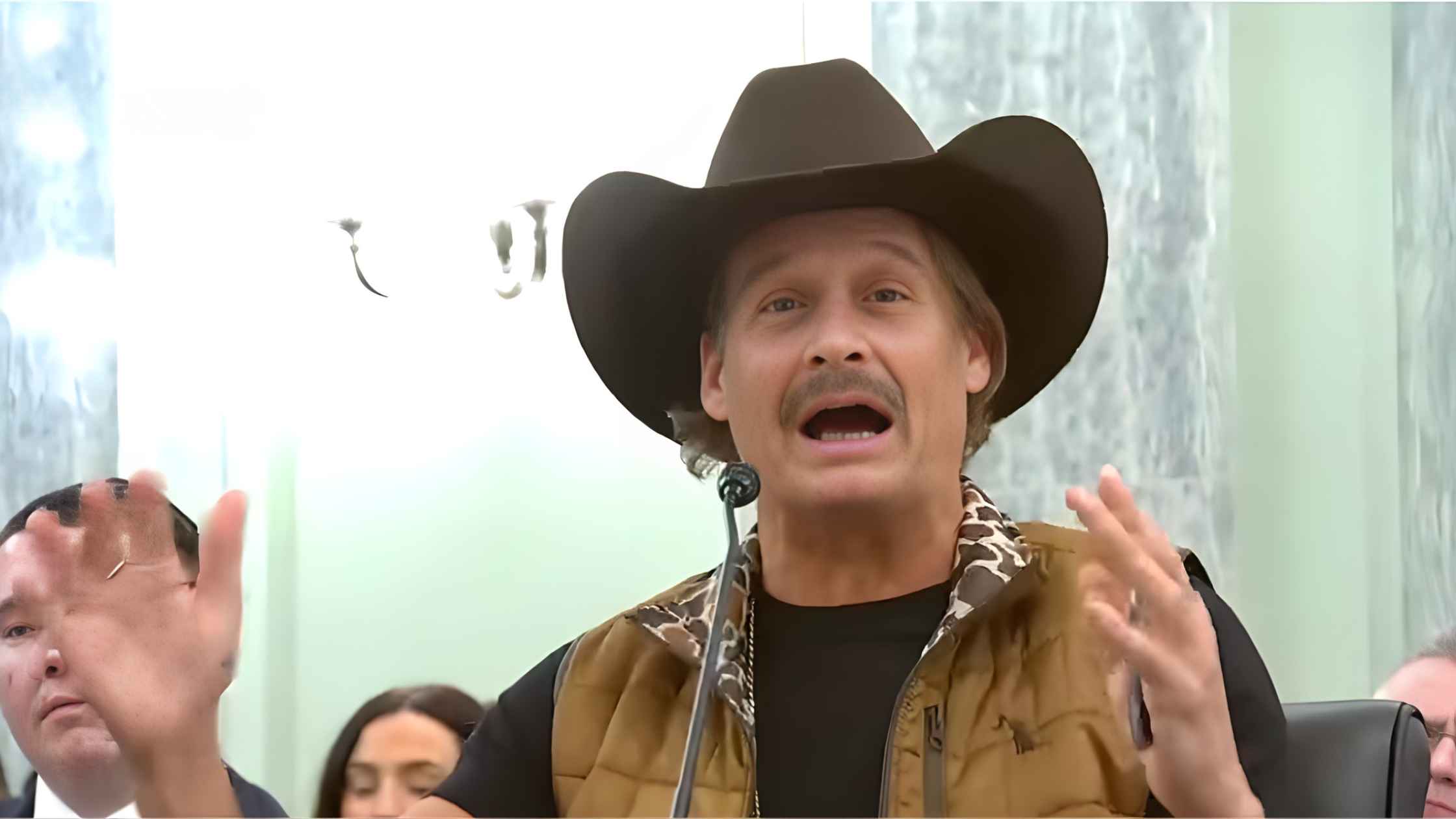
Topics: