
Speaker X (00:00):
… after that.
Speaker 2 (07:59):
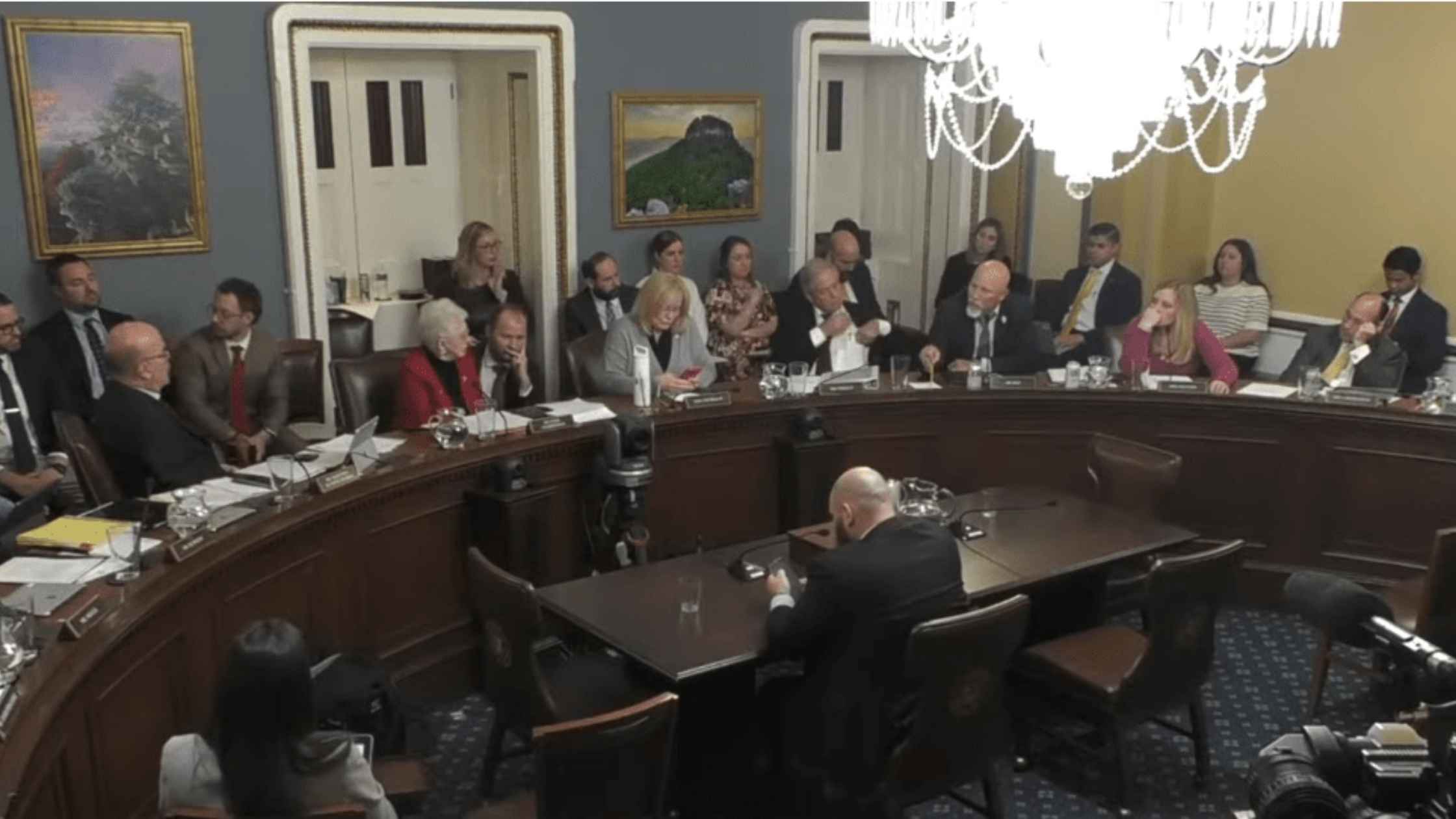
Good afternoon. The committee will come to order. Without objection, the chair's authorized to declare a recess at any time. We have a lot of business to catch up on, given that the Schumer shutdown has concluded. Today, the Rules Committee is convening to consider eight separate measures. S.J.Res.80, H.J.Res.130, H.J.Res.131. I'm sorry, I'm going to go back S.J.Res. I'm not sure how I read that first one. H.R.1949, H.R.3109, H.R.5214, H.R.5107, and H.Con.Res.58. The three Congressional Review Act resolutions before us today, alongside H.R.1949 and H.R.3109, are part of our efforts to unleash and utilize the abundance of natural resources that our nation has to offer. And who will stand to benefit when we pass these pieces of legislation? The American people, that's who.
(09:05)
Our colleagues have shown us repeatedly they oppose the development of energy that comes from American soil. They have such an allergic reaction to it, it's quite a perplexing position to have. We have vast repositories of natural resources across our entire nation. Why in the world would we deny ourselves the opportunity to harness them and utilize them accordingly? I'm sure Chairman Westerman will do an excellent job of cutting through the noise and explaining to everyone why these pieces of legislation are important and what they mean for the nation.
(09:41)
Next, we turn to H.R.5214 and H.R.5107. H.R.5214, the District of Columbia Cash Bail Reform Act of 2025 would require mandatory pretrial and post-conviction detention for crimes of violence and dangerous crimes and require mandatory cash bail for certain offenses that pose a threat to public safety or order in the District of Columbia. Crime and lawlessness should not be allowed to run rampant in the streets of Washington D.C. Our capital city should set an example that the rest of the country should follow and not be burdened by violence in criminality.
(10:27)
Thanks to the efforts of President Trump, the streets here are safer for the first time in many years. We can add to this progress by revoking cashless bail, so that balance can be restored to the criminal justice system in D.C. too. H.R.5107, the Clean D.C. Act of 2025, would repeal the Comprehensive Policing and Justice Reform Amendment Act of 2022, enacted by the District of Columbia Council. The enactment of the Comprehensive Policing and Justice Reform Amendment Act in January of 2023 effectively bound the hands of local law enforcement in D.C.
(11:10)
It contains many progressive measures that target law enforcement officers' actions, particularly in emergent situations. It also makes it easier to fire officers for actions that anti-police activists do not approve of and embolden these same activists to target law enforcement officers for acting within the parameters of their public safety role. Even the D.C. Police Union has voiced its concern over this act and has lost over 1,600 officers because of it. It's evident that this misguided act must be repealed entirely.
(11:50)
The last item on today's docket is H.Con.Res.58. a resolution denouncing the horrors of socialism. Socialist ideology necessitates a concentration of power that has time and time again collapsed into communist regimes, to totalitarian rule and brutal dictatorships. We can and should denounce this corrosive ideology in the strongest possible terms. This resolution before us will allow for that.
(12:24)
With that, I now yield to Ranking member McGovern for any comments that he wishes to make.
Speaker 3 (12:34):
Well, thank you, Madam Chair, and I appreciate that the committee has gotten back to legislative business this week. But after taking a look at this week's bills, I'm not positive how good that is for the country. Eight weeks of paid vacation, and this is what Republicans came up with. Nothing at all to lower prices or address people's everyday concerns. No, none of that. Instead, we will get reruns of bills that you've already passed. Give me a break.
(13:04)
The Unlocking our Domestic LNG potential Act was supposedly so important that Republicans passed it last Congress multiple times and then didn't even bother sending the bill to the Senate. I mean, you guys pretend like what you're doing is a big deal, like it's going to make a difference for people the second it's passed and you never even send it to the Senate. Has anyone on the other side ever watched Schoolhouse Rock!? I mean, I think you ought to because you guys might learn a thing or two.
(13:34)
By the way, for the record, not a single appropriations bill is being considered this week, not one. We've had eight weeks out, eight weeks, eight weeks out, and where are all the appropriation bills that would've been promised? We're barreling towards another shutdown deadline. Why aren't Republicans bringing up one appropriation bill after another to get this done, so you don't have to do another continuing resolution? And I'm noticing on the agenda here today a number of bills dealing with the District of Columbia.
(14:05)
Let me give my colleagues on the Republican side some advice. If you really want to micromanage D.C.'s affairs, then resign from Congress and run for city council here in D.C., then you could have more of a say in what's going on here in the District of Columbia. I mean, but to micromanage every bit of D.C.'s affairs is offensive. I mean, the president of the United States wants to have control over what the name of the football team's going to be. I mean, this is ridiculous. The people of D.C. pay taxes, just like the people in our districts. People here have served in our military, people here have sacrificed their lives fighting for this country's freedoms, and yet, they don't even have a full vote here in the United States Congress. So, I mean, it's just so offensive.
(14:58)
And meanwhile, as we talk about all this stuff, everything is getting more expensive. Groceries, rent, gas, childcare, energy costs, healthcare. And now, after 11 months of Republican leadership, we finally get their plan to address the economic uncertainty that so many families feel. And what is their plan? What's the big reveal? It's to tell people that there is no affordability crisis. Inflation isn't real. Costs aren't up. I mean, you got to be kidding me. Can I just offer some advice? Let me critique the last administration. I don't think President Biden spent nearly enough time talking about and addressing the affordability crisis. Many of my colleagues in Congress raised the alarm to no avail. And you know what? You guys are making the same mistake. Donald Trump promised to bring prices down to make life more affordable. He didn't say he would tweak inflation or nibble around the edges. He said he would work to bring costs way down. Well, I go grocery shopping in Worcester and I look at my receipts. Prices aren't going down. They're up and going up even more. Trump is bragging about that Walmart's Thanksgiving dinner package got cheaper, 15 bucks cheaper. And then, I look at the fine print. It's because they removed items. They shrank the dinner package and surprise, the price goes down.
(16:26)
Maybe if Trump or anyone in his billionaire-first inner circle actually went grocery shopping like the rest of us, they'd know that, but they don't. They don't live how the rest of America lives. And it's not just Trump's failure to bring costs down, it's that he's making it worse. He said his tariffs would not raise prices, and they did. He said they wouldn't be paid by Americans, they are. And now, every single one of us is paying more for everything due to his stupid trade war. So, please excuse the American people if we don't applaud him for swooping in, reversing some of the stupid tariffs and trying to take credit for fixing a problem that he himself created.
(17:06)
And finally, on the Epstein files, after months of Republicans blocking transparency, stonewalling in this committee, inventing excuses and trying to block these files from ever coming out, A majority of members of this party have now signed a discharge petition to force a vote. And out of nowhere, miraculously, your leadership is now eager to bring the bill to the floor. We welcome your sudden change of heart, but we know what this is about. Trump gave you all permission.
(17:39)
Last week he was calling people into the situation room to try to kill the release of the files, but he knows he failed. And so, now finally, we get a last-minute to try to save face. Guess what? I'll believe it when I see it. I'll believe it when the Senate votes on the release of the files. I'll believe it when he signs the bill into law. And frankly, I'm concerned that even if he does, he's going to try to invent a new excuse to bury, cover up and block these files from coming out.
(18:08)
For months and months this Republican majority voted time after time after time to cover up for a pedophile. I think it's disgusting. And for the sake of the survivors who deserve accountability and for the public that deserves transparency, these files must come out.
(18:25)
I yield back my time.
Speaker 2 (18:28):
Thank you, Mr. McGovern. Without objection, any prepared statements that our witnesses may have will be included in the record. I now welcome our first panel representative, Representative Latta and Ranking Member Pallone from the Committee on Energy and Commerce. Your full statement will be submitted for the record and we ask that you summarize your statement in five minutes. Representative Latta, I welcome your testimony.
Speaker 4 (18:57):
Well, thank you, Madam Chair, Mr. Ranking Member, members of the Rules Committee. Thanks for the opportunity to testify before you today. I'm pleased to speak in support of two pieces of legislation, H.R.1949 Unlocking our Domestic LNG Potential Act and H.R.3109, the Researching Efficient Federal Improvements for Necessary Energy Refining Act. Both bills are aimed at unleashing our nation's natural resources to bolster national security, lower domestic prices from consumers and supply our allies with critical fuels.
(19:32)
Geopolitical events over the last several years have reaffirmed the world's need for American energy. Russia's unprovoked invasion of Ukraine in 2022 led to a reshaping of global energy markets as a significant amount of oil, natural gas and refined products were immediately sanctioned. In response, American energy producers stepped up to the plate, supplying Europe and other allies around the world with critical energy. In fact, the United States was the largest supplier of liquefied natural gas to Europe in 2023.
(20:04)
Not only has US LNG helped stabilize global markets, but it has also decreased cost for domestic consumers and supported thousands of American jobs. In fact, in just a few years, the US has increased its LNG export capacity from zero to 11.6 billion cubic feet per day. During the same period, the spot price of US natural gas has remained stable and affordable. Unfortunately, these cargoes were threatened in January 2024 when the Biden-Harris administration was coming under political pressure and announcing an indefinite ban on LNG export authorizations. During the ban, Russia overtook the US as the lead gas supplier to Europe, long-term American contracts were jeopardized and global buyers were forced to look elsewhere for less clean sources.
(20:56)
H.R.1949, led by the gentleman from Texas, would ensure a ban is never placed on US LNG exports again. By removing DOE from the process, export restrictions would be repealed and LNG exports would have equal treatment with other commodities like crude oil. Nothing in this legislation limits the authority of the president to impose sanctions in a foreign government and to prohibit imports or exports if needed. Additionally, this legislation does not affect existing FERC authorities or procedures for reviewing or ordering the export facility for environment or safety purposes.
(21:36)
Like LNG export facilities, American refineries have played a critical and crucial role in providing secure, affordable, and high-value petroleum products to global consumers. However, a new major refinery has not been built in the United States since the 1970s. Meanwhile, the US Energy Information Administration, EIA, projects global demand for liquefied fuels to increase by 20 million barrels per day by 2050. The United States must be able to meet this moment. However, hostile regulatory environments, like those in California, have shuttered critical refineries and deterred investment. New infrastructure.
(22:15)
California used to be home to 40 refineries in the 1980s. This number has decreased to 14 as of last year with two additional refineries that could close by early 2026, the anticipated closure of the Phillips 66 and Valero refineries would disrupt fuel supplies and increase energy prices. Further, a lack of pipeline connectivity, boutique blending requirements, gas taxes and restrictive re-regulations have resulted in California becoming an energy island. In fact, the state imports over 60% of its crude oil from foreign countries, like Iraq, Brazil and Saudi Arabia. As energy companies choose to do business in more reasonable states, Californians should unfortunately expect even higher fuel prices.
(23:04)
It is important that we understand the challenges to increasing US refining capacity. My bill, 3109, would require the National Petroleum Council to examine the role of our current refining fleet, opportunity to expand capacity and detail challenges and risk to those facilities. A lack of capacity along the West Coast has resulted in fuel price volatility in the region and increased the importation of fuel supplies often coming from countries with significantly less stringent environmental and labor standards than the United States. We cannot let the rest of the country follow suit. Both LNG exports and US refining capacity unequivocally benefit our economy, domestic crisis, and allies around the world.
(23:51)
I urge all my colleagues to join me in supporting H.R.1949 and H.R.3109. And I thank you and I yield back the balance of my time.
Speaker 2 (24:00):
Thank you. Congressman Latta. Ranking Member Pallone, you're recognized.
Speaker 5 (24:06):
Thank you, Chairwoman Fox, and Ranking Member McGovern and members of the committee. It turns out that two weeks after millions of Americans got notifications that their health insurance premiums are skyrocketing, that Republicans don't want to talk about how much healthcare costs are rising on their watch or the millions of families who now won't be able to afford it. They also don't want to talk about the fact that President Trump seems to have known exactly what Jeffrey Epstein was up to on his island. So, instead, during our first week back from the Republican shutdown, we're here to talk about two energy bills that serve absolutely no one except the fossil fuel industry. In fact, one of them will shoulder Americans with higher energy costs and make the affordability crisis even worse. I don't see the logic in this, but I'm happy to point out some facts.
(24:55)
The price of natural gas, which millions of people use to cook and heat their homes, is 15% higher than it was a year ago. And just since President Trump took office, the price of electricity has gone up 11% nationwide. I think it's pretty clear that President Trump's promise to cut power bills in half and is just a broken campaign promise. Our country has experienced a cost-of-living crisis that's now jeopardizing one of our most crucial necessities, the ability to heat and cool our homes. But tragically, these cost increases are just the beginning. The Big Beautiful Bill, I call it the Big Ugly Bill, that Republicans passed this summer is projected to increase electricity prices by a staggering 60% on top of the rate hikes families have already endured. Earlier this year, one industry coalition letter called the Republican bill, the "single largest nationwide utility bill increase in American history," and that's because it's set to cut the deployment of clean, affordable American renewable energy in half. And that's not even mentioning the president's tariffs, which are a tax on Americans that will cost the average family about $2,000 a year.
(26:09)
So, now faced with a cost-of-living crisis of their own making, what do Republicans want to do? Well, they want to pass bills that would make the problem even worse, and not just a little bit, by a lot. The first bill, H.R.1949, would allow unlimited exports of American liquid natural gas or LNG, without asking the Department of Energy to figure out if these exports are in the public interest.
(26:32)
Now, when we talk about the public interest that exists now that has to be cleared by the DOE before these kinds of exports take place. We're talking about prices, we're talking about strategic interests, and we're talking about environmental or climate interests. None of those would be reviewed any more under this bill. It's just deemed in the public interest and there's no reason to review it.
(26:57)
Last year DOE found that unlimited exports of LNG would increase natural gas prices by over 30% and cost households well over $100 a year. It's just common sense, in my opinion, that sending more of our energy resources abroad will send energy prices skyrocketing here at home.
(27:17)
Then, we have the other bill H.R.3109, which is just a complete waste of time that Bill directs the National Petroleum Council to write a report on the refinery industry. That's it, just a report. I mean, now reports are a big priority. I'd like to note that when he called us back here last week, Speaker Johnson threatened that we'd be working long hours into the night, and that's his quote. And this is his quote, "We look forward to the government reopening this week, so Congress can get back to our regular legislative business. We have a lot of business to do."
(27:53)
Well, I agree with the speaker, we've got a lot of business to do, but that is not what we're doing here. I mean, a lot of businesses is fixing the Republican healthcare crisis, addressing the rise in cost of living is crushing our constituents. I just think it's ridiculous that after we're home for seven weeks, the Republican leadership has brought us back to writing a bill that asked the National Petroleum Council for a study.
(28:19)
So, Madam Chair, I don't think this is serious. We need to work on solutions to drive costs down, not ignore them or worse, send them skyrocketing further. And that's that's what this bill, these bills would do. And what that, I yield back, Madam Speaker.
Speaker 2 (28:36):
Thank you, Mr. Pallone. I'm going to defer questioning myself. Ms. Fischbach, do you have any questions? You're recognized.
Speaker 1 (28:46):
Thank you very much, Madam Chair. Just really quickly because I know we've got a lot on the docket and I will ask on 1949, I'm trying to keep them straight. Really what we're talking about in there is that it really streamlines things and it makes it better to deal with the issue. Am I understanding that correctly?
Speaker 4 (29:07):
That's correct.
Speaker 1 (29:09):
And that makes a lot of sense because when you're talking about prices, I mean the expenses have been… When you do streamline things, it will help. Is that not the right way to-
Speaker 4 (29:23):
Yeah, and thank you very much for the question because it is really important. Because again, when you think about the LNG exports, we want to make sure that two things, number one, that we're producing the energy here in the United States, that we're also getting that energy across the globe to our friends. I know when I've spoken at different meetings with a lot of different foreign countries, they've all said the same thing, "We want to buy US LNG." They do not want to buy Russian LNG and they say for a particular reason, they say they don't support Putin's war. And so, the United States is going to be out there doing what we can do best and making sure that we're putting a product out there,, it's also cleaner than being produced from any place else in the world and making sure that we're helping here domestically and also with our foreign policy.
Speaker 1 (30:16):
Thank you very much. And then, on 3109, there was some talk about why we needed the report. And so, I'm going to ask you to maybe just give us a little explanation of why the report is needed.
Speaker 4 (30:29):
Well, first of all, there hasn't been a report in 21 years, I think that's an important number right there. And number two is that as we see the increased demand in committee hearings that we've had, I've asked the same question, do we have to have more energy or less energy in this country? And everybody has said the exact same thing. We have to have more energy being produced. How are you going to refine it? So, what we're seeing is that we haven't had a new refinery. They've been adding on and trying to keep up with the demand, but we're seeing that the demand is increasing. And so, we have to make sure that we have the refining capacity in this country to do it right here in this country.
Speaker 1 (31:11):
Thank you very much and I appreciate it and thank you for the bills. And with that, I yield back.
Speaker 2 (31:16):
Thank you, Congresswoman Fischbach. Mr. McGovern, you're recognized.
Speaker 3 (31:21):
Mr. Latta, as Mr. Pallone pointed out, electricity prices have gone up by 11% since President Trump took office. And just last week, the US Energy Information Administration projected that natural gas prices will rise 16% next year, "primarily due to increased liquefied natural gas exports." So, my question is, won't H.R.1949 further increase LNG exports, which the EIA says will be a key driver in rising natural gas prices in the United States next year? And how is a bill that would help foreign entities import our oil and gas, while raising prices for Americans be considered American-first?
Speaker 4 (32:06):
Well, thank you very much for the question. If we go back in just time, I can remember a day in the 1970s where they're telling us that we didn't have any energy left in this country and we've been able to change that and for the better. And it's because right now, we've become the number one natural gas producer in the world. We can out produce Russia and Saudi Arabia in oil production on any given day. And what we've also seen is what we've heard in testimony before us in committee is a very simple fact. We're using a lot more energy in this country and a lot more electricity.
(32:39)
And so, what we've seen from when we've had the RTOs and ISOs testifying before, so those are all the regional companies, like PJM that takes care of Washington D.C. and 13 other states, is that we've got to have more energy. But what we've also seen numbers like in the last year, we were being told that because of the data centers coming online, that they'd be using about 4.5% to 6% of potential electricity and energy out there. And now, we're seeing it's over 10%. It's just going to keep increasing. So, we want to make sure that we keep-
Speaker 3 (33:17):
Do you dispute the US Energy Information Administration's projection that natural gas prices will increase by 16%, primarily due to increased LNG exports? Do you disagree?
Speaker 4 (33:32):
No. I think, again, I think it really comes down to that if we're not producing the energy in the fields and getting it from point A to point B, then we have to make sure that we have it out there.
Speaker 3 (33:44):
All right. Even if you think this bill is great, this is the question I have. Why did Republicans pass it last year but never send it to the Senate? In fact, last Congress, Republicans passed 12 bills in the House that they never sent to the Senate and that kind of baffles me. I'd imagine that if you actually wanted to change the law, you'd send the bill over to the Senate after you passed it in the House and not let it languish. I mean, have you asked the speaker why he didn't send this bill to the Senate last year?
Speaker 4 (34:14):
To the ranking member, we passed great legislation on the Energy and Commerce Committee. And once it leaves the committee, I can't speak for what leadership did on the legislation.
Speaker 3 (34:29):
Did you complain that he never sent it?
Speaker 4 (34:33):
Again, I wasn't the chair of the committee, so I'm not sure whether the discussions were being made. It could very well have been made, but I wasn't privy to that.
Speaker 3 (34:40):
Do you know why they didn't send it?
Speaker 6 (34:44):
I'm sorry. What was the question again? I wanted to say something-
Speaker 3 (34:46):
I'm just wondering why this bill's so great that we passed it in the last Congress, but it was never sent to the Senate?
Speaker 6 (34:52):
Well, because the Senate obviously thinks it's a bad idea.
Speaker 3 (34:57):
Yeah, why not send it anyway? We
McGovern (35:00):
We send lots of bad bills to the Senate. I'm just wondering.
Pallone (35:06):
I mean, look, this is such a terrible bill. I can't blame anybody for not moving it or sending it. I mean, to be honest, I think that what we're seeing repeatedly with the Republican House in the last session and the Republican House now is they just constantly pass bills that hurt the environment, make energy prices higher. It doesn't matter.
McGovern (35:33):
[inaudible 00:35:33] Do you have any assurance that if this bill passes again, that the speaker will actually send it to the Senate?
Latta (35:41):
To the ranking member, again, when the legislation leaves the Energy and Commerce Committee, it's a good… We've passed a very good piece of the legislation. We're just waiting, hopefully, that bill will then make its way over to the Senate.
McGovern (35:54):
Do you believe it should be sent to the Senate?
Latta (35:57):
Absolutely.
McGovern (35:57):
Okay.
Latta (35:58):
I wouldn't be here today.
McGovern (35:59):
And I assume you'd be disappointed if the Speaker once again chose not to send it?
Latta (36:04):
No. And again, I think that what we've seen in the past is that we had a situation in this country where we weren't producing energy, and then we're in a situation today that we are producing energy.
McGovern (36:16):
I get it.
Latta (36:17):
And again, when it comes to making sure that once it leaves our committee, then that's the discussion that the leadership has.
McGovern (36:26):
I'm just wondering whether we're playing pretend Congress or whether we're playing real Congress because if this were real, you pass a bill here, and then we send it to the Senate and ask them to.
Latta (36:38):
Well, I worked on pieces of legislation for a good number of years and it might take several Congresses to get something through, but we will get it there.
Pallone (36:46):
Could I go back to answer a question you asked him earlier, that you asked Mr. Latter earlier. I wanted to answer a question that you asked him earlier, if possible.
McGovern (37:00):
How many questions ago are we talking about?
Pallone (37:04):
I don't know. I mean the bottom line is, but-
McGovern (37:06):
The issue is whether or not this bill will actually increase energy prices here as the US Energy Information Administration projected that the more we export, that prices will go up here.
Pallone (37:21):
Yeah. I would suggest to you in response maybe to all your questions that the reason the speaker doesn't send it is because he thinks it's a lousy bill that not only increases energy prices, but it's totally unnecessary. Just two things in that regard. One is that, first of all, the amount of permits that have been already approved by DOE for LNG are three times triple are what the export capacity is today.
(37:52)
So the bottom line is even if they never issued another permit, it would take us into the early 2030s before they could ever possibly export the level that is being advocated here. But beyond that, keep in mind that you can export right now to any country which we have a fair trade agreement with, without going through this process. And the problem is now is China. In other words, they want to export to China.
McGovern (38:23):
Right.
Pallone (38:23):
That's the problem.
McGovern (38:24):
Let get two other quick questions here. One is, would you be opposed to an amendment that would require if this bill gets passed that it be mandatory, that'd be required that it gets sent to the Senate?
Latta (38:39):
I'm not sure.
McGovern (38:41):
It can feel like we're watching reruns here?
Latta (38:42):
I guess my question is how often does that ever occur?
McGovern (38:45):
Yeah. In the last Congress we passed this bill, and then it never gets sent to the Senate.
Latta (38:50):
Right. But I said-
McGovern (38:50):
So here, we're back again. [inaudible 00:38:52] this bill.
Latta (38:56):
And again, I can't speak for leadership, but I know that one of the things I do know is this, is that if we want to make sure that the United States stays on top, that we have to make sure we have the right regulations out in the fields, that these people can be out there producing energy. What we've seen in the past, you put the stringent requirements out there to a point that we can't produce energy.
McGovern (39:18):
I guess I'm not getting answer my question, but I'd like to ask you unanimous consent to insert in the record a list of the 12 bills that we actually passed that everybody here said was so important that we passed that never got sent to the Senate.
(39:29)
And in your committee, Mr. Poland just referred to it, Republicans blocked an amendment that would've allowed the energy secretary to block exports of LNG to China if he or she determines they harm the public interest. Why did Republicans oppose that amendment?
Latta (39:45):
Off the top of my head, I can't quite remember the exact rationale, but I know this, is that if the Chinese become more dependent on buying from us, they're not getting it from some other source. Maybe, it's like a Russia or someplace else. So it also helps on our trade side because of the imbalance there. So it makes them more dependent on us.
McGovern (40:10):
Well, I don't think the energy secretary is flaming liberal here, but my question would be, according to this amendment, the energy secretary could only block exports of LNG to China if he or she determined that they harm the public interest.
(40:27)
I'm just trying to understand why is that a bad idea? If energy secretary determines that exporting LNG to China is not in the public interest of people here in the United States, Republicans blocked it. I'm just trying to… Is there a reason?
Latta (40:50):
And again, I can't go back in memory to that exact moment. But as I mentioned before that it's important that the United States, if we're selling the energy to China, they're not getting it from someplace else. And again, they're more dependent on the United States.
McGovern (41:11):
And just the final quick because I mentioned Neguse is, I think, stuck on a plane, but he brought this up last time because last time we met on bills in your committee's jurisdiction, it was to vote on a bill to reestablish a coal council, even though the Trump administration has already reestablished that council in June.
(41:29)
But when we met in September, Mr. Neguse pointed out that the council had been reestablished a name only on its website. If you went to the current members tab. It said quote, "Coming soon."
(41:40)
Well, I just went to the website this morning, and it still says, "Coming soon." So it's been five months since Trump's announcement, two months since you passed your bill. And still, there does not appear to be a council. Do you have any update for us on the happenings of the National Coal Council, which Republicans have all said is incredibly important to get up and running? And that was one of the reasons why we dealt with your legislation only a few months ago. Do you have any update on-
Latta (42:09):
Well, I'll do this. I'll get back to the ranking member on that. I'd be happy to do that.
McGovern (42:16):
Yeah, because here's the website, and it still says, "Coming soon." So anyway. Okay. Well, I appreciate it, and I yield back.
Latta (42:23):
No. Thank you very much.
Chairwoman Foxx (42:25):
Thank you, Mr. McGovern. Ms. Houchin, you're recognized.
Houchin (42:30):
Thank you, Madam Chair. Thank you to Chairman Latta, Ranking Member Pallone for being here. From day one, the Trump administration has worked to reverse the disastrous energy policies of the Biden administration, unleashing American energy production and reducing our dependence on our foreign adversaries.
(42:51)
Finally, after four long years of failed leadership under President Biden, we once again have a president who understands that energy security is national security. Under current law, any entity wishing to export US natural gas must gain approval to construct and operate LNG facilities, obtain multiple federal and state permits, and undergo a rigorous regulatory review. As if that process wasn't burdensome enough, the Biden administration announced an indefinite ban on issuing export permits to non-free trade agreement countries while it reviewed the climate impacts of US LNG, surrendering to radical climate activists, and effectively kneecapping one of America's most powerful economic and geopolitical tools.
(43:35)
This legislation builds on the common sense policies of the Trump administration by removing unnecessary restrictions on the export of natural gas by eliminating the requirement for the Department of Energy to authorize LNG exports and instead giving the Federal Energy Regulatory Commission sole authority over the approval process.
(43:57)
Congressman Latta, do you agree that as a result of President Biden's freeze, Russia surpassed the US as Europe's leading gas supplier as documented at the time?
Latta (44:08):
That's absolutely correct. And again, if I just can reiterate, one of the things again, what our European allies have all said, they want to buy from the United States. They did not want to buy from Russia and pay for his war against Ukraine.
Houchin (44:24):
And how does that serve our national security or our allies if the United States is not a leader in these exports?
Latta (44:32):
Well, the United States should be a leader. It's absolutely essential because, again, if the United States is leading and then the rest of the world is saying, "You know what, we want the United States out…" And that's what they've all said, you talk to these countries from around the world. They say they don't want it when it comes to Russia or anyplace else if they can get it from the United States because not only do they know that they're not being held hostage, but they also know this, is that they're making sure they're not financing wars that they'll end up… could be very likely be next in. So they really see the United States as the leader out there.
Houchin (45:08):
So under the Trump administration, the first Trump administration, the United States was energy independent and was a net positive exporter of energy for the first time in 40 years.
(45:20)
Under the Biden administration, LNG exports were stopped, as I mentioned before, under pressure from climate activists. We've heard from some of our colleagues yet this afternoon that if we try to increase exports of natural gas, it might drive up costs for consumers.
(45:40)
However, history will tell us that the Biden halt of exports from liquid natural gas only resulted in a less than 1% discount on residential rates. Yet, it costs to the United States in terms of our GDP. The industry itself is an economic engine accounting for about $408 billion in GDP since 2016. Madam Chairwoman, I'd like to insert for the record an article posted on api.org, Facts, Not Fiction: The False Narrative on LNG Exports and US residential Prices.
Chairwoman Foxx (46:20):
Without objection.
Houchin (46:22):
So the International Energy Agency does project global gas demand will reach record highs. Why is it important for the United States to fill that demand, and you've mentioned some of these reasons, as opposed to our adversaries like Iran or Russia?
(46:40)
In my view, the United States can and should be a leader and a net exporter of our energy portfolio, and this legislation is a step in that direction. Do you agree?
Latta (46:53):
I absolutely agree with that.
Houchin (46:56):
Thank you. I yield back.
Chairwoman Foxx (46:58):
Thank you very much. Ms. Scanlon, you're recognized.
Scanlon (47:02):
Thank you, Madam Chair. I guess my constituents and I were naive when we thought that after a seven-week vacation for our colleagues that when we came back to Congress, we would be addressing the most important issues for the American people, healthcare and housing affordability, addressing government corruption.
(47:22)
There's no shortage of issues that we should be working on, but looks like we're doomed to disappointment. So this panel, we've got families in Pennsylvania and across the country who are being squeezed by higher energy costs.
(47:37)
But we're considering several bills whose major purpose is to give handouts to the fossil fuel industry, make it easier for them to make bank.
(47:46)
HR 1949 strips the Department of Energy of its ability to consider issues affecting my constituents and the country as a whole. Issues like consumer prices, the environmental impact, and the strategic national interests of our country. This means the impact of this bill is to have more exports tied to global price swings, fewer consumer safeguards, exactly the opposite of what families in my district need when their energy bills are already too high.
(48:19)
The Department of Energy's own analysis and independent experts have warned that unfettered LNG exports can raise domestic prices and increase volatility. We should be protecting our ratepayers, not exposing them to higher costs.
(48:34)
The REFINER Act., H.R.3109, instructs the Oil & Gas Advisory Council to submit a report to Congress on the oil and gas industry. So that's not neutral policy. That's outsourcing policymaking to an industry-led council instead of independent experts. So it does not appear that these bills prioritize the best interests of the American people or certainly my constituents.
(48:58)
Last Congress, we passed historic legislation to invest in clean energy. We lowered energy costs across the board and set the stage for a future with less pollution and more reliable electricity generation.
(49:11)
But Trump and the Republican-led Congress have undone large parts of that critical legislation to provide billionaires with tax breaks. And now, they're going forward with this legislation which will enrich corporations, increase the pollution poisoning our air and water, and worsen the climate crisis. So I'm obviously not a big fan of this legislation.
(49:32)
But Ranking Member Pallone, can you talk a little bit about the concerns about the environment and the cost for consumers and why exporting more LNG is likely to raise profits for the fossil fuel industry, but also to raise prices for Americans?
Pallone (49:51):
Absolutely, and I appreciate your question. Look, the only country that's benefiting from this is China and other adversaries, because right now, as I said, something like the DOE has allowed permits to triple the amount of LNG.
(50:10)
And if you're worried about our allies like Europe, this takes you to 2032, right? The Europeans are not worried that they're not getting enough LNG under the current permits that have been approved. The problem is that for countries that are not… for which we don't have a free trade agreement, they need to go through this permit process which looks at the price, the impact of the price on Americans, the impact on the environment and climate, and also on our strategic interests.
(50:42)
So if you eliminate that permit process, which is essentially what this bill does, then they never look to see whether increased exports to China, for example, could be other adversaries are beneficial or could possibly harm us.
(50:59)
And the president is going around hawking the fact that we could send more LNG to China. He doesn't pretend that that's not what he's up to. He makes it clear every day. He says, "I want to sell more LNG to China." He says it outright. Okay.
(51:14)
So what you're saying is absolutely true. In other words, when you send all the LNG abroad, all the documentation proves that the price here goes up because it becomes a shortage here, right? But it's not just the price. The price is bad enough, but it's also the strategic national interest is the impact on climate.
(51:36)
It's the impact on the environment. Who is benefiting from this? Just our adversaries. And China is the best example because the more we send to them, the more they're going to use it, in my opinion, for purposes that are not helpful to us. That's what this is all about.
(51:57)
And the ultimate irony of it is that I hear my colleagues on the committee, you sometimes, but some of the others even more, talk about China, China, China, "Oh, we got to stick up to China. We got to have tariffs on China. We have to have this."
(52:14)
Well, why in the world would you allow this to occur? I know the president wants to send it to China, but we shouldn't be. It's not in our interest.
Scanlon (52:24):
I think you're laying out really well the strategic national interest, but the calls I get in my office are about people's concerns about not being able to afford their energy bills-
Pallone (52:33):
Sure.
Scanlon (52:34):
… and concerns about the environmental impact of running LNG lines through their neighborhoods.
Pallone (52:39):
And the ultimate irony is that, as you know, during his campaign, the president said over and over again, "I am going to cut electricity prices in half." I think he even said in the day or the first week, and they keep climbing every day, and this will only contribute to it.
Scanlon (52:54):
Well, and what I find most offensive about this legislation is it basically puts not just a thumb on the scale but a fist and says, "We are not even going to look at the things that Americans are most concerned about." We're just going to say, "Nope. We're assuming that all this is going to be good for Americans despite the evidence to the contrary, and we're just going to look at how to make it better for oil companies and natural gas companies."
(53:18)
So I object to legislation that puts the blinders on Congress when it comes to how we should be legislating. With that, I yield back. Thank you. x
Chairwoman Foxx (53:30):
I to meet irony Scanlon, Mr. Scott, you're recognized.
Scott (53:33):
Thank you, Madam Chair. And I just go back to the opening comments, and I got to ask this. Mr. Pallone, did you help write the Affordable Care Act?
Pallone (53:40):
Did I what? I'm sorry?
Scott (53:41):
Did you help write the Affordable Care Act or did you just vote for it?
Pallone (53:45):
Actually, not only was I one of the drafters, but I'm the only one left. There were six of us, the chair at the time of the full-
Scott (53:55):
Okay. Great. So maybe, you can explain this to me then.
Pallone (53:58):
Sure.
Scott (54:00):
So I went to the pharmacist this weekend, and I am covered under the Affordable Care or Obamacare. I went to the pharmacist. It was Friday, and it's cheaper for me to pay cash at the pharmacist than to actually use the Affordable Care. So why would you write a piece of legislation that mandated that the American citizens buy a contract when if you use it, your copay is literally more than the cash price of the prescription drug? I'm just wondering why you would draft a piece of legislation that did that.
Pallone (54:40):
Well, all I can tell you is that whenever I go to the pharmacy, it's just the opposite. If you want to pay cash, it's a lot more expensive.
Scott (54:48):
Oh, I think the American citizens would probably recognize that that's not true. The way y'all drafted the contract, it was a gift to the insurance industry, and it's actually cheaper to pay cash for most drugs than it is to [inaudible 00:55:02].
Pallone (55:01):
I haven't seen that to be the case at all.
Scott (55:02):
Well, let me ask you one more because I got a charge right here. And if it wasn't so sad, it would be funny, but last charge was $111. This is for an outpatient appointment, and the balance I owed on this contract that you wrote that we're mandated to be covered under, I had to pay $60 of the $111. Do you want to guess how much the insurance company paid?
Pallone (55:35):
You could tell me what you want.
Scott (55:37):
Yeah. The insurance company paid $7.99. Now there's another $43.1 that they simply took out of the provider reimbursement. And so, those of you who actually wrote the Affordable Care Act, also known as Obamacare, you talk about a healthcare crisis. We absolutely have a healthcare crisis in this country, but those of you who wrote that contract that does those types of things, it was nothing other than a gift to the insurance industry.
(56:06)
When you look in the mirror, you're looking at the person that created the healthcare crisis in that country. Madam Chair, with that, I yield.
Pallone (56:12):
Well, Mr. Scott, could I just say one thing, just one thing in response. I don't know anybody who would prefer to not have health insurance and pay cash. I just don't, but that's my experience.
Chairwoman Foxx (56:25):
Thank you. Mr. Griffith, you're recognized,
Griffith (56:30):
Madam Chair, it's always good to see my colleagues from energy and commerce with us. I wasn't planning on saying anything, but Mr. Scott got me going. And so let me say this, I'm not sure it's most drugs, but there are certainly a fair number of drugs. And my colleagues may remember that a couple of years ago, we had a bill passed out of Energy and Commerce. I don't remember the vote. I don't keep score like that. That's not my nature. Don't remember the vote. But I had a bill because I see the insurance companies as fiduciaries for their enrolled subscribers and tried to reverse the situation that Mr. Scott just raised because it does exist on many drugs. I can't say it's most. I can't tell you what percentage it is, but it's a significant number, where the insurance company pays, in his example, it was $7.99, and yet the co-pay was 30 or 60. I forgot-
Scott (57:26):
That was on a physician charge.
Griffith (57:28):
Oh, physician charge. All right. But that happens enough that I put the bill through, and Energy and Commerce passed it. Unfortunately, Ways and Means thought I was trying to price control. And all I was trying to do was recognize that there is a fiduciary, in my opinion, and I think it's accurate, a fiduciary relationship between an insurance company and their enrollee whether it be paid for by the enrollee themselves or by their employer on their behalf, and that the insurance company should not charge more in their co-pay than what they charged or what they paid for a particular prescription.
(58:05)
That bill's still floating ran out there. Maybe, we can get another shot at it before this term is up. But that makes sense to me. So I'm just addressing the point previously raised. I disagree with my colleagues on the other side of the aisle when it comes to energy.
(58:17)
The more energy we can produce, the better. Exports will not… As the gentleman pointed out, they will not have a significant impact for a long time on… At least that was my recollection of his comments, on the gas being produced will not be exported as fast as we might want it to be. But the only dilemma with that would be then that the price in the United States would come down even further.
(58:46)
Although it's interesting, the price doesn't fluctuate that much based on current supply. It deals more with what's going on in the world economy. But I would just say that I disagree with my colleagues and think that these are good bills and would say to my colleagues on Energy and Commerce, "I look forward to discussing these and other issues with you as we move forward this year."And I yield back.
Chairwoman Foxx (59:09):
Thank you. Mr. Jack.
Jack (59:12):
Well, I agree with the gentleman from Virginia [inaudible 00:59:15] like both of these bills, and our colleagues mentioned affordability. That's certainly something we've heard and seen in the news for the last two weeks.
(59:21)
Mr. Latta, in closing, I would welcome your thoughts on not only how both of these bills will help lower costs for Americans, but likewise how they'll make America more affordable for our fellow countrymen.
Latta (59:35):
Well, thank you very much for the question. And again, we have to be producing. We've got to go out and produce because the more we produce, the better it is. If we're in a situation where we can't get out there and get the energy and get it up, or if they don't have any place to be able to move it to, is going to be another problem. They're going to say, "Well, now, we're going to have to close down wells because they don't have a market."
(59:59)
So by producing more and more energy, that's better, not only for the United States but for our allies out there. So that's why, and it's also on the production side, but it's also when you think about on the refining side, you got to refine it. Some people always have to remember it's just not refining into gasoline, but we just got through the harvest season, and the farmers are out there.
(01:00:22)
You're going to start thinking about the petrochemicals out there they're going to need in the future that they're going to have to have on for their crops. So it's important that we have that there for them. And because my district right now is the largest farm income-producing district in the state of Ohio, I've got 86,000 manufacturing jobs. And I've said it in the rules committee before, and I'll say it again. It's just not that we have energy, but it's got to be affordable.
(01:00:46)
And that's what is so important in making sure that those 86,000 people across the fifth district have jobs, is that when they go to work every day, they know that they've got the energy. They can produce a product that's going to be affordable and be competitive not only in this country but around the world.
Jack (01:01:04):
Thank you. I'd like to thank you, and Mr. Pallone, for testifying and I will yield back to the chairwoman.
Chairwoman Foxx (01:01:09):
Thank you very much, gentlemen.
Norman (01:01:13):
Oh, thank both of you.
Chairwoman Foxx (01:01:13):
I'm sorry. Mr. Norman, I almost forgot you. Thank you. I appreciate it. Okay.
Norman (01:01:19):
I want to thank both of you for being here. The facts are the facts. President Trump took over in January of '25. If you look at the price of gas in 2025, it was 319 per gallon down from 329 a gallon month prior and down from 326 last year, the Biden administration.
(01:01:49)
I think we forget too, the fact that the Strategic Petroleum Reserve in March of 2022, the Biden administration sold off 180 million barrels in the Strategic Petroleum Reserve, which were meant for hurricanes, disasters. And it took it to a 40-year low.
(01:02:14)
I think the capacity is around 714 million barrels. What this administration did to sacrifice the security of this country and embolden Russia is unfathomable. So I like these two bills. Fact's the facts. Gas is coming down as never before. And these two bills will help take the regulations that should have never been there in the first place. I yield back.
Chairwoman Foxx (01:02:43):
Thank you very much. I apologize I went down that way. Forgot you were here. Gentlemen, I think there are no further questions for you. We thank you very much for coming, and you are dismissed.
Norman (01:02:59):
Thank you, Madam Chair.
Chairwoman Foxx (01:03:05):
I now welcome our second panel, Chairman Westerman and Representative Elfreth from the Committee on Natural Resources. Your full statement will be submitted for the record, and we ask you summarize your statement in five minutes. Chairman Westerman, I welcome your testimony.
Westerman (01:03:33):
Thank you, Chairman Foxx. It's great to be here at the Rules Committee again, taking care of the people's business, and I want to thank you for this opportunity to testify. The three CRAs we're considering today are a continuation of our efforts to reverse some misguided resource management plans or RMPs, which were finalized during the last administration. These RMPs bypassed Congress, ignored local input, and locked up huge swaths of our federal lands and mineral resources.
(01:04:05)
SJ Resolution 80 introduced by Senator Dan Sullivan mirrors SJ Resolution 124 introduced by Representative Begich from Alaska. The legislation would undo the 2022 Integrated Activity Plan or the IAP for the National Petroleum Reserve in Alaska, also known as the NPR-A.
(01:04:25)
The Biden Administration's IAP for the NPR-A locked up nearly 50% of the NPR-A to oil and gas leasing. The US Geological survey estimates that the NPR-A contains about 8.7 billion barrels of oil and 25 trillion cubic feet of natural gas.
(01:04:44)
The development of these resources will support American energy needs and is essential to the livelihoods of Alaska Native communities across the state. Since Alaska gained statehood, oil and natural gas production have contributed over 180 billion in total revenue and typically account for up to 90% of the state's unrestricted general fund revenue.
(01:05:07)
In fiscal year 2022, Alaskan oil and natural gas production generated 4.5 billion in state and local revenue and supported over 69,250 direct and indirect jobs. In addition, Alaska receives 50% of the bonuses, rents and roll-throughs derived from oil and gas production in the NPR-A.
(01:05:27)
Strong support for energy production in the NPR-A has been expressed by North Slope Native voices who highlight the significant economic opportunities, energy production provides to the Arctic and Yupiaq tribes that live on the North Slope of Alaska. Despite the significant contributions that NPR-A oil and gas production makes to the state and local economies, the last administration recklessly moved to stymie oil and gas production within the NPR-A.
(01:05:56)
Congress must now act to overturn the 2022 IAP that threatens the livelihoods of those who call the North Slope home. Overturning the IAP would open an additional 6.8 million acres for oil and gas leasing and allow access to an additional 2.3 million acres for new infrastructure supporting local communities and tribes, all while maintaining a proven approach that successfully manages the resources of the NPR-A.
(01:06:21)
Next, we have H.J.Res. 131 offered by Representative Begich, which would repeal a [inaudible 01:06:26] Record of Decision or ROD restricting oil and gas production on 1.16 million acres within the 1002 area of the Arctic National Wildlife Refuge, also known as ANWR. The US Geological survey previously estimated that the coastal plane contains between four and a quarter and 11.8 billion barrels of recoverable oil.
(01:06:49)
Based in part on this fact, Congress specifically set aside the 1002 area of ANWR for its oil and gas potential, and Congress has twice mandated energy leasing in the area with the support of North Slope communities located within ANWR. The importance of the 1002 area to the economic livelihoods of those residing within the area cannot be overstated.
(01:07:09)
The current administration has recognized this and, earlier this year, acted to reopen the coastal plane within ANWR to oil and gas leasing. On October 23rd of this year, the Inupiat leadership of Kaktovik, the lone indigenous tribal community within ANWR raised interior policy and reiterated the community's need for resource development income. Kaktovik Inupiat Corporation prresident, Charles C.C. Lampe said in a statement, quote, "It is vital that Kaktovik's perspective be listened to and reflected in federal policy that directly impacts our ancestral homelands."
(01:07:45)
In addition, he said, "It is encouraging to see decisionmakers in Washington advancing policies that respect our voice and support Kaktovik's long-term success." During President Trump's first administration consistent with federal law and local voices, the Department of Interior finalized plans to make all 1.56 million acres of the coastal plan available to oil and gas leasing.
(01:08:08)
However, in 2024, the administration disregarded congressional intent and local voices in reverse course implementing a restrictive plan that made it available minimal acreage for energy leasing. Repealing the 2024 ROD will enable the 1002 area to reach its true energy potential, which is crucial for our national security, as well as the area's infrastructure needs, including Arctic roads, airports, telecommunications, and ports, all of which link to the oil and gas industry or the revenue generated from it.
(01:08:39)
Lastly, H.J.Res.130 offered by representative Harriet Hageman would overturn the disastrous Buffalo Field Office RMP amendment, which needlessly blocked up to 800,000 acres of land and 4.7 million acres of minerals in the heart of Wyoming coal country. When paired with the pro-energy policies and the working families tax cut law, overturning this RMP amendment would unleash American mining, generating over 260 million in revenue for the US Treasury, improving energy affordability, and reducing our national debt by maintaining access to more than 48 billion short tons of coal.
(01:09:12)
This is enough coal to meet the US demand for the next century and beyond. Failing to overturn the Buffalo RMP Amendment would result in the loss of hundreds of millions of dollars for Wyoming's K-12 public education system and more than 4,000 high paying jobs in rural Wyoming. The Navajo Transitional Energy Company, which is wholly owned by the Navajo Nation, expounded on the importance of these jobs. In a letter, they wrote to the BLM before the agency finalized the Buffalo RMP Amendment stating, quote, "These positions are not seasonal or transitional jobs, but enduring careers that enable workers to earn wages to support their families as a sole income earner and to support extended family." The economic impacts of coal mines within the planting area extend beyond their employees permeating throughout the community and significantly contributing to overall
Mr. Westerman (01:10:00):
… all economic self-sufficiency. The immense value of coal mining, which is projected average about $2 billion per year, is the essential nucleus for a robust economic system. In addition to the Navajo Transitional energy company, the RMP amendment was opposed by Wyoming's governor, congressional delegation, locally elected officials and energy stakeholders.
(01:10:20)
In fact, the BLM did not receive a single letter of support for the Buffalo RMP amendment, every single letter they received was one of opposition. I want to thank Representatives, Hagerman and Begich for their leadership in advancing these important resolutions. As representatives of some of the most rural states in our nation, they're giving their constituents a strong voice in Congress, urged the committee to report an appropriate rule so the Congressional Review Act resolutions can be considered in the house. Thank you. And I yield back.
Madam Chair (01:10:49):
Thank you very much. Ms. Elfreth, you're recognized for five minutes.
Ms. Elfreth (01:10:54):
Thank you, Madam Chair. Thank you chair member McGovern, members of the committee. I'm here today on behalf of ranking member Huffman in opposition to the three CRAs that would overturn the Bureau of Land Management Plans in Wyoming and Alaska, including the Arctic National Wildlife Refuge. Across the country plans like these are foundational documents for the stewardship of our federal lands.
(01:11:13)
Agencies like BLM developed these plans through years of collaborative, transparent processes that incorporate science, law, and robust public input. These documents guide activities from energy development and grazing to recreation and conservation, reflecting the unique needs of communities, industries, and ecosystems.
(01:11:31)
By law, BLM must prioritize multiple uses of public lands, managing these lands for future generations by balancing at the same time the needs of today. The resolutions before you would not only overturn these plans, but critically, critically prohibit the Bureau from issuing any substantially similar plans in the future. If they pass millions of acres of public lands in Wyoming and Alaska would be locked into reckless fossil fuel development for the foreseeable future.
(01:11:57)
S.J.Res.80 would overturn a plan for the National Petroleum Reserve in Alaska that balances oil and gas development with a protection of 13 million acres of delicate ecosystems in the Western Arctic. The name National Petroleum Reserve is misleading. This area is not simply a vast untapped oil field. The lands are critical habitat for countless species, including migratory birds and caribou. Tribes have relied on these lands for subsistence for thousands of years, and scientists continue to study archeology and paleontology of the land to learn more about our shared history.
(01:12:29)
The CRA would also undo decades of collaborative efforts with local, state, tribal, and federal stakeholders by permanently and unilaterally ceding millions of acres of land to oil and gas development. H.J.Res.130 would repeal the court-ordered resource management plan amendment for the BLM, Buffalo Field Office in Wyoming, in order to open approximately 500,000 additional acres of federal land to coal mining.
(01:12:52)
This amended plan you are being asked to overturn was developed by 17 separate tribal nations and 11 local, state and federal partner agencies. Further, BLM has already noticed their intent to amend the RMP with the scoping and public comment period just this past summer. The CRA would not only cancel out years of work and input from countless stakeholders, but it would prevent BLM from continuing the work they started just this year under this administration to amend the plan within the confines of the law.
(01:13:20)
H.J.Res.131 which would overturn a land management decision for the coastal plane of the Arctic National Wildlife Refuge is similarly unnecessary. The Department of the Interior has already placed the record of decision for the coastal plane in Alaska just last month, in addition to the language of HR1 in the executive order, which made over 150 million acres of this land eligible for lease sale.
(01:13:43)
So what is the point if these rules are already either replaced or in the process of being amended by agencies and stakeholders? Why are we spending precious congressional time arguing these CRAs? This is not about energy dominance and there is nothing, nothing in these CRAs to ensure any energy produced would even benefit Americans, let alone the communities that are most impacted by these land management decisions.
(01:14:07)
I agree with Chair Westerman that our nation is in the midst of an affordability crisis with over half of Americans living paycheck to paycheck and energy bills continuing to climb. But the resources extracted on the lands in these CRAs would by and large be sent overseas to both our allies, but importantly our adversaries. And it was discussed on the last panel, but we are literally fueling our adversaries without protections on who we sell to.
(01:14:32)
The real challenges to energy affordability like transmission, generation, grid reliability or renewable energy development continue to go unaddressed by this Congress. These CRAs are picking winners and losers not only favoring certain industries and land users, but also deciding which stakeholders get to have their voices heard in these decisions impacting their communities, cultures, sacred lands and livelihoods. We already have processes in place to help ensure public input and balanced land management decisions, which this administration is literally, actively using on some of the policies we're discussing today.
(01:15:06)
By passing these CRAs, Congress is silencing thousands of stakeholders from tribal nations to local landowners who help shape each land management plan. These resolutions send a clear message. Local needs will be disregarded if they don't align with the fossil fuel industry's interests. And as I said when I was here last July, testifying on similar CRAs, I submit that the Congressional Review Act is the wrong tool to address policy differences with these management plans. It cuts out the public and it forever locks that agency into inflexible policy decisions.
(01:15:37)
I urge my colleagues to reject these reckless resolutions that would have been carefully crafted and balanced public manage management plans. And with that, Mr. Chair, I yield.
Mr Chairman (01:15:47):
Thank you all so much for your testimony and now recognize the gentleman from Georgia, Mr. Scott for his time of questioning.
Mr. Scott (01:15:54):
Thank you, Mr. Chairman. I don't have a whole lot of questions on these issues. Certainly support them. Mr. Westerman, do you have anything that you would like to add at this stage?
Mr. Westerman (01:16:06):
Well, thank you Representative Scott. You know when we talk about a CRA, the only way you can have a CRA is when an administration makes a rule that Congress says "That's a bad rule, we're going to revoke it." And it was the administration that were picking who the losers were when it comes to these three specific issues. And it's Congress stepping in and saying, "No, you can't do that, and we're going to do a CRA." And when we do a CRA, it takes that off of the table for future bureaucrats in the administration to do the same thing.
Mr. Scott (01:16:41):
Thank you. And I yield.
Mr Chairman (01:16:41):
The gentleman yields back. Now recognize the gentleman from Massachusetts, Mr. McGovern, for his time.
Mr. McGovern (01:16:52):
Thank you. I'm going to be very brief because again, I had hoped that after seven or eight weeks out that we would've come back and actually be taking up legislation that would make a meaningful difference in the lives of my constituents in terms of lowering costs of a whole range of things because life is too damn expensive in this country and it's getting more and more expensive under this administration. But let me just ask one question, Ms. Elfreth, is it true that oil and gas industry experts across the political spectrum agree that the use of the CRA on land use plans creates regulatory and legal ambiguity?
Ms. Elfreth (01:17:28):
That is true. In fact, the Trump administration's former nominee for the BLM, Kathleen Sgamma said, "There could be some legal risks introduced and bad legal precedent when using CRAs on land management plans." She was formerly not just the nominee for the director, but she led the Western Energy Alliance and Oil and Gas Trade Association and testified in front of the house natural resources for the majority. So yes, I think we're in legally murky waters here in addition to permanently handcuffing BLM from substantially similar decisions moving forward.
Mr. Scott (01:18:03):
Thank you for your answer. Again, let me just say, I got a sandwich just there at a local restaurant here and the waiter was telling me about how he just received notice that his healthcare costs are going to double and wants to know what we're going to do about it. And while everybody can pontificate on the perfect healthcare system that we'd like to see in this country, and I have my own ideas, we have an immediate crisis, that we're not focused on that right now and we're doing this stuff, it seems that this congress is tone-deaf.
(01:18:34)
And I would hope that we could find a way to right now figure out a way to extend the tax credits and then we can have these other conversations about the affordability of prescription drugs. And I'm with you if you want to hold the insurance companies accountable, I'm with you on that. But we have a crisis this second and that we're not dealing with that in this committee right now, I think is unfortunate. With that I yield back.
Mr Chairman (01:19:02):
The gentleman yields back and now recognize the gentlelady from Pennsylvania, Ms. Scanlon, for her time of questioning.
Ms. Scanlon (01:19:10):
Thank you. As I noted with the last panel, once again, we have Congress substituting the judgment of the fossil fuel industry and Republican donors for the considered judgment of the experts and the community members who spent, as I understand it, substantial time and energy coming up with the Bureau of Land Management plans that Congress would now just cast out without so much as consulting the folks most directly interested in it.
(01:19:40)
And it just, as you mentioned, is really questionable legally about doing it this way, but also creates these really huge practical issues where none of this is going to lower costs for the American people. It's not going to address the healthcare crisis, doesn't cut a dime from families' monthly expenses and the uncertainty that it injects into the process for developers. What's going to happen with cleanup costs, shifting industry risks onto the American people, once again.
(01:20:15)
It is not a good use of Congressional legislation. I think the American people deserve policy that respects their health and their interests in wildlife, cultural resources, local economies as opposed to privileging extraction over absolutely everything else. So could you just, Ms. Elfreth, talk a little bit about what goes into crafting these policies and why it's going to inject uncertainty?
Ms. Elfreth (01:20:46):
Sure. Years in some cases, which may be too long, but I think it's a robust process of, again, local, state, federal government agencies, dozens at a time, tribal nations, particularly in these two Alaska and in Wyoming and in a careful negotiation of balancing of land use policies. Many of us came from local government or state houses. We appreciate how challenging land use policy is. There are lots of demands on that land use, one of them certainly is conservation when we're talking about such sensitive areas of the world.
(01:21:15)
The Arctic Wildlife Refuge is one of the most sensitive areas in the entire world. And all of these are balanced through a process that has that robust public input. What the CRAs are doing is throwing that entire process out. And again, what's odd is that this administration, the Trump administration is in the midst of renegotiating those anyway. I mean they're going back through the process because they disagreed with the Biden administration discussions. I don't have a problem with that. If it's done through the correct process. What the CRAs are doing is Congress is just silencing all of that work.
Ms. Scanlon (01:21:47):
I think that's the part that's really so troubling is just saying we're not going to pay attention to anyone's interests other than the fossil fuel industry. Does the industry have a say in the development of the land management plans?
Ms. Elfreth (01:22:02):
As any stakeholder would, yes. But also I think demand is an interesting topic as well in terms of how difficult some of these places are to actually conduct extraction and whether there's actually going to be buyers or bidders is up in the air.
Ms. Scanlon (01:22:17):
So instead of having a process where the variety of interests at stake are balanced, this is just congress once again putting a sledgehammer on the scale and saying, "No, we're only going to pay attention to the industries."
Ms. Elfreth (01:22:31):
And listen, I'd like to believe I'm a balanced legislator like we all like to believe. And if there were restrictions ensuring that any energy produced under these CRAs would go directly to benefit and tackle the affordability crisis all of our communities and constituents are experiencing, I would be apt to sit down at the table and talk about that. But as has been clearly said, there are currently no restrictions on selling this energy to our literal adversaries, fueling our adversaries, not keeping that benefit, but that destruction is going to be in our communities and in this country, but the benefit isn't necessarily coming back home.
Ms. Scanlon (01:23:05):
It does seem like it's created a very one-sided process and that's why I'll be of no vote. Thank you for your testimony. I yield back.
Mr Chairman (01:23:12):
And now I recognize, Ms. Leger Fernández, for her time of questioning.
Ms. Leger Fernández (01:23:19):
Good afternoon, Chair. And my apologies for the nature of travel these days, but even though we're now on our second panel, it strikes me that neither this panel nor the one before addressed the issue that is on all voters minds, which is how do we lower the cost of groceries? How do we lower the cost of affording healthcare and the insurance premiums that go along? How do we lower the cost of utilities?
(01:23:54)
This month's elections told us that voters want us to the lower the cost of utilities and none of these bills do that. In fact, they move in the opposite direction. The other concerning thing what we're considering in this panel is how we are dictating from DC. We are overturning careful consideration as you have pointed out about these bills. And with regards to the comment and the questions earlier from the ranking member about what it means out there, I would love to enter into the record items since you're here. I would like to enter into the record an article called, Could Congress use of this law create "Wild West" for Public Land Management, published September 19th, 2025 in the Deseret News.
Mr Chairman (01:24:49):
Without objection.
Ms. Leger Fernández (01:24:52):
And this article, which comes from Utah, a place that we might not see as like a New Mexico, but we really do want to preserve both the ability to extract oil and gas since that's important, but also the ability to protect land and most importantly, the ability to have the input from community. And this actually points out that not only could it create the wild west, but this quote, "What is clear is that rescinding management plans under the CRA," which has never been done before, "would open a Pandora's Box of legal and regulatory uncertainty. One that could affect every permit, lease and management decision made on public lands since the law went into effect." And that law was the CRA. Do you want to add some more to that ranking member?
Ms. Elfreth (01:25:45):
Well I would just want to… I think certainty, let's just take the side of the oil, for kicks. Let's take the side of the oil and gas industry here for this purpose of the conversation. Certainty is incredibly important. And so by using the CRA for this purpose, what we are saying is a future change in administration, presidential administration could disagree with these and switch back. And we're going to see investment from the private sector diminish.
(01:26:11)
Certainty isn't when we talk about lowering costs for our constituents, certainty in industry is really important too. And using this tool creates this complete chaos for both industry and our constituents.
Ms. Leger Fernández (01:26:26):
And I would also point out that I've actually been to the Arctic circle, been to these lands and anybody who's gone there and witnessed the breathtaking beauty of these lands, seen those caribou migrate and understand that those caribou only migrate in the numbers that they are, the porcupine herd, because there isn't the kind of development that they are seeking now. That everywhere else where there are roads and pipelines, they are decimating the caribou herds that so many rely on for not just subsistence but also their cultural value.
(01:27:11)
And I would also seek to enter into the record unanimous consent in October 14th, 2025, press release from the Gwich'in Nation, which condemns the use of the CRA for this purpose.
Mr Chairman (01:27:24):
Without objection. It's ordered.
Ms. Leger Fernández (01:27:27):
And with that I am going to close, I think this idea of we are going to dictate from DC and overturn in a couple of weeks this legislation was just, we were all off doing not much, but we didn't have any hearings on it, so we weren't here, we weren't doing anything. This gets introduced and like that, years of work in consultation overturned this idea of constantly dictating from DC, I just have to vote against. And with that I yield back, Mr. Chair.
Mr Chairman (01:28:02):
Gentlelady yields back and now I'll take my time. Mr. Chairman, is there anything you wanted to add or any comments you want to say in closing?
Mr. Westerman (01:28:10):
There's a lot I want to add and I've got some stuff to submit to the record as well. But thank you, Mr. Chairman. And let's talk about community input. Let's talk about tribal input. If we look at the Buffalo Field Office management plan, the Navajo Transitional Energy Company submitted comments and I want to submit their letter to the record, but NCEC-
Mr Chairman (01:28:41):
What's the date of their letter?
Mr. Westerman (01:28:43):
The date of their letter is August 3rd, 2023.
Mr Chairman (01:28:50):
All right, without objection. So ordered.
Mr. Westerman (01:28:53):
So in their letter they talk about how NTEC is a single-member limited liability company wholly owned by the Navajo Nation. They provided detailed comments during the comment period for the draft SEIS. Unfortunately, after reviewing the RMPA, it's clear BLM dismissed all of any NTECs comments and NTEC is protesting the Resource Management Plan. That's the Wyoming CRE. Let's go to Alaska for a minute. When the public comment period was scheduled for Alaska, the Biden administration scheduled that during fishing season where the people who would've commented on it weren't even there or available to comment. So these were direct attacks on these resource management-
Mr Chairman (01:29:43):
Let me clarify, when you say fishing season, that wasn't fishing season in the Appalachian Mountains of Virginia.
Mr. Westerman (01:29:48):
This would be in Alaska. And it was fishing season in Alaska to survive.
Mr Chairman (01:29:54):
I figured that's what you were saying, but I just wanted to clarify. Go ahead, sorry.
Mr. Westerman (01:29:58):
So you've got that going on. Now, let's talk about affordability. Mr. Chairman, if I was to ask you what big city in our country is running out of energy, you probably wouldn't expect Anchorage, Alaska to make that list, but they're literally running out of natural gas in Anchorage, Alaska. And on the North Slope, there's not just billions of cubic feet of natural gas, there's trillions of cubic feet of natural gas.
(01:30:29)
Tapping into that natural gas will definitely help affordability in Anchorage, Alaska. It's also enough gas that we can export it to our allies in Southeast Asia who are currently buying natural gas from Russia. So there is a big affordability and a national defense nexus to utilizing these resources that we have on the North Slope. A lot of this gas has already been produced since the 1970s when the oil was being produced and there was no pipeline or market for it. So it's just up there in the ground waiting to be popped down to Anchorage and out to the Cook Inlet so that it can be exported. So those kinds of stories can be replicated across our country when it comes to affordability and benefiting American consumers and in making our national defense stronger.
Mr Chairman (01:31:24):
And as a person who's very interested in nature and as you are, am I correct that this can be done with modern technology without disrupting the ecology of the region?
Mr. Westerman (01:31:37):
Yeah. And I've had the chance to go to the North Slope as well and there are a lot of caribou up there and you know where you can see them, they're huddled around the Alaska pipeline because the warm oil in it draws them close to that pipeline. It's also literally a postage stamp on the North Slope, A very, very small developed area that has minimal disruption to the ecosystem there. So the great thing about this resource is we can tap it with very little environmental disturbance.
Mr Chairman (01:32:12):
All right. I don't have any additional questions. Any final comments? Mr. Chairman? Go ahead.
Mr. Westerman (01:32:19):
I have no further comments.
Mr Chairman (01:32:20):
I appreciate both our witnesses being with us today and that concludes this panel. Thank you.
Mr. Westerman (01:32:24):
Thank you.
Mr Chairman (01:32:38):
All right, we'll give them a minute to clear out and then we'll welcome our third panel. Are we ready for the third panel? We'll take a brief pause as we look for our witnesses. It's hard to have a third panel without the witnesses. If you don't object, we'll just say all their language is approved. We will now come back to order and I welcome our third panel. We have Chairman Hill and if she's able to make it and we understand people have travel issues and so forth, Ranking Member Waters from the Committee on Financial Services, your full statements will be submitted for the record and we ask that you summarize your statement in five minutes. Chairman Hill, I welcome your testimony.
Chairman Hill (01:37:20):
Well, thank you, Mr. Chairman and ranking member McGovern. It's good to be back in business in the rules committee and delighted to be with you tonight. I want to thank my great colleague, our great new member of the House Financial Services Committee from Florida, Congresswoman Salazar, for the opportunity to testify today on this resolution which condemns the atrocities of socialism and warns of the implications it poses to our society.
(01:37:44)
I was taught from an early age to be grateful for our gift here in America of freedom. While attending elementary school in Little Rock, one of my favorite teachers was a young Cuban exile mother who taught us Spanish. Before settling in Arkansas, her family fled the Castro regime and authoritarian government known for its brutally murdering thousands of political prisoners and Cuban citizens. Castro ripped families from their farms, businesses and private property and repressed his people.
(01:38:16)
Castro's socialist regime systematically destroyed one of the most beautiful countries in the world while stripping the people of their individual freedoms. While a young businessperson, I witnessed the brutality of state control when at the height of the Cold War in 1986, I joined a US Army led tour of East Berlin. Passing west to east through the incredibly infamous Berlin Wall of concrete, barbed wire and machine guns through the infamous Checkpoint Charlie, I saw the stark contrast between West Berlin's full color freedom versus East Berlin's, black and white cruel socialism and communism.
(01:38:55)
The difference in treatment of citizens was unmistakable. On one side the west had vibrant storefronts, bustling with employees and patrons and all of its shelves fully stocked. And on the other side, the east drab building still marked by allied bomb scars bore empty store windows, destitute and begging citizens, and an overarching veil of dissolution.
(01:39:20)
Just three and a half years later, following the fall of the Berlin Wall, I had the honor of representing President George H. W Bush as his Deputy Assistant Secretary of the Treasury. I was tasked with designing and delivering economic and technical assistance to the citizens of countries freed from socialism, communism, spanning from the Baltic to the Black Sea.
(01:39:40)
To this day, I keep a piece of the Berlin Wall in my office as a poignant reminder of the grim purpose to keep people in and keep freedom out. Now, three decades later, we rejoice in the triumph of capitalism and freedom over authoritarianism and the control of socialism. While my democratic colleagues and I may not agree on everything, I certainly hope we can unite in recognizing that socialism stands in direct opposition to the values upon which America was founded.
(01:40:09)
Time and time again, socialist policies have failed resulting in unimaginable suffering for nations and millions of people across the globe. Despite socialism's long history of failure we're met with insurgencies of people trying to institute that backwards framework. In a recent survey revealed a concerning trend, 62% of Americans age 18 to 29 view socialism favorably. I worry that some of my Democratic colleagues have not learned from the lessons of the past.
(01:40:40)
Many of their legislative proposals, although many well-intentioned provide a path that leads us and our nation in a wrong direction, often towards a socialist failure. In their pursuit to tackle social issues those on the far left have taken the approach that more closely mirrors communist China than proven free market solutions that make America the envy of the world.
(01:41:02)
Again, this is not a critique of the integrity of any colleague or their intentions, which is why I believe it's a call to denounce socialism should be a resolution that we can all support in this house. During my time in the house, Republicans have consistently fought to safeguard our nation from the dangers of socialism.
(01:41:19)
I urge my colleagues on both sides of the aisle and upholding American ideals by supporting this resolution. As history has proven the alternatives like socialism will lead to catastrophic consequences. Let's send a strong message to our citizens and adversaries that socialism has no place in the United States.
(01:41:38)
I want to thank Congressman Salazar, again for her commitment, work on this important resolution. I yield back the balance of my time and look forward to our questions.
Mr Chairman (01:41:45):
The gentleman yields back. Ms. Waters statement will be placed into the record when we receive it. I now recognize the gentlelady from Minnesota, Ms. Fischbach.
Ms. Fischbach (01:41:56):
Thank you very much, Mr. Chair. And thank you Representative Hill for bringing it forward. And I thank Representative Salazar for introducing it. I think it really does speak for itself as you take a look at the resolution. And you are absolutely right that socialism is against all of the principles that we're founded on and I think it's important that we state that I'm a co-sponsor of the resolution.
(01:42:22)
And you look at some of the things that happened in the election in New York, the mayor of New York, and someone running in Minneapolis who fortunately lost the position of mayor. But I think this is a critical time and you mentioned also the young people's CFC socialism favorably and that it really is a problem. And so I think that putting this resolution forward, it's at a good time. And so again, I thank you and I thank Representative Salazar, and I yield back.
Mr Chairman (01:42:55):
And Lady is back. Now recognize the gentleman from Massachusetts, ranking member, Mr. McGovern, for his time of questioning.
Mr. McGovern (01:42:59):
Well, the gentleman knows I like him a lot, but I really can't believe that this is what we're spending our time debating in the rules committee right now. When every public opinion poll tells us that the issue of affordability is front-and-center, and this is what we're dealing with here in the rules committee.
(01:43:18)
Chairman Hill, I mean this resolution states that Congress "Denounces socialism in all its forms and opposes the implementation of socialist policies in the United States." So let's have a little lightning round here since your bill doesn't have a definition of socialism in it. And I just want you to help me narrow it down a little bit because quite frankly, because Republicans routinely say that everything Democrats do is socialism.
(01:43:45)
And I just want to make sure that I'm understanding this and I just have some yes or no questions that I hope to get you to just say if these things are socialist policies or not. So let's start. Socialist or not, Medicare.
Chairman Hill (01:44:00):
I think it's a… I'll give you a yes or no answer. That is on the side of state control of healthcare. So I'd say it could be considered socialist.
Mr. McGovern (01:44:10):
Wow. Okay. Social security?
Chairman Hill (01:44:13):
No.
Mr. McGovern (01:44:14):
What about SNAP? The Food Assistance program?
Chairman Hill (01:44:16):
No.
Mr. McGovern (01:44:17):
How about VA health or the VA home loan program? Is that socialist?
Chairman Hill (01:44:21):
I don't think so. I think that's a commitment we made following the admonition of President Lincoln to pay benefits to those who wore the uniform and served in uniform.
Mr. McGovern (01:44:31):
Fire departments?
Chairman Hill (01:44:32):
No.
Mr. McGovern (01:44:33):
National parks?
Chairman Hill (01:44:34):
No.
Mr. McGovern (01:44:35):
Public schools?
Chairman Hill (01:44:36):
No.
Mr. McGovern (01:44:37):
How about the Affordable Care Act tax credits which Republicans are refusing to extend?
Chairman Hill (01:44:43):
Well, again, I think the state has far too much control in healthcare dominating, and therefore I think the healthcare programs as a general matter could be considered state control and therefore on the side of socialism.
Mr. McGovern (01:44:57):
Okay. So of all those,
Speaker 7 (01:45:01):
You hint that the tax credits might be, and Medicare you mentioned might be considered a socialist program, so is this resolution condemning Medicare?
Mr. Hill (01:45:14):
No, it's condemning socialism.
Speaker 7 (01:45:20):
According to Bill, it says Congress denounces socialism in all its forms. And you just said that Medicare could be considered a socialist appropriate.
Mr. Hill (01:45:27):
Yes, some people could consider it too much state control. That's right.
Speaker 7 (01:45:34):
Let me ask you a few more. Socialists or not President Trump's proposal to use tariff revenue from his trade war to bail out farmers to the tune of billions of dollars.
Mr. Hill (01:45:43):
I don't think that's socialism.
Speaker 7 (01:45:46):
That's redistributing-
Mr. Hill (01:45:46):
Well, I don't-
Speaker 7 (01:45:50):
That's like a… Well, whatever. I'm going to… How about the Trump administration's $9 billion stake in chip manufacturer Intel?
Mr. Hill (01:45:59):
I didn't support the CHIPS Act by the Biden administration and I'm not a big fan of industrial policy on that scale personally.
Speaker 7 (01:46:07):
That's a yes for that?
Mr. Hill (01:46:09):
Well, I wouldn't call it socialism. I'm not calling it socialism, but you're asking me-
Speaker 7 (01:46:14):
Medicare is, but that's not. Commerce Secretary Lutnick recently stated that the Trump administration is considering taking ownership stakes in large defense companies like Boeing and Lockheed Martin. If he did that, would that be a socialist policy?
Mr. Hill (01:46:28):
Not necessarily.
Speaker 7 (01:46:30):
Look, again, there's no definition in here, but you just basically said that Medicare could be considered a socialist policy. And as I read this, this is the resolve that Congress denounces socialism in all its forms and opposes the implementation of socialist policies in the United States. Again, we did this last year.
Mr. Hill (01:46:52):
You did. Last Congress and you voted in favor of it, I think. You voted against it in the rule. I don't know how you voted on it.
Speaker 7 (01:46:59):
I think I voted no.
Mr. Hill (01:47:00):
You voted no, yeah.
Speaker 7 (01:47:01):
Yeah, no. Because there's no definition here. And I have to be honest with you, I'm really concerned because I follow social media like everybody here does, listen to the news and I hear the word socialist thrown around all the time. For every program that seems to be about helping lift people out of poverty, that helps make people's quality of life better. And again, I think Medicare is a good program. I support it a million percent, and so I cannot vote for a resolution that can be interpreted as condemning Medicare as a socialist policy. I thank the gentleman for being here, but again, I wish we were doing something like extending the Affordable Care Act tax credits or doing something to lower the cost of food for people. But this is what we're doing after eight weeks of paid vacation. And again, I respect the gentleman, but I respectfully will not support this. I yield back.
Speaker 8 (01:48:04):
The gentleman yields back. Now recognize the gentleman of Georgia, Mr. Scott, for his time of questioning.
Mr. Scott (01:48:13):
Certainly, Medicare is a social insurance program, but I don't think it's… I would disagree with him, I do not believe that it is a socialist program. There is still a lot of consumer choice in there and people pay a premium, pay a tax all of their life to have access to it. I think what's so alarming to me, and my granddad told me if things kept going in the country many years ago, that we would end up with people who were socialists and communists actually running for office and getting elected in this country. And I didn't think that would ever happened here, but it is happening in this country and I do think that it is important that we bring awareness to what socialism actually is and the dangers of it. And so I intend to support the resolution and I don't have any questions. Mr. Hill, unless you have something that you would like to add.
Speaker 8 (01:49:09):
No gentleman yields back. Now recognize the gentlelady of Pennsylvania, Ms. Scanlon for her time of questioning.
Ms. Scanlon (01:49:14):
Thanks. I would yield first to the ranking member.
Speaker 7 (01:49:17):
It would seem to me that it would've maybe been smart to put a definition in this bill of what you're talking about because you guys can't even agree on what socialism is and which programs are socialist. And again, the word gets thrown around an awful lot. I don't like it when it gets thrown around, when you're putting Medicare in the same pile as when you're talking about Fidel Castro. I think this is an important and vital social program, but the bottom line is increasingly in our political system, the word is being thrown around to describe politicians. I don't know, maybe you think we're all socialist up here. I don't know what you think, but the bottom line is that the word gets thrown around very casually and if you're going to have a resolution condemning it, I would think that it would maybe be in everybody's interest to have a detailed definition of what you're talking about. And so I thank the gentlelady for yielding. I yield my time back to her.
Ms. Scanlon (01:50:24):
Thanks. I do think that is a fatal flaw in this legislation is there's no definition of socialism and when it is increasingly being used as some kind of scarlet A to brand anyone or anything that you don't like. I know that every member on this side of the dais has been called a socialist by our Republican opponents often on the same day that we're called the corporate tool, so pardon me if I don't find the lack of definition of any help. In the absence of a definition we do see increasingly that everything that those on the right dislike is called socialist. And I find it small wonder that particularly young people are more open to considering the possibility of some socialist proposals when they hear everyone being labeled a socialist and the economy is sure as hell not working for them.
(01:51:23)
They can't afford a house, they can't afford a car, they can't afford their student loans and our government, our Congress is not doing anything to help them out other than throwing around frankly stupid resolutions denouncing the horrors of socialism without even saying what that is. I would be more than happy to endorse a bill that celebrates our democratic Republic, the separation of powers that denounces authoritarianism, but this is just another bullshit bill and I can't support it. I yield back.
Speaker 8 (01:51:56):
The gentlelady yields back. Now recognize the gentleman from South Carolina, Mr. Norman for his time of questioning.
Mr. Norman (01:52:05):
This describes the difference now that the two parties have, Chairman Hill, this describes what those comments were, describes what we're up against. And I agree with the Supreme Court on the pornography issue. They said they know it when they see it, there's no definition. But if their party, which is pretty frightening, is endorsing a man in New York City that is advocating for total government control of gas stations of our supermarkets, dismantling the police. That's the difference now that we're facing in this country. That's the part that my good friend, Mr. McGovern, he's parsing the things programs that-
Speaker 7 (01:52:59):
I just support medicare.
Mr. Norman (01:53:00):
… began years ago and got off track. Social security should not be raided. Medicare should have guardrails. They want no guardrails. They want total government control. That's the difference in the Democrat party now, Marxist socialist assuming office funded by a man by the name of George Soros who does not have the best interest of this country. It's pretty clear, it's interesting, that it shocked me his comments, but that's where we are today in this country. That's where their party is. That's why Americans are not going to endorse that.
Mr. Hill (01:53:35):
I think Mr. Norman, if I could, I think that the capital system offers individual ownership, freedom of choice. I think those are important issues and that when somebody proposes to have state control of all the gas stations or all the grocery stores in New York, I view that as a taking, which is anti-private property, anti-choice, anti freedom of association in business. And that's not the right direction for our country. And that's how frequently you've seen socialist tendencies begin to get a bigger and bigger part of the economy and eventually take over the country in full state control as we saw in Eastern Europe.
(01:54:18)
And I witnessed firsthand when I was there working after the Berlin Wall fell. And I don't think that's in the interest of the United States. And I think it's absolutely something that's shared by both political parties in the United States, the majority of both political parties in the United States, that our market-based system here and our capitalist system has done more to lift people out of poverty here and around the world than any other system ever devised by man. And as we celebrate the 250th birthday of our country, we ought to be celebrating that and rejecting state control and state dominance of every aspect of our lives.
Mr. Norman (01:54:55):
Would you not agree that socialism is a godless type, call it non-religion? Do they embrace a God as our constitution does?
Mr. Hill (01:55:06):
Well, I think you'd have to be looking at the people who've used socialism to control the state and make that a decision, not so much about the definition that we might come up with on socialism, but how people have implemented in their country and in the 20th century experience that we've seen, whether it's in Cuba or in Eastern Europe, it was. It was a godless religion. Religion was condemned by Marx, by Lenin, by communism. And that doctrine is what governed so many socialists and communists in the 20th century.
Mr. Norman (01:55:39):
Well, I showed you the kind of war we're in with their party, with their thought process. And regardless of what they say, socialism is a godless type of abuse of the thing that made this country great, which is freedom, faith, family, and freedom. Appreciate it. I support this. Yield back.
Speaker 8 (01:56:02):
Thank you. Chairman Yields back. I'm now going to recognize Ms. Leger Fernandez of New Mexico. We have worked it out so we can get the parliamentary procedure right, that she's then going to yield some time to Ms. Waters who's here so that she can make her opening statement. And I appreciate that. Thank you.
Ms. Leger Fernandez (01:56:19):
That is exactly what I'm going to do. Welcome Ranking Member Waters and we would love to hear your opening statement.
Ranking Member Waters (01:56:40):
Thank you very much. [inaudible 01:56:40].
Ms. Leger Fernandez (01:56:40):
Can we get her-
Speaker 9 (01:56:40):
Is your mic on?
Speaker 8 (01:56:40):
You're still not on. I have the darnedest time with those mics.
Ranking Member Waters (01:56:41):
There it is. Congressman Griffith and Ranking Member McGovern and members of the committee, once again, we are not here to debate solutions that lower costs for Americans tackle the affordable housing crisis, support small businesses or build a thriving financial system that works for everyone. Instead, republicans are advancing a resolution that undermines critical programs like Social Security, Medicare, Medicaid, and Obamacare by simply suggesting that these policies that support hardworking Americans leads to despotic totalitarian government. And so let me just ask, the government shutdown demonstrated how important food assistance programs, how important they are to 42 million people in America. But this resolution, we cast such assistance as so-called socialism. Its crystal clear how President Trump views the Americans who rely so very much on food assistance after possibly breaking the law to pay masked federal agents as they arrest US citizens. The administration fought twice in the Supreme Court to avoid having to use illegally available funds that hungry Americans eat.
(01:58:12)
Instead of working to end the shutdown, the Trump administration fired an entire office. The community development of financial institutions fund, a critical agency that works with small lenders to offer affordable loans and assistance in rural and struggling communities. Trump's action was so outrageous that more than 220 lawmakers in Congress including 102 Republicans rebuked the President. I'm appalled that after witnessing Americans struggling during their two-month paid vacation, they're getting even more programs that Americans depend on instead of taking action to lower the cost of living. And it couldn't come at a worst time. This past October saw the highest level of job cuts since 2003. Up to 22 million Americans will see their monthly health insurance premiums double and up to five million Americans may become uninsured because Republicans refuse to extend the Obamacare tax cuts and tax credits. And as more than four million young people experience homelessness, the Trump administration is cutting funding that could put 170,000 people back on the street.
(01:59:44)
Instead of addressing these issues, House Republicans are trying to scare the American people about so-called socialism. Now everyone here agrees that we should denounce brutal dictators like Stalin or Pol Pot, but the sponsor seems to have forgotten history's most terrible dictators like Adolf Hitler. And why aren't we denouncing modern-day dictators like Putin who has for the last three years terrorized Ukraine and his own people? Why aren't we denouncing President Xi of China who runs concentration camps for ethnic minorities? Because maybe it's because Republicans know that President Trump admires both Putin and Xi. Or if my Republican colleagues are so concerned about socialism in the US, why not denounce the actions we've seen in the last year that follow those dictators' playbook? President Trump has targeted the free press ,targeted universities, our fair legal system, forced the Justice Department to prosecute his political opponents, sent mass federal agents and military into US cities such as mine, arrested and detained American, including children.
(02:01:06)
He's also demanded the government be given ownership interest in American companies like Intel. If that's not socialist, I don't know what it is. And he has undermined the role of this body, blocking funding that Congress passed into law. And like other modern-day dictators, the Trump family is finding countless ways to personally benefit using their own stable coin and other cryptocurrencies, even as Congress considers legislation and regulators writes the rules. In fact, the Trump family is more than one billion richer from crypto alone since taking office. And while Americans struggled to put food on the table, Trump is building a golden ballroom in the White House spending 40 billion to Argentina, sending it and hosting Great Gatsby-themed parties at Mar-a-Lago. Okay, all right. And so none of this, anything in this resolution does nothing to lower cost in America, so I urge my colleagues to remove this resolution and instead simply ask a no vote and allow amendments instead of passing a closed rule. I yield back.
Ms. Leger Fernandez (02:02:28):
Thank you Ranking Member Waters. And I'll ask the question, Mr. Hill, this resolution, the ranking member asked, how come it doesn't condemn Adolf Hitler? How come it doesn't condemn Putin? How come it doesn't condemn Xi? Is there a reason why you left those out? I don't see any reason why. If you're going to be condemning brutal dictators and authoritarianists, why didn't you condemn them?
Mr. Hill (02:02:54):
Well, first I think Ms. Salazar in her resolution, let's not forget the conditions that brought her to America, which is a Cuban exile. And so she centers her life experience about Castro's communism, which is a creature of Russia's Soviet communism. And that's at the heart of why she drafted this resolution because she is a victim, her family's a victim herself of Castro's takeover of that country. And she talks about the death of Ukrainians at the hands of the Soviets in here, so I think she more than satisfactorily addresses some of the examples that are important to her that are some of the most egregious cases, but not exclusively of the negative impacts of socialism.
Ms. Leger Fernandez (02:03:43):
Even though Putin is a dictator in Russia right now, he's left out. But what's more concerning is the idea that there is no definition at all of what socialist is. And we've heard on this panel today, people condemn our mayor-elect of New York City or the mayor-elect of New York City who ran on an issue of affordability. The idea that we would be condemning somebody who ran on an issue of affordability, of making sure that rents are affordable, that buses work and run on time, that grocery costs are not outrageous, that is the problem. We have had everything from Medicare being a form of socialism to a democratically elected mayor, overwhelmingly democratically elected mayor being condemned as socialist. And would those fall under that because there's no definition. And I think my colleague hit it right. Representative Scanlon pointed out that the frustration that Americans are feeling right now is that the rich are getting richer.
(02:05:04)
And right now we know that 0.1% of households in the United States reached $23.3 trillion last year while the bottom 50% barely hold 4.2, so what we have right now is a country where the haves keep getting more and where this Congress does not do anything to address that structural imbalance. And when they do, like with the Affordable Care Act, with Medicare, with addressing those issues, it can get condemned as socialist and equivalent to Joseph Stalin and Mao Zedong and Fidel Castro and Pol Pot and these other people when those policies are just trying to help Americans survive and pay their bills and have healthcare, which as we heard on the floor last week when Leader Jeffries cited Martin Luther King, the access to healthcare is the most important right ever. And we have people tonight condemning Medicare, which provides healthcare to our elderly and those who are disabled as socialists in favor of condemnation. I agree with my colleagues here. This is not what we should be doing. We should be addressing that affordability crisis. Thank you very much.
Mr. Hill (02:06:41):
Would the gentlewoman yield?
Ms. Leger Fernandez (02:06:43):
Of course.
Mr. Hill (02:06:44):
Does the gentlewoman think that rent control produces more housing at lower prices for the citizens in New York? Do you think that state-controlled grocery stores produce more food at lower prices?
Ms. Leger Fernandez (02:06:55):
Well, that is an issue that the great thing about democracy is that the people of New York City could decide on that and they have decided that they want to elect somebody who is going to look at addressing these issues. Because what is clear is that the system we have now is not working for Americans. That the system we have now is not making rent affordable and it's not making homeownership available, so the system we have now where we keep passing policies and passing tax cuts that give trillions to billionaires like you voted for last July is not working for working Americans. With that, Mr. Chair, I yield back.
Speaker 8 (02:07:44):
Gentlelady yields back. I now recognize myself for my time of questioning and I don't have many questions. I will just say a few things. One, there is a difference between a government that is socialistic and a government that has a welfare state mentality. That is the distinction with a lot of our European countries that have successfully had democratic programs initiated by their countries that are welfare programs, but not true socialism. Now, it's also true that socialism, since its inception has been hard to define and the various types of socialism and socialists disagree with one another as to who is or what is the true socialism. I think what the resolution is trying to get at Mr. Chairman, I'm going to ask you if you agree with me, is that what we have seen is that socialism has existed now for a couple centuries and whenever socialism becomes the predominant philosophy of a governmental state, freedom suffers and is greatly curtailed. Would you agree with that?
Mr. Hill (02:08:58):
I do agree with that.
Speaker 8 (02:08:59):
And that's what this resolution is trying to condemn. Is it not?
Mr. Hill (02:09:02):
It is. I think we learned that time and time again in the lessons of the 20th century. The famous Austrian economist Hayek said that time and time again, people argued, gosh, there's just not enough government in this particular sector of the economy. If we had 100% government control we promise you we'll get a better outcome. And so to me, programs that lead to greater state control limit freedom, they limit choice. They raise prices, they limit supply, and they're not in the best interest, which is why I think all of us as Americans should band together this week and condemn socialism.
Speaker 8 (02:09:39):
Thank the gentlemen. I yield back. That concludes panel three and we appreciate our witnesses for being here. Thank you. We will take a brief recess so that folks can leave and we can get set up for panel four.
Ranking Member Waters (02:09:50):
Oh, my God.
Speaker 8 (02:10:36):
All right. I will now call us back into session and I welcome our fourth panel, the distinguished former chairman of this committee, Representative Pete Sessions and Representative Lee from the Committee on Oversight and Government Reform. Your full statement will be submitted for the record and we ask that you summarize your statement in five minutes. Representative Sessions, I welcome your testimony. You may begin.
Representative Sessions (02:11:00):
Chairman, thank you very much and what a delight it is to be up in front of the committee before I have many friends who I've spent years with. Is that better? Years with not only in service to this great nation but also this Congress. And I appreciate everybody doing the same this term also. Mr. Chairman, you've read my statement and I'm going to go ahead and summarize it if I can. But the young chairman of the Government Reform and Oversight Committee, Jamie Comer, has asked that I be here today to present two bills to the committee. There are two bills which were debated before the government shut down. They represent strong work that I believe represents common sense and a lot of things that will streamline the need to make sure that Washington DC effectively corrects itself by looking at some of the issues that we believe have been taken advantage of. Not just the citizens, but in this case many children and adults and senior citizens and those who may be in disability form.
(02:12:18)
And so I would like to, if I can refer first to a bill, it's H.R.5214, and it's called the District of Columbia Cash Bail Reform Act. Representative Elise Stefanik, one of our young members from New York, wrote this bill and I think it represents the essence of what we need. And that is that bail would be looked at and reformed, the need to have bail, who would qualify for bail and under what circumstances. And I must say that you could easily say that the District of Columbia, unless you were caught red-handed committing a murder or an extreme felony, you did not have to post bail. They had provisions where they did not… They just brought you in, processed you, and let you go. And we believe that that has presented itself with people who have taken advantage of this system and have done things that we believe are wrong. The more to this is that a bail system is there to protect people from someone who is out of control, someone who has created a crime, committed a crime, and it allows the community to be safer.
(02:13:44)
I think that what she has done is she has come up and looked at the bail system and made changes. We debated this specifically for certain cases of aggravated assault and other matters that were very egregious crimes against people and we believe we're doing the right thing. Second is a Bill H.R.5107, Common Sense Law Enforcement Accountability Now in DC Act called the CLEAN Act. And essentially this is a bill that would provide a more level playing field to the police officers in Washington DC. And there are a number of specific things that this bill is intended to correct. Number one, we believe that when there is a police officer who's involved perhaps in some question that the union could be of representation to them, we think that that's important that a police officer not have to just go get outside counsel that's very expensive to protect himself, but rather the union could be their. Secondly, there's specific provisions that would be given about body cam. Body cameras, police officer when they're going back and redoing, filing their report are not allowed to look at that today and we think that that is wrong.
(02:15:14)
Things that happened in the heat of the moment are captured and we believe as they're redoing their report, that would be one of the things they'd be allowed to do. And perhaps another is that we believe that they would be able to have greater help as they represent the people of the District of Columbia. And so these matters come directly to Representative Clyde's bill for accountability. Accountability is with our police officers. They stand out today as shielding citizens from criminals, people who are dangerous, people who are having a bad day, people who do things wrong. And we need to make sure that this accountability act is fair also for the men and women of law enforcement. Mr. Chairman, I'll be pleased to make myself open to any questions you may have.
Speaker 8 (02:16:12):
I thank the gentleman and now recognize Representative Lee for her time to present her five-minute summary of her opening statement. Thank you.
Representative Lee (02:16:21):
Thank you, Mr. Chair. I'm of course grateful to be here but disappointed. And the reason, it's completely unbelievable that we're here today yet again to micromanage Washington DC. The federal government was shut down for 42 days, a record-breaking 42 days. The Republicans who control the House, the Senate, and the presidency put Americans health and safety at risk, even making multiple attempts to block the most vulnerable Americans from accessing benefits that keep them from starving. And Republicans have shown a lack of ability to govern the federal government, yet they want to take on local issues. Millions of Americans are seeing huge spikes in health insurance costs up to 114%. Your monthly premiums could more than double and Republicans refuse to act. Multiple federal courts ruled that the President must allow SNAP funds to be distributed, yet the president ignored the courts and refused to comply with the law.
(02:17:15)
And still my Republican colleagues insist that micromanaging DC is the best use of our time. Today, the Rules Committee will consider two pieces of legislation that are a ridiculous overreach by our federal government. DC has over 700,000 residents. That's more than two states. DC taxpayers don't just pay federal taxes, they pay more per capita than any state. DC as a whole contributes more total federal taxes than 26 states. The people handling DC's government should be local leaders who are accountable to the people of DC and who actually know the city, not some member of Congress who has never left Capitol Hill or Navy Yard. If Donald Trump wants to run DC, he should resign from the presidency and run for mayor. And my Republican colleagues are welcome to run for DC Council. We all support public safety, but the federal government should be a partner to DC and we should focus on actual solutions instead of attempts at being an overseer.
(02:18:16)
Despite the Trump administration's repeated claims that violent crime in DC is rising, the Republican investigation into crime statistics at the Metropolitan Police Department has confirmed what we already know, crime has gone down. The committee's investigation has also repeatedly highlighted the steps DC government officials have taken to bring down crime from its recent peak in 2023. The DC Council passed legislation to fill gaps in the criminal code, to fix unintentional problems created by existing laws and to empower local courts. We've also repeatedly heard about the importance of maintaining that critical partnership between local enforcement, local elected officials, and the communities they serve. It is the responsibility of DC's elected officials to address local DC issues, not Congress. Today the majority is proposing two bills, which will both attack DC's right at self-government. First we have H.R.5214, the District of Columbia Cash Bail Reform Act. Under this bill, if you're charged with certain crimes you will automatically be locked up before your trial.
(02:19:21)
For other crimes, the bill will require cash, bail or a bond. This will make DC's local law far stricter than the federal law. Pre-trial release should be based on a judge's determination of flight risk or danger to the community, not just a blanket mandate from Congress. When a person's freedom is at stake, they deserve to be heard as an individual rather than painted With a broad brush. You shouldn't automatically be locked up based on a criminal charge before you're proven guilty. It seems Republicans have forgotten about innocent until proven guilty, and the Fifth Amendment core tenets of our democracy. And our system should not treat you more harshly just because you're poor or a resident of the District of Columbia.
Congresswoman Lee (02:20:00):
Rich defendants are not less prone to criminality than poor defendants. This bill will lock up more poor people and more innocent people. It's unfair to D.C. and unfair to innocent people.
(02:20:10)
Next and finally, we have the CLEAN D.C. Act, which repeals Common-Sense criminal justice reforms passed by D.C.'s elected representatives in the wake of the Black Lives Matter protests. We know that cities and communities all over the country pass similar reforms to increase trust, accountability and safety.
(02:20:27)
In D.C., these measures increase accountability for bad actors. They improve training for police officers. They strengthen independent civilian oversight and expanded public access to body-worn cameras. None of these reforms are radical or anti-police measures. None of them are particularly transformative. They are the first small steps towards justice and this bill repeals all of that.
(02:20:49)
It would damage what little trust there is between D.C. police and the communities they protect and serve. We should oppose it. Both of these bills are opposed by D.C. residents. They are opposed by the mayor and the Council. They were opposed by D.C.'s member of Congress and the Oversight committee. We should reject them. I urge the majority to keep their hands off D.C. and I yield back.
Madam Chair (02:21:12):
Thank you very much. I will delay my questioning until a little later. Congresswoman Fischbach, you're recognized.
Congresswoman Fischbach (02:21:22):
Thank you very much, Madam Chair. And I just, I want to say Congressman Sessions, thank you for bringing this forward and thank you for being here because there's obvious real concern about the crime in the D.C. area and we have to be here. And so we understand what is happening there. We have a constitutional obligation to oversee what is going on.
(02:21:45)
And the cashless bail is really a problem because the police officers risk their lives to arrest and make sure that the criminals are put in jail and then they're let right out and they have to do it over and over and over again. And so it's dangerous. So I think you probably explained it, but how would that bill really, really keep folks in jail?
Mr. Sessions (02:22:19):
Congresswoman, thank you very much, and what a delight it is to be before you and your young chairman, the great Virginia Foxx. The inference that Republicans or any member of Congress simply lives on Capitol Hill or visits the Navy Yard is, I don't think the correct way to look at this. My parents lived here since 1987. My father, former director of the FBI for President Reagan, President Bush and President Clinton. During that period of time in the 30 years, 25 years after, both my parents sought the opportunity to walk at night and to be involved in their neighborhood and to move places freely in Washington, D.C. And I would say generally that was very well accommodated.
(02:23:17)
But not everybody lives in Northwest. Members of Congress have had their cars carjacked with a gun at their head. One of my staff members when he was in high school, had a knife put at his throat and his car stolen. That person never even got behind a bar, never slowed down, was simply brought in and scolded. They were arrested and that was it.
(02:23:48)
It is important to note that bail is a part of process whereby someone has to stand before a judge and make an account for what they have done. You could say a lot of things about kids that have to do this, but it slows them down. It provides some bit of deterrence against their activity. For someone who is just homeless and on the street, probably not so much. But for people who are out committing crimes, increasingly we find in the District of Columbia, they are youth. They are 14, 15, 16 years old and they have guns and they kill their own people, also meaning their own ethnicity.
(02:24:36)
And this is a crime problem and we have held a number of hearings in the committee for a number of years where people believe that they're asking for bail to slow down because it keeps someone in jail. And then you've got to have someone through a legal process come and represent them to get them out, and then there's accountability. We aren't talking about the outcome of juries, we're talking about the outcome of slowing down people who are committing crimes and will turn around and do it again.
(02:25:07)
So I think that this makes perfect sense when you've got an opportunity for a judge to be able to use the standards of the law to be able to apply it as opposed to being told, "Leave them alone, let them go." It's a big difference. And I think members of Congress who live here, who work here, should have a say in the matter.
(02:25:28)
Lastly, let me say this, that someone wants to argue that it's none of our business. First of all, we did this before the government shut down. The hearing was held several months ago, and in that hearing we had no clue that we would be shutting down the government. So we had been busy. Secondly, I voted to fund the government. I voted to make sure that it stayed open.
(02:25:52)
Under Home Rule Act, Congress has the right to enact legislation D.C. on any subject including legislation to amend or repeal any law enforced in Washington, D.C. So if someone wants to know whether it's our jurisdiction or not, it is in law.
Congresswoman Fischbach (02:26:12):
Thank you very much. I appreciate that. And I expressed my concern earlier, but I will reiterate it because I think that as we talk about police officers and the hard job that they do. And making sure that what they are out there protecting us, apprehending criminals, and making sure that when they do bring them in, it is dealt with appropriately and they're not just sent back out immediately.
(02:26:39)
Because these officers do put their life on the line every single day for us. And to disrespect them that way by turning around and letting people out the back door as soon as they bring them in is an issue. So I thank you for bringing the bills forward and I yield back.
Madam Chair (02:26:55):
Thank you representative Fischbach. Ms. Scanlon, you're recognized.
Ms. Scanlon (02:27:01):
Thank you, Madam Chair. I feel like there's a gross misrepresentation here about what's happening with respect to the criminal justice system in D.C., starting with the idea that if someone is arrested, they're immediately tossed back out on the street and that there is no bail process.
(02:27:20)
My understanding is that the cash bail system that's in effect has been in effect since the George W. Bush… No, yeah, the first George Bush administration. So 30, 40 years of this process. But it requires judges when someone is arrested to assess the likelihood that they'll show up for their trial, at which point criminal charges could be proven or disproven and also that their danger to the community is assessed. Is that right?
Congresswoman Lee (02:27:51):
Yes, it is. And Representative Scanlon, if you would allow me a moment to disabuse the committee of a couple, I think dangerous assertions that we've heard.
(02:28:01)
I do want to say that under our Constitution, an arrest does not equal criminality. One who is arrested is not automatically a criminal. In fact, it runs afoul of our due process and a presumption of innocence that all folks accused of crime are owed. So even the assertion that to implement a cash bail on overwhelmingly poor and marginalized folks who are accused of crime to slow down the process is actually an improper use of our criminal legal system.
(02:28:33)
The purpose is not to slow down someone who has already committed a crime because it's assuming that they've already committed a crime. Instead, the purpose of going to trial and a trial by jury is to determine and discern whether or not a person has committed a crime. A person who was held without cash bail has not necessarily had a hearing yet, there has been no trial.
(02:28:55)
Which is of course one of the problems, the assertion or the implication being that if one is poor, they're more likely to be a flight risk or a danger to their community. But if a person is rich or of means and commits a crime that they are somehow less dangerous. That's what this particular bill got at. The idea that someone's socioeconomic status does not equate to their criminality or their flight risk.
Ms. Scanlon (02:29:21):
How many people did you say reside in the District of Columbia?
Congresswoman Lee (02:29:24):
I believe it's around 700,000.
Ms. Scanlon (02:29:27):
Okay. So 700,000 people. And while I understand that our Home Rule legislation gives Congress the authority to overturn laws duly enacted at the behest of the democratically elected people in the District of Columbia, it seems to me something that would have to be exercised with great care to have 535 people who do not live in the District of Columbia, but visit it occasionally, some years less occasionally than others, to have them impose their will on the 700,000 people that actually do live here, and have through their elections of their representatives expressed opinions on how they would like the District run.
(02:30:18)
I find that just really, really troubling. And I'm always struck by how our colleagues from North Carolina, South Carolina, Texas, other jurisdictions would feel if suddenly 500 people from the District of Columbia popped into their districts and told them how they should run their jurisdictions. I think it may be a legal authority, but I think it's one that has to be exercised extremely cautiously and this is not a place to do it. So is there anything else you would like to add?
Congresswoman Lee (02:30:52):
No, I think this idea that we have to exert some sort of control over the District of Columbia and its residents, I think is an incredibly paternalistic viewpoint. I think even when we consider where or why the residents of D.C. are allowed to govern themselves, it comes from the D.C. Home Rule Charter that was signed into law by Richard Nixon for a reason.
(02:31:19)
These are tax-paying residents of our country. They are no less capable of governing themselves, of understanding the local particularities or the local needs, the unique needs of their district than any other people's districts. That they are also folks who are taxed with no representation, I think should also be on the record, that we are talking about a group of people who again, pay more taxes federally than 26 other states and yet have no representation. They have no Senate representation, they have no House representation.
(02:31:50)
And now this committee wants to strip their local government of its ability to enact or carry out laws that harm or help or benefit the people of their own constituents.
Ms. Scanlon (02:32:03):
Yeah, I would have to agree with all that. I think our time would probably be better spent discussing whether or not the District of Columbia should have statehood and therefore be entitled to proportionate representation as well as senators given the size of the community. So thank you for your testimony. I yield back.
Madam Chair (02:32:22):
Thank you Ms. Scanlon. Mr. Scott, you're recognized
Mr. Scott (02:32:26):
Madam Chair. I was just reading through this, and Mr. Sessions, I see violence or dangerous crime, violence or dangerous crime, robbery in the first degree, attempted robbery in the first degree, robbery with a dangerous weapon. I mean, we have a duty to protect the citizens of this country. I mean, we're talking about violent crimes here and to me the victim's got rights too. Am I missing something?
Mr. Sessions (02:33:01):
Mr. Scott-
Mr. Scott (02:33:01):
Seems to me like a good piece of-
Mr. Sessions (02:33:04):
Yes, sir, Mr. Scott. I think that you have focused on what we believe the essence of the bill is, and that is not on your socioeconomic outcome, how rich or how poor you are, what color your skin might be, what your ethnicity might be.
(02:33:22)
It is related to an offense that is dangerous and that is harmful to the community and that is against the law in other places. And simply to argue that this group of people here should allow this to happen is very interesting. Two years ago as D.C. was talking about another crime bill, a female member of Congress who was a Democrat, was assaulted and it automatically changed the vote that took place in the United States Senate, because the reality of what is happening is apparent to everyone.
(02:34:08)
Just like I stated about one of my staffers who had a knife placed on his throat and threatened, the young man was brought in, he was arrested and immediately let go. That was the third or fourth occurrence where he had put a knife to someone's throat. I would like to really see the kind of judge that thought that that was not of something of a nature that they did not need to be incarcerated for or held accountable with bail for.
(02:34:41)
And so we just have different standards, but at no point have we talked about anything other than crime, and safety, and protecting lives. And that is what I believe is a responsibility. I believe the Home Rule Act allows us that. And so I'm very proud and pleased to bring both these bills today.
Mr. Scott (02:35:05):
I don't have any further questions. Madam Chair, I yield.
Madam Chair (02:35:09):
Thank you very much. Mr. Griffith, you're recognized.
Mr. Griffith (02:35:14):
Thank you Madam Chair. D.C. is a special creature in our Constitution. It's created in the Constitution to be no more than 10 square miles. It's not the same as every other city in the country. It's setup is different. I have actually had a bill in for some time that would cede the territory that is currently the District of Columbia. District Columbia used to be bigger, and part of it was retrocessed is the word, back to the Commonwealth of Virginia.
(02:35:50)
I have a retrocession bill for Maryland to take over D.C. and then Maryland can do whatever it wants to with its charter to D.C. If we were to do that, with the exception of a few blocks where the seat of government is located, because the Constitution says it can be no more than 10 square miles, it doesn't say it can't be less. But those issues came up.
(02:36:14)
I would note, however, that sometimes people say things and as a recovering attorney, and it is an affliction in one's life at times because you hear things differently than other folks, I just remind people that coming from the Commonwealth of Virginia, every city has a charter. That city charter is different for each locality. And further the legislature, a hundred members of the House and 40 members of the Senate can revoke that charter and take over the city should they so choose or revert it back to the county from which it originally came.
(02:36:54)
There have been some reversions on cities that felt like they had lost population and wanted to go back to their county. But this is a tool available to the states, or at least to the Commonwealth of Virginia under its constitution, and its charters to the cities. And I would remind everybody that Virginia is a Dillon Rule state, meaning that the cities do not have any power, not specifically granted to them by the state legislature.
(02:37:24)
So when comments are made that how would you like it if 435 people came in and took over? Well, I mean in theory it hasn't happened, but Virginia could do that to any city in the Commonwealth, including cities that used to be a part of the District of Columbia, like Alexandria.
(02:37:44)
That said, I also point out, and Mr. Chairman, I would ask you this. I was very confused when first looking at this because it keeps talking about cash bonds, and that concerned me because as a recovering defense attorney in the criminal arena, many of my clients did not have sufficient funds to post a cash bond but could post a property bond. But in researching it and looking at it, it does appear in those areas where this bill says cash, it really means a surety bond. When you follow the definitions in the bill, that does include posting a property bond.
(02:38:24)
And that's important because a lot of times you'll have family members who are willing because they're going to keep you on the right path. You've had a bad night, I think you said that Mr. Chairman. Or I keep thinking of you as [inaudible 02:38:36] chairman, I apologize, Mr. Sessions. But Representative Sessions, you said, "Sometimes you have a bad night and you do things you ought not do, and we want to make sure we protect society." I agree with that.
(02:38:44)
Sometimes you just got evil people, but sometimes somebody has a bad night and they really do something bad. And if the family is willing to step in and say, "Yes, we will make sure that this young man or this young woman behaves themselves, they can post a property bond," that is still preserved in here as I read it, is that not correct?
Mr. Sessions (02:39:03):
That would be correct, sir. And as part of the court, you recognize that one of the most important things that in criminal matters when you have a DWI, most places require that you spend the night. And that is because people do not remember what they did.
Mr. Griffith (02:39:26):
Well, in fact, in Virginia there's-
Mr. Sessions (02:39:27):
The same would be true of drugs that you have people that are wildly out of control and this is a control mechanism. And as I said, to slow them down a bit. And I think that's I important, an important point that would be available within this…
Mr. Griffith (02:39:45):
And just because we're talking legal theory, Virginia actually has on a DWI, a seven-day administrative revocation of one's driver's license. So there are penalties just when you're charged.
(02:39:57)
And then of course there are famous cases where people can't get bond because of their flight risk even if they're wealthy. We had one recently with a rapper, spent a lot of time, if I remember correctly, spent a lot of time in jail pre-trial because there was concern about leaving to go to other countries. And that's since been resolved. But that was the nature of that beast.
(02:40:19)
So there's never a perfect situation that will fit every single situation perfectly, but we've seen that what we have now in D.C. does not work. Would you agree with that?
Mr. Sessions (02:40:33):
I would, sir. And that is why we're trying to hold the hearings that we have and government oversight, government reform and oversight. We've attempted to bring people in. We had the mayor in, we had a number of people. And I talked specifically to them at that time in a common sense way, and told them we are attempting to bring some bit of balance. And that's what I believe this represents.
(02:40:59)
The main part of what I was speaking about that day is judges, they have… I don't recall exactly, but some 14 judges that they have been unable to appoint and it falls on some three judges, and their selection of judges up to the time we got in, and even now is a failure. We're trying to fix some frailties, and we believe this are frailties and I believe it's the right thing. And I'm delighted that this Rules Committee is able, as part of the process, to hear these same facts and factors.
Mr. Griffith (02:41:35):
And I would submit to the gentleman as well that while we talk about not allowing bond in some cases, the vast majority of crimes, even the vast majority of the ones included specifically in this bill, there is still a rebuttable. There's a presumption that bail is not appropriate, but then that is a rebuttable presumption. Is that not correct?
Mr. Sessions (02:41:59):
Well, it would be and that's why we specifically refer to those that are the most dangerous, as it were, to rise up on the offense that would be presented.
Mr. Griffith (02:42:10):
I appreciate the gentleman's comments. Madam Chair, I yield back.
Madam Chair (02:42:14):
Thank you very much, Mr. Griffith. And I may come back to some of the issues you raised in a moment. Mr. Norman… Sorry, Ms. Leger Fernández, you sneaked in when I wasn't looking. Thank you. You're recognized.
Ms. Leger Fernández (02:42:31):
Thank you. Thank you Madam Chair. In the time before Trump's era of scandal and corruption, a woman like Megyn Kelly suggesting it's not that bad to molest and rape girls if they are 15 and not five, would've had her show canceled. But because she debased herself in service to Trump's pedophile protection efforts, she's still on the air. And the time before Trump's era of cruelty and hunger, the denial of food benefits that Congress appropriated for the hungry would be investigated by your committee, the Oversight committee. It'd be condemned by every religious group. Instead, the Catholic bishops are attacked for raising the scriptures that teach about caring for your neighbor. And the Republican's Oversight committee remains silent in the face of that overreach and cruelty.
(02:43:36)
In the time before Trump's era of scandal and corruption, having Trump appear 1,500 times in just Epstein's emails, including in reference to the rape of a young girl, would lead to the House and Senate hearings of the president and condemnation from every Republican elected official.
(02:44:02)
Republicans forced Nixon to resign over much less. But that was back when Republican's values and principles allowed them to challenge their president. Epstein had a network of the elite, of the rich and powerful that profited from abusing girls, sex trafficking, and pedophilia. The Oversight committee should be focused on that. They should be focused on that instead of prioritizing bills that micromanage the local governing of D.C.
(02:44:39)
And do you know what? Republicans, some Republicans in this House, and hopefully we will have a big vote tomorrow, because our voters, Republican voters and Democratic voters are outraged. And in this Rules Committee we voted nine times to delay the hearing and the vote on the Epstein Transparency Act. We could have been voting on this a long time ago. Adelita Grijalva could have been sworn in as congresswoman a long time ago. Those are the things the Oversight should be bringing to this committee.
(02:45:22)
And with much sadness about what we will be hearing tomorrow as we sit and listen, hopefully many of us with as open heart as we can have to the Epstein survivors. I yield back Madam Chair.
Madam Chair (02:45:41):
Thank you Ms. Leger Fernández. Now Mr. Norman, you're recognized.
Mr. Norman (02:45:50):
I guess in response to Ms. Leger Fernández, we are having a vote on it tomorrow. I wonder where the questions that you raised were the four years under your president, Joe Biden. Where was the interest to the victims, represent the victims? Crickets. James Comer has done a great job of putting this at his Oversight hearing-
Ms. Scanlon (02:46:16):
Would the gentleman yield? Did you want an answer to that question?
Mr. Norman (02:46:20):
But back on this bill, Mr. Sessions-
Ms. Scanlon (02:46:21):
Would the gentleman yield?
Mr. Norman (02:46:22):
No, I really don't… I don't want to be-
Ms. Scanlon (02:46:25):
I think there are answers.
Mr. Norman (02:46:27):
Do not want to yield. The bill that's before us makes common sense. We've got the right to do it. I wish everybody could have heard the testimony of what I heard Saturday of the girl who got murdered in Columbia, South Carolina by a felon who had had 25 prior… He'd been arrested over 40 times. Cut loose, liberal judges. We're going to redo the way we pick our judges in South Carolina. Virginia's the only other state that picks them like South Carolina does.
(02:47:04)
But this isn't some small matter of a shoplifter who does not deserve a sentence. This is violent crime. In D.C., it's 664 per 1,000, or per 100,000. New York City, it wasn't but 189. So it's got out of hand up here.
(02:47:28)
And I wonder if it were those who are questioning this, if it were their daughter, or their husband, if their work… If they got this type of… They're handcuffing the police officers and giving every right known to man to the criminals. They're sending a message, continue to do the crime, you're not going to do the time. It's over with.
(02:47:56)
And Mr. Sessions, doesn't D.C. get a good bit of funding from the federal government? Could they do without the funding, you think?
Mr. Sessions (02:48:06):
Mr. Norman, the amount of carnage that happens in Washington, D.C., with things that I personally disagree with are staggering, including that Washington, D.C. a few years ago, all the money that was given for hospitals was used up in months just on overdoses alone. The amount of money that goes for women to have healthy babies, and they lead the nation in unhealthy babies. They have crime-ridden problems that get in the way of families that are trying to raise their children and have better schools. They will defund charter schools. They will take away the opportunity where a glimpse of light just appears.
(02:49:04)
And I believe that we have been very careful at Government Reform and Oversight. I chair what's called Government Operations and I have tried to be very careful as we dealt with what… The money, the federal money that was used and what outcomes come there.
(02:49:24)
But I think James Comer and the committee have attempted to look at the biggest problems, not all the problems. And we certainly are not there to do anything other than to make things a little bit better. And I think exactly the way you say it, is the way it is. And that is, we do have a responsibility and we are going to exercise that, and it's not going to happen on our watch that we will allow this to continue.
Mr. Norman (02:49:55):
No, and I mentioned earlier when Mr. McGovern made a comment about basically embracing socialism, a godless type of government. That's the difference now, what we're facing now. What New York City has embraced and what America was built on is not socialism. It's never worked.
(02:50:12)
This is another example. This shows the difference in the two parties right now. One is completely off the rails, totally a Marxist type government. This illustrates when it comes to crime, they coddle the criminal, and do harm to the police. So thank you for bringing this. Yield back.
Madam Chair (02:50:36):
Thank you. I now recognize myself. And first I want to say I appreciate you so much, the former chair of the Rules Committee for being here today, and for being such a great friend over the years to me. I truly adore him and his family, and appreciate all I have learned.
Mr. Sessions (02:50:58):
Madam Chairman, we named my first granddaughter Virginia for a reason.
Madam Chair (02:51:05):
You're very kind Mr. Chairman. I appreciate it. I'm only going to point out a couple of little things, and my friend from Virginia walked into this earlier and I'm grateful to him for all the points that he brought up.
(02:51:22)
And I just do want to quote the Constitution because I love quoting the Constitution, which is what we swear to uphold when we come into this body. This is Article 1, Section 8 of the Constitution, and it says, "To exercise exclusive legislation in all cases whatsoever over such district, not exceeding 10 miles square, as may by secession of particular states and the acceptance of Congress become the seat of the government of the United States."
(02:52:10)
For those who want to say that we are overstepping our bounds, I want to say you obviously haven't read the Constitution, especially anybody who's taken an oath to uphold it because that's what it says. We have exclusive rights to pass legislation to govern the District of Columbia. And that probably needs to be stated more often than it is stated. We are not impinging on the rights of any other elected body. The Constitution is the law of the land, and it takes precedent over every other legislation. We are not mistreating anyone within the bounds of what's left of the 10 miles, which was begun as my colleague pointed out. No, we're doing our jobs. And I make no apologies for that whatsoever. Even if we did not have people being harmed, our own staffs, our own members being harmed, even if we didn't have those things happening, this is our not only right, but responsibility to do. And anybody who wants to run away from that responsibility is not upholding his or her oath.
(02:53:52)
And so I think we're doing absolutely the right thing here. I think we ought to probably be doing a lot more. And I would not mind looking at the whole Home Rule issue and giving back to Congress the complete jurisdiction of what's happening in the District of Columbia because it's not working out very well.
(02:54:19)
So I thank you, and I want to echo what other members have said about the great job that the Oversight committee has been doing in this regard and in other ways. And looking forward to this bill being on the floor and seeing how our colleagues respond to voting for this legislation, which I think is doing the right thing.
(02:54:47)
I think there's no one else here to ask questions of our distinguished panel. And so I would say to you, thank you all very much for being here and you're dismissed.
Madam Chair (02:55:01):
… [inaudible 02:55:01]. Thank you. Mr. Moylan, I believe you have an amendment you'd like to offer and so I'll recognize you now. If you'd like to come to the witness table.
Group (02:55:19):
[inaudible 02:55:24].
Madam Chair (02:55:33):
You can take all that. You can take these.
Group (02:55:34):
[inaudible 02:55:38].
Madam Chair (02:55:45):
I think if you've heard me say here today or maybe Mr. Griffith say, well, in my absence, your written testimony will be made a part of the record and I'll recognize you now for five minutes.
Mr. Moylan (02:56:02):
Thank you Madam Chairwoman. And I'm proud today to offer my amendment to H.R. 1949, which would expand upon the Bill's original goal of promoting American's LNG infrastructure. Since the bill transfers application authority to the Federal Emergency Regulatory Commission for natural gas export or import facilities, my amendment will further prioritize facilities that directly support our national security. By ensuring that the commission prioritizes LNG infrastructure that supports US military installations, our national emergency defense will improve dramatically. My amendment requires the Federal Energy Regulatory Commission to work directly with the Secretary of Defense in identifying civilian LNG facilities that are vital to military readiness and to treat these as priority applications.
(02:57:04)
Additionally, my amendment directs the commission again in consultation with the defense department to recommend locations for additional federal support where military supporting infrastructure lacks reliable access to LNG. In Guam, the new Ukudu Power Plant both supplies Guam's many military installations and has the capacity to use LNG. Yet because of the great distance in the current US maritime deficiencies, LNG shipments to Guam seem impossible. With this amendment, I seek to change that shortcoming for my district and other districts that face this problem. Together, these steps ensure that our armed forces have the secure and dependable energy resources they need to operate effectively while promoting civilian infrastructure and industry. Thank you, Madam Chairwoman. I yield back.
Madam Chair (02:58:13):
Thank you very much. Mr. Moylan. Mr. Norman, do you have any questions? Ms. Scanlon, do you have any questions?
Ms. Scanlon (02:58:22):
Thank you. I don't have any questions. I think you've done a great job of presenting your amendment, so thank you for coming and for your patience. Thank you.
Speaker 11 (02:58:37):
Is there anyone else seeking to testify on H.R. 1949, H.R. 3109, H.R. 5107, H.R. 5214, H.J. Res 130-
Ms. Scanlon (02:58:55):
H.J. Res 131, S.J. Res 80 or H.Con. Res 58. Seeing none, this closes the hearing portion of our meeting. Without objection, the committee stands in recess until 6:15 P.M.
Group (02:59:12):
[inaudible 02:59:16].
Ms. Scanlon (03:20:48):
We will reconvene. The chair will be in receipt of a motion from the gentleman from Virginia, Mr. Griffith.
Mr. Griffith (03:20:53):
Madam Chair, I move the committee grant closed rules for S.J. Res. 80, providing for congressional disapproval under Chapter 8 of Title 5. United States Code of the rules submitted by the Bureau of Land Management relating to National Petroleum Reserve in Alaska, Integrated Activity Plan, record of decision. S.J. Res. 130 providing for congressional disapproval under chapter eight of Title V. United States Code of the rules submitted by the Bureau of Land Management relating to Buffalo Field Office record of decision and approved resource management plan amendment in S.J. Res. 131 providing for congressional disapproval under Chapter 8 of Title 5. United States Code of the rules submitted by the Bureau of Land Management relating to coastal plain oil and gas leasing program record of decision. The rule waives all points of order against consideration of each such joint resolution. The rule provides that each such joint resolution be considered as read. The rule waives all points of order against provisions in each such joint resolution.
(03:21:48)
The rule provides one hour of general debate on each such joint resolution equally divided and controlled by the chair and ranking minority member of the committee on natural resources or their respective designees. The rule provides each such joint resolution. One motion to recommit or commit as the case may be. The rule further provides for consideration of H.Con.Res. 58 denouncing the horrors of socialism under a closed rule. The rule waives all points of order against consideration of the concurrent resolution. The rule provides that the concurrent resolution shall be considered as read. The rule waives all points of order against provisions in the concurrent resolution. The rule provides one hour of general debate equally divided and controlled by the chair and ranking minority member of the committee on financial services or their respective designees. The rule further provides for consideration of H.R. 1949, the unlocking of our domestic L&G Potential Act of 2025 under a closed rule.
(03:22:43)
The rule waives all points of order against consideration of the bill. The rule provides that the bill shall be considered as read. The rule waives all points of order against provisions in the bill. The rule provides one hour of general debate, equally divided and control by the chair and ranking minority member of the committee on Energy and Commerce or their respective designees. The rule provides one motion to recommit. The rule further provides for consideration of H.R. 3109, the refiner Act under a closed rule. The rule waives all points of order against consideration of the bill. The rule provides that the bill shall be considered as read. The rule waives all points of order against provisions in the bill. The rule provides one hour of general debate equally divided and controlled by the chair and ranking minority member of the committee on Energy and Commerce or their respective designees. The rule provides one motion to recommit.
(03:23:31)
The rule further provides for consideration of H.R. 5107, the common sense law enforcement and accountability now in D.C Act of 2025 under closed rule. The rule waives all points of order against consideration of the bill. The rule provides that the amendment the nature of a substitute recommended by the Committee on Oversight and Government Reform now printed in the bill shall be considered as adopted in the bill as amended shall be considered as read. The rule waives all points of order against provisions in the bill as amended. The rule provides one hour of general debate equally divided and controlled by the chair and ranking minority member of the committee on Oversight and Government Reform or their respective designees. The rule provides one motion to recommit. The rule further provides for consideration of H.R. 5214, the District of Columbia Cash Bail Reform Act of 2025 under a closed rule.
(03:24:17)
The rule waives all points of order against consideration of the bill. The rule provides that the amendment and the nature of substitute recommended by the Committee on Oversight and Government Reform now printed in the bill shall be considered as adopted and the bill is amended shall be considered as read. The rule waives all points of order against provisions in the bill as amended. The rule provides one hour of general debate equally divided and controlled by the chair and ranking minority member of the committee on Oversight and Government Reform or their respective designees. The rule provides one motion to recommit.
(03:24:49)
Finally, the rule provides that upon transmission to the Senate of a message that the house has passed H.R. 4405. House resolution 581 shall be laid on the table.
Madam Chair (03:25:08):
Thank you very much. You now heard the motion. Is there any discussion or amendment to the rule?
Mr. McGovern (03:25:14):
Yes, Madam Chair. Those were a lot of words to basically say, there are eight measures that will be considered under a completely closed rule. And I will remind my Republican friends that 87% of the legislation that you brought to the floor has been under a totally closed rule process. I mean, again, eight in this bill alone, you're going to break your previous record of the most closed rules ever. And I just point that out because as we all talk about the importance of debate, and discussion, and having all ideas considered, that's not what this represents. I point that out and we have a few amendments. And I would also say-
Madam Chair (03:26:08):
[inaudible 03:26:10].
Mr. McGovern (03:26:10):
… on the Epstein, so I'll get to that at the end. I mean you guys are bending yourself into pretzels to try to get this to the floor and I don't even understand what you're thinking, but we'll get to that at the end. So Madam Chair, I have an amendment to the rule. I move the committee, make an order Amendment number five to H.Con.Res 58 offered by Representative Takano, which would clarify their programs including Medicare, Social Security, TRICARE, VA Healthcare, and the VA home loan program. VA burial benefits and VA homelessness programs are not included under the definition of socialism under this resolution.
(03:26:45)
Earlier today, when I asked Chairman Hill, the top Republican on the financial service committee, if he considered Medicare to be a socialist policy. He responded and let me quote him verbatim, "I think it's on the side of state-controlled healthcare so it could be considered socialist." When I asked him about the ACA credits, he said, they are, "On the side of socialism." So this resolution says that Congress, "Denounces socialism in all its forms and opposes the implementation of socialist policies in the United States." So therefore, this resolution condemns and denounces Medicare and the Affordable Care Act tax credits by the leading member of the Committee on Financial Services who came up and testified before us today. I think that is dangerous. I think it should be roundly rejected and I would urge a, "Yes," vote on my motion. And I yield back.
Madam Chair (03:27:42):
The gentleman yields back. Does anybody wish to speak on the proposed amendment? Hearing none, the question is on the amendment. All those in favor signify by saying Aye.
Group (03:27:55):
Aye.
Madam Chair (03:27:56):
Those opposed say, no.
Group (03:27:57):
No.
Madam Chair (03:27:58):
In the opinion Chair of the noes have it. The amendment's not agreed.
Mr. McGovern (03:28:01):
Madam Chair, because I think it's important to defend Medicare. I ask for a roll call vote.
Madam Chair (03:28:07):
The Clerk will call the roll.
Speaker 10 (03:28:09):
Mrs. Fischbach?
Mrs. Fischbach (03:28:10):
No.
Speaker 10 (03:28:10):
Mrs. Fischbach, no. Mr. Norman?
Mr. Norman (03:28:11):
No.
Speaker 10 (03:28:12):
Mr. Norman, no. Mr. Roy?
Mr. Roy (03:28:13):
No.
Speaker 10 (03:28:13):
Mr. Roy, no. Mrs. Houchin?
Mrs. Houchin (03:28:14):
No.
Speaker 10 (03:28:14):
Mrs. Houchin, no. Mr. Langworthy?
Mr. Langworthy (03:28:16):
No.
Speaker 10 (03:28:16):
Mr. Langworthy, no. Mr. Scott?
Mr. Scott (03:28:18):
No,
Speaker 10 (03:28:18):
Mr. Scott, no. Mr. Griffith?
Mr. Griffith (03:28:19):
No.
Speaker 10 (03:28:19):
Mr. Griffith, no. Mr. Jack?
Mr. Jack (03:28:21):
No.
Speaker 10 (03:28:21):
Mr. Jack, no. Mr. McGovern?
Mr. McGovern (03:28:23):
Aye.
Speaker 10 (03:28:23):
Mr. McGovern, aye. Ms. Scanlon?
Ms. Scanlon (03:28:25):
Aye.
Speaker 10 (03:28:25):
Ms. Scanlon, aye. Mr. [inaudible 03:28:27]. Ms. Ledger-Fernandez?
Ms. Ledger-Fernandez (03:28:28):
Aye.
Speaker 10 (03:28:28):
Ms. Ledger-Fernandez, aye. Madam Chair?
Madam Chair (03:28:30):
No.
Speaker 10 (03:28:30):
Madam Chair, no.
Madam Chair (03:28:33):
The amendment is not agreed to. Are there further amendments?
Speaker 12 (03:28:37):
Clerk will report.
Madam Chair (03:28:38):
To the report.
Speaker 12 (03:28:39):
No. Clerk will report. Sorry, he didn't report.
Madam Chair (03:28:41):
I'm so sorry. Would the Clerk report the roll call?
Speaker 10 (03:28:46):
Three yeas. Nine nays.
Madam Chair (03:28:51):
The amendment is not adopted.
Mr. McGovern (03:28:54):
I have another amendment to the rule, Madam Chair.
Madam Chair (03:28:58):
Mr McGovern's recommended.
Mr. McGovern (03:28:59):
I move the committee, make an order Amendment number one to H.Con.Res 58, offered by Representative Gottheimer, which would revise the preamble to include fascism and add new findings. Recognizing the horrors of the Holocaust, Congress's commitment to Holocaust education and the sacrifices of American service members in defeating fascism. Madam Chair, this resolution condemns atrocities committed by many authoritarian leaders, but strangely fails to even mention Hitler or the evils of the Holocaust. Let's fix the error. I urge your, "Yes, vote on my motion and I yield back.
Madam Chair (03:29:31):
Is there further discussion on the motion by Mr. McGovern?
Mr. Griffith (03:29:37):
Madam Chair
Madam Chair (03:29:39):
Mr. Griffith.
Mr. Griffith (03:29:41):
This is where we get into the issue of socialism and the definition of socialism because the European fascist movement of the 20th century was based out of socialism. Most socialists today would say they
Mr. Griffith (03:30:01):
Adulterated what we had and what we did and so forth. But it seems to me that adding that in just gets us into, what else are we going to add? What are we going to take out? And I agree with what Mr. Norman said. You have to look at it from a broad perspective of government controlling the economy and that type of socialism consistently impedes on freedoms. And we will know it when we see it as the Supreme Court said on pornography and Mr. Norman raised that issue, we will know when we see it. If we try to get into defining every ism in the 20th century, even in the 19th century that had socialistic ties or socialistic roots or claimed to be socialist, and there's huge historical debate about all of this, if we start down that path, we will never end.
(03:30:56)
And so I have to oppose the amendment because attempting to define it will defeat the concept, as I pointed out in Michael's statements, defeat the concept that what we're trying to say overall is this resolution is saying that when a government takes over the economy, it ain't good and it's bad for freedom. And so, I think trying to go down the path and define exactly what it is, is going to be difficult. And it is an argument in the past for historians and in the future for the public to make a decision. And as with pornography, we'll know it when we see it.
Madam Chair (03:31:40):
Thank you, Mr. Griffith. Ms. Scanlon, you're recognized.
Ms. Scanlon (03:31:44):
Thank you. And I would yield to the Ranking Member.
Mr. McGovern (03:31:46):
I would just say in response, you did start down that path and you routinely call out things as socialism and socialist that quite frankly we don't agree with. And the fact that there is no clarity and no definition, I think is problematic. Again, we heard the chair of the financial services committee basically come before us and say that he thought Medicare was socialist, that the ACA tax credits were. I disagree with that. I don't… If that's your definition of socialism, we have very different opinions and I certainly don't want to condemn Medicare or the ACA. But I also say with regard to this amendment, we have a lot of Nazi activity going on in this country right now, and it would be nice if as a Congress we could come together and condemn it. And that's what this resolution also asked to do. That's what this amendment asked to have happened. I thank the Gentlelady for yielding.
Madam Chair (03:32:42):
Thank you. Anyone else?
Speaker 14 (03:32:43):
Madam Chair, I'd like to yield to the gentleman from West Virginia.
Mr. Griffith (03:32:46):
From Virginia.
Speaker 14 (03:32:47):
I'm sorry, from Virginia.
Mr. Griffith (03:32:48):
I'm from Western Virginia. I'm darn close. And I surround parts of West Virginia, but I'm still Virginian.
Speaker 14 (03:32:54):
I apologize.
Mr. Griffith (03:32:55):
And that's what I'm saying. And I would disagree with the chairman's comments from the witness table as well. I don't agree with him. I'm more likely to agree with you. But you want to include Nazism, which was the National Socialist Workers Party. Benito Mussolini was a member of the… Let's see if I can get the right title here, the Directorate of the Italian Socialist Party. I may have that slightly off in looking at my notes here. And so, if we start deciding… I would submit that we're already condemning those because we're condemning socialism. Now, I understand that most socialists today reject the fact that Mussolini and Hitler both had socialist roots, but they did. And it is evolving.
(03:33:42)
And in today's world, we know that from history, whenever you have a government that is predominantly socialist, freedom is eroded. And that's what this resolution is really about, Madam Chair. And that's why I made my comments. And I think now if we start going down this path, and we don't list every, every entity that's ever done anything wrong in the name of socialism. I mean, we haven't gotten to the Cubans, we haven't gotten to the Russians, we haven't gotten to the Chinese, although they started off more communist than socialist.
Mr. McGovern (03:34:17):
Think the Cubans are mentioned in this resolution.
Mr. Griffith (03:34:19):
Okay, good, good. Okay, good. But I'm just saying as we start to define each one of these, and I think it's in the resolution because of the sponsor's history with that one. But if we start narrowing it down that way, we're going to leave somebody out and somebody's going to be mad at us for that. So I understand you don't like the resolution and I appreciate you're going to vote no, but don't mischaracterize it and don't make it appear that we are voting in favor of Mussolini and Hitler and Nazism and fascism because this resolution already covers that, just like so many things that are covered under Socialism's broad umbrella.
Mr. McGovern (03:34:54):
We brought this up a year ago, and I think I know exactly why you're not going to vote for this amendment. I yield back.
Madam Chair (03:35:00):
Thank you, Ms. Leger Fernandez.
Ms. Leger Fernandez (03:35:03):
Madam Chair, I mean, I think the fact that we are not including Hitler, it's not an oversight. That is-
Mr. McGovern (03:35:15):
[inaudible 03:35:13] reference. There's no-
Madam Chair (03:35:15):
I'm sorry.
Ms. Leger Fernandez (03:35:17):
They're not specifically included. And the idea that when the government gets involved in the economy, we have major, major tax breaks and tax cuts and subsidies for big Ag, for big oil and gas, for big corporations, but you won't condemn that. But we'll have members who present this resolution condemn Medicare and the Affordable Care Act. This is actually… I think in many ways Mr. Griffith's understanding of history has made the point of why this resolution is problematic because it is too broad, and at the same time, not specific enough. And with that, I yield back.
Madam Chair (03:36:03):
Thank you, Ms. Leger Fernandez. Anyone else?
Mr. Roy (03:36:07):
Madam Chairman. All I want to say is I think socialism is bad, for the record. I yield back.
Madam Chair (03:36:12):
Thank you. Any further discussion on Mr. McGovern's amendment? Hearing none, the questions on the amendment, all those in favor signify by saying aye.
Mr. McGovern (03:36:23):
Aye.
Madam Chair (03:36:24):
All those opposed, say no.
Ms. Scanlon (03:36:26):
No.
Madam Chair (03:36:27):
In the opinion of the Chair, the no's have it. Mr. McGovern requests for a roll call. The clerk will call the roll.
Speaker 13 (03:36:33):
Mrs. Fischbach?
Mrs. Fischbach (03:36:35):
No.
Speaker 13 (03:36:35):
Mrs. Fischbach, no. Mr. Norman?
Mr. Norman (03:36:35):
No.
Speaker 13 (03:36:36):
Mr. Norman, no. Mr. Roy?
Mr. Roy (03:36:36):
No.
Speaker 13 (03:36:37):
Mr. Roy, no. Mrs. Houchin?
Mrs. Houchin (03:36:38):
No.
Speaker 13 (03:36:38):
Mrs. Houchin, no. Mr. Langworthy?
Mr. Langworthy (03:36:39):
No.
Speaker 13 (03:36:40):
Mr. Langworthy, no. Mr. Scott?
Mr. Scott (03:36:41):
No.
Speaker 13 (03:36:42):
Mr. Scott, no. Mr. Griffith?
Mr. Griffith (03:36:43):
No.
Speaker 13 (03:36:43):
Mr. Griffith, no. Mr. Jack?
Mr. Jack (03:36:44):
No.
Speaker 13 (03:36:45):
Mr. Jack, no. Mr. McGovern?
Mr. McGovern (03:36:46):
Yes.
Speaker 13 (03:36:46):
Mr. McGovern, aye. Ms. Scanlon?
Ms. Scanlon (03:36:48):
Aye.
Speaker 13 (03:36:48):
Ms. Scanlon, aye. Mr. Neguse? Ms. Leger Fernandez?
Ms. Leger Fernandez (03:36:52):
Aye.
Speaker 13 (03:36:52):
Ms. Leger Fernandez, aye. Madam Chair?
Madam Chair (03:36:53):
No.
Speaker 13 (03:36:54):
Madam Chair, no.
Madam Chair (03:36:55):
The clerk will report the total.
Speaker 13 (03:36:57):
Three yeas, nine nays.
Madam Chair (03:36:59):
The amendment… The no's have it. The amendment is not agreed to. Mr. McGovern?
Mr. McGovern (03:37:04):
Yeah, madam Chair, I have one …another amendment, but I just want to ask some questions about how you guys are handling the Epstein issue. So, I mean, this is a lot more complicated than it needs to be. I mean, you could have just deemed the rule pass, or you could have given us an hour to debate on the rule. I think you're trying to limit time for discussion, but I think you're bringing it up under a suspension. And I guess just a couple of questions. Can you commit to voting on the Khanna, Massie bill tomorrow? And are you planning to take it up under suspension?
Madam Chair (03:37:43):
We are. If this rule passes, we will be voting on the Khanna, Massie discharge petition tomorrow as it will be designated. After, if the rule passes, it will be voted on as a suspension bill.
Mr. McGovern (03:38:05):
Okay. So the question… That's not what this says.
Speaker 15 (03:38:17):
You're asking are we doing the suspension? Are we doing it?
Mr. McGovern (03:38:17):
Yeah. I mean, I don't.. So we're doing this under a suspension bill, correct?
Madam Chair (03:38:21):
The Khanna, Massie.
Mr. McGovern (03:38:26):
Yep. All right.
Madam Chair (03:38:26):
The discharge petition is-
Mr. McGovern (03:38:28):
What's coming up first, the rule or the suspension?
Madam Chair (03:38:31):
The rule.
Mr. McGovern (03:38:35):
So it's going to be right with the suspension. Can you commit to not amending or changing the bill on the floor?
Madam Chair (03:38:43):
It's a suspension bill. It can't be changed.
Mr. McGovern (03:38:45):
Yes it can.
Madam Chair (03:38:47):
Well, we have no plans to change it.
Mr. McGovern (03:38:50):
Okay. And why did you decide to raise the threshold for passage to a supermajority? Because that's what this process entails. And I'm hoping that since Trump gave you permission, that we will have a supermajority. But I'm just curious, why did you raise it to a supermajority?
Madam Chair (03:39:09):
Well, a suspension bill has to have two-thirds vote.
Mr. McGovern (03:39:14):
No.
Madam Chair (03:39:14):
I mean, there's no-
Mr. McGovern (03:39:14):
I know, but-
Madam Chair (03:39:14):
That's under our normal rules.
Mr. McGovern (03:39:16):
Right, but if the-
Madam Chair (03:39:17):
We didn't change it in the rule.
Mr. McGovern (03:39:19):
No, but if the Massie, Khanna discharge petition were to be followed, it would've been brought to the floor and it would've only needed a majority of votes to pass. So you have decided to do a different process to bring it up in the suspension, which requires a supermajority. And I'm just curious why. And then the other issue is that this provides us less debate time as well.
Madam Chair (03:39:46):
We wanted to get this done. Frankly, you all have been pounding us to bring up the Massie, Khanna discharge petition. You wouldn't talk about anything else.
Mr. McGovern (03:40:03):
And we're still not, yeah.
Madam Chair (03:40:03):
That's all you're talking about. So we want to get it voted on and sent to the Senate.
Mr. McGovern (03:40:12):
But the deal is, again, your voters are talking about this, too, but the deal is, the way you bring it up provides an hour and 20 minutes less debate time. And again, you could have easily put in the rule that you could have deemed the Massie, Khanna discharge petition passed and we could have had a full hour of debate, a simple majority. And you have chosen to go a different route. And that also, where somebody could amend this on the floor tomorrow. That's why I'm grateful that we have your commitment that it will not be amended. But I'm just curious, why wrap yourself in a pretzel to come up with a process that provides all of us less time to be able to speak on this, Madam Chair?
Madam Chair (03:40:56):
We're not wrapping ourselves in a pretzel at all. We're just interested in getting it passed.
Mr. Scott (03:41:01):
Madam Chair, isn't the rule written-
Madam Chair (03:41:05):
Mr. Scott, you're recognized.
Mr. Scott (03:41:06):
Thank you, Madam Chair. As I read the rule and I would suggest that the others read it, too, if the suspension fails, then the discharge petition is still active, correct?
Mr. McGovern (03:41:19):
And will it be brought-
Madam Chair (03:41:19):
That is correct.
Mr. McGovern (03:41:20):
And will it be brought up tomorrow?
Madam Chair (03:41:21):
That is correct. But, Mr. McGovern didn't ask that question so I didn't answer it.
Mr. Scott (03:41:26):
Right, but-
Madam Chair (03:41:27):
He's been on the rules committee a long time.
Mr. Scott (03:41:33):
If the suspension vote failed, then the discharge petition would still be active.
Mr. McGovern (03:41:36):
Okay. So I guess my question is, is this all about condensing the amount of time that could be… We could talk about this? Because it makes no sense otherwise.
Madam Chair (03:41:46):
We're just-
Mr. Scott (03:41:46):
If it's about action, let's have the vote and get it over with. Let's roll.
Mr. McGovern (03:41:53):
We've been trying for 10 months by the way, to try to get this thing moving. By the way, it's not us talking about it. Republican voters are furious because Republicans on this committee have voted nine times to stop the file from being released. Yeah, again, we have no… This is just really strange, but I'm going to give you the benefit of the doubt I guess. But I have an amendment to the rule.
(03:42:17)
I move the committee add a new section to the rule stating that if a motion to suspend the rules and pass HR4405 has failed in the House, or fails after adoption of this rule, HRES581 is hereby adopted. This rule unnecessarily raises the threshold for the Massie, Khanna Epstein files discharge petition to a supermajority rather than a simple majority. And while I'm optimistic that we will reach that number, but there is no reason to raise the bar for passage. That's no way to treat Epstein's victims, the survivors who have been waiting long enough for further justice. So my motion will ensure that if the bill doesn't receive a supermajority, the Massie, rule will automatically be adopted and the bill will immediately receive a further hour of debate and a vote with a simple majority threshold.
(03:43:09)
And that brings me to the other impact of this rule. We will have significantly less debate time than if this were considered under the discharge process, just 40 minutes instead of two hours and 20 minutes. And I think that that's the real reason why you're doing this. And by the way, Speaker Johnson is now saying he expects the Senate to amend the Epstein bill to include new protection for victims and whistleblowers. I don't even know what the hell he's talking about.
Madam Chair (03:43:41):
Well, let me say it does not appear that we can make the members of the rules committee happy when it comes to Epstein. Here we are putting it out for a vote tomorrow. We've litigated this issue at length. I'm very glad to be a member of the Oversight & Government Reform Committee that supported this Epstein files investigation all summer long. We're ready to vote, let's vote. Let's put it on the floor and allow everybody to vote. It's what you all have been asking for months. So let's-
Mr. McGovern (03:44:18):
Did you sign the discharge petition? I mean, nobody here signed the discharge petition. So forgive us if we're a little bit skeptical about what's going on here. And by the way, the Massie, Khanna bill already provides protections for the survivors and for whistleblowers. So I'm now getting a little bit nervous that I understand what's happening here is that there's an end run here to try to restrict what can be released to the survivors as by what Speaker Johnson is talking about. So any event, that's why we're insisting on our amendment. Look, I think-
Madam Chair (03:44:50):
We have a… We're going to vote tomorrow, Mr. McGovern, to move the Khanna, Massie discharge petition forward. For heaven's sake, can't you take yes for an answer?
Mr. McGovern (03:45:07):
You're not moving the discharge petition. You're bringing this up under suspension and now we're hearing additional comments from the Speaker that there may be additional changes that they're going to insist on in the Senate. All I'm simply saying to you, to everybody here, none of you signed the discharge petition. You all voted repeatedly to block our ability to bring this to the floor. We're just a little bit skeptical, so forgive us. I hope my skepticism is unfounded. We will find out in the coming days. And so, I would just urge that my amendment be voted on and we can then move on.
Mr. Griffith (03:45:43):
Madam Chair?
Madam Chair (03:45:43):
Is there a further discussion? Mr. Griffith?
Mr. Griffith (03:45:48):
First, I would just say we never have the power, certainly not in the rules committee, to bind the Senate in any way, shape, or form. That's a whole other animal. And I often disagree with Senate.
Mr. McGovern (03:45:58):
You don't even send the bills.
Mr. Griffith (03:46:00):
That said, I mean, he's talking about the speaker saying the Senate's going to do something. I don't have any idea what the Senate's going to do. And that's true on almost every bill. I have no idea what they're going to do. Sometimes they do things I just totally disagree with. But I am really confused about what this amendment does because I heard in the discussion that it would basically deem, if the resolution, if the suspension failed, it would have the rule deem the bill passed. But then it also deemed additional debate time.
Mr. McGovern (03:46:29):
It deems the rule passed, and then we could take up the-
Mr. Griffith (03:46:31):
I'm sorry, I misunderstood. Could you repeat it?
Mr. McGovern (03:46:33):
Deems the rule passed and we could then take up the Khanna, Massie bill on its own without requiring a supermajority. So again, there's a… Right. Yeah. So that if it doesn't get a supermajority, we can still pass it. So again, we're ready to move on here, but I'm just simply saying that this is not an unreasonable request and we are quite frankly skeptical having been dealing with no votes and all kinds of roadblocks on this from all of you and from this Republican leadership from the very beginning. And again, the President to do a total turnaround, again, I'm looking for where's the hitch here, but any event I would ask that my amendment be voted on and then we can go on.
Madam Chair (03:47:31):
Any further discussion on Mr. McGovern's amendment?
Ms. Leger Fernandez (03:47:34):
Madam Chair, I'd just like to make a point. Sometimes we talk about supermajorities and majorities. Let's make it real clear. If the rules committee hadn't done what it's doing tonight to the bill, the Epstein Transparency Act, it could have passed if it got 218 votes. Because of what you were doing tonight, it's going to require 290 votes. That is changing the calculation. Now once again, we are hopeful that it will get a bipartisan of 290 votes, but now it won't pass unless it does. And that's the difference.
Mr. Roy (03:48:15):
Madam Chairwoman?
Ms. Leger Fernandez (03:48:15):
And I would like to, before I have yield it back-
Madam Chair (03:48:19):
I'm asking for one person to please speak at a time. Thank you.
Ms. Leger Fernandez (03:48:25):
I had the-
Madam Chair (03:48:26):
You did.
Ms. Leger Fernandez (03:48:27):
Right, Madam Chair? And so I just wanted to yield some of my time to the Ranking Members.
Mr. McGovern (03:48:33):
I would just say briefly, this is an incredibly serious issue. And there were survivors here. There are victims of Mr. Epstein and those associated with him. And we're treating this by adopting a process that we use when we pass post office naming bills. And so, it just doesn't seem right to me. But in any event, I would hope that we could pass my amendment and we can move on.
Mr. Roy (03:49:05):
Madam Chairwoman?
Madam Chair (03:49:06):
Mr. Roy,
Mr. Roy (03:49:07):
I would just-
Madam Chair (03:49:08):
In just about a minute, I'm going to recess the committee so we can go vote and come back because I don't want us to miss vote. So we can go on debating, but I just want you to know that's what I'm going to do.
Mr. Roy (03:49:22):
I'm just going to take 30 seconds and hope we can clear this out and go forward. But just say number one, it was the Trump Administration in 2019, indicted and got a prosecution on Epstein. It was the Trump Administration who set out the indictment and started the process that resulted in the conviction of Maxwell. It was the Trump Administration along with the oversight committee led by Republicans that put out tens of thousands of pages of materials when the Biden Administration was silent for four years. Those are the facts. And the fact is right now, we've got legislation that would come up tomorrow that if passed by suspension, moves off the House floor and goes to the Senate. The Senate will do whatever it does. What is true is that the discharge petition remains intact and the discharge petition will be just as ripe in seven legislative days regardless. But we put it here under this rule where we'd be able to do it under a suspension tomorrow. Those are the facts. I yield back.
Madam Chair (03:50:23):
There being no further discussion, on the amendment by Mr. McGovern. The question is on the amendment. All those in favor signify by saying aye.
Mr. McGovern (03:50:35):
Aye.
Madam Chair (03:50:37):
Those opposed say, no.
Mr. Griffith (03:50:38):
No.
Madam Chair (03:50:40):
In the opinion of the Chair, the no's have it.
Mr. McGovern (03:50:42):
I ask for a… I record a vote.
Madam Chair (03:50:44):
Mr. McGovern requests a roll call vote. The clerk will call the roll.
Speaker 13 (03:50:49):
Mrs. Fischbach?
Mrs. Fischbach (03:50:49):
No.
Speaker 13 (03:50:50):
Mrs. Fischbach, no. Mr. Norman?
Mr. Norman (03:50:50):
No.
Speaker 13 (03:50:50):
Mr. Norman, no. Mr. Roy?
Mr. Roy (03:50:51):
No.
Speaker 13 (03:50:52):
Mr. Roy, no. Mrs. Houchin?
Mrs. Houchin (03:50:53):
No.
Speaker 13 (03:50:53):
Mrs. Houchin, no. Mr. Langworthy?
Mr. Langworthy (03:50:54):
No.
Speaker 13 (03:50:55):
Mr. Langworthy, no. Mr. Scott?
Mr. Scott (03:50:56):
No.
Speaker 13 (03:50:56):
Mr. Scott, no. Mr. Griffith?
Mr. Griffith (03:50:57):
No.
Speaker 13 (03:50:58):
Mr. Griffith, no. Mr. Jack?
Mr. Jack (03:50:59):
No.
Speaker 13 (03:50:59):
Mr. Jack, no. Mr. McGovern?
Mr. McGovern (03:51:01):
Aye.
Speaker 13 (03:51:01):
Mr. McGovern, aye. Ms. Scanlon?
Ms. Scanlon (03:51:02):
Aye.
Speaker 13 (03:51:03):
Mr. Scanlon, aye. Mr. Neguse?
Mr. Neguse (03:51:03):
Aye.
Speaker 13 (03:51:04):
Mr. Neguse, aye. Ms. Leger Fernandez?
Ms. Leger Fernandez (03:51:06):
Aye.
Speaker 13 (03:51:06):
Ms. Leger Fernandez, aye. Madam Chair?
Madam Chair (03:51:09):
No.
Speaker 13 (03:51:09):
Madam Chair, no.
Madam Chair (03:51:11):
The clerk will report the total.
Speaker 13 (03:51:13):
Four yeas, nine nays.
Madam Chair (03:51:14):
And the no's have it. The amendment's not agreed to. Mr. McGovern, I'll just say one quick thing. This is going to move this faster and that's what we're interested in. Are there further amendments or discussion?
Ms. Leger Fernandez (03:51:28):
Madam Chair?
Madam Chair (03:51:29):
Ms. Ledger-Fernandez.
Ms. Leger Fernandez (03:51:30):
Madam Chair, I have an amendment to the rule. I move the rule at a new section to provide that immediately upon adoption of the resolution, the House shall consider HR 6049, introduce by myself, the No Payola Act, which strikes the Senate million-dollar payout language Republicans snuck in the CR, and it also claws back any money distributed to Senators under that provision before the language can be repealed under a closed rule with an hour of debate. And we're running out of time because we took a break, but I want to remind everybody that last week, House Republicans voted for payola on the House floor. They didn't fight for Americans healthcare. They didn't fight to lower premiums. They didn't fight for family struggling with groceries and rent, but they voted for payola. Only two Republicans voted no. And Stubbe said, "I could not in good conscience support a resolution that creates a self- indulgent legal provision for certain senators."
(03:52:33)
And I know that there is another provision, but it doesn't claw back. It doesn't… It allows those who are going to seek that. And we've already had one senator who said, "You bet you I'm going to get that payola. I'm going to make sure I get paid millions of dollars." So we need to act quickly and we need to make sure that if… That money cannot go out. We need to act now and make sure it doesn't go out. And who knows what the Senate will do. With that, Madam Chair, I yield back.
Madam Chair (03:53:00):
Is there further debate?
Mr. Roy (03:53:02):
Madam Chairman, I might only point out that on suspension on Wednesday, we're going to have a measure that will strike that provision and vote on it on Wednesday. I yield back.
Ms. Leger Fernandez (03:53:09):
And Madam Chair, I'd point out that that bill does not have the clawback provision. This bill will make sure that no money goes out to any senator.
Madam Chair (03:53:21):
We will have a vote to claw back that portion of the bill. Is there any further discussion on Ms. Leger Fernandez' amendment? If not, the question is on the amendment. All those in favor signify by saying, aye.
Ms. Leger Fernandez (03:53:40):
Aye.
Madam Chair (03:53:41):
Those opposed, say no.
Mr. Roy (03:53:42):
No.
Madam Chair (03:53:42):
No. In the opinion of the Chair, the no's have it. The amendment's not agreed to.
Ms. Leger Fernandez (03:53:47):
Roll call.
Madam Chair (03:53:48):
Mr. Leger Fernandez requests a recorded vote. The clerk will call the roll.
Speaker 13 (03:53:52):
Mrs. Fischbach?
Mrs. Fischbach (03:53:52):
No.
Speaker 13 (03:53:53):
Mrs. Fischbach, no. Mr. Norman?
Mr. Norman (03:53:55):
No.
Speaker 13 (03:53:55):
Mr. Norman, no. Mr. Roy?
Mr. Roy (03:53:55):
No.
Speaker 13 (03:53:56):
Mr. Roy, no. Mrs. Houchin?
Mrs. Houchin (03:53:57):
No.
Speaker 13 (03:53:57):
Mrs. Houchin, no. Mr. Langworthy?
Mr. Langworthy (03:53:58):
No.
Speaker 13 (03:53:59):
Mr. Langworthy, no. Mr. Scott?
Mr. Scott (03:54:00):
No.
Speaker 13 (03:54:00):
Mr. Scott, no. Mr. Griffith?
Mr. Griffith (03:54:01):
No.
Speaker 13 (03:54:02):
Mr. Griffith, no. Mr. Jack?
Mr. Jack (03:54:03):
No.
Speaker 13 (03:54:03):
Mr. Jack, no. Mr. McGovern?
Mr. McGovern (03:54:04):
Aye.
Speaker 13 (03:54:05):
Mr. McGovern, aye. Ms. Scanlon?
Ms. Scanlon (03:54:06):
Aye.
Speaker 13 (03:54:07):
Ms. Scanlon, aye. Mr. Neguse?
Mr. Neguse (03:54:08):
Aye.
Speaker 13 (03:54:08):
Mr. Neguse, aye. Ms. Leger Fernandez?
Ms. Leger Fernandez (03:54:10):
Aye.
Speaker 13 (03:54:10):
Ms. Leger Fernandez, aye. Madam Chair?
Madam Chair (03:54:12):
No.
Speaker 13 (03:54:12):
Madam Chair, no.
Madam Chair (03:54:15):
The clerk will report the total.
Speaker 13 (03:54:16):
Four yeas, nine nays.
Madam Chair (03:54:18):
The no's have at the amendment's not agreed to. Is there further discussion or debate on the motion? Hearing no further… I do want to say one thing. Mr. McGovern, as you know, three of these bills are CRAs. They are not amendable. And of the five left, only three even received an amendment. So closed amendments… I mean, closed bills are-
Mr. McGovern (03:54:52):
You didn't ask for amendments.
Madam Chair (03:54:53):
Some are not closed.
Mr. McGovern (03:54:54):
You didn't ask for amendments.
Madam Chair (03:54:58):
Hearing no further discussion, the questions on the motion from the gentleman from Virginia. All those in favor signify by saying aye.
Mr. Griffith (03:55:05):
Aye.
Madam Chair (03:55:07):
Those opposed, say no.
Mr. McGovern (03:55:08):
No.
Madam Chair (03:55:09):
In the opinion of the Chair, the ayes have it. The motion is not agreed to.
Mr. McGovern (03:55:12):
I ask for a roll call.
Madam Chair (03:55:13):
Mr. McGovern requests a recorded vote, the clerk will call the roll.
Speaker 13 (03:55:18):
Mrs. Fischbach?
Mrs. Fischbach (03:55:19):
Aye.
Speaker 13 (03:55:19):
Mrs. Fischbach, aye. Mr. Norman?
Mr. Norman (03:55:20):
Aye.
Speaker 13 (03:55:20):
Mr. Norman, aye. Mr. Roy?
Mr. Roy (03:55:21):
Aye.
Speaker 13 (03:55:22):
Mr. Roy, aye. Mrs. Houchin?
Mrs. Houchin (03:55:23):
Aye.
Speaker 13 (03:55:23):
Mrs. Houchin, aye. Mr. Langworthy?
Mr. Langworthy (03:55:25):
Aye.
Speaker 13 (03:55:25):
Mr. Langworthy, aye. Mr. Scott?
Mr. Scott (03:55:27):
Aye.
Speaker 13 (03:55:27):
Mr. Scott, aye. Mr. Griffith?
Mr. Griffith (03:55:28):
Aye.
Speaker 13 (03:55:29):
Mr. Griffith, aye. Mr. Jack?
Mr. Jack (03:55:30):
Aye.
Speaker 13 (03:55:30):
Mr. Jack, aye. Mr. McGovern?
Mr. McGovern (03:55:32):
No.
Speaker 13 (03:55:32):
Mr. McGovern, no. Ms. Scanlon?
Ms. Scanlon (03:55:33):
No.
Speaker 13 (03:55:34):
Ms. Scanlon, no. Mr. Neguse?
Mr. Neguse (03:55:34):
No.
Speaker 13 (03:55:35):
Mr. Neguse, no. Ms. Leger Fernandez?
Ms. Leger Fernandez (03:55:37):
No.
Speaker 13 (03:55:38):
Ms. Leger Fernandez, no. Madam Chair?
Madam Chair (03:55:39):
Aye.
Speaker 13 (03:55:40):
Madam Chair, aye.
Madam Chair (03:55:42):
The clerk will report the total.
Speaker 13 (03:55:43):
Nine yeas, four nays.
Madam Chair (03:55:46):
The ayes have it. The motion to report is agreed to. Accordingly, I'll be managing this rule for the majority.
Mr. McGovern (03:55:51):
And I'll do it for the minority.
Madam Chair (03:55:53):
Look forward to seeing you. Without objection, the committee's adjourned.