


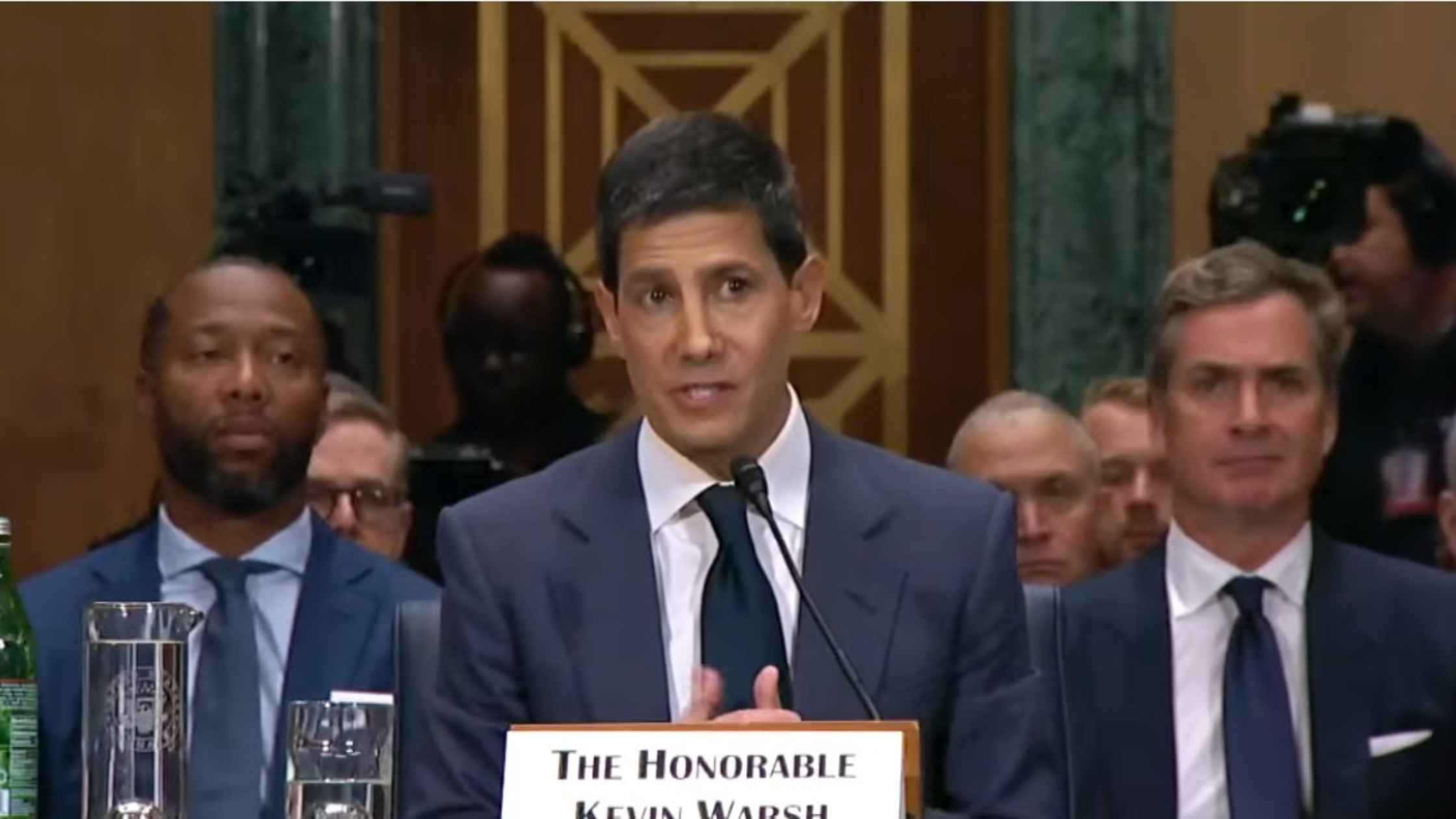
Senator Tim Scott (00:00):
... this is really about the kitchen table. People across our country want to have confidence in our institutions that your nomination goes in the direction of reinforcing why they should have confidence in the institutions. You've been nominated by the president to be the chairman of the Federal Reserve system. The Federal Reserve plays a powerful role in our economy. Monetary policy choices made at the Federal Reserve can affect the Americans' ability to buy groceries, whether or not they can afford a home, how far their paycheck goes, especially at the end of the month.
(00:41)
And in South Carolina, I hear all the time how families are working hard, doing everything right, and still feeling squeezed. Bidenomics made prices go up and paychecks have not kept pace. Too many parents are stretching every single dollar they have just to cover the basics. And too many workers are wondering when the economy will start to feel stronger at their kitchen table, not just on paper.
(01:11)
Congress, President Trump, and his administration are focusing on fixing the disastrous mistakes of Bidenomics to restore Americans' confidence in our economy. Through efforts like the Working Family's Tax Cut Bill, we are helping Americans keep more of their hard-earned money. Compared to the average tax return under President Biden, over four years, the average return is up 24% since then. Just in the last year, the average tax return is now around $3,400, an 11% increase, because President Trump and his leadership decided to focus on hardworking Americans who are struggling to make ends meet paycheck to paycheck. Nearly half the country, half the returns filed in 2026 claimed either a deduction for tipped income, overtime earnings, senior citizens or auto loan interest for major parts of the Working Family's Tax Cut Bill that every single person on this dais to the right voted for.
(02:26)
Under President Trump's leadership, Americans are keeping more of their hard-earned money about $300 more every month. It is necessary that Congress continues to put money back in the hands of everyday Americans, and that is why it is important. And I want to be clear here, that is why it is important that we confirm Kevin Warsh to be the Federal Reserve Chair. The Federal Reserve has a clear dual mandate to promote stable prices and maximum employment. The policies of the Fed therefore directly affect Americans' cost of living and their income. And when the Fed is successful in fulfilling its dual-mandate, affordability improves, with Americans taking home more money and paying less for everyday necessities.
(03:24)
Unfortunately, in recent years, the Fed has faced real challenges. There have been questions about its decisions, its focus, and whether it has engaged in issues far outside its jurisdiction. Under the Biden administration, the Federal Reserve appeared to move with the political winds, raising real concerns about politics and weaponizing one of the most powerful weapons we have for good economically, the entire Federal Reserve system.
(03:58)
For example, under the Biden administration, the Fed pushed climate-focused initiatives, only to reverse that climate agenda as soon as President Trump took office. When actions appear to shift with changing political priorities, it can undermine confidence in the independence of this great institution. An independent Federal Reserve is essential to achieving its mission, markets depend on it, families depend on it, and that independence must be protected. The American people expect the Federal Reserve to stay focused on the economy, not politics.
(04:42)
Today's hearing is an opportunity to refocus the Federal Reserve on its dual-mandate to increase economic stability and affordability for everyday Americans. Kevin Warsh is battle-tested and brings a necessary experience from his time as a Federal Reserve governor during the Great Recession. During his first term as governor, he helped our economy through the crisis and restored faith in the economy. He has seen the economy in its darkest days and understands how economic decisions affect job growth, our economy, and the opportunities that we have come to love as Americans. We want every citizen in this country to have a chance to live their version of the American dream and that means having our private sector economy running as strong as possible, which means your focus has to be on everyday Americans and not politicians, not to political winds, but on everyday Americans who desperately want to restore their confidence in our institutions.
(06:05)
Today, this committee will examine the plans Mr. Warsh has for his return to the Fed, this time as chair, and how he plans to lead the institution at a critical moment to deliver lower cost and real relief for working families. For folks back home in the great state of South Carolina and across the country, the goal is simple, they want lower costs and more opportunities. The Federal Reserve plays a key role in bringing prices down and helping wages go up. Confirming Kevin Warsh will make sure that affordability is at the center of our economic agenda.
(06:47)
Senator Warren is now recognized.
Senator Elizabeth Warren (06:50):
Thank you, Mr. Chairman. And if I may, I just want to start by saying one of our members lost a child yesterday. And I know our hearts go out to Mark Warner and his family, and that is true on both sides of the aisle, that we may disagree on policies and we may do so vigorously, but when it comes to the safety and security and the health of our families, I know we are as one and we are praying for them.
Senator Tim Scott (07:20):
Ranking Member, I think it'd be appropriate for us to take a few seconds of silence on his behalf. 36 years old, the one thing you don't want to do as a parent.
Senator Elizabeth Warren (07:31):
Yeah.
Senator Tim Scott (07:39):
Thank you.
Senator Elizabeth Warren (07:40):
Thank you. Thank you, Mr. Chairman, and appreciate all you do.
(07:44)
So, we should not be having this hearing today and here's the context. First, over the past year, President Trump has racked up one economic failure after another, and Americans know that. Consumer sentiment just hit its lowest level on record ever. Inflation is rising and families are paying more for groceries, more for healthcare, more for utilities, more for housing, all thanks to Trump's chaotic tariffs and One Big Beautiful Bill. And now, his war with Iran is putting American troops in harm's way and further driving up the cost of nearly everything here at home.
(08:28)
Second, in your testimony, you said it's perfectly fine for elected officials to state their views on interest rates, but that is not what Donald Trump is doing. The president has repeatedly and illegally attempted to take over the Fed. His bogus attacks on Governor Lisa Cook and Chair Powell were designed to threaten all the members of the Fed to do Trump's bidding and open more spots for Trump flunkies. Why try to end the independence of the Fed? Because Trump's economic failures are causing him political problems and he wants the Fed to use monetary policies to artificially juice the economy in the short-term, and this is his last chance to do that before the November elections. Having a sock puppet in charge of the Fed would also give the president access to the Fed's powerful authorities to enrich himself, his family, and his Wall Street buddies. It could mean granting special accounts to his family's crypto company or bailouts to his friends on Wall Street if they get into trouble. In other words, a Fed under Donald Trump's control creates more opportunities for Trump's corruption.
(09:52)
Third, the nominee before us today, Kevin Warsh, is uniquely ill-suited for the job as Fed chair. In our meeting last week, we discussed the 2008 Financial Crash where 8 million people lost their jobs, 10 million people lost their homes, and millions more lost their life savings. Giant banks, however, got hundreds of billions of dollars in bailouts. Mr. Warsh was a Fed governor from 2006 to 2011. That's before, during, and after the crash. And he said to me that he has no regrets about anything he did.
(10:35)
So, let's take a deeper dive into Mr. Warsh's record. In the years leading up to the 2008 Financial Crisis, he was an enthusiastic cheerleader for credit default swaps and complex securitizations. He dismissed repeated and increasingly urgent concerns from housing advocates across the country regarding subprime mortgages. He refused to use the Fed's authorities to address the risks that were building in the financial system. And when the crisis hit and the economy blew up, Warsh took on the job of Wall Street's personal liaison on the Fed board. He was quick to respond to concerns from Wall Street CEOs, and he worked tirelessly to arrange multi-billion dollar bailouts for them with nothing for American families. "No regrets," he says. "No regrets."
(11:36)
After the crash, most people on the Feds saw millions of Americans unemployed. People had lost their homes and said, "Now might be a good time to lower rates and make the cost of borrowing cheaper for businesses to avoid more layoffs and make it cheaper for Americans who are worried about paying their mortgages or their credit cards," but not Mr. Warsh, nope. He wanted to keep interest rates high and he sang the same song for more than a decade, even as the economy struggled. When the job of Fed chair became available during Trump's first term as president, Warsh held on to his high interest rate inflation hawk views and Trump passed him by.
(12:24)
Regretful, he soon reversed course and called for the Fed to pause interest rate hikes. Then, once Trump left office, Mr. Warsh flipped again and was even criticizing the Fed for cutting rates in the fall of 2024. But as soon as Donald Trump became president a second time, Warsh reversed himself once more and began shouting from the rooftops about how the Fed should cut interest rates. Evidently, he learned his lesson. This time around, he sucked up to Donald Trump to snag his dream job.
(13:04)
Mr. Chairman, last week, every single Democratic member of this committee asked that you postpone this hearing and instead conduct oversight on the president's role in directing bogus criminal probes into Chair Powell and Governor Cook. The Senate should not be aiding and abetting Donald Trump's illegal takeover of the Fed by installing his chosen sock puppet as chair. It's an invitation for corruption and for economic catastrophe. We have the power to stop it and we should be using that power.
(13:41)
Thank you, Mr. Chairman.
Senator Tim Scott (13:48):
Well, there you have it. I'll just say it is interesting that we're going to hear from Senator Dave McCormick and his introduction of Kevin Warsh, who was last time unanimously confirmed by the United States Senate, unanimously confirmed by the US Senate. Dave, the floor is yours.
Senator Dave McCormick (14:10):
Thank you, Mr. Chairman, Ranking Member Warren, distinguished colleagues. It's really a great honor to introduce my friend Kevin Warsh and welcome him and Jane here today. Kevin has been a friend for many years. Winston Churchill observed that, "For great leaders there comes," and I quote, "a special moment where they are figuratively tapped on the shoulder and offered the chance to do a very special thing. What a tragedy," he warned, "if that moment finds them unprepared for that, which would have been their finest hour."
(14:52)
Colleagues, I'm here today to assure you as someone who knows Kevin and who knows this institution, that Kevin Warsh could not be more prepared for this, his finest hour. There's no one more fitting, no one more fitting, no one more qualified to face this consequential moment as the 17th chair of the Federal Reserve.
(15:18)
Now, I'm not going to belabor Kevin's academic and professional record, they speak for themselves. Instead, I'd like to tell you about a man who Dina and I worked with decades ago and who has been someone I've called a friend for almost 30 years. President George W. Bush famously appointed Kevin to the Federal Reserve in 2006 when Kevin was just 35. He was the youngest appointed board member in history, but President Bush saw in Kevin what I believe you will see in him with your questions today, wisdom that belied his age, now deepened by experience, a moral clarity, even in the most turbulent of times, a sharp and independent intellect further strengthened by decades immersed in unforgiving global financial markets, and a deep, deep, honest understanding of how the decisions made in the marble hallways of Washington affect the lives of hardworking Americans.
(16:32)
Now, I, unlike many on this committee, have seen these virtues on display across decades of friendship. I first met Kevin in the late 1990s when he and my younger brother were junior associates on Wall Street. And a decade later, we served together in the crucible of the Global Financial Crisis, I, as the undersecretary of Treasury for International Affairs and Kevin on the Fed board. For nearly two years, we worked hand in hand to contain the damage and navigate the country through the crisis. And I know that then Chairman Ben Bernanke relied heavily on Kevin during those turbulent times, and I did too. And I've continued to seek his counsel regularly in the year since.
(17:17)
Now, Kevin came to Washington all those years ago as an outsider, an idealistic young man determined to serve his country, one who has succeeded beyond all expectations. And he returns today as the ideal candidate to lead the Fed at this most crucial juncture. If confirmed, Kevin will inherit a Federal Reserve in need of repair and confronting serious uncertainty, an overextended balance sheet, a poor record on inflation and a weak understanding of the profound opportunities offered in today's economy. He is uniquely suited to confront these challenges. He brings a reformer's heart. He will shake up a stagnant institution at a time when change is sorely needed. He possesses a deep understanding of markets and is trusted by leaders across the financial industry, but he equally understands the real economy. Born and raised in Upstate New York, he knows from personal experience how the actions of the Fed can change the lives of working families. It's no small thing. It's no small thing to know firsthand how an increase in gas prices or mortgage rates or an uptick in unemployment affect everyday Americans. The Federal Reserve must not be ruled by pointy-head economists, pouring over outdated models and reams of market data. It needs a leader. It needs a leader who understands that the Fed's mandate of stable prices and maximum employment serves a higher purpose, the preservation of the American dream.
(19:15)
Now, colleagues, Kevin Warsh has lived the American dream. I know in my heart he will always fight to keep that dream alive for all Americans. He is the right man for this pivotal moment, and I urge you, I urge you not to get caught up in the politics of the moment and support his speedy confirmation.
(19:38)
Thank you, Mr. Chairman.
Senator Tim Scott (19:41):
Thank you, Senator McCormick. I will now swear in the nominee. Will you please stand and rise? Raise your right hand. Do you swear that the testimony that you are about to give is the truth, the whole truth, and nothing but the truth, so help you God?
Kevin Warsh (19:55):
I do, sir.
Senator Tim Scott (19:56):
Do you agree to appear and testify before any duly constituted committee of the Senate?
Kevin Warsh (20:01):
I do.
Senator Tim Scott (20:01):
You may sit down. Your written statement will be made part of the record in its entirety. Please keep your oral comments to five minutes. Mr. Warsh, you're now recognized.
Kevin Warsh (20:12):
Thank you, Mr. Chairman. I appreciate your consideration today. I've known you for quite a while and I certainly appreciate the many courtesies you've given me, not just since the president's nomination, but long before. It's an honor to be with you, with Ranking Member Warren, and with the entire committee. I'm deeply grateful to President Trump for asking me to take on this public trust, because that's what it is, a public trust. The president believes that real economic growth in the US and real take-home pay will accelerate. I share the president's confidence in our country and its people. America's economic growth potential is rising as we sit here today. I'm also especially happy that my wife, Jane, is here. She's been with me for many of the most important moments in my life. I'm grateful for her love and her personal accomplishments. I reciprocate that with somewhat of my own love, though I'm a little more stoic than she.
(21:15)
And about every 20 years, I reintroduce her to this committee. She sat behind me 20 years ago, and it was almost 20 years ago to the day and so, let me offer today what I said then. Jane, happy anniversary. I'm also thinking of my late mom and dad. They were paying great attention to this hearing 20 years ago. They're no longer with us, but I was always proud of them and the values they taught me, and I hope they'd be proud of me today.
(21:49)
We start today with a note of broad agreement, even though we might have heard different narratives at the outset of this hearing. This is a time of great consequence for the nation's economy. As a former Fed governor and friend or colleague of the last five Fed chiefs from whom I've learned plenty of lessons, I'm particularly alert to the challenges and opportunities confronting the institution that I cherish the Federal Reserve. To the president, to the Congress, the nation. I owe my best judgment and my most faithful efforts in serving the mission that you in Congress assigned to the Federal Reserve, including full employment and stable prices.
(22:36)
The American people are counting on the Fed to deliver on its commitments, perhaps now more than ever. The real highlights of my life are not on my resume, as Senator McCormick said. They include the individuals with whom I worked and from whom I learned. I graduated from high school in Upstate New York. I had some exceptional teachers there and some brilliant classmates. I've learned we're lucky in life if we start out with good influences in learning and in character. A public school education gave me both of these, and I'm grateful.
(23:13)
I made my way to Stanford and found myself in the company of some of the most highly-accomplished economists and policymakers. George Shultz, former Secretary of State and Treasury, was among the great patriots at the Hoover Institution, who I came to know as a teacher, mentor, and friend. He passed away right after COVID at age 100, but I still feel him with me. I could not have imagined a better formative experience than working from and learning from folks like him.
(23:43)
I could tell you about all the things I learned, but maybe the most important was to be around people completely devoted to the ideas and ideals of our country. Silicon Valley in the early '90s, another fitting backdrop for all the things we confront today. I found myself in the right place at the right time. The US was at the vanguard of a new era of technological leadership, and I just looked out my door to see it. Now, in the last 15 years, I've gained deep experience in macro and in markets working with Stan Druckenmiller. He never held a position in government, but is no less a patriot. He never got a PhD in economics, but I don't know a finer economic thinker. Without their guidance and the guidance of Conde Rice, my friend and I should say my boss at the Hoover Institution, I doubt I would be sitting before you today as the president's Fed chairman nominee.
(24:39)
But I'm certain of one thing, absent their tutelage, absent their example, I would not be as prepared for the urgent mission-critical task at hand. In between these bookend experiences, I served quite a while ago as a governor at the Federal Reserve. At the birth, at the onset of the Financial Crisis, as Senator Warren said, our central bank played an indispensable role, and we benefited enormously from the credibility that our predecessors had built up and passed down to us, governors of the Fed at the time. In these unusual negligent circumstances, I saw the Fed and its people at their very best, but I also witnessed an institution that was tempted to play a larger role in the economy and society. So, let me be very clear, monetary policy independence is essential. Monetary policy makers must act in the nation's interest. Their decision's the product of rigor, deliberation and unclouded decision making. And as Senator Warren said I do not believe that independence of monetary policy is threatened when elected officials state their views on rights." Fed independents is up to the Fed, that has three implications. First, Congress is tasked with the mission to ensure price stability. Inflation is the Fed's choice. Second, Fed independence is at its peak in the conduct of monetary policy. And third, as the chairman said, the Fed must stay in its lane.
(26:18)
I'm committed to ensuring that the conduct of monetary policy remains strictly independent, equally committed to work with the administration and Congress on non-monetary matters that are part of the Fed's remit, and I commit myself to accountability. Finally, I'll just say this, Mr. Chairman. Milton Friedman had a phrase that always stayed with me. He always worried about government officials that lured and hung around with what he called the tyranny of the status quo. Status quo practices and policies are especially harmful when the world is changing this fast. If confirmed as chairman, I'll be faithful to the Constitution, to the Federal Reserve Act, and to the very best of the Fed's traditions. I believe a reform-oriented Fed can make a real difference to the American people, and if confirmed, I will seek to create an environment in which the best people do their best work.
(27:14)
Candor and goodwill will go a long way in pursuing those objectives, and I suspect this hearing, Mr. Chairman, will put us to the test. It's a real privilege to be here.
Senator Tim Scott (27:23):
Thank you, sir. I will say that we typically stick to a five-minute opening comments and I would encourage all of us to stick with our five minutes as it relates to our question and answers. We have full attendance today, and it's going to be really important for us to stick as closely to the five minutes as possible. If we go over by much, you'll hear me... which is an indication that you're already over, and I'll do my very best to keep us on time.
(27:53)
Kevin, there are so many questions to talk to you about, to ask you about, to be honest with you. And I just want to name a couple of them, and we'll look forward to hearing more on these topics. I will not have enough time to delve into some of the most important issues facing our country. I'll take two of those issues and focus my time. I'm sure my colleagues on either side will have a conversation with you and ask questions about AI. The AI future is going to have massive impact on where we go as a nation. It's going to have a massive impact on your dual-mandate as it relates to full employment. Our production may go up while our employment stays flat. So, this is a really important question that at some point we should delve into.
(28:35)
I also think that someone should spend some time talking about our balance sheet. We have nearly a $7 trillion balance sheet at the Federal Reserve. Too much attention has been paid to your balance sheet and not enough attention has been paid to the nation's balance sheet. And I think it's really important for us to dig into that issue as well.
(28:55)
Digital assets, the future of finance in the world seems to have a major component of being digital assets, the market structure legislation we don't want your comment on, but the important role of the blockchain in the future is another really important part of the future of our economy.
(29:14)
I will spend some time talking about affordability and the importance of the independence of the Fed. One of the things I've appreciated about your previous comments is the importance that you have placed on the dual-mandate, stable prices, which typically comes through the form of interest rate changes, as well as promoting maximum employment. I think those two will become more challenging in the current environment. One, obviously, the second one being the AI and the future of full employment.
(29:45)
You've criticized the Federal Reserve for getting too big, mismanaging inflation. I'm sure you know the definition of transitory, so I won't ask you, but I've got a feeling you know, and some of your predecessors did not. Compromising the independence of the Fed, I think I think we should spend more time on finance, less time on climate change, on politics, on who is or who's not in charge. I think you would agree on those issues, though I will not ask you.
(30:13)
I will ask you however, that under your leadership, how will you steer the Federal Reserve to address the real-life issues of affordability is my first question? And my second question will be about, how do you make sure that the Federal Reserve stays out of the lane of external influences?
Kevin Warsh (30:34):
Well, thank you, Mr. Chairman. There's probably no more pressing question than the cost of living. We know at the Federal Reserve that price stability was an objective that you and your colleagues gave to the Fed. So, when, over the course of the last several years, especially after COVID, when prices went up to the tune of 25% to 35% for virtually
Kevin Warsh (31:00):
... virtually all deciles of the American people. That's an indication that the Fed missed its mark. And we are still dealing with the legacy of the policy errors in 2021 and 2022. Once you let inflation take hold in the economy, it's more expensive and harder to bring it down.
(31:20)
And so the fatal policy error going back four or five years is still a legacy that we're dealing with. We need, in my judgment, fundamental policy reforms to fix it. And while it's true that inflation is less problematic, meaning the rate of change in prices is less severe than it was some years ago, hardworking Americans are no doubt feeling it.
(31:42)
I think that means a regime change in the conduct of policy. I think that means a different new inflation framework. I look forward to working with my colleagues at the Fed if confirmed to achieve that. I think it means, as you suggested, using tools differently. The Fed has an interest rate tool and a balance sheet tool. My view is the interest rate tool gets in the cracks. It's fairer. The balance sheet tool disproportionately helps those with financial assets. The interest rate tool hits the entire economy. So we need a new framework, new tools. And I'd also say, Mr. Chairman, new communications.
Senator Tim Scott (32:18):
Yes.
Kevin Warsh (32:19):
I think part of the reason why after making a mistake in 2021 and 22, the mistake was compounded is the Fed gives its forward guidance. The Fed tells the whole world what their dots are going to be, what their forecasts are going to be.
(32:33)
Well, the Fed's human. Then they hold onto those forecasts longer than they should. I think if the Fed were to wait until it gets into a meeting before making a decision, that incremental deliberation can keep the Central Bank from compounding its errors. I think these are big changes that are needed. And if confirmed, I look forward to doing it.
Senator Tim Scott (32:52):
Thank you very much. Ranking Member Warren.
Senator Elizabeth Warren (32:55):
Thank you, Mr. Chairman. So the Fed has been plagued by deeply disturbing ethics scandals in recent years involving at least six Fed officials. So it's critical that the next chair have no financial conflicts, none. You have more than $100 million in investments that you have refused to disclose to ethics officials and to the public.
(33:19)
So let me ask, do the Juggernaut Fund or the THSDFS LLC invest in any companies affiliated with President Trump or his family, companies that have facilitated money laundering, Chinese controlled companies, or financing vehicles established by Jeffrey Epstein?
Kevin Warsh (33:44):
Senator Warren, thank you. So let me first share a point of agreement with you. The Fed has two tools. One is its monetary policy and the second is its credibility and the scandals that you talked about, the ethics problems you talked about-
Senator Elizabeth Warren (34:00):
Mr. Warsh, I appreciate that but I have very limited time.
Kevin Warsh (34:00):
... went to the core of the credibility that has hurt the Fed.
Senator Elizabeth Warren (34:02):
Would you answer my question, please? I ask. You have $100 million in undisclosed assets. And what I'm asking is, are any of those with this outfit that invests in companies affiliated with President Trump or his family, companies that have facilitated money laundering, Chinese controlled companies, or financing vehicles set up by Jeffrey Epstein? It's a yes or no question.
Kevin Warsh (34:28):
Senator, I have worked tirelessly with the ethics officials at the Office of Government Ethics.
Senator Elizabeth Warren (34:32):
Yes. And you have not revealed $100 million in assets.
Kevin Warsh (34:34):
I'm doing ethics agreement with them. And have agreed, Senator, to sell all of my financial assets-
Senator Elizabeth Warren (34:40):
That's not my question.
Kevin Warsh (34:40):
... including Duquesne assets.
Senator Elizabeth Warren (34:41):
Mr. Warsh, are you refusing to tell us if you have investments, for example, in vehicles set up to advance Jeffrey Epstein? Is that what you're telling us you just won't tell us?
Kevin Warsh (34:54):
Senator, what I'm telling you is that those assets that you represent at Juggernaut will be sold if I'm confirmed before I take office-
Senator Elizabeth Warren (35:01):
Let me follow up.
Kevin Warsh (35:02):
... and sign the oath of office.
Senator Elizabeth Warren (35:03):
Let me follow up on that. Will you at least disclose how you plan to disclose and divest these secret assets? I'm sure you understand that the public might question your motives if, for example, billionaire Stanley Druckenmiller, who you honored in your opening statement, and who makes a living guessing what the Fed will do next, cuts you a massive check for $100 million as you take the oath of office to become the new Federal Reserve Chair.
Kevin Warsh (35:36):
Senator, as you know, it sounds like your fight might not be with me, but the Office of Government Ethics, I have come to full agreement with them and have agreed to divest all of those assets-
Senator Elizabeth Warren (35:47):
I'm asking you-
Kevin Warsh (35:49):
... especially those that you referenced-
Senator Elizabeth Warren (35:49):
... a very straightforward question, Mr Warsh.
Kevin Warsh (35:51):
... before I take the oath of office.
Senator Elizabeth Warren (35:53):
And that is, will you disclose how you divest those assets or will you just collect a check for $100 million from someone whose whole business is betting on what the Fed will do?
Kevin Warsh (36:05):
As I said to the ethics officials at the Federal Reserve and the Office of Government Ethics. And they agree-
Senator Elizabeth Warren (36:10):
I'll take that as a no as well.
Kevin Warsh (36:11):
... I would be redeeming my assets before I take office.
Senator Elizabeth Warren (36:14):
Donald trump has made clear that he does not want an independent Fed. In fact, he has said, and I quote, "Anybody that disagrees with me will never be Fed chairman." And he's made clear that you are his sock puppets, saying last week that interest rates will drop quote, " When Kevin gets in. Yeah, I think they do."
(36:33)
Not when economic conditions change, we'll get lower rates, not when the economy needs it. Nope. He said, "When my guy, Kevin Warsh, is in there. We'll get the interest rates that I, Donald Trump, wants." So independence takes courage. Let's check out your independence and your courage. We'll start easy. Mr. Warsh, did Donald Trump lose the 2020 election?
Kevin Warsh (36:59):
We try to keep politics if I'm confirmed out of the Federal-
Senator Elizabeth Warren (37:01):
I'm just asking you a factual question. I need to know, I need to measure-
Kevin Warsh (37:05):
Sure.
Senator Elizabeth Warren (37:05):
... your independence and your courage.
Kevin Warsh (37:08):
Senator, I believe that this body certified that election many years ago but-
Senator Elizabeth Warren (37:12):
That's not the question I'm asking. I'm asking, did Donald Trump lose in 2020?
Kevin Warsh (37:16):
Man, I'm suggesting you in 2020, the Fed made a-
Senator Elizabeth Warren (37:17):
I'm suggesting you can't answer that.
Kevin Warsh (37:21):
... huge inflation problem and you certified the election.
Senator Elizabeth Warren (37:23):
So let me ask you another question.
Kevin Warsh (37:24):
We need to kop politics out of monetary policy, and monetary policy out of politics.
Senator Elizabeth Warren (37:27):
In our meeting you said you would be independent because you're, quote, " a tough guy." Those were your words, tough guy. And you will be able to stand up to President Trump. So let's try it again. Name one aspect of President Trump's economic agenda with which you disagree.
Kevin Warsh (37:44):
Well, Senator, the Federal Reserve in recent years has wandered outside of its remit, wandered into other areas.
Senator Elizabeth Warren (37:50):
I'm asking for something-
Kevin Warsh (37:51):
That's not something I'm prepared to do.
Senator Elizabeth Warren (37:51):
... you disagree with Donald Trump on.
Kevin Warsh (37:51):
If I'm confirmed-
Senator Elizabeth Warren (37:51):
Just one economic issue.
Kevin Warsh (37:55):
... the Federal Reserve should stay in its lane.
Senator Elizabeth Warren (37:57):
Just one. Just one little place where you disagree with Donald Trump.
Kevin Warsh (38:01):
Well, I do have a disagreement actually, Senator, with the president. I think even this morning, he said that he thought I was out of central casting. I think central casting, I'd look older, grayer, maybe show up here with a cigar of sorts.
Senator Elizabeth Warren (38:16):
Quite adorable. But we need a Fed chair who is independent. That's the only way we preserve the independence-
Kevin Warsh (38:25):
I agree with you-
Senator Elizabeth Warren (38:26):
... of the Federal Reserve. If you can't answer these questions, you don't have the courage and you don't have the independence.
Kevin Warsh (38:32):
I agree with you on independence, Senator.
Senator Elizabeth Warren (38:34):
Thank you, Mr. Chairman.
Senator Tim Scott (38:36):
Senator Rounds.
Mr. Rounds (38:39):
Thank you. Thank you, Mr. Chairman. Mr. Warsh, first of all, welcome. And I appreciated the opportunity to visit with you personally within the office. I agree with you, and I think Fed independence is critical. And I think that's an item that you and I agree on wholeheartedly. I want to take an opportunity just to perhaps give you an opportunity to respond. I know that the ranking member had a number of items that she expressed concerns with. I'd like to give you an opportunity to just work this way through and let me just ask you a few questions and I'll allow you to take the time to fully answer the questions.
(39:20)
As I understand, Mr. Warsh, you worked with the career ethics professionals at the Office of Government Ethics and at the Fed to come to an agreement in terms of your dissolution of some of the assets that you as a businessman have. Is that correct?
Kevin Warsh (39:38):
Yes, Senator. That is correct. I worked with the Fed ethics officials first, answered all of their questions. Then with the career professionals, the Office of Government Ethics, answered all of their questions. And then they drafted, wrote up an ethics agreement, which is part of the public record. But because I agree with Senator Warren on the ethical questions that have been raised over the last several years by several people that were members of the FOMC, so that there's no question about my independence, no question about the clarity of my financial record.
(40:13)
I agreed to divest virtually all of my financial assets, the large majority of which will be divested before I raise my right hand and is sworn into office if confirmed by this body. So I've gone above and beyond, not for any other special reason other than the Fed needs to reestablish its credibility because the conduct of policy depends on it.
Mr. Rounds (40:37):
So let me just, for the record, the agreement which you have signed clearly states that you have agreed to divest your assets that are in question within 90 days of confirmation if you have not already divested it. That is correct?
Kevin Warsh (40:55):
Yes, Senator. And in fact, the large majority of those assets will be divested before I am sworn into office, if confirmed.
Mr. Rounds (41:05):
Thank you. The career ethics professionals were the ones that basically had sent your signed paperwork to this committee's chief clerk. I really questioned whether or not they would have done that if they did not come to the ethics agreement with you in the first place, correct?
Kevin Warsh (41:27):
Yes. I presume that's right. We had a very good working relationship. And I'm happy to be sitting after the divestiture and cash or T-bills or whatever's the permitted asset so we can get back to the business of fixing the Fed, reforming an institution that has lost its way a bit, that has missed the mark.
(41:48)
As Chairman Scott said at the outset, this inflation risk is still something that's being talked about around kitchen tables and boardrooms. My preferred definition of stable prices is a little different than most academics. I believe that price stability should be a change in prices such that no one's talking about it. That's an old-fashioned definition, but I think it's still valid. And the sooner that we can reform the institution with my colleagues, if confirmed, the sooner we can ensure price stability, and we can have a new set of leaders atop the institution with high credible ethical standards to return the Fed to what it should be. The independence that both Chairman Scott and Senator Warren mentioned, critically important, but independence has to be earned and it's earned by delivering on the promises, the commitments that the Fed has made. And as the Fed hasn't delivered on those promises, we shouldn't be surprised that we hear politics that are entering the room at the Fed. We need to get to politics out of it so the Fed can focus on its day job, deliver on full employment and stable prices.
Mr. Rounds (42:57):
It's true that people want to see stability within the Fed, but is it okay for a Fed governor or a chairman to change their mind on a particular policy?
Kevin Warsh (43:09):
It's more than okay. It's essential. Economics is not physics. It's not math. Frankly, most of us that ended up in the economics business. We started like I did as a math major and it was too hard. So we ended up in economics. In economics, what we need to do is focus the left of the decimal point, not to the right of the decimal point. We need to focus on the big things. And if mistakes are made, central bankers, economic policymakers need to correct them fast. The real mistakes, the mistakes that cause inflation be persistent to undermine hardworking American standard of living is when those mistakes go on.
Mr. Rounds (43:46):
Thank you. Thank you, Mr. Chairman.
Senator Tim Scott (43:48):
Yes, sir. Senator Reed.
Senator Elizabeth Warren (43:50):
Mr. Chairman, before we start the next question, I ask that we have entered into the record the US Office of Government Ethics Certification, which requires that all nominees disclose all of their assets and showing that Mr. Warsh is out of compliance and that he has not met the ethics requirements.
Senator Tim Scott (44:17):
Without objection, I will note, however, that what has been clearly articulated is that he will, according to his agreement with OGE, do what many others have done as well within 90 days. Be not only in compliance, but to have divested himself from many assets that are in question.
Senator Elizabeth Warren (44:38):
Mr. Chairman, can I ask? I don't think we've had other nominees who are out of compliance and not disclosing at the time they come before the hearing.
Senator Tim Scott (44:46):
Not on this committee. That's correct.
Senator Elizabeth Warren (44:47):
Not in this committee.
Senator Tim Scott (44:51):
Before we ... Here's what we're not going to do.
Senator Elizabeth Warren (44:53):
Fair enough.
Senator Tim Scott (44:53):
We're not going to have two chairmen for sure.
Senator Elizabeth Warren (44:55):
Just asking.
Senator Tim Scott (44:56):
Number one. Number two, what we're also not going to do is debate what we're putting into the record. And finally, what we are going to do is have a conversation about America's economy. And frankly, we all deserve the opportunity to ask our questions. We don't get to figure out the answers, but we do get to ask our questions.
(45:18)
I hope that we are able to continue in that direction. As long as we are, we're going to have a very good hearing. And if we're not, then I will find a way to help us expedite getting back on track. Senator Reed.
Mr.Reed (45:31):
Thank you very much, Mr. Chairman, Mr. Warsh. Until you dispose of all the assets you've identified to the Office of Government Ethics, you will not be in compliance. Is that correct?
Kevin Warsh (45:47):
That's not my understanding. Excuse me, sir. My understanding is that a signed ethics agreement provides duties and responsibilities on me and duties and responsibilities on the government, and that's what the nature of the ethics agreement is.
Mr.Reed (46:01):
You have an agreement that within 90 days, you will dispose of all your assets. Is that correct?
Kevin Warsh (46:09):
Senator, I have an agreement within 90 days so that there is no appearance of anything inappropriate that I would divest all of my assets, the majority of which before sworn in. What I've disclosed, Senator, is all the information that is mine to disclose. I've shared all information about assets that I control and that I can share, which I did much to the satisfaction of the government ethics office.
Mr.Reed (46:31):
Excuse me. What you've said is that you will take the oath, if confirmed, as chairman with assets that have already been identified as presenting potential conflicts of interest. Will you agree to not take the oath until you have fully disposed all the assets that you've been identified?
Kevin Warsh (46:51):
Well, Senator, I'll agree to take the oath pursuant to the terms of the ethics agreement that I struck with the Office of Government Ethics. I don't think anyone could do more than that other than me. I've agreed to divest even more assets that I will have virtually no financial assets.
Mr.Reed (47:08):
The divestiture is totally up to you. You can select what assets you're disposing of, what assets you keep. Is that correct? And then still be sworn in as chairman.
Kevin Warsh (47:18):
The divestiture is up to the agreement that I struck with the Office of Government Ethics.
Mr.Reed (47:22):
Who makes the decision as to what assets are divested, you or the Office of Government Ethics?
Kevin Warsh (47:28):
Both of us. That's why it's an agreement.
Mr.Reed (47:30):
Excuse me. I must commend you on the way you can circularly go around questions and not answer them. It's a skill. Unfortunately, it's not a good skill for the chairman of the Federal Reserve Board.
(47:46)
We typically ask questions and expect to get direct faithful answers. You haven't given them to the ranking member and you're not giving them to me. So again, you feel you will be compliant if after 90 days, you still have a significant number of assets that have been identified as presenting conflicts of interest. Is that your view?
Kevin Warsh (48:12):
No, Senator. If I were to violate the ethics agreement, I would not be in compliance. If I follow the agreement, I will be.
Mr.Reed (48:22):
Well, that's your position. I think others would differ. When you sell all your assets, where are you going to place the proceeds of those sales? I believe that Chairman Powell has placed them in funds which are very difficult to individually influence it. Do you propose to do that?
Kevin Warsh (48:51):
Yeah, I propose to put them in permissible assets that are as close to cash or treasury bills as I possibly can. I haven't selected anything, but it will be as plain vanilla as possible so that there would be no appearance or reality of having any influence. We'll be sitting in something like cash.
Mr.Reed (49:08):
Okay. Now, the question of independence is just one that I think will dominate these proceedings. This morning, President Trump was asked on CNBC, "Will you be disappointed if your new Fed chair doesn't cut rates right away?" And President Trump answered, "I would."
(49:29)
It's very hard to separate President Trump's obsession with rate cuts, his attacks on the Federal Reserve, on Chairman Powell, particularly, and your nomination. So this independence thing seems to have evaporated quite quickly between President Trump's statements and your positions. Again, you maintain you'll be independent of President Trump?
Kevin Warsh (50:02):
Yes, Senator. I do.
Mr.Reed (50:03):
Well, President Trump constantly maintains that nobody's independent of him, that it's his morality that guides the whole United States government, including the Federal Reserve, and that you will be someone who will carry out his wishes. Frankly, do you suspect that he chose you because you indicated to him that you want to cut rates?
Kevin Warsh (50:25):
Senator, I don't know the reason for the president's choice, but I can tell you what I've been writing about for 15 years and what I said to the president, which-
Mr.Reed (50:36):
Which is, "I'll cut rates if you give me the job."
Kevin Warsh (50:39):
No, that's not what I said, Senator. Now, the president, as you might know, much like virtually all presidents I've either known or studied, presidents tend to be for cutting rates. I think the difference is President Trump expresses it quite publicly without surrogates or subterfuge, but presidents want lower rates. But Fed independence is up to the Fed.
Mr.Reed (51:00):
That's not it.
Kevin Warsh (51:01):
Fed leadership has to make a decision about what's the right thing to do.
Mr.Reed (51:04):
No.
Kevin Warsh (51:04):
In my judgment-
Mr.Reed (51:05):
You're a leader. You're the leader. You establish the moral and ethical standards and economic principles of the Fed. And you just pass it off to, "Well, it's not my job. It's everybody's job." That means it's nobody's job. Thank you.
Senator Tim Scott (51:26):
Senator Tillis.
Mr.Tillis (51:27):
Mr. Chair, before my time starts, can I make a parliamentary inquiry?
Senator Tim Scott (51:30):
Certainly.
Mr.Tillis (51:32):
I want to make sure that we get this right. I'm not an attorney, but I think it's pretty important to suggest that according to Mr. Warsh, he has signed an agreement that is in compliance provided that he executes the agreement.
Senator Tim Scott (51:45):
Correct.
Mr.Tillis (51:46):
So we should not have into the record that he is before us out of compliance because you stipulated that what Senator Warren said was a first of a kind here, but he is not out of compliance. He has agreement that if he executes, will be in compliance, that's why he's properly before us. And I just want to make sure for the record that that is clear.
Senator Tim Scott (52:07):
Yeah, very clear. Let me just say it. I'm going to reiterate what you just said, but I was writing it down myself. The Office of Government Ethics has entered into an agreement with Kevin Warsh that he has up until 90 days after confirmed to divest of his assets.
Mr.Tillis (52:26):
I mean, to non-attorneys here, I heard someone say, "He's before us out of compliance." And that's why I checked with the staff to be absolutely certain he is properly before us. He will be in compliance if he executes agreement that addresses the concerns that have been presented by some of my colleagues on the other side of the aisle. I just want to confirm for the record that that is in fact accurate.
Senator Elizabeth Warren (52:49):
So if we're doing a matter here of, is this parliamentary inquiry? Is that what this is?
Mr.Tillis (52:54):
I've made a parliamentary inquiry, so I'm not burning my time on something.
Senator Elizabeth Warren (52:57):
I understand.
Mr.Tillis (52:57):
I thought felt like a cheap shot to say he's out of compliance when in fact he's not.
Senator Elizabeth Warren (53:01):
Then I'd like to ask the other question, and that is, have we seen this agreement? Do we have any way to verify that in fact the sales will occur if we have no idea what's in them and no one has told? And let's do remember the law for a minute. The Fed, unlike other parts of government, do not have a 90 day, you can be out of compliance. Fed law is explicit that you cannot own any portion of a financial interest in a bank.
Mr. Kennedy (53:39):
Mr. Chairman, excuse me for interrupting, Senator.
Mr.Tillis (53:43):
Now I'll let the attorneys take over.
Mr. Kennedy (53:45):
All we're going to all get extra time here?
Senator Tim Scott (53:47):
No.
Mr. Kennedy (53:47):
I'd like an extra three minutes.
Senator Tim Scott (53:50):
All right.
Mr. Kennedy (53:50):
Okay?
Mr.Tillis (53:53):
Mr. Chair, I just, for the record, and the only reason I said that-
Mr. Kennedy (53:55):
That was a parliamentary inquiry so it doesn't count.
Mr.Tillis (53:57):
Yeah.
Mr. Kennedy (53:59):
Okay.
Mr.Tillis (54:00):
Mr. Chair, the reason I mentioned that is because you had stipulated that, I don't think you meant it this way, but you as a chair said that this is the first of a kind of someone being out of compliance. I don't think you meant that. I wanted to make sure it was clear for the record.
Senator Tim Scott (54:13):
Well, let me just be very clear again. The career ethics professionals were the ones that sent Mr. Warsh's signed paperwork to this committee's chief clerk. They would not have done so if they did not come to an ethics agreement with Mr. Warsh. Mr. Kennedy, Senator Kennedy does raise a good point though. We are going to stick to our timeline and I appreciate you raising the point of how long that inquiry can go on and that does not buy you more time unless of course we all decide we want more time. And then I would rule on that and I would rule against it.
Mr.Tillis (54:53):
Thank you, Mr. Chair. Mr. Warsh, congratulations. You can't count this as a date with Jane, particularly this one. I think probably the first hearing was a little less acrimonious. I'm not going to ask you anything. You can take a break and get ready for the bludgeoning on the other side. They're going to beat you till you bleed and then they're going to beat you for bleeding.
(55:13)
I'm going to talk about what's preventing me from being in a position to vote for you until ... We've spent time together in my office. You have extraordinary credentials. They're impeccable. I think the way you're dealing with the ethics issue is strong.
(55:28)
Problem I have is where we are right now. And I start by saying, I loved your opening statement. I love your focus on the independence of the Fed. I love the idea of Fed independence with respect to achieving the dual mandate, but Fed transparency on so many other things that the Fed does that frankly we're all frustrated with. Bank examination supervision being some among them that I think we should have more insight into.
(55:57)
Mr. Chair, I'd like to submit for the record two executive orders under President Trump and one in 2020 and one in 2025 talking about making federal architecture beautiful again and focusing on trying to preserve the integrity of old buildings.
Senator Tim Scott (56:15):
Without objection.
Mr.Tillis (56:15):
Thank you. And Mr. Chair, I will be submitting an analysis, but if we can go to slide two and turn it up right. Much has been made about the building project that has senator or that has Chair Powell under investigation. I'm not going to get into the details except to say that I used to work for a firm that did audit and compliance.
(56:41)
So I'm naturally wired to go back from the ground up and figure out what the deal is. Here's what I know. The Martin Building has been conflated into this project to make it a $4 billion building. Even if you put the Martin building in, it's a $3 billion building. The reality is what we're talking about is the Eccles building and the East building, for which ... Bring that up higher, Jack. You're a tall guy so people can see it.
(57:05)
These are the overruns, and these overruns occurred in part because the cost of inputs went up 69% since the original estimate. Asbestos was identified, remediation was required. Pylons had to be built underneath the building because turns out they used it as a landfill and they had a water table issue.
(57:26)
There were a variety of reasons why this building went over budget. And as a matter of fact, if we put everybody in prison in federal government that had had a budget go over, we'd have to reserve an area roughly the size of Texas for a penalty colony because of the way government projects work. And the reality is the overage of inflation adjusted was about 730 million, the majority of which it seems to be legitimate.
(57:53)
Next slide. Not acceptable, unfortunate, but legitimate. Now, what I've really got a problem with, and we're talking about Fed independence ... By the way, I think you're going to be independent. You have to be. You got to convince 11 other people to vote with you, at least the majority. It's a consensus organization. You try to get the majority to. Most of these votes are 11 to one.
(58:15)
So if anybody thinks the president can appoint somebody and you unilaterally can control things, you're going to be an unsuccessful chair if history is any God and you've served under some of the best. So I know you're going to do it right. The problem that I have here is that we had some US attorney with a dream or assistant US attorney thinking it would be cute to bring Chair Powell under an investigation just a few months before the position was going to be open. This happened this year.
(58:46)
Normal course and speed, here's how it works at the Fed. February or March, May the 15th, the term would have expired. We'd be having this hearing, you'd be getting confirmed. Custom also suggests that the sitting chair, even though he has two years left on his term, would have exited. But instead, we have somebody who thinks a building project that went over by about $700 million with a lot of what seemed to be justifications for it are holding up this whole process.
(59:15)
It sounds like to me, somebody over in the DOJ didn't even check with the boss. The boss said on the same night that I said, "I can't go forward until this bogus investigation is done with," said he didn't know anything about it. So we've got people in DOJ over in the DC circuit or the DC district doing these investigations. We have got to end this investigation. Big DOJ didn't know about it. The president didn't know about it. Let's get rid of this investigation so I can support your confirmation.
(59:45)
Mr. Warsh, the only thing I've found the least bit odd about you is you've never watched an episode of Seinfeld. You've spent so much time at being a rock solid economist that you're not even taking time away for a little laugh like that. I look forward to supporting your nomination and I look forward to this investigation being taken down.
(01:00:05)
If the chair wants to have all of our subcommittees start looking at capital expenditure projects for the agencies that we're overseeing, I think that's a great idea. And I'd like to be on a committee specifically drilling down on this analysis. If somebody can prove me wrong, I'd be happy to make a criminal referral. But I don't have the DC circuit tell me a crime was committed when seven members on this committee said it wasn't, including the chair. Thank you, Mr. Chair.
Senator Tim Scott (01:00:33):
You're welcome. Only one question. What is Seinfeld? Senator Van Hollen.
Mr. Van Hollen (01:00:42):
Mr. Chairman, thank you. Mr. Warsh, good to see you. Reviewing your record, I am concerned that your position on interest rates seems to shift with what's politically convenient rather than based on sound economic judgment. In the aftermath of the 2008 financial crisis, the worst recession since the Great Depression, with some of the worst unemployment in our lifetimes, you were a hawkish voice, expressing concern that the Fed might wait too long to raise rates.
(01:01:14)
I think you got it wrong then, but now you seem to have swung 180 degrees in the opposite direction to embrace lower rates, a view that conveniently aligns with the president who nominated you. You've made this pivot even as today, prices are too high. I think we all know that. Our economy works for families when prices are affordable and unemployment is low. That's why price stability is an important part of the Fed's mandate, right?
Kevin Warsh (01:01:45):
Senator, yes.
Mr. Van Hollen (01:01:46):
And the Fed uses its monetary policy tools for price stability and full employment. That's the job Congress gave to the Fed. Here's how Ben Bernanke described how the Fed uses those tools. He
Mr. Van Hollen (01:02:00):
... said, and I'm quoting, "Generally, if economic weakness is the primary concern, the Fed acts to reduce interest rates, which supports the economy. If the economy is overheating, the Fed can raise interest rates to constrain inflationary pressures." So that's a textbook model of the Fed. Cutting rates supports the economy, but can lead to higher inflation, while raising rates helps to fight inflation, but can limit growth. Do you agree with Chairman Bernanke that that's generally how the Fed can use monetary policy to affect the economy?
Kevin Warsh (01:02:40):
Senator, I do agree generally with that proposition, but I'll note at a moment like this, the supply side of the economy is changing dramatically. So the core of what Chairman Bernanke said is a question about what's the economy's potential. As I said in my opening remarks, I think the economy's potential is growing quite quickly, and that makes the decision that you tee up to be a difficult one and one that the Fed's going to have to dig deep in in evaluating what's the right policy choice in the upcoming meetings.
Mr. Van Hollen (01:03:09):
Wow. I want to push you a little bit on that in a moment, but right now the Fed has said its main interest rate at 3.5 to 3.7%. Last December, President Trump told The Wall Street Journal that he wanted to cut rates to 1% and maybe lower than that by the end of this year. So just to better understand how you think about economics, in the economic model Bernanke laid out, let's say there's an economy with decent growth and no recession. If the central bank were to cut rates from 3.5 to 1% or lower a massive cut, that would typically push prices up, right?
Kevin Warsh (01:03:51):
Senator, unlike many of my colleagues past and present, I don't believe in forward guidance. I don't believe that I should be previewing for you what a future decision might be. I think it's essential that the Fed make decisions in the room.
Mr. Van Hollen (01:04:06):
Mr. Walsh, I'm not asking you what decision you would make. Obviously that's going to be up to you. I'm asking you for the framework in which you think about these things. It seems a pretty straightforward question about what would happen if we reduced interest rates by the end of this year to 1% or less. Under the Bernanke model, I think almost every economist or most economists would say that that will drive up prices. So that's what I'm asking you. Would you agree that that would likely drive up prices?
Kevin Warsh (01:04:40):
Senator, the Fed has two important monetary policy tools. One is interest rates and the other is a balance sheet, a balance sheet that we created in the 2008 financial crisis. Those tools should be working in concert, not across purposes. So it's hard for me to isolate one variable when we'd have to have a discussion on the other.
Mr. Van Hollen (01:05:01):
All right. Let me-
Kevin Warsh (01:05:04):
But generally... Oh, sorry.
Mr. Van Hollen (01:05:04):
Well, let me just say this was a pretty clear question about the framework in which these decisions are made. I have heard you talk about how AI may change that calculation. I will just say, and I think you know this, I mean, I have this, the Financial Times pointed out, the economists reject Kevin Warsh's claim that the AI boom will enable rate cuts. I find it just implausible to suggest that by the end of this year, AI would produce such increases in productivity, that it could reduce a rate cut to below 1%, and you can't tell me that that would very likely increase prices.
Kevin Warsh (01:05:56):
Senator, can I say two things? First-
Senator Tim Scott (01:05:58):
Thank you, Senator.
Kevin Warsh (01:05:59):
Oops, sorry.
Senator Tim Scott (01:06:00):
Quickly.
Kevin Warsh (01:06:01):
Sorry. Monetary Policy Center works with long and variable lags quite famously. If the Fed were to make a decision today about the conduct of policy, it's likely to find its way to the real economy six, nine, or 12 months later. So it's difficult to judge policy today for an immediate result. And that would be my only concern about the framing of your question.
Mr. Van Hollen (01:06:27):
Thank you, Mr. Chairman. In closing, this is what concerns me, is that your views now have sort of flipped to conform with where the president of United States is. And that's been a concern many of us have. Thank you, Mr. Chairman.
Senator Tim Scott (01:06:39):
Senator Kennedy?
Senator John Neely Kennedy (01:06:40):
I want extra time, Mr. Chairman.
Senator Tim Scott (01:06:44):
I know.
Senator John Neely Kennedy (01:06:45):
Consider these five minutes of parliamentary inquiry. Professor, what's a sock puppet?
Kevin Warsh (01:06:53):
I heard the reference from Senator Warren earlier.
Senator John Neely Kennedy (01:06:55):
Yeah, what is it?
Kevin Warsh (01:06:56):
I'm not sure I know. I think it's that thing you stick your hand in.
Senator John Neely Kennedy (01:07:00):
Yeah. Kind of like this?
Kevin Warsh (01:07:01):
Yes.
Senator John Neely Kennedy (01:07:03):
What's a human sock puppet? Isn't a human sock puppet, somebody will do what somebody else tells them to do?
Kevin Warsh (01:07:10):
I think that's what the Senator was trying to suggest. I think that was the innuendo.
Senator John Neely Kennedy (01:07:14):
Are you going to be the president's human sock puppet?
Kevin Warsh (01:07:18):
Senator, absolutely not.
Senator John Neely Kennedy (01:07:19):
Are you going to be anybody's human sock puppet?
Kevin Warsh (01:07:22):
No. I'm honored the president nominated me for the position, and I'll be an independent actor if confirmed as chairman of the Federal Reserve.
Senator John Neely Kennedy (01:07:29):
My friend Senator Warren, and she is my friend, suggested that, I wrote it down, "You might use your power to bail out your friends if they get in trouble," kind of like President Biden did with Silicon Valley Bank and Signature Bank. She didn't say the last part, I just did. Are you going to do that?
Kevin Warsh (01:07:52):
No, Senator.
Senator John Neely Kennedy (01:07:53):
Okay. The ethics folks, they've cleared you, but they've said you got to sell some assets, is that right?
Kevin Warsh (01:08:03):
Yes, sir.
Senator John Neely Kennedy (01:08:04):
Okay. These assets that you have, you can't just hold a yard sale, can you?
Kevin Warsh (01:08:11):
No, not for most of them.
Senator John Neely Kennedy (01:08:12):
Okay. So it takes a reasonable period of time, right?
Kevin Warsh (01:08:18):
Yes, Senator.
Senator John Neely Kennedy (01:08:19):
You've promised to sell them, right?
Kevin Warsh (01:08:21):
I did.
Senator John Neely Kennedy (01:08:22):
If you don't sell them, we'll know and the ethics folks will know, right?
Kevin Warsh (01:08:27):
Yes. I'd be in violation of the ethics agreement if I refuse to sell them.
Senator John Neely Kennedy (01:08:31):
But you're going to sell them, right?
Kevin Warsh (01:08:32):
Yes, Senator. I will.
Senator John Neely Kennedy (01:08:34):
Okay. Can we agree that politicians have the right to offer you advice about what to do with interest rates?
Kevin Warsh (01:08:46):
Senator, we can agree, and it's not something that I would shy away from. I've heard many senators from this very committee in years past express strong views on interest rates.
Senator John Neely Kennedy (01:08:56):
Okay.
Kevin Warsh (01:08:57):
Humble central bankers should be listening and then making their own decisions.
Senator John Neely Kennedy (01:09:00):
But some politicians matter more than others. Generally speaking, presidents matter, their opinion matters more than, say, a senator. President Trump has offered his opinion about what you ought to do with interest rates. Is that right?
Kevin Warsh (01:09:19):
Senator, he has not made his opinion on that a secret to anybody.
Senator John Neely Kennedy (01:09:22):
Yeah. Every president has, that you're aware of?
Kevin Warsh (01:09:29):
Yes. They all tend to be in the same direction, Senator Kennedy.
Senator John Neely Kennedy (01:09:33):
Okay. Now, the problem is, can we agree that your credibility as Fed chairman is the most important thing you have?
Kevin Warsh (01:09:41):
It's the most important thing to me. It's the most important thing to the institution, and it's the most important thing to the successful conduct of policy. If the market-
Senator John Neely Kennedy (01:09:51):
Okay. That's a yes, right?
Kevin Warsh (01:09:52):
Yes, Senator.
Senator John Neely Kennedy (01:09:53):
Okay. The problem is that President Trump has said he's not going to appoint anybody who wouldn't agree to lower interest rates. Have you agreed with the president that you're going to lower interest rates?
Kevin Warsh (01:10:06):
Senator, I'm glad you framed it that way. The president never asked me to predetermine, commit, fix, decide on any interest rate decision in any of our discussions, nor would I ever agree to do so.
Senator John Neely Kennedy (01:10:22):
So the president has never sat you down, looked you in the eye, and said, "Here's the deal, Scooter. I'm going to appoint you, but you got to agree to lower interest rates"? That didn't happen or did happen?
Kevin Warsh (01:10:35):
The president never once asked me to commit to any particular interest rate decision, period, and nor would I ever agree to do so if he had, but he never did. I was honored he nominated me. Like everyone else in the committee and the world, I've heard his view on interest rates. It sounded very similar to me to every other president in economic history that I've studied.
Senator John Neely Kennedy (01:10:58):
Okay. I've got one more question because I'm about to run out of my parliamentary inquiry time. I've heard your argument the last few months about artificial intelligence has made us so productive, labor so productive that companies don't have to raise prices, therefore inflation isn't a problem, therefore rates can be cut. Do you really believe that right now?
Kevin Warsh (01:11:30):
No, that is not how I would characterize the story on AI.
Senator John Neely Kennedy (01:11:35):
Okay. But you've said what I just said, haven't you?
Kevin Warsh (01:11:37):
I have said that this is the most disruptive moment in modern economic history in the U.S. and the world. I've said that artificial intelligence, AI, short for American Ingenuity, is going to have a big effect-
Senator John Neely Kennedy (01:11:51):
Okay. Let me stop you because the chair's going to cut me off.
Kevin Warsh (01:11:53):
Oh, sorry.
Senator John Neely Kennedy (01:11:53):
Here's my worry, that a lot of this stuff about artificial intelligence making us more productive is a bunch of hype by people who want to sell stock and an IPO. Okay, I'd be careful there.
Kevin Warsh (01:12:05):
Yes.
Senator John Neely Kennedy (01:12:06):
Thank you, Mr. Chairman. I'll get to my five minutes in a little bit.
Senator Tim Scott (01:12:12):
You come back about midnight, sir. We'll go ahead and start all over again. Brand new day, sir. Brand new day. Thank you for your patience. Senator Cortez Masto?
Senator Catherine Cortez Masto (01:12:22):
Thank you. Thank you. Mr. Warsh, thank you for taking the time with me. I appreciate meeting with you. Congratulations on this nomination, and welcome to all your family, friends who are here.
(01:12:35)
Let me talk to you about a couple of things on... It's really around economic theory, and we have talked a little bit about this when we were meeting. Inflation has been above the Fed's target for five years. Would you agree with that?
Kevin Warsh (01:12:51):
Yes, Senator. Yes.
Senator Catherine Cortez Masto (01:12:52):
Yeah. Core PCE inflation has been running at about 3%, a full point above that Fed target, correct?
Kevin Warsh (01:12:58):
Yes.
Senator Catherine Cortez Masto (01:12:59):
So some Federal Reserve officials have said that this excess is due to tariffs. Do you agree with that?
Kevin Warsh (01:13:08):
Senator, I don't. If I can make two points.
Senator Catherine Cortez Masto (01:13:12):
Please.
Kevin Warsh (01:13:12):
Much as we discussed in your office, I think the data that's being used to judge inflation is quite imperfect data. Among the projects that the economics profession, and if I'm confirmed as chairman of the Fed, the Fed needs to do, is to try to use our new understanding and new data sources to see what's really the inflation rate in the economy. We used to use Core PCE, Core measures, so we'd exclude food and energy, because it was sort of a rough swag as to what was going on. We don't have to do a rough swag anymore. What I'm most interested in is, what's the underlying inflation rate? Not what's the one time change in prices because of a change in geopolitics or a change in beef, but what's the underlying generalized change in prices in the economy?
(01:14:01)
My broad sense is that these inflation risks and the inflation damage the last several years is improving somewhat. It has improved somewhat in the last year. The measures I prefer are looking at things that are called trimmed averages, where we take out all of the tail risks, all of the one-off items, and we ask ourselves whether the generalized change in prices is having second order effects on the economy. Again, they're not where they should be, but I think that the trend is quite favorable.
Senator Catherine Cortez Masto (01:14:30):
These trend averages in the data that you're looking at now, it's not traditionally the norm that economists would use in this position. Is that correct?
Kevin Warsh (01:14:38):
Some in economics profession are increasingly looking to these median type measures, but among the projects I would hope to undertake as one of the first reforms at the Fed is a data project where we would go off and we would evaluate with the public sector and the private sector, including the Bureau of Labor Statistics, a survey of a billion prices. What I'm really most interested, Senator, is what's the change of that 500 million and one price? Because that's inflation. That's a change in the generalized level. In a market economy, prices change all the time. And I don't want to be confused by that. I want to know what inflation really is, and I still think there's some work to do.
Senator Catherine Cortez Masto (01:15:19):
Listen, listening to you today and talking with you, I respect you truly believe as an economist and a theorist in this theory and what you are talking to us today about, which is traditionally not the norm. Many are disagreeing with you on that, and publicly disagreeing. So I understand that. But I guess the position I have is I hope you're right, but at the end of the day, my concern is, people are suffering right now with high costs, and we need to address it. I don't know how long it's going to take for your economic theory to gain traction or to be proven that it's going to benefit so many people in this country right now. Here's one other thing, because I don't have that much time, and this is what is also a concern of mine. So I want you to address it. Earlier, you've been on the Federal Reserve Board, and you were there during the financial crisis of 2008. You and I talked about this. I was the attorney general then. It hit Nevada so hard. Here's what I do know at that time. In 2006, you attended numerous meetings where housing experts pleaded with you to stop predatory mortgages. In fact, Gail Burks, who was the CEO of Nevada's Fair Housing at that time, who I worked with, repeatedly warned Fed leadership, including you, about predatory lending practices such as flipping loans or misinforming seniors about reverse mortgages. And in 2007, you said, and I quote, "Subprime mortgages have gotten a bad name in this environment, and in some cases, that's not just." You also said that you don't see any immediate systemic risk issues among big banks. You said that at that time.
(01:17:01)
And then just recently, and this is what I want you to address, Senator Warren has said that you told her you had no regrets during this tenure. How can we trust that your economic theory, when you were wrong then, is going to be the accurate theory we need now to help so many families and businesses that are struggling with the policies that we're dealing with now?
Kevin Warsh (01:17:21):
Senator, let me address a few things. The chairman is going to cut me off when he must, but I would say this, for many years before the global financial crisis, I warned about the very real risks of Fannie Mae and Freddie Mac blowing up, which they did. I think that part of the housing market was vulnerable for many years, and not enough was done about it. Even in spite of my protestations and my urging about GSE reform, it wasn't done. I think that compounded the financial crisis.
(01:17:51)
Secondly, I think subprime mortgages then, subprime assets then were indicative of prices of almost every financial asset that were mispriced. What I suggested then and what I believe now is that subprime mortgages were just indicative of a set of prices that were incorrect, and they all repriced. Just to give one fine example before I turn to the chairman-
Senator Tim Scott (01:18:14):
Perhaps no examples right now.
Kevin Warsh (01:18:16):
Okay, sorry.
Senator Tim Scott (01:18:16):
Let's go to Senator Hagerty.
Senator Catherine Cortez Masto (01:18:17):
Thank you.
Senator Tim Scott (01:18:19):
I want to give you opportunity to finish that exchange.
Senator Bill Hagerty (01:18:21):
Thank you, Mr. Chairman, and Mr. Warsh, I want to welcome you and your family. I want the committee to know that I've known Kevin Warsh for 30 years. We first crossed paths back in 1992, shortly after Kevin graduated from Stanford. We both worked in the White House staff at that point in time. I just want to say this, that the man testifying before us today is the same man that I got to know then: serious, disciplined, with a true heart for public service. And I want to say this, I've said it before, Kevin Warsh is the man for the moment. His background, his experience, and his discipline are precisely what we need to bring our economy into its full potential. I'm delighted to see him here today as we both reinforce competence here at home and do the same thing abroad.